With reports from reliable sources of Spotted Flycatcher being seen around our usual ringing rides, I decided it was time to have another session in Ravensroost Wood. I have been reluctant of late, mainly because the catches have been rather poor, but this was inducement enough for me to arrange the session.
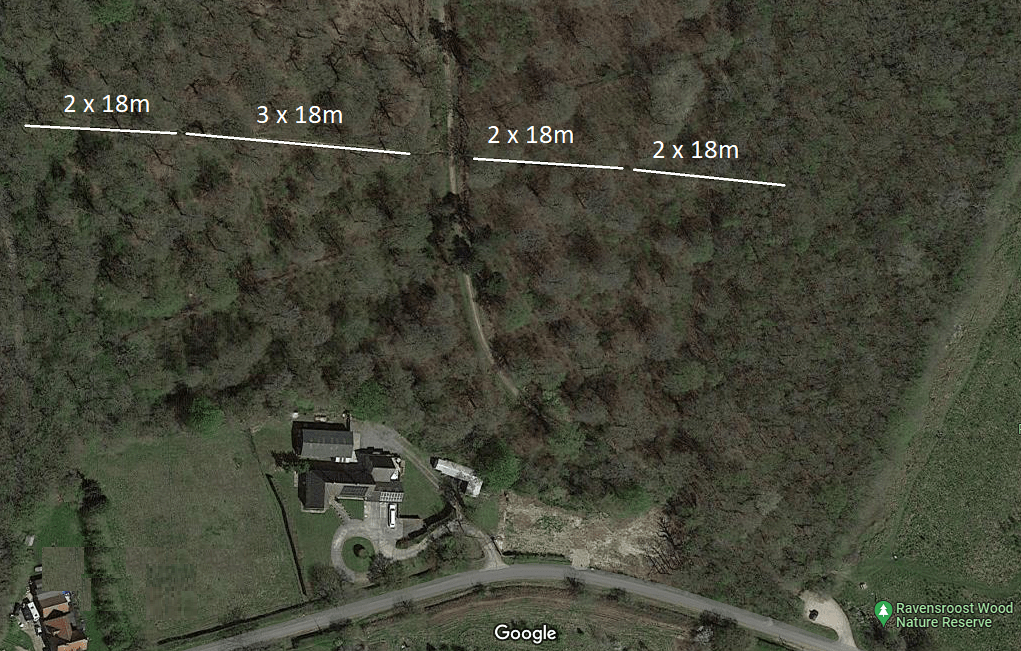
Miranda and I met at 5:30 and we set 9 x 18m nets:
First out of the nets were three Wrens: one of which was an absolute nightmare. Miranda very kindly passed it on to me (it is my own fault: the key rule I give my trainees is that, if a bird is proving too difficult for them, call me, don’t persevere and risk the health of the bird). I do rather like the difficult birds to arrive after my first coffee of the morning! We also extracted a juvenile Robin.
As all of our sessions seem to go, we had one good round with plenty of empties and low numbers. That is not to say that it wasn’t enjoyable, because we had some very pleasing results in amongst our catch. Following on from the first juvenile Blackcap a week ago at the Meadow Pond, this morning we caught another three and another couple of juvenile Chiffchaff. However, our first juvenile Marsh Tit of the year was a bonus:

Marsh Tit photo courtesy of Miranda. With the catch having died down, at 10:45 I did the usual “if there are no birds next round we will shut the nets” so, naturally, we took four more birds out of the nets. This included our first juvenile Chaffinch of the year:

I love the “Oi! What are you looking at?” attitude. During the same round we also extracted this Great Tit, showing just exactly how harrowing trying to raise a brood can be:

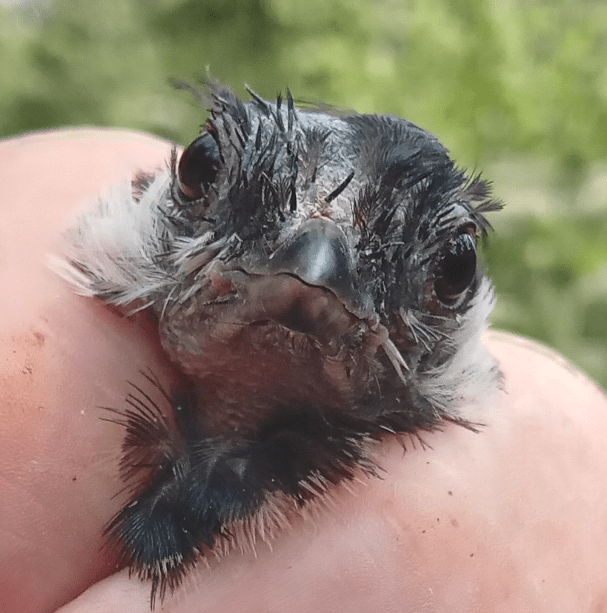
Of course the difference between a Great Tit and a similarly follically challenged male human is that the Great Tit’s head covering will grow back naturally.
One other interesting plumage seen this morning was a second calendar year male Blackbird:

Although in the field male birds of this age generally look black, that is probably because of the impact of their body and tail feathers. As you can see from this photograph, the wings are still very substantially brown. It has three retained greater coverts from the set that it had when it fledged.
The list for the day was: Nuthatch 1(1); Blue Tit [1]; Great Tit 1; Marsh Tit [1](1); Wren 1(2); Robin 1[4](1); Blackbird 1(1); Blackcap [3](2); Chiffchaff [2]; Chaffinch [1]; Bullfinch 1. Totals: 6 adults ringed from 6 species, 12 juveniles ringed from 6 species and 8 birds retrapped from 6 species, making 26 birds processed from 11 species.
As well as the birds caught and processed, we were surrounded by several other species that did evade the nets. These included Willow Warbler, Song Thrush and Great Spotted Woodpecker (but not the Goldcrest that Miranda’s app said was singing close by. I might be old but I can still hear Goldcrest singing and calling, and there were none in the vicinity). There were a few butterflies about: particularly Red Admiral and Speckled Wood, plus an unidentified Skipper. One of the passers by who stopped to chat had mentioned that there was a White Admiral up near the entrance to the reserve and I am pleased to say that I did see it as I was locking the gate upon leaving.
We did finally shut the nets at 11:45 and were away from site at 12:15. My car had been sounding a bit rough this morning (and for a few mornings before that, if truth be told) and there was a bit of a smell of something burning, as Miranda mentioned, but it got me home. Unfortunately for my wife, when she took the car into Wootton Bassett afterwards, it got her there okay but didn’t want to bring her home. Our friendly mobile mechanic got her started and sorted enough to get them both home. He called me and suggested I look under the bonnet, which I did:

I think that explains the roughness of the engine, the smell and the failure to start! Hopefully he will have fixed it by the weekend, otherwise I will have to have a lie-in rather than the pleasure of getting up at 5:00!
One final thought: no sign of the Spotted Flycatcher!
 Ringing In The Braydon Forest & Beyond