A slight departure from my usual blogging activities this time: augmenting the ringing report posted on Saturday, 19th August. Bio-blitzes are a pretty good way of finding out what is to be found on a site. This Saturday’s was arranged, at fairly short notice, with half-a-dozen enthusiastic volunteers, organised by Rosie and another Trust staffer. My participation was to run my bird-ringing session first thing in the morning, and a moth-trapping session from 20:00 that evening.
The group went off on their surveying, and spent the next 5 hours or so looking at whatever they could see and identifying as much of those as they can. The list they produced was extensive, with a minimum of 183 species seen, and over 175 fully identified. This split down into, at least: 76 plant species; 5 fungi and lichen species; 39 butterfly and moth species; 26 other insect species; 12 other invertebrate species; 5 mammal species and 21 bird species. The lists that follow are a work in progress, with a number of species yet to be identified from photographs taken at the time.
The bird ringing produced 8 species, which was augmented considerably by the survey. The full bird list was: Grey Heron; Buzzard; Sparrowhawk; Barn Owl; Tawny Owl; Kestrel; Woodpigeon; Green Woodpecker; Blue Tit; Great Tit; Wren; Dunnock; Robin; Redstart; Lesser Whitethroat; Chiffchaff; Carrion Crow; Magpie; Jay; Goldfinch; Wheatear; Starling. We decided not to count the Peacock that we could hear calling across the back of the fields!
Outside of the butterflies and the moth caterpillars reported on in the ringing post, the mothing session went well. Rosie, Lynn (one of the volunteer crew) and I met at 20:00, set up my moth trap and sat and waited to see what we would get. Pretty quickly there were a lot of grass moths around: Rosie used her sweep net to catch those flying around and we were able to identify Agriphila tristella, Agriphila geniculea and Chrysoteuchia culmella. There were lots more flying around and plenty went into the traps: including a couple of European Hornets that seemed absolutely transfixed by the light: crawling over the actual bulb at times. I took the trap home, so it could be analysed the next day for additional species identification. Amongst the many moths in the trap we had this beauty:

Angle Shades, Phlogophora meticulosa
The commonest macro moth we found was the Six-Striped Rustic:

Six-striped Rustic, Xestia sexstrigata
My favourite, though, was a Cloaked Minor:

Cloaked Minor, Mesoligia furuncula
Or perhaps this:

Orange Swift, Hepialus sylvina
The moth list was: Orange Swift; Willow Ermine; Eudonia mercurella; Garden Grass Veneer; Agriphila tristella; Agriphila geniculea; Privet Hawkmoth caterpillar; Hummingbird Hawkmoth; Blood-vein; Shaded Broad-bar; Yellow Shell; Magpie Moth; Straw Dot; Dingy Footman; Cinnabar Moth caterpillar; Mother Shipton caterpillar; Vine’s Rustic; Straw Underwing; Angle Shades; Cloaked Minor; Lesser Common Rustic; Striped Wainscot; Common Wainscot; White-point; Flame Shoulder; Large Yellow Underwing; Lesser Broad-bordered Yellow Underwing; Square-spot Rustic; Six-striped Rustic; Setaceous Hebrew Character.
The butterfly list was: Small Copper; Common Blue; Gatekeeper; Brown Argus; Meadow Brown; Large White; Small Skipper.
Naturally the moth trap attracted in a lot of other insects. One of the most often encountered, pretty much everywhere in this area, is this Caddis Fly:
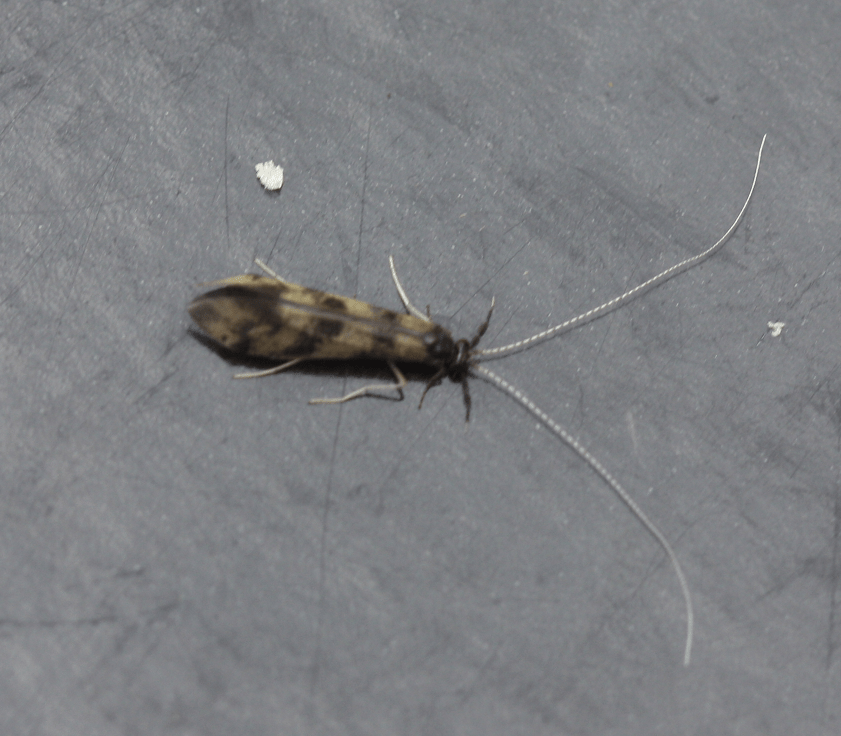
Mystacides longicornis
The other insects found were: Mystacides longicornis; other Caddis Fly spp; Robber Fly; Hoverfly spp; Long Hoverfly; Dronefly; Ground Beetle spp; Pterostichus madidus; Pterostichus versicolor; Amara spp; Rove Beetle spp; 7-Spot Ladybird; 22-Spot Ladybird; Leafhopper spp; Common Fly spp; Small Blackfly; Common Carder Bee; Buff-tailed Bumble Bee – worker; Red-tailed Bumble Bee – male; Honey Bee; European Hornet; Darter dragonfly spp; Black Ant spp; Red Ant spp; Grasshopper spp; Roesel’s Bush-cricket.
The last has some quite striking markings:

Roesel’s Bush Cricket, Roeseliana roeselli
The other invertebrates were: Brown-lipped Snail; Unidentified Snail spp; Small Black & White shelled Snail; Small Stone White “Helix” Snail; Slug: Arion vulgaris “Davies”; Tent Spider spp; Wolf Spider; Harvestman spp; Woodlouse spp; Rough Woodlouse; Centipede; Earthworm spp.
The mammals identified were: Roe Deer, Muntjac; Fox; Badger; Rabbit.
The list of plants was, somewhat unsurprisingly, the longest: Pedunculate Oak; Ash; Field Maple; Crack / Grey Willow; Hawthorn; Blackthorn / Sloe; other Prunus spp; Crab Apple; Hazel; Elder; Spindle; Poppy; Bramble; Dogwood; Common Ragwort; Hoary Ragwort; Guelder-rose; Hawkbit spp; Cinquefoil; Dog Rose; Bulbous Buttercup; Fat-hen; Honeysuckle; Hop Trefoil; Bird’s-foot Trefoil (?); Dandelion; Ladies’ Bedstraw; Horseshoe Vetch; (Feather) Moss; Mallow; Common Agrimony; Sneezewort; Stinging Nettle; Horsetail; Common Yarrow / Field Horsetail; Biting Stonecrop; White Clover; Stitchwort / Mousey; Scabious spp; Knapweed; Red Dead-nettle; White Dead-nettle; Thistle spp; Crown Thistle (?); Teasel; Common Vetch; Black Medic; Thyme-leaved Sandwort; Ox-eye Daisy; Robin’s Pin-cushion; Musk Mallow; Cut-leaved Cranesbill; Briony; Groundsel / Chickweed; Willowherb (Hoary?); Wild Carrot; Tussock Grass; Ribbed Plantain; Meadow Vetchling; St John’s Wort; Germander Speedwell; Common Bindweed; Bittersweet Nightshade; Burdock; Hogweed; Ivy; Dock; Geranium; Broad-leaved Plantain; Lords & Ladies; Cornflower; Meadow Buttercup; Sorrel; Native Water-lily; Water Forget-Me-Not; Hedge Mustard.

Common Fleabane, Pulicaria dysenterica

Creeping Cinquefoil, Potentilla reptans
Fungi & Lichens: Lichen spp; Jelly Fungus; Field Mushroom; Under Tree Mushroom; Chalara Ash Die-back (Hymenoscyphus fraxineus)
Given that the group are primarily a small group of enthusiastic amateurs, this is quite a colossal achievement in such a short period of time.
 Ringing In The Braydon Forest & Beyond