As regular readers of my blog will know, my trainee, Rosie, regularly turns up to help me set up the nets before going off to her day job as an Estates Manager at the Wiltshire Wildlife Trust. On some days she doesn’t even get to process a bird before leaving. What you won’t know is that she lives on the edge of the Forest of Dean, so it is one heck of a commute, certainly the furthest of my trainees to work with me for little reward. She had asked me if I would return the many favours and run a ringing session in her garden, which backs onto the woodland of the Forest. We had tried to arrange it for a while but weather and other factors got in the way, until today.
Rosie had said that her garden was fairly steep. Oh boy! It certainly was! The first thing we noticed on arrival is that the slope was at least a 45o angle, possibly steeper. Fortunately, Rosie, being so much younger and fitter, took on the vast bulk of the net checking and extracting.
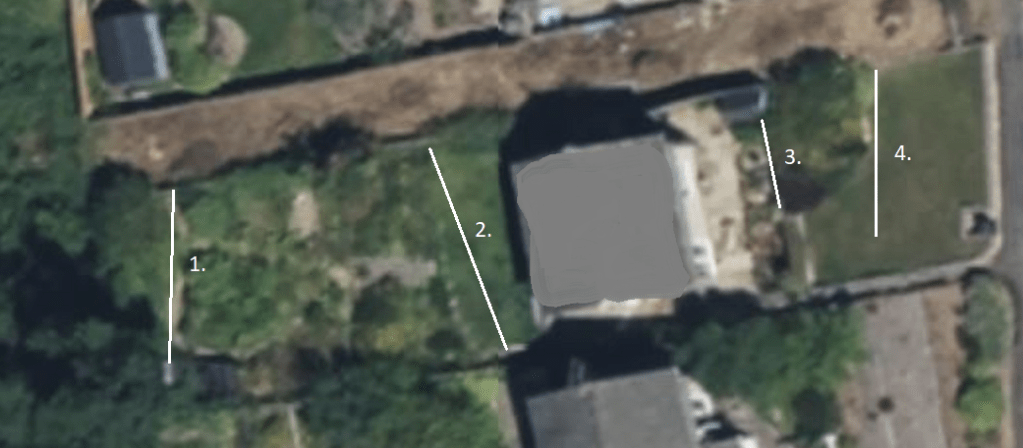
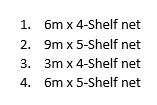
We set the nets and had them open by 7:45. The maximum width of the garden was 10m. Each of the nets was set adjacent to a feeding station, with a wide range of different feeds on offer. Ironically, net 3 was adjacent to the biggest feeding station and, although at times we had over twenty Starlings on and around those feeders, it only caught one bird: a House Sparrow. The other nets caught regularly. It started brightly, with an opening round of nine birds, including a Nuthatch. If anything is going to underline the proximity of the woodlands, it is catching a Nuthatch in the garden.
However, the key species being caught this morning was House Sparrow. The sheer numbers in this area are astonishing. We caught 25, it could have been 50+. Not surprisingly, the second largest catch was Blue Tit: the ever presents at garden bird feeders.
The bird of the morning for me was the bogey bird for so many of the less educated birdwatching fraternity / sorority:

Juvenile Magpie, Pica pica
As you can tell from the photo, there was a lot of dark brown feathering on the head and, although it doesn’t show so well in the photo, it had patches of a soft peach colouration mixed in with the white. The key ageing criterion is the colouration of the first primary: both have black lining around the outside of the feather. On an adult the centre of the feather is pure white right up to the tip. A juvenile has a small amount of white with dirty brownish infill to the tip.
As well as this we had a juvenile Coal Tit, just one from a flock of a dozen and, although we didn’t catch any in net 3, we did catch four Starlings in net 4. Just about the finale for the session was a second Nuthatch. The first was a male, the second a female, a pair?
We were catching birds all morning until it died off at about 11:00. Still. it was a good haul for garden ringing. Unsurprisingly, there were no retrapped birds, so we ringed: Nuthatch 2; Magpie 1; Blue Tit 17; Great Tit 2; Coal Tit 1; Dunnock 3; Robin 3; Song Thrush 1; Starling 4; House Sparrow 25. Total: 59 birds processed from 10 species.
It was an excellent session and, being in the garden, great to have all facilities on tap: and the 10:00 bacon sandwich was especially welcome!
 Ringing In The Braydon Forest & Beyond