With storms raging all around, I was interested to know how we would fare (i.e. how the birds have fared) when we arrived at the site. The first thing I saw on arriving was not weather damage but another piece of petty vandalism of the front gate:
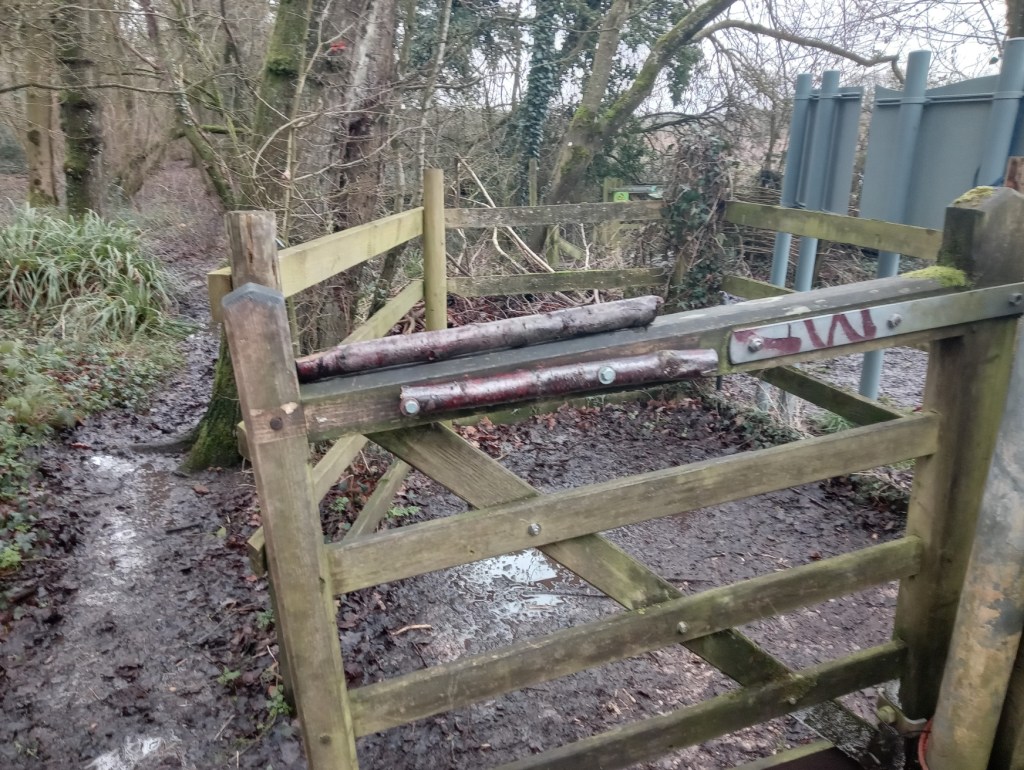
This is the third time that this gate has been vandalised, as far as I am aware. The bar along the top is continually being broken off, for no good reason. It is there to stop the gate flapping backwards and forwards. Vandalism is a regular feature at this nature reserve: from dog owners ripping down signs asking them to keep their dogs on a lead and to clean up after them to trashing the lovely, old Shooter’s Hut deep in the wood and the car park is continually blighted by fly-tipping. Rant over!
I was joined for the session by Laura and her two boys, Adam and Daniel, Teresa and Rosie dropped in to help set up before heading off to work at the Wildlife Trust. We set the usual nets along rides R28 and R38 and I set sound lures for a variety of winter visitors. Unfortunately, it didn’t attract in a single bird from any of those species. We did see a few Redwing flying around but that was about it. Having caught 62 birds from 12 species there, working solo the last time I ringed there, I was hoping for a decent catch. Unfortunately those hopes were quickly dashed.
In fact, between 8.30 and 11.00 we caught only 13 birds: Blue Tit 1(1); Great Tit 2(1); Coal Tit 1; Long-tailed Tit (3); Wren 1; Robin 1; Blackbird (1); Goldcrest (1). Totals: 6 birds ringed from 5 species and 7 birds retrapped from 5 species, making 13 birds processed from 8 species. Ironically, whilst we did catch 57 birds in Webb’s Wood on Monday, it was from only 6 species.
That is not to say that we didn’t have a good time of it: just lots more time to chat, plus plenty of time to focus on the birds we did catch. One of the more difficult birds to age are Coal Tits:
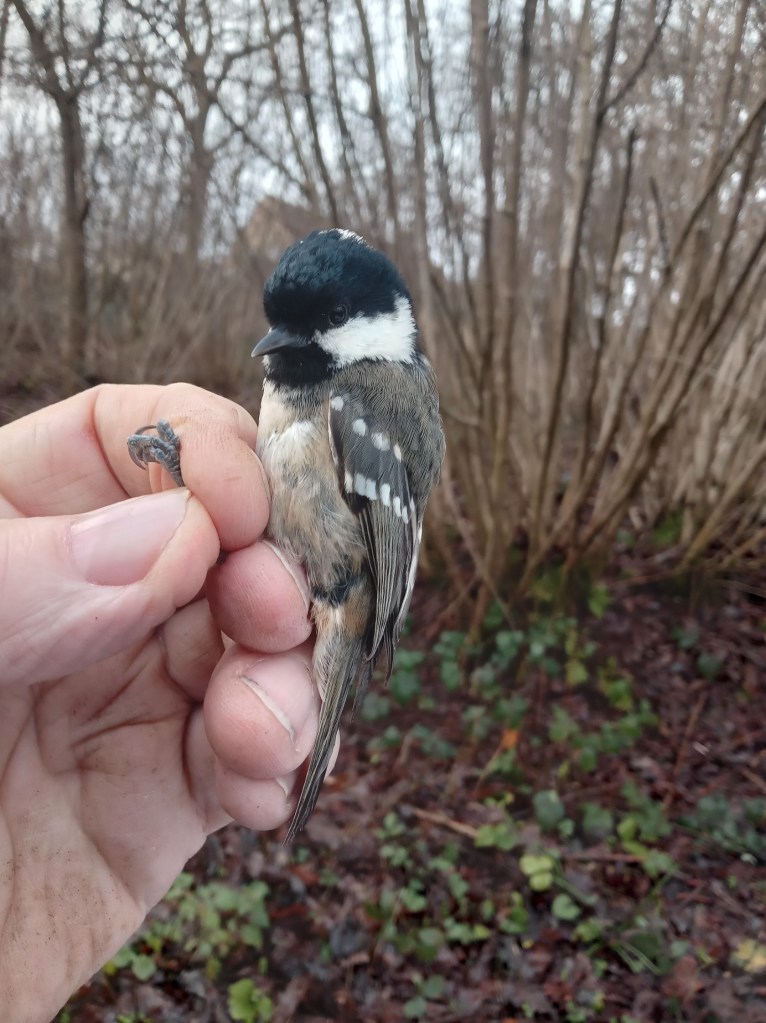
Coal Tit, Periparus ater
The key ageing criterion is the colour of the greater coverts:

The trick is in identifying the difference between the outer, older feathers, which tend to be browner with a brownish / yellow distal fringing and the inner, newer, feathers that are darker, greyer with greyish distal fringing. The outer three feathers of this bird were what we used to identify this bird as a juvenile.
We were treated to more Ravens flying around and croaking, Carrion Crows croaking in a higher key and a Song Thrush that sat in the tree adjacent to our ringing station and refused to put a cork in it nearly all morning.
One other interesting birding event: a Kestrel hunting within the wood. We saw it on several occasions throughout the morning and it was definitely hunting.
We met a lot of dog walkers this morning and, for once, they all had their dogs on leads – possibly to ensure that they didn’t get absolutely plastered in mud. Whilst not as much of a quagmire as Webb’s Wood, ride R38 was extremely muddy and, by the time we had walked back and forth along it a dozen times, it was an absolute morass.
At 11:00, after a couple of empty rounds, we decided to call it a day and took down the nets. With two teams working at it, we had the nets down and everything packed away by 11:30.
 Ringing In The Braydon Forest & Beyond