Looking for a decent woodland session for this morning, because the forecast was for it to be a bit windy, I did a quick analysis of the average catch sizes in each of the Braydon Forest woodlands during August, excluding the Firs, because we ringed there just a couple of weeks ago. The results were interesting: Somerford Common 42.9; Red Lodge 49.3; Ravensroost complex 35.9 and Webb’s Wood at 49.2. As our last foray into Red Lodge yielded a very disappointing six birds, I decided it had to be Webb’s Wood.
With a 6:30 start, I was joined first thing by Rosie and a few minutes later by Steph and daughter Bea (6 years old, cute and great fun to have around). We set the following nets:
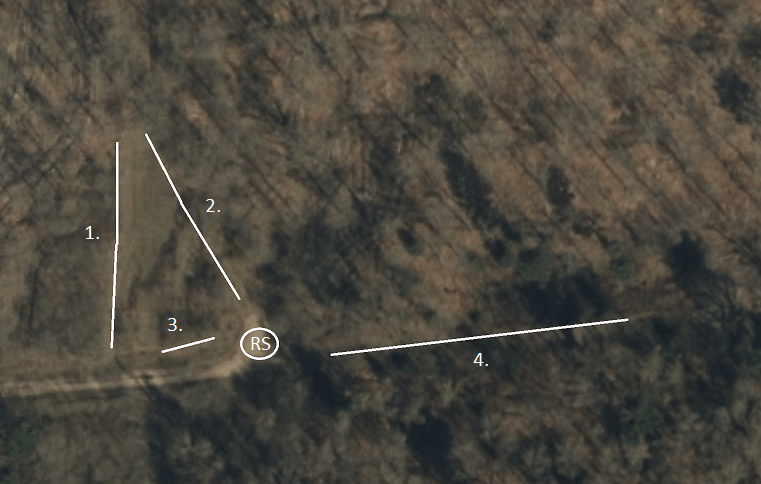
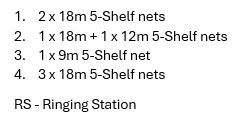
With the nets open by 7:30 it didn’t take long for us to start catching birds. The first was a juvenile Robin: and we caught at least one in each of the first five rounds to a total of seven.
It was quite remarkable in several ways: firstly, despite our regular forays into this woodland, we did not catch a single previously ringed bird. Also, all of the birds that we caught, bar one, were juveniles.
There were a few firsts for the year: our first juvenile Coal Tit of the year (in fact, only our third catch of this species this year):

Juvenile Coal Tit, Periparus ater
We also caught our third and fourth Nuthatch of the year: and our first two juveniles, both females:

Juvenile female Nuthatch, Sitta europaea
Both of these females had nearly completed their post-fledging moult. Another couple of months and they will be impossible to distinguish from adults, as both age groups will have the same plumage.
We also caught three juvenile Goldcrests, again, firsts for the year. Two had almost completed their post-fledging moult and could be sexed (both male) but the third has to be the cutest juvenile of the day (probably of the year to date):

Juvenile Goldcrest, Regulus regulus
The list for the session was: Nuthatch [2]; Blue Tit 1[11]; Great Tit [3]; Coal Tit [1]; Wren [3]; Dunnock [1]; Robin [7]; Blackcap [1]; Chiffchaff [3]; Willow Warbler [1]; Goldcrest [3]. Totals: 1 adult ringed and 36 juveniles ringed from 11 species.
There were a couple of incidents involving Hornets. The first was the horrible sight of a Hornet stinging a Chiffchaff in net ride 1 before Steph could get it away from the bird. I am pleased to say that, after extraction, the Chiffchaff flew off. It was a bit wobbly in its flight, but it was flying, and stayed up in the trees. We didn’t ring it, regardless.
The second was finding a Hornet in the same net ride eating a wasp of indeterminate species. Unfortunately, this Hornet had got the net wrapped around its abdomen: it was never coming out in one piece. Mind you, it did get a sting in on me as I tried to extract it.
The third was in ride 3: fortunately I managed to extract that one without damage to either party!
Rosie had to leave at just after 8:30 to go to work, having ringed half-a-dozen birds. We worked on until the wind got up at about 10:45. By 11:00 we had to shut the nets, because the pockets were billowing out, and the conditions were just wrong for bird ringing. We had the nets shut and everything packed away about an hour earlier than I had hoped, at 11:45.
 Ringing In The Braydon Forest & Beyond