As well as being active within the group, several of us also work with other bodies. Ellie works for the Wildfowl & Wetlands Trust and helps them whenever the opportunity arises, but doesn’t keep records of what she has processed with them. Clearly not a nerd like Jonny and myself.
Jonny enjoys a productive relationship with a group that rings in Iceland. This year he was there again and had another fantastic experience:

A couple of photographs that I am in no way jealous of!!!


As mentioned in the introduction to part 1 of this review, I took on the responsibility of being trainer for the Salisbury Plain Raptor Ringing Group. In order to get to know the various elements of the group I spent a day out with each of them.
My first session was with Justine, a C-permit holder, who had been coming out with me prior to the trainer issue arising, as she wanted to expand her knowledge beyond raptors, and Mark, who has now signed on as a T-permit holder but had been doing the ladder work, with Justine doing the processing. Their work is primarily along the River Wylye valley, farmland along the A303 and some areas on the edge of the Salisbury Plain Training Area. It was the fact that I was already working with Justine that put me in line to help the group out. This session was on the 5th May and we processed a brood of Tawny Owls and five broods of Barn Owl:


My second trip out was with Dick, currently heading up the SPRRG, and Jon. They cover the central SPTA boxes. I met with them at West Down camp on the morning of the 15th June and we checked a number of boxes, ringing four broods of Kestrel and three broods of Barn Owl. One interesting find was regarding the diet of Barn Owls. A couple of years ago, at one of my sites near Waterhay, I found the remains of a Starling in one of the boxes. One of the boxes holding a Barn Owl brood on the Plain has a huge stock of Starling carcasses:

Clearly, this is a dietary choice for these particular birds. I suppose that large roosts of Starling are fairly easy prey. After this session I asked Ian to assess Jon for his A-permit, which he did and Jon is now a fully licensed bird ringer.
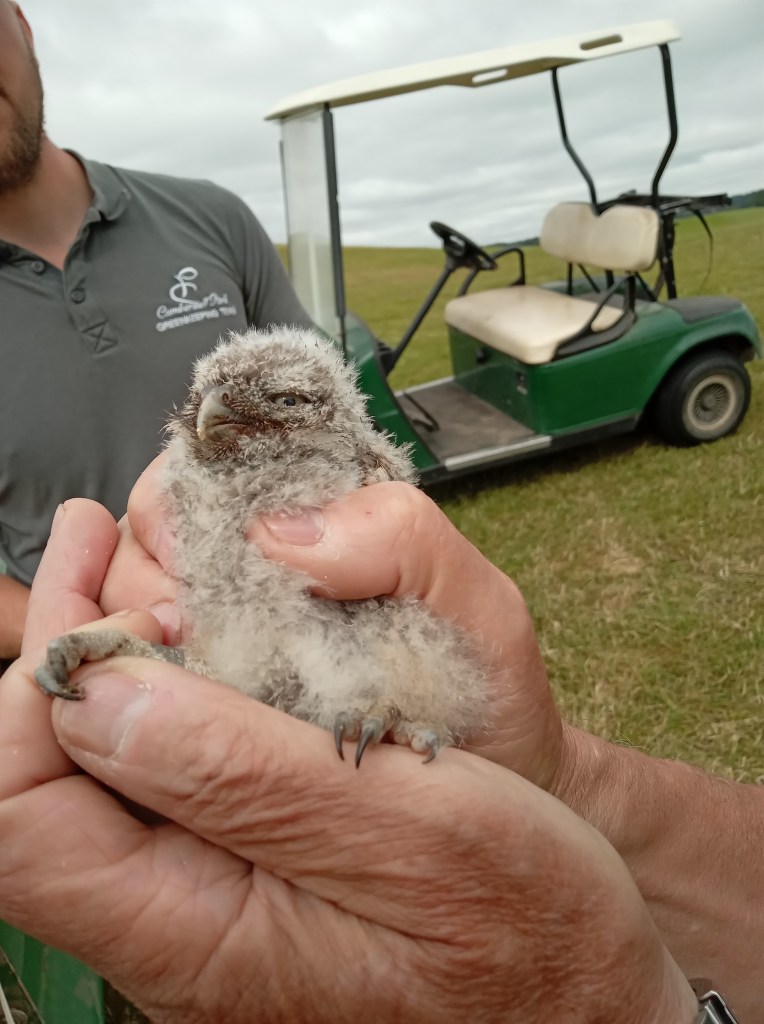
My third session was with another Jon. This time it was at Cumberwell Golf Course on the 23rd June. As well as being a greenkeeper, Jon is the conservation manager for the site. His work is exceptional, and the site is an absolute haven for wildlife. We ringed two broods each of Kestrel and Barn Owl, plus one brood of Little Owl. I was delighted to be given the opportunity to ring my first ever Little Owl:
My last trip out was my long weekend with the Wash Wader Research Group, as previously blogged about. Rather than repeat all of the detail from that, this was the list that I was lucky enough to process: Curlew 1; Dunlin 15(2); Redshank 8(1).
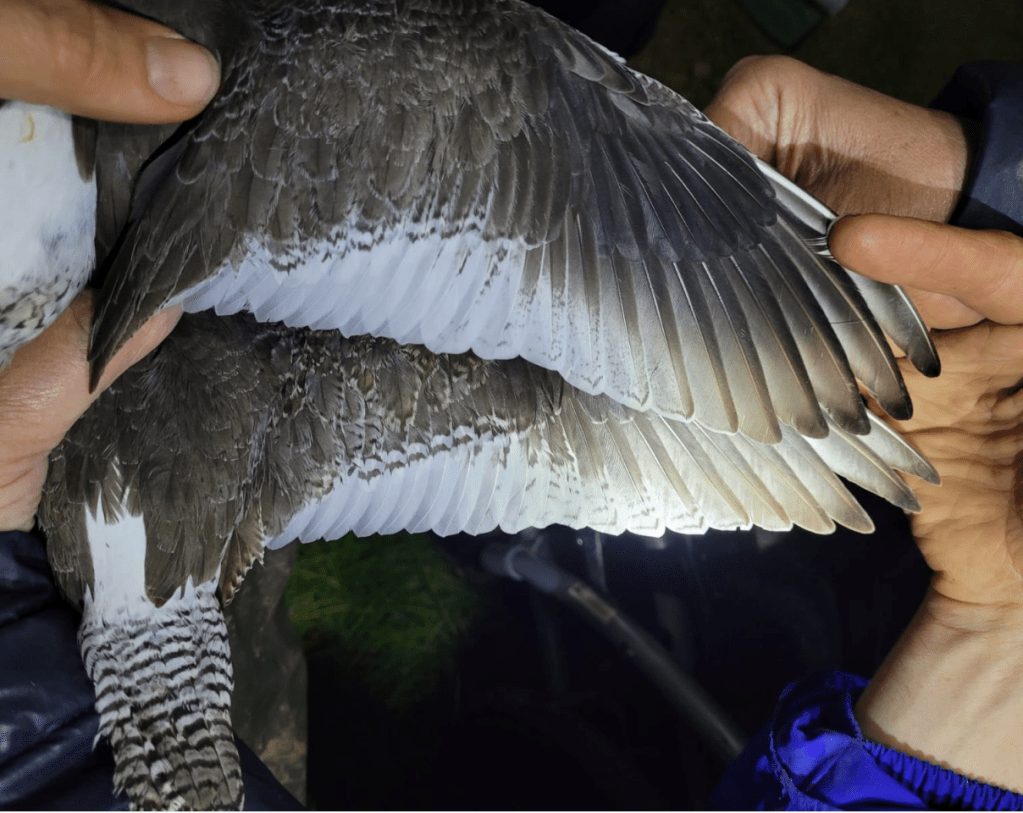
There was a lot of opportunity to get really confused about ageing Redshank. This photo shows the wing of both an adult (top) and juvenile Redshank below (I think I remember that correctly):
I am looking forward to my next session there in October!
 Ringing In The Braydon Forest & Beyond