We arrived on site at 7:00 this morning: David, Laura , Daniel and myself started to set up the nets. First we set them along the Heronry Ride and then headed down to the Wildlife Refuge to set the nets there. We were greeted by some very familiar faces on the other side of the gate: what looked like Herdwick sheep. I thought that the sheep they had were mules but these certainly didn’t look like them. It was too late to change our plans, so our first task was to move them out of the netting area and erect a temporary barrier to keep them away from the nets. Unfortunately, their presence meant that I could not set all of the nets I had planned, another two rides, another 75 metres of net, and the catch suffered accordingly.
We set the following nets:
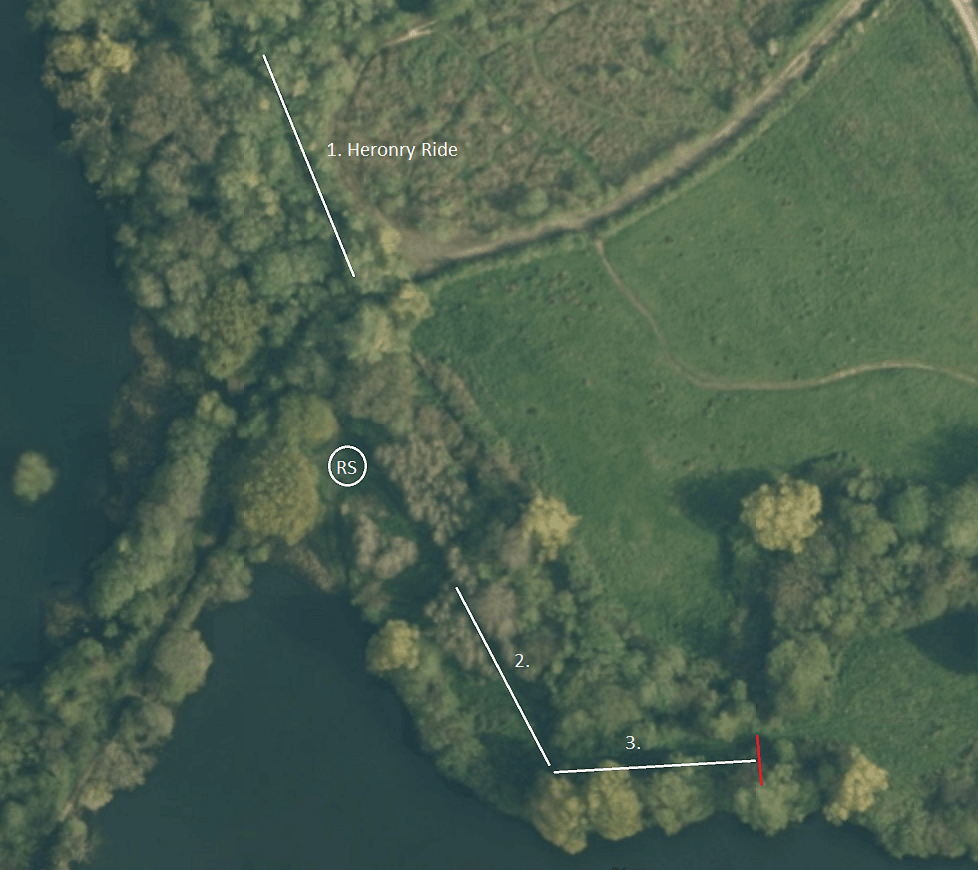

Ride 3 cut short so we could block off access to the sheep. The first round was entirely misleading, as we had quite a reasonable haul. Adam and Mark arrived at about 9:00, Adam having felt unwell at 6:00 in the morning! I know how he feels – every time at 6:00 in the morning! I wonder how he will feel when it gets to 4:30am or earlier?
It was a very similar session to the last one that David and I did at Lower Moor on the first day of this month. The catch was: Blue Tit 1(1); Great Tit 1(1); Long-tailed Tit 2(1); Dunnock 1(1); Robin 1(1); Song Thrush 1; Chiffchaff 1(1); Goldcrest 3; Chaffinch (1); Bullfinch (1). Totals: 11 birds ringed from 8 species and 8 birds retrapped from 8 species, making 19 birds processed from 10 species.
I am running these early sessions to see how the site is shaping up for the year ahead. It is my Constant Effort Site, which means the same nets are positioned in the same places for each session and open for a consistent period of time. I have committed to the project since 2015. However, the catches have declined by some 40% over the last four years. It is a big commitment: 12 sessions, roughly every 10 days, between the beginning of May / end of August, sometimes first week of September. This reduces availability for working other sites and I have to decide if it is worth continuing.
Another factor is providing enough birds, from enough species, to give my trainees the experience they need to progress. If you take today’s results: my three T-permit holders got just six birds each. I want them to have between 15 and 20 birds each in a session, but would settle for 12 or 13. The Wildlife Trust have carried out a number of habitat management changes that I suggested, and I am extremely grateful that they have done so. In return, it is only right that I do enough to evaluate the impact of their efforts. Hence there will be a minimum of one visit per month.
Anyway, with the catch dying off by 11:00, we started packing up at 11:15, had everything down and packed away quite quickly and I was home by just after midday for once. It was really enjoyable session, because I work with really nice people and we filled the gaps in the catches with a great deal of chat and laughter!
* A little codicil to yesterday’s report: at the same time as we were catching our 19 birds, Ellie was catching and ringing in the farmhouse garden at the same time. She caught 21 birds: Blue Tit 9(7); Great Tit 2(2) and Long-tailed Tit (1): I think that I am happier with our catch!!
 Ringing In The Braydon Forest & Beyond