It is a long time since we have had a really strong catch in Ravensroost Wood. This morning I was keen to increase the catch size, so I decided to set some additional nets. I was joined by David, Laura, Adam and Mark at 6:00 and we set the following nets:

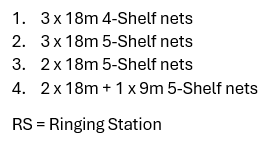
Not as many nets as I had planned but the ride along which number 1 was set was very overgrown. Mark and Adam did a great job of clearing enough to set the three nets but we decided that was enough. I will get in with my strimmer before the next session. Why ” a bit like the old days”? In the last five years the largest May catch we have had in Ravensroost was 28 and the smallest full session was 11. Prior to then our May catches were regularly larger than this: up to 52 in 2019. Today’s catch was 56, our largest ever in May. We have had larger catches: but they were all when the feeding stations were in operation.
We had a decent start, with two Willow Warblers in the nets almost as soon as they were opened. The catch started well, peaked at 9:35 and then fell away until we started packing up at 11:00.
The peak was boosted by an amazing catch of 23 Long-tailed Tits! Our largest May catch in the whole Ravensroost complex prior to this was six: ten years ago! We had none in May between 2017 (2) and 2021 (1). Then there were 3 in 2022, 2 in 2023 and none in 2024 (which isn’t surprising, as we didn’t manage a session in May 2024). We have only caught juveniles in May in Ravensroost on three previous occasions: 2015 (4); 2016 (3) and 2022 (2). Today we ringed 15 juveniles, we also ringed two adults and retrapped six adults.
Particularly pleasing for me was to extract two of one of my favourite birds: the Garden Warbler. One was a female in breeding condition and, right next to her in the net was our first juvenile of the year. Unfortunately, neither of my photos are good enough to put on the blog. It is our first ever May juvenile: the earliest I have ever caught at any of my sites. I am a little concerned at how early it is, as they don’t usually lay until early to mid-May, but the flanks and belly were bald and the armpit was also somewhat naked. The plumage was pristine: there is no way that bird had flown all of the way from the Congo rainforest, following the rains, without showing some kind of feather wear. It does mean that the egg must have been laid in early April. If it had been a month later I wouldn’t question it. However, the record was accepted by the BTO without query. We went on to catch another two in the session. It is the best number ringed for just under eight years: July 2017 was the last time. 2017 was our best ever year for the species: hopefully a portent of things to come!
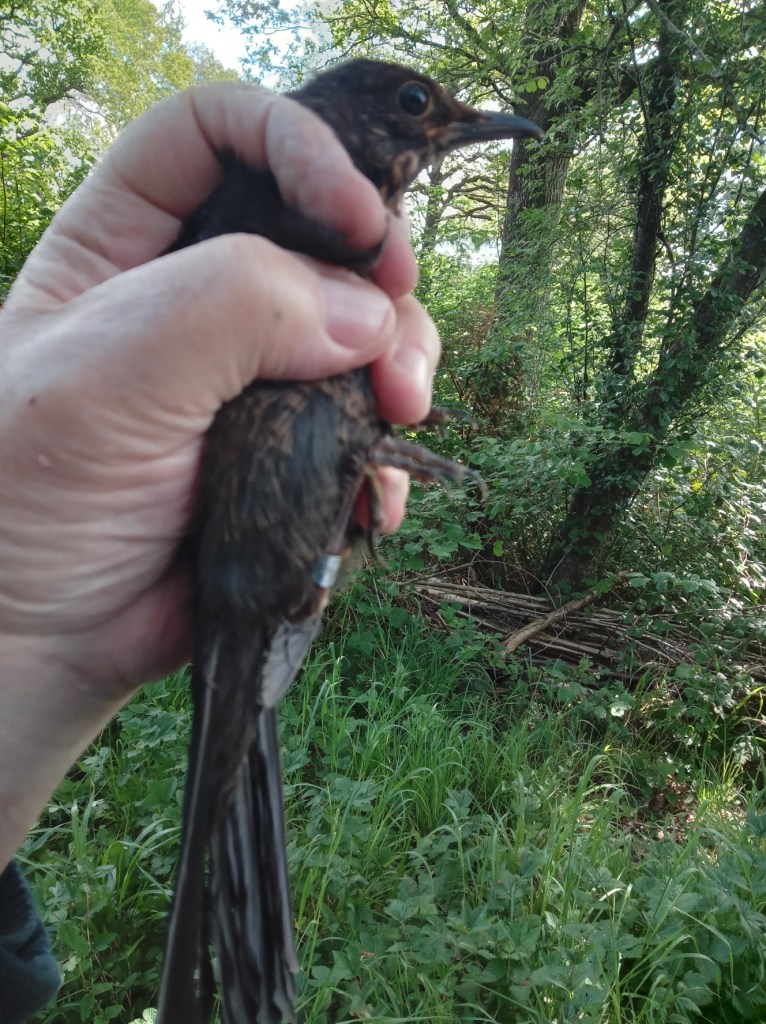
It was another red letter day for Blackbirds: we caught seven: five ringed and two retraps. This is our best ever catch of the species. Prior to that you have to back to January 2013 for a catch of six, our previous highest total. However, those were all ringed, whereas today was five ringed and two retraps. To put that into perspective though: January 2013 was only the fourth session in the wood under my ringing regimen. Today’s catch included our first juvenile of the year:
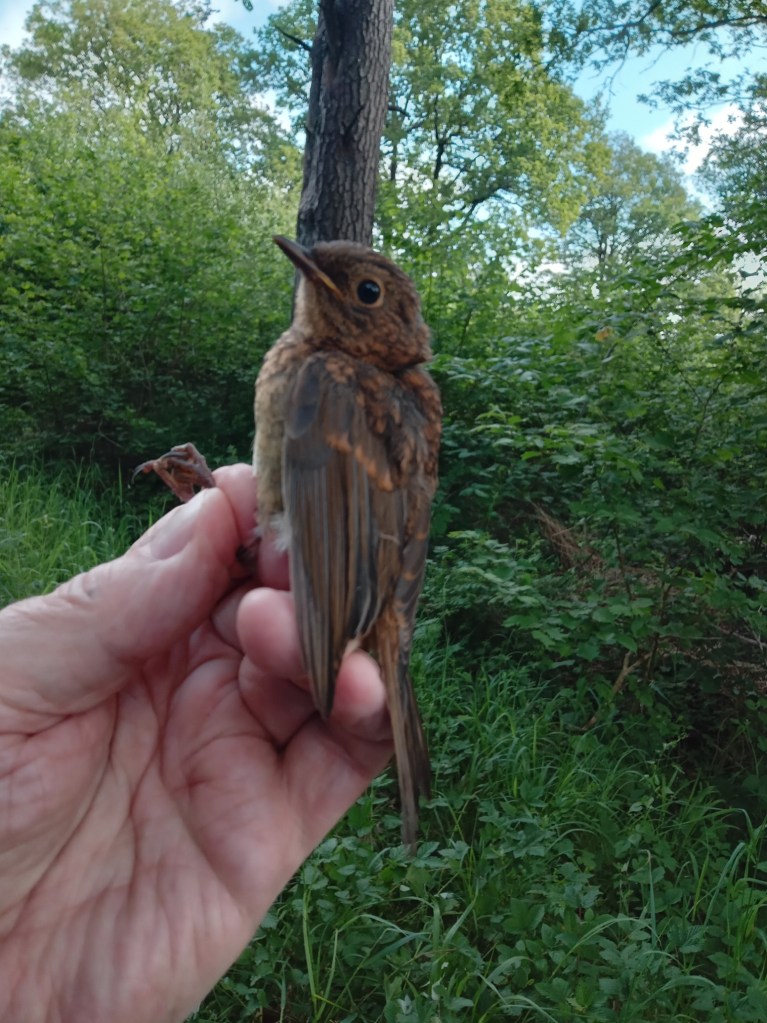
To complete the list of first juveniles for the year, we had our first Bobble:
So, the list for the session was: Blue Tit 2(2); Great Tit (1); Long-tailed Tit 17(6); Wren 1; Robin 3; Blackbird 5(2); Blackcap 4(1); Garden Warbler 4; Chiffchaff 1(2); Willow Warbler 5. Totals: 42 birds ringed from 9 species and 14 birds retrapped from 6 species, making 56 birds processed from 10 species.
It was a good number of Willow Warbler: our second highest catch in the complex but our best catch inside the woodland. We mainly catch them in the Meadow Pond area.
So, after a thoroughly enjoyable session, we started taking down in stages at 11:00, were packed up by 11:45 and off site by midday.
 Ringing In The Braydon Forest & Beyond