After Wednesday’s rain, Laura, Ellie and I met at the Firs at 6:00 and set the following nets:
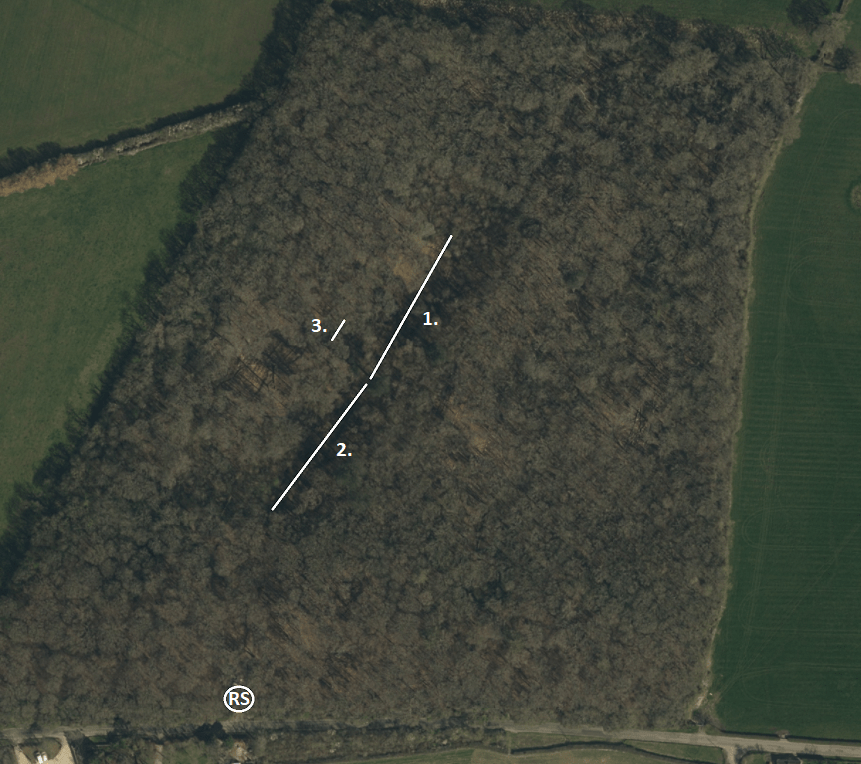
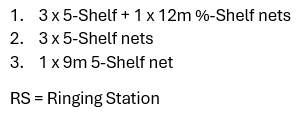
It was a quiet morning catch wise, but it was very, very loud with birdsong. In particular, we started with one male Chaffinch singing away, after about 30 minutes, a second joined in. Another hour and a third joined the party and 30 minutes later, a fourth decided he needed to establish his presence.
As ever, we listened to the two Green Woodpeckers, who have territories either side of the wood, but never get close to the nets, laughing at us! Song Thrush, Chiffchaff, Raven and lots more heard throughout the morning.
The highest number of birds extracted on a single round was just four. However, it was a nice variety in the catch: the first bird out of the net was a Garden Warbler: only the fifth for the wood, following on from last year’s three (a male, a female and a fledgling), the first being in 2019. This was a female in full breeding condition. Hopeful that this species could become established as a regular breeder in this wood.
The next round, the “big round” comprised three Chiffchaff and a Blackcap. After the next two rounds, with just one bird in each, I decided that we didn’t all need to slog up and down the hill at the Firs, which is a surprisingly steep 200m, that we would each take it in turns to do a round, and call for help if needed. It wasn’t! The only round that had more than two birds, the last that I did, delivered three birds. That was one on my way down and two flew in whilst I was carrying out what our team (thanks Justine) refer to as a “Wren survey”.
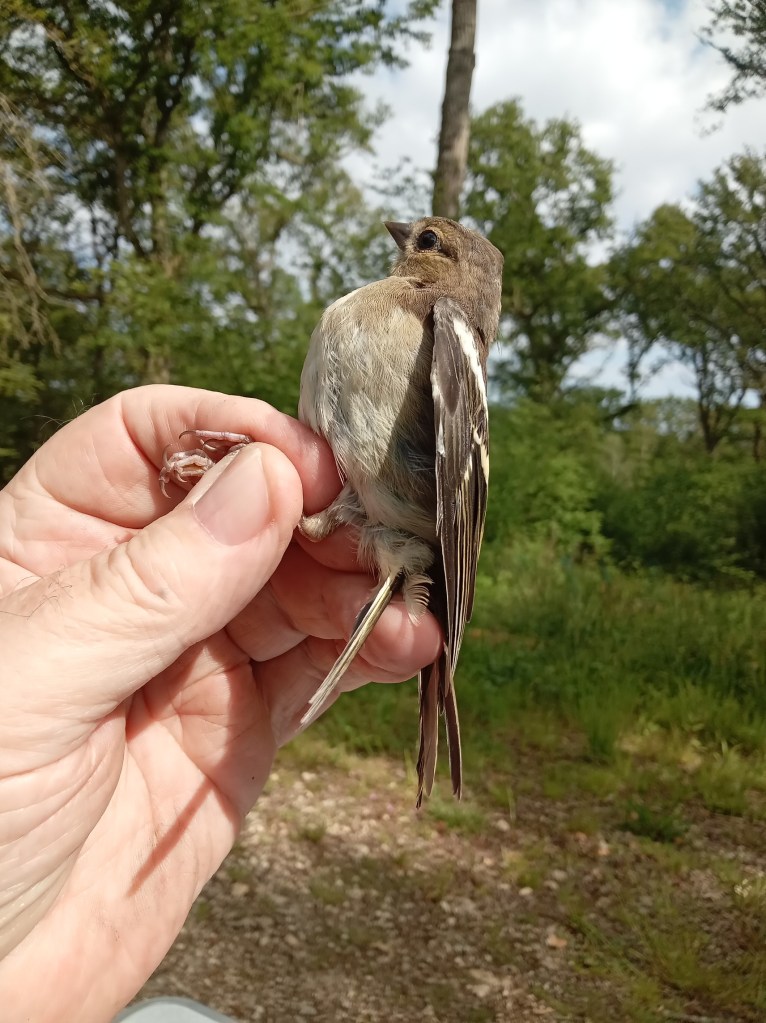
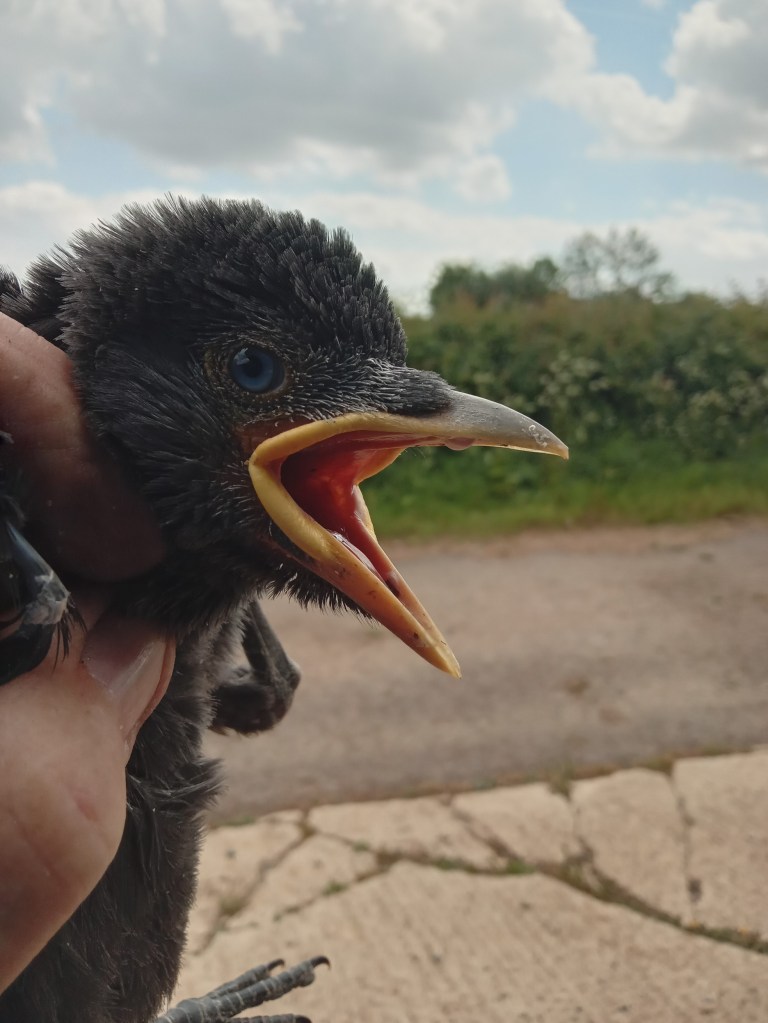
There was another catch of Blackbirds, two second calendar year males with very brown primaries and an unmoulted alula. However, the absolute highlight of the morning arrived at 10:10. At first it was camera shy:
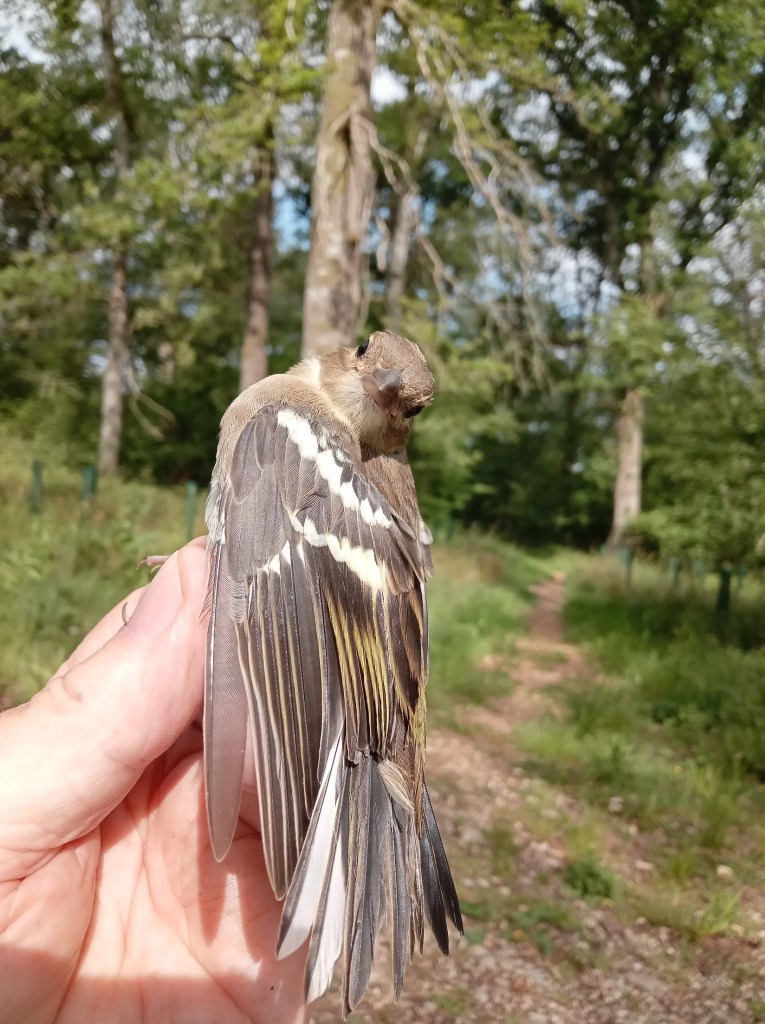
And then it was “Who are you looking at?”
With all of those males singing, admittedly in the trees up by the ringing station, it was lovely to catch our first recently fledged Chaffinch of the year. Then, on our last round at 11:40, we caught another. This one had started its post-fledging moult, whereas the first hadn’t.
The list for the day was: Great Tit 1; Wren 1; Blackbird 2; Blackcap 2(2); Garden Warbler 1; Chiffchaff 2(3); Willow Warbler (1); Goldcrest (1); Chaffinch [2]. Totals: 9 adult birds ringed from 6 species, 2 juveniles ringed from 1 species and 7 birds retrapped from 4 species, making 18 birds processed from 9 species.
It would always be nice to have a few more birds but I liked the catch. However, my absolute favourite moment of the morning was a Spotted Flycatcher hunting in some trees just down from the ringing station. I noticed it fly on to a perch, sitting in its typical upright manner, then flying out after an insect and returning to its post, then doing it again. There was also a lovely time with a Treecreeper running up the Oak tree adjacent to us, showing really well, before flying to the next tree over, and continuing its ascent.
With everything packed away we were off-site by 12:15. Ellie came back to my place to have lunch before we set off to carry out some owl box checks in the afternoon. This is where it all went bad. I should taken heed when my roof rack decided it had shrunk and didn’t want to fit the car! We got it sorted eventually and headed off. First box was at Lower Pavenhill Farm: we had to negotiate a field full of horses with their foals. They aren’t a problem other than that they do love to nibble and rub against the car. However, Ellie managed to keep them at bay whilst I checked the box – which was empty. Our next stop was Ravensroost Meadow where the first gate padlock was seized solid. So we went to the second gate: one padlock was also seized but there was a secondary one, which was blocked with fur from the Belted Galloways in the field. Belties are docile and safe, so we drove in and were immediately concerned when the eight Belties came haring towards the car. It was dangerous, for them, so we did a quick reverse ferret and got out of there. I will have to get them moved into the field next door before trying again. Not much of a start then. We then headed to the big barn at Somerford Farm. This box produced a brood for the first time last year, so I am hopeful. I climbed up and opened the box only to find it absolutely stuffed full of sticks and a bit of nesting material and over in the corner was this:
It’s primary and secondary feathers were between one third and two thirds grown, feathers medium, to give it the BTO reporting term. We went from there to another part of the farm, a field with a Little Owl box in it. It has not yet produced anything and this year is no different: I cleared out a squirrel drey. I am going to suggest we move it into the farmyard.
This is when it all went to hell in a handcart. I pressed the clutch down to start the car and the pedal fell straight to the floor! Not only that but the brake pedal would not depress. I got onto Green Flag and explained the situation. They said it was the same fault as last time, I said it wasn’t, they said prove it: like I carry that paperwork around with me. Then they advised that it would cost me £150 to recover the vehicle. That’s not too bad but, when I described where I was, they put me on hold and came back with a revised price, because they would have to bring “specialist equipment”, of £450. Apparently, they would need to bring a 4×4 with a winch to get me off the field so they could then get it onto the recovery truck! I explained that the field was like concrete and that wasn’t necessary but they insisted, so I called a local recovery guy who I had used before I took out roadside assistance. He quoted the £150, I explained exactly where we were and he wasn’t phased at all. It took him over an hour to arrive, but he had been finishing a recovery in Newbury. Anyway, he got me home and we got the car off the truck and out of the way on my drive. I am waiting for an engineer to arrive today, Friday, to advise on whether it is worth repairing or scrapping but I have decided I need a new car.
I felt sorry for Ellie, she is still finish off her Masters at Cardiff University and had set off from Cardiff at 4:00 in the morning and didn’t get away until 18:00 Thursday afternoon. That’s a long day! The compensation was ringing her first juvenile Chaffinch and her first nestling Jackdaw.
 Ringing In The Braydon Forest & Beyond