So pleasing to get out and have a proper session today and to have a good catch and lots of other things going on. The reason for the title: we were joined later on in the morning by the new Swindon Well-being Group run by the Wiltshire Wildlife Trust. They were a lovely group of people and hugely appreciative of our demonstrations and explanations about the ringing scheme plus being allowed to hold and release a few birds.
It was also a big morning for Laura and Miranda: my trainer, Dr Ian Grier, who helped me get my C- and then my A-permit, came along to assess their abilities and, I am pleased to say, that after the session he has confirmed that he is happy to sign off on their C-permits! I do feel a bit guilty: I omitted to tell Ian our start time. He assumed that I am as dedicated as he is and arrived at the Firs at 6:00. I got his text saying he had arrived when I crawled out of my pit at 6:45. I rushed to get out and ready and was on site by 7:15. It gave Ian a chance to have a look around the reserve before I got there. The rest of the team, Laura, Miranda, Ellie and Pete, arrived at 7:30. We set nets all of the way down the central glade:
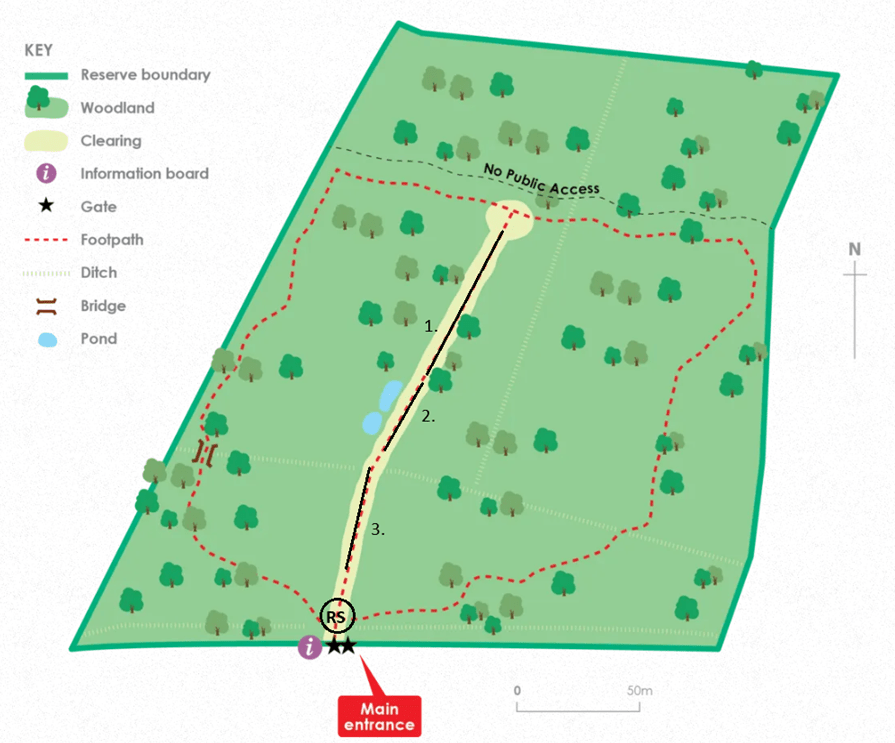
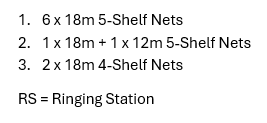
With two teams working to get them open we had them up and ready soon after 8:00 and started catching straight away. It isn’t bad when you pick up two Nuthatch as you are walking back to the ringing station having only just opened the nets.
It was an excellent morning, there wasn’t much else we could have asked for: another two new Marsh Tits ringed, taking us to nine ringed already this year. To put that into perspective, the previous highest Braydon Forest Marsh Tit ringing catch in the first two months of the year was six, last year, our best year to date. Our number retrapped in these first two months is equal to our previous best of 18 in 2022. Obviously that means that it is our best ever start to the year for Marsh Tits.
We caught what is only our sixth Redpoll in the Firs: we ringed two in November 2016, two in February 2022, and now, one each in February and January of this year.
When the Well-being group arrived Ian took the star turn, showing them the birds and doing his party piece: stroking the belly of a Blue Tit, the bitiest bird in the wood, until it totally relaxed and just lay there in his palm until he turned it over and it flew away. I did most of the basic stuff on the purpose of the ringing scheme, how it works and what it delivers, with Ian filling in the bits I left out.
The list for the session was: Great Spotted Woodpecker (1); Nuthatch 2(2); Blue Tit 18(17); Great Tit 9(7); Coal Tit 1; Marsh Tit 2; Long-tailed Tit 4(2); Wren 3; Dunnock 3(1); Blackbird (1); Goldcrest 1; Chaffinch 6; Redpoll 1. Totals: 50 birds ringed from 11 species and 31 birds retrapped from 7 species, making 81 birds processed from 13 species.
There were a couple of non-ringing highlights: my first butterflies of the year (two Brimstone) but the absolute highlight was hearing a Lesser Spotted Woodpecker drumming away. Well, to start with, but when a second started up on the opposite side of the wood, that was just brilliant. Then a Great Spotted Woodpecker started drumming as well, which gave an excellent opportunity to hear the difference between the two. The Lesser drumming is longer and more metallic than the Great. The Great’s drumming finishes with a slight upturn or downturn in the sound at the end of the drum. It is the top bird on my list of birds I want to ring, for reasons I won’t give into, but are connected to why I changed trainer and was lucky enough to be taken on by Ian. Finally, when we went to close the nets, we heard a Green Woodpecker yaffling at the edge of the wood. All three heard in one session is not a common occurrence.
Another highlight was a Treecreeper in one of the trees adjacent to the ringing station. We spotted it flying in, and then spent five minutes watching it moving up the trunk, pecking into crevices after invertebrates. We do catch them regularly, but it is so nice to watch them going about their natural business.
We worked through until midday before emptying the nets one last time, closing them as we went, processing the last six birds, taking down and packing away. Before we left, just about all of the members of the Well-being Group came up to me one by one to thank me for allowing them to come and to say how much they had enjoyed it. That’s one of the reasons I like doing these sessions: people appreciate having the opportunity to get close to the birds and we get the opportunity to educate them on why bird ringing is important in conservation.
A big thank you to Ian coming all this way, from about 20 miles south of Devizes to Purton, and for being so helpful all morning and carrying out the assessments of Laura an Miranda and being excellent company and very entertaining. Also a big thank you for everybody in the team, who did most of the work this morning, whilst I am struggling with a back problem.
 Ringing In The Braydon Forest & Beyond