Who Needs Early Starts? Monday, 17th April 2023

The last couple of months bird ringing have been rather frustrating for me. With an almost complete absence of the usual February / March winter visitors: no Siskin or Brambling to be found anywhere, and very few Lesser Redpoll at the usual sites, the unremitting diet of Blue and Great Tits does become a bit wearing. Coupled with the awful weather, particularly the wind, that has made my farmland sites unworkable, it has been a limited “same old, same old” for the last 6 months. Okay, the recent arrival of some of our summer visitors has helped lift my mood but, with yesterday being forecast to be wind free, I had hoped to get out to Brown’s Farm for some Yellowhammers and Linnets. Unfortunately, the forecast changed to rain between 6:30 and 8:30 and overnight I became unwell: so that was another session down the pan (literally)!

As the forecast for today was for low wind and no rain, I thought I might open my garden nets this morning. So, naturally, I woke up this morning to find it was raining. It was showery but the skies began to clear at 10:30, so I kicked myself up the backside and opened the two 6m nets at 11:30. I am so pleased that I did!

There are lots of benefits to garden ringing: one of the key ones today was carrying out my ringing to the background music of the frogs in my pond singing away for the whole time I was out there. Of course, tea / coffee on tap, food when wanted, other facilities available when needed (and in comfort) are major benefits. Being garden based in a rural village, I check the nets twice as often as I do in the woods, the neighbours have been advised about keeping their cat in when the nets are open, and I do have two effective electronic cat scarers as well, but I don’t take any risks.

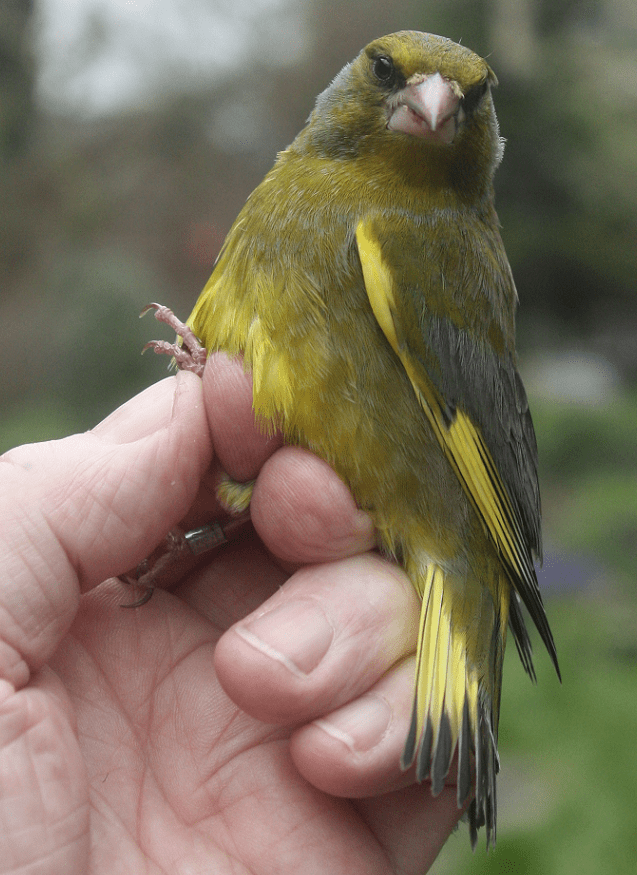
I caught my first bird at 11:40: a female Greenfinch. As part of our BTO Garden Birdwatch Scheme observations, we have recorded pairs of Greenfinch coming to our feeding station (okay, for GBW notation, four Greenfinch maximum in the garden at any one time). Today’s results showed how different casual observation is from physically catching and noting what you find. By the end of the session I had caught and processed seven Greenfinch: four females and three males. Interestingly, of the four females, three were second year birds and the fourth was a fourth year bird. The three second year birds had extremely well-developed brood patches, ready to brood eggs, but the older bird was still defeathering her brood patch and looked as though she would need another couple of weeks before she would be ready to start laying. This is her:

One of the things I love about Greenfinches is the way they look at you with such a haughty expression on their faces. Without being too anthropomorphic, a sort of “Who do you think you’re looking at?” expression:
It reminds me of Sam the Eagle from the Muppets:

As usual, the major part of the catch was made up of Goldfinches: mainly males. All of them were second year birds, including the two retrapped birds that were ringed as juveniles last autumn.

Whilst loath to get carried away with pairing them all up, I did catch a male and female Robin in the same net. He had a well-developed cloacal protuberance (willy equivalent for the lay-people) and she had a well-developed brood patch and I suspect they were foraging to feed their young (it is okay – they were in the net and inconvenienced for just a couple of minutes). I also caught a beautifully plumaged male Chaffinch, alongside a female, both endowed with exactly the same descriptions as the Robins and both, thankfully, with good clean legs available for ringing. I also caught a male and a female Starling: both beautifully marked, striking birds. Astonishingly, neither of them made any fuss as I extracted and processed them.

Despite my best intentions, I did catch three Blue Tits: all retrapped birds originally ringed in my garden: one in the second round and two in the final round (I shut the nets at 16:45, so I could get on with cooking tea).

The list for the session was: Blue Tit (3); Robin 1(2); Chaffinch 2; Greenfinch 6(1); Goldfinch 7(2); Starling 2. Totals: 18 birds ringed from 5 species and 8 bird retrapped from 4 species, making 26 birds processed from 6 species.

During the session Woodpigeon did get into the nets on three occasions only, unfortunately, they all managed to get out before I could get to them. The local Jackdaws realised that something was amiss so, instead of coming down to the fat balls and peanuts as usual, they just sat in the Aspen and sulked. It was great to see a Rook back in the garden for the first time for quite a while. Again, it stayed out of the nets, despite their favourite half coconut shell filled with fat and minced peanuts having been filled for the occasion.

It was a really enjoyable session, with a reasonable selection of birds, and I actually caught more than in my most recent sessions in the woodlands, and the same number as at last weekend at Lower Moor Farm, but without the six o’clock starts and loads of nets!
Webb’s Wood: Saturday, 15th April 2023

I had hoped to be at Blakehill Farm this morning to have a look for some Spring migrants. Unfortunately, the forecast changed yesterday so that, although it would remain dry, it would be too breezy for us to risk spending several hours extracting nets from the perimeter track hedgerow. So I moved the session to Webb’s Wood. I was joined by David for the morning session, with Laura and family joining us later on.

David and I met at 6:00 and erected the nets. I have never seen the site so wet: every ride was, basically, a quagmire, except the one along the main track.

We had the nets open quite quickly and started catching almost straight away, with the first bird, a Chiffchaff, out of the net at 7:00.

It was never busy, and it was cold. There was a light breeze, which added to the cold feel. The sun appeared on a fairly regular basis, and in the sun it was warm, but it was never out for long enough to warm up the ambient temperature until, as per usual, we had started to pack away. I put on a variety of lures for migratory warblers: Blackcap, Chiffchaff, Willow Warbler and Whitethroat. The first three of the four worked.

The catch was light but it was pretty decent: by which I mean, we didn’t have to handle a single Blue Tit in the entire session. Following on from the initial Chiffchaff, we caught two recaptured Wrens, 20 minutes apart, and from then on the catch trickled through with just one or two birds over the course of 11 catching rounds, with a complete blank during three rounds between 9:00 and 10:00 (except for a few same day recaptures that we simply re-released) but we persevered and were rewarded with two Treecreepers, one each in consecutive net rounds.

The lures did their job and we caught Blackcap, Chiffchaff and Willow Warbler close to each lure. Every net ride caught something. The Blackcap was originally ringed at Webb’s Wood on the 24th April last year.

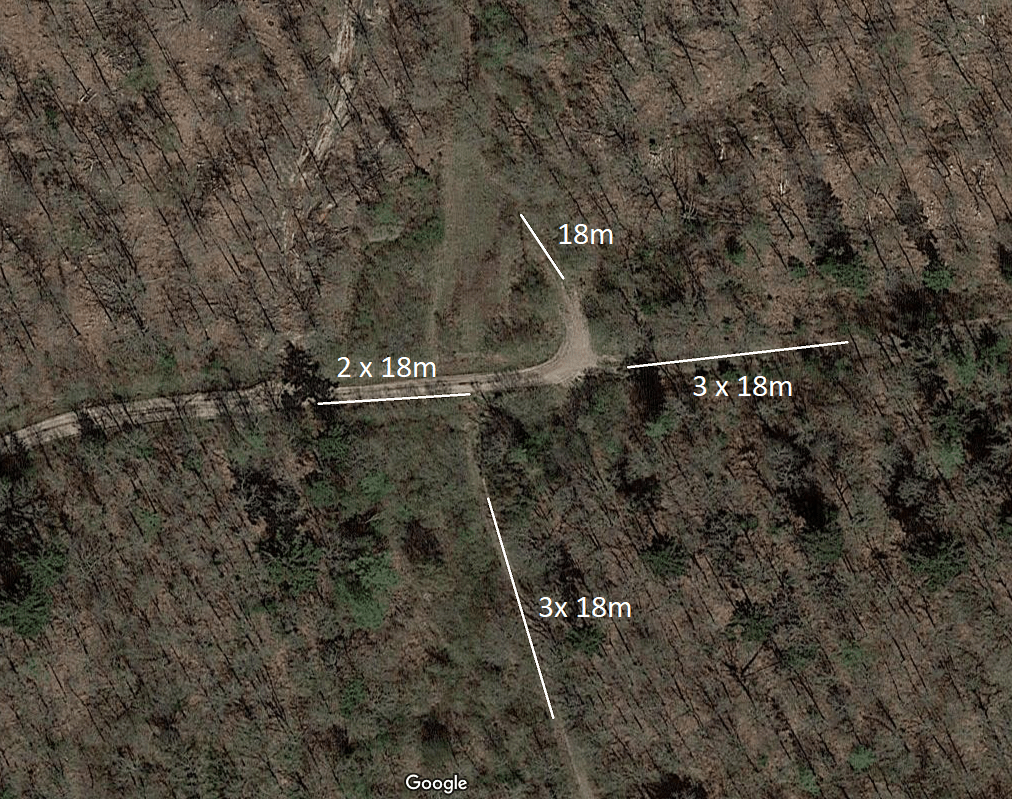
Highlights were definitely a couple of Willow Warblers and a couple of Treecreepers. We also caught a pair of Long-tailed Tits, and I do mean a pair. It was a male and a female taken out close together in the same net, in the 3 x 18m west-east ride. Not only that, after release, at the next round they were caught again in the 3 x 18m north-south ride. The female caught on the way in, the male caught on the opposite side of the net, just above her, when it returned to find its mate (or, at least, that is my interpretation).

The list for the session was: Treecreeper 2; Great Tit (1); Coal Tit 1; Long-tailed Tit 2; Wren (2); Blackcap (1); Chiffchaff 5(2); Willow Warbler 2. Totals: 12 birds ringed from 5 species and 6 birds retrapped from 4 species, making 18 birds processed from 8 species.

At 11:00 we started to take down. As ever, Laura and her family mucked in to help, David’s dad, Trevor arrived and did his bit, and we were all packed away and off site just before midday after a pleasant, if cold, not too busy, but nicely varied session.

Another Notable Day @ Lower Moor Farm: Saturday, 8th April 2023

Back in October 2016 I had one of the absolute highlights of my ringing career when I caught and ringed only the second ever Yellow-browed Warbler processed in Wiltshire, in the wildlife refuge at Lower Moor Farm. Whilst today does not equate with the importance of that catch for Wiltshire records, it is right up there with the best catches for me personally. More on that later.

With the weather forecast for today being for a low breeze and no April showers, I decided upon a visit to Lower Moor Farm. It started out very cold: -1oC. It started to warm up after 9:30 and by the time we started packing up just before midday it was T-shirt weather.

I was joined for the morning by Rosie and Anna. Rosie was working with a volunteer group at Blakehill Farm from 10:00, so would have to leave by 9:10 to get ready, and Anna was with me for the whole morning. We met up at 6:00 and set nets in the wildlife refuge area:

Jonny Cooper caught his first Willow Warbler of the year on the 30th March and his first Reed Warbler of 2023 on the 7th April, both at Wiltshire Wildlife Trust’s Langford Lakes reserve, so I thought I would have a look see what warblers might have arrived at our similar habitat in the north.

I put on lures for Chiffchaff, Willow Warbler, Blackcap and Whitethroat as they are only now arriving on these shores, whereas many of our resident species are already paired up and ready to breed (if they aren’t already: I have seen juvenile Collared Doves and Blackbird already this year). My expectation was not for a large catch: March and early April are always quiet times at my sites, but I was hoping for a few warblers today. We did start catching straight away and it became clear that Chiffchaff would form a significant part of our catch today.

So what unusual bird did I catch? At 8:30, in the 12 metre net at the far end of our net setup, were two Phylloscopus warblers: one was a Chiffchaff and the other dwarfed it. Its head was about 50% larger than that of the Chiffchaff. To my mind, it was a Willow Warbler on steroids. Looking at the bird, I thought it had to be a Wood Warbler. I ringed it and then set about confirming my initial thoughts, using the biometric and plumage data from our two Passerine bibles: Svensson’s Identification Guide to European Passerines and Demongin’s Identification Guide to Birds in the Hand. From those I could compare what I had measured and could see on the bird with the parameters for both Willow Warbler and Wood Warbler.

This is my reasoning, with apologies for the technical jargon. When processed, the overall features of this bird say Wood Warbler: 74mm wing length, 56mm tail length & 10.6g weight. The measured wing length is beyond the extreme given for Willow Warbler, but the tail length and weight were within the given ranges for both species. According to both Demongin & Svensson for a Wood Warbler: wing length range = 70 to 81mm. Demongin gives a tail length range of 42 to 56mm and a weight range of 8 to 12g.  However, comparing this bird with what they say for Willow Warbler: wing length: 60 to 71mm; tail length 42 to 56.5mm; weight is 7 to 12g. The wing length was the key diagnostic differentiator. The only thing that bothered me was that the colouration of the wings and back were duller than I expect for that species, not the bright olive green you see in every field guide. The throat isn’t bright yellow but the belly is entirely white, with no yellow streaking.

It was such a big chunky bird for a Phylloscopus. It was certainly greener than the photo shows (strong sunlight this morning), particularly the head colouration.

20230408_091623.jpg
20230408_091823.jpg

Wing point on Wood Warbler is 3, on Willow Warbler 3(4), P2 = 4 or 4/5 for Wood Warbler and P2 = 5/6 or 6 for the Willow Warbler. P2 on this bird = P5.

IMG_4145.jpg
IMG_4150.jpg
IMG_4154.jpg

Although I have seen a reasonable number, both on breeding grounds in the Forest of Dean and on passage in a number of places, I have never held or seen one in the hand. That is not too surprising: the last Wood Warbler ringed in Wiltshire was back in 2016. So, before committing myself to a firm diagnosis of Wood Warbler and confirming the entry in the BTO database, I passed the details of the bird to my former trainer, Dr Ian Grier, and a former, long-serving, bird recorder for Wiltshire, Rob Turner, for their opinions. They also have over 80 years ringing experience between them and their depth of knowledge is exceptional. Ian confirmed by return that he would have no qualms about confirming it as a Wood Warbler, saying “The wing formula would have clinched it, with a noticeable long P2. The undertail coverts are white. The primary projection looks at least equal to tertial length. Aberrant brown and white colouration is well documented”.

If anybody has a different view on the identification of this bird, please don’t hesitate to contact me via the feedback system with your reasons.

The list for the session was: Blue Tit 1; Great Tit 1(3); Long-tailed Tit (2); Wren 1(1); Dunnock (3); Robin (1); Cetti’s Warbler (1); Blackcap 2; Wood Warbler 1; Chiffchaff 7(1); Goldcrest 1. Totals: 14 birds ringed from 7 species and 12 birds retrapped from 7 species, making 26 birds processed from 11 species.

Amongst the Chiffchaffs caught this morning was this punky little beast:

He has clearly been eating from a very sticky source to give him his pollen horn.

The only downside to this morning’s session was a female Bullfinch that we couldn’t ring. It was developing the warty excrescences on its legs caused by Fringilla papillomavirus.

It was a very pleasant morning, with lots of positive interaction with the general public, including a surprise reacquainting with Rob Werran and his partner. Rob’s a really nice bloke and came along for a few ringing sessions, but his work schedule just didn’t allow for him to keep at it.

As mentioned, we closed the nets by midday, took down and were away soon after 12:30.

Red Lodge: Wednesday, 5th April 2023

This was my first ringing session since the 19th March as a combination of bad weather and a holiday to Scotland interfered / intervened. Unfortunately, this session was truncated by the weather. Again, at 10:00 last night the forecast was for it to be dry until at least midday, by 9:30 it was beginning to drizzle so we packed up and left site by 10:00. That is not to say that it wasn’t an interesting session, because it was.

Miranda and I met at 6:00 and had the nets open just before 7:00. Having packed away the feeding station before leaving for Scotland, we moved to the summer / autumn ringing area:

The following nets were set:

One Robin was so impatient to be caught that it flew into the net set along the main path before we had the nets open. Fortunately, it did not become entangled.

As usual at this time of year, between the departure of the winter visitors and the arrival of the summer visitors, it was a quiet morning. With the rain forcing an early termination of the session we ended up with just 12 birds: 8 ringed and 4 retraps.

First of the retraps was a female Chiffchaff, ringed as an adult in breeding condition in Red Lodge in June 2021, retrapped this time last year and now again this year. Our penultimate round produced a male Blackcap, ringed as an adult male in Red Lodge last April. Two nice examples of site fidelity in migrant warblers.

The list for the day was: Treecreeper 1; Blue Tit 2(1); Wren (1); Robin 2; Song Thrush 2; Blackcap (1); Chiffchaff 1(1). Totals: 8 birds ringed from 5 species and 4 birds retrapped from 4 species, making 12 birds processed from 7 species.

All birds processed, bar the retrapped Chiffchaff, were in breeding condition.

Footnote: yesterday I was contacted by Oak & Furrows RSPCA Rehabilitation Centre and asked to go and ring a Buzzard and a Barn Owl. The Barn Owl had been brought in underweight and unable to fly, the Buzzard had been brought in having been clipped by a car. Thanks to the great care and attention given to both birds, they are scheduled for release. Yesterday they were being moved out to the flight pens for a week, prior to their ultimate release.

The work they do is first rate. Since I started ringing their birds prior to release, they have successfully rehabilitated five Buzzards, three Barn Owls, one Tawny Owl and a Sparrowhawk.

West Wilts Ringing Group results: March 2023

An interesting month in many ways, and disappointing in others.  When over 80% of the catch is down to a single individual, Jonny Cooper, it is a little concerning.  My team managed just four sessions with me, plus two by Ellie working solo (even if we could wave to each other across the expanse of Mallard Lake on the 19th of the month) and one ad hoc garden catch from Andy.  To be fair, the weather was really difficult, and I was away enjoying the rain in Scotland for the last 10 days of the month.  That said, although this was only third in our list of March catch sizes, it was actually our best March catch per session average, particularly in numbers ringed.

There was a significant reduction in the number of species encountered, down from 34 to 26.  Missing this year were Brambling, Cetti’s Warbler; Collared Dove; Dipper; Green Woodpecker, Grey Wagtail; Kingfisher; Meadow Pipit; Redwing; Siskin; Woodpigeon and Yellowhammer.  Added this year were Bullfinch; Linnet; Stock Dove and Willow Warbler.  The Willow Warbler is particularly notable: it is our earliest ever capture of the species and was caught at Langford Lakes on the 30th. 

In addition to these birds, our leg-tagged Curlew, FJ18913 has returned from its winter quarters at Porthcarro in Cornwall and was seen again at the Cotswold Water Park on the 7th and on the 20th in the fields adjacent to Red Lodge.  Also, one of the colour-ringed Dipper project birds was reported from the Bybrook near Selwyn Hall, Box on the 9th.

I ran another sold out ringing demonstration for the Swindon Wildlife Group on the 11th.  We had to move it from Ravensroost Wood, as the contractors were still working there finishing the 25 year coppice and some Ash dieback removal.  Apparently, the reserves management team and the events team don’t communicate so, although the ringing demonstration was booked at the end of October last, on the website and published in the “What’s On” leaflet since last November, reserves management were unaware of the arrangement.  With the mooted changes to the way the reserves are managed, removing all ground staff, replacing them with contractors (and what a great job they have done with the Firs (still inaccessible) and Ravensroost Wood this winter!), and purely relying on volunteers for other work and activities, it will be interesting to see what happens with the Wildlife Trust reserves in the future.

As mentioned, I had a wet week+ in Scotland, on the shores of Loch Long. We managed to get some decent birding in whilst there, including one of my favourite birds:

Three of us are heading to Portland Bill for the beginning of May and I am hoping that Anna and Rosie will get the opportunity to ring a Rock Pipit, Anthus petrosus, whilst we are there.

Lower Moor & Clattinger Farms: Sunday, 19th March 2023

I think that this is a first: whilst I was ringing in the wildlife refuge at Lower Moor Farm, Ellie was ringing over the other side of Mallard Lake:

Whilst Ellie was working solo, I was joined for the morning by two of the attendees from last week’s ringing demonstration: Teresa and Andy. Teresa is learning both photography and wildlife and, as Andy volunteered to help me set up, and take down at the end, who was I to refuse. In addition, the rest of my team (except Ellie) were spending Mother’s Day with their respective mothers, so I was working solo and I wanted to set a decent number of nets. This is the quiet time: in this area we have lost most of the winter visitors and just a few of the summer visitors have begun to arrive, so I need to set more nets to get a reasonable catch, especially as I never have set up a regular feeding station at Lower Moor Farm to attract birds in. Once I have set one in there, in advance of a ringing demonstration, and once to ensure we had some birds to show for my (second) appearance on Countryfile!

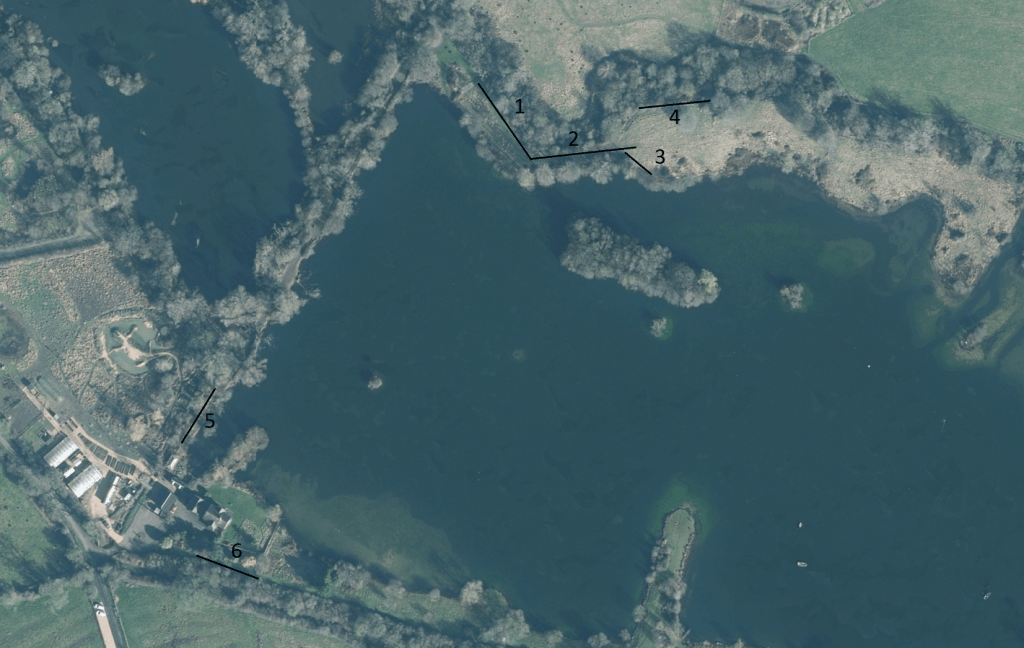
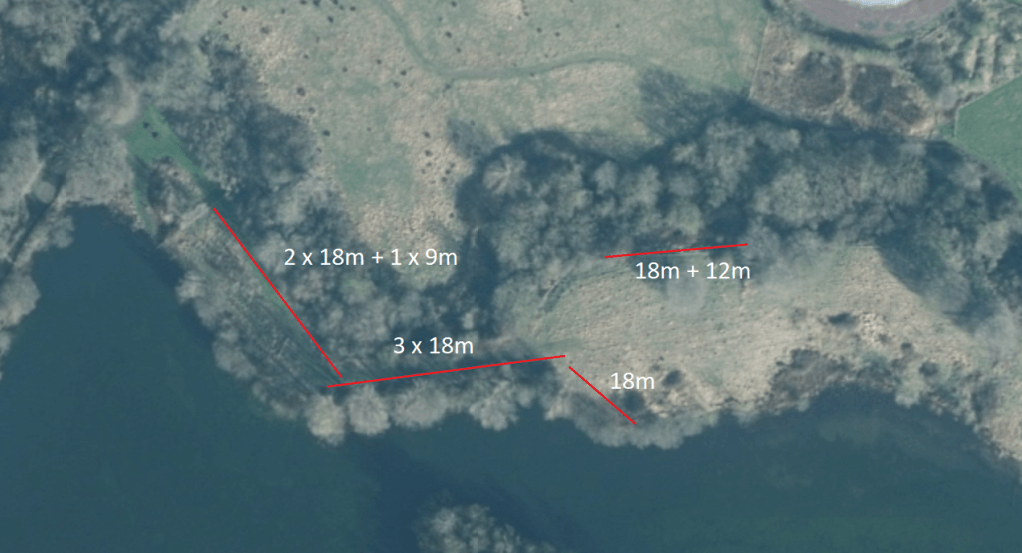
We met at 6:30 and had the nets open by just before 8:00. This was my net setup for today. I decided to keep it all within the Wildlife Refuge, to make it easier for me to manage, and keeping the nets out of sight of the general public, assuming, correctly, that it would be busy with families and dog walkers this morning:

These nets all run between Mallard Lake and Flagham Brook. The seeming thick run of trees actually line either side of the brook, which also happens to be the Wiltshire / Gloucestershire border.

Ellie’s nets comprised 2 x 18m along the lane / tree line and 1 x 12m along the lake side.

The birds started to arrive quite quickly after the nets were open and at 8:15 I was extracting a pair of Bullfinch, two Chiffchaff and one each of Long-tailed Tit, Treecreeper and Wren. I say a pair of Bullfinch: a male and a female within a metre of each other in the same net. Somewhat surprisingly, the 18m x 12m net set caught all bar the Wren on that first round. In fact, it actually caught 50% of today’s catch. So often I set these nets and catch one bird if I am lucky, so this was a welcome change.

The second round delivered another three birds, and then that was it: I did not catch another bird in four rounds between 9:15 and 10:45. I told Teresa and Andy that if the next round was also empty I would close up and we could go home. Naturally, that round produced a couple of birds, as did the following round.

Although it did go quiet for 90 minutes it was never uninteresting. The Grey Herons were busy squabbling over the nest sites in the trees between Swallow Pool and Cottage Lake. One of my usual rides used to be called, possibly still is, the Heronry Ride. Unfortunately, the heronry that refers to is no longer active but there still are a couple of nest sites in the aforementioned trees.

Somewhat surprisingly, when we did catch birds we also attracted a lot of passers-by who wanted to see what was going on. I am pleased to say that we had some very happy children and adults get to see some small birds close up. They were also pretty interested in the whole ringing process: I think I did more talking than I did at last week’s ringing demonstration. In fact, apart from one ignorant dog owner, who had three spaniels off the lead and running around, all the many dog walkers were being well-behaved (at least around me they were) this morning and were every bit as interested in what we were doing as everyone else.

My list for the day was: Treecreeper (1); Blue Tit 4(1); Great Tit 1; Long-tailed Tit 1(1); Wren 2; Dunnock 1; Chiffchaff 5; Bullfinch 2. Totals: 16 birds ringed from 7 species and 3 birds retrapped from 3 species, making 19 birds processed from 8 species.

Ellie’s list was a bit more titmouse heavy, probably because she was ringing rather closer to human habitation. Her list was: Blue Tit 6(3); Great Tit 6(2); Dunnock (1); Robin (2); Chiffchaff 1; Goldcrest (1). Totals: 13 birds ringed from 3 species and 9 birds retrapped from 5 species, making 22 birds processed from 6 species.

My highlight had to be my first Chiffchaffs of the year. I know that there is an overwintering population in the Cotswold Water Park but we don’t often catch them in March at this site. Also, the Bullfinch pair were in lovely condition. When I processed them, I kept back the first bird until the second was done, so they could be released together. Pleasingly, they actually flew off together, into the same tree, preened themselves and then flew off together again.

Teresa’s highlight was the Treecreeper: her absolute favourite bird and she had never had the chance to see one as closely as she did today.

Ellie’s highlights included her first Chiffchaff of the year, plus a Robin and a Great Tit ringed in her first couple of solo sessions at Lower Moor Farm at the end of 2019 / start of 2020.

We shut the nets at 11:45 and, with Andy’s help, has everything packed away 30 minutes later. It still took me another 15 minutes to get away from site as I became the de facto tour guide for a couple of families finding their way around the site for the first time. All in all, a pleasant and relaxed session with some good birds at a time of year that is usually quiet.

It’s oh so quiet! Wednesday, 15th March 2023

I needed a change from ringing inside a woodland, so this morning, taking advantage of a forecast for low windspeeds, I headed to Blakehill Farm. Rosie and Miranda joined me for the morning. Perhaps I should have checked my records: it is always quiet there in March!

To be honest, I had thought of going over early and setting nets for Snipe on the ponds but, as looking out the window the car was rimed with ice and I thought better of it.

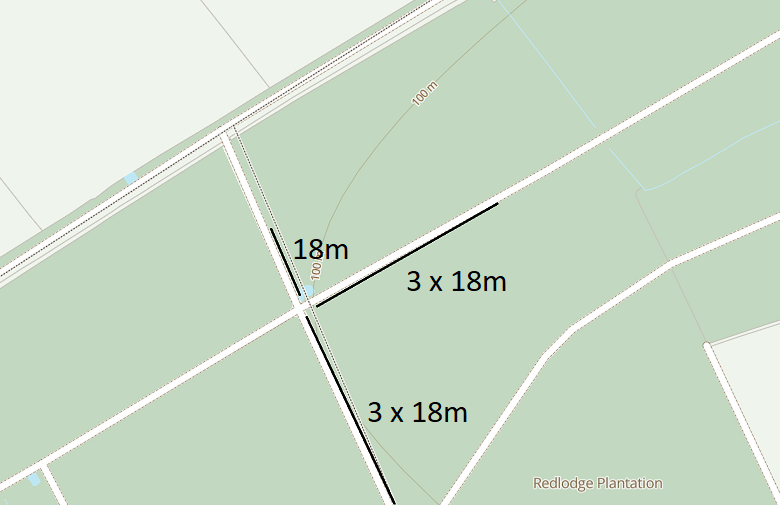
We set the following nets:

We have had some large catches at this site: just last October we had our best ever catch, with 84 individuals from 14 species, only 3 individuals from 2 species that could be considered winter visitors: the rest were residents. That said, the previous fives sessions held here in March of various years has averaged fewer than 15 birds per session. Unfortunately this morning’s session fitted into the lower end of that pattern. Rosie got to process three birds before heading of to work at 8:40.

The 2 x 18m ride delivered 2 birds, the 2 x 18m + 9m didn’t catch a thing, except the breeze that got up at take down, and the T-bone delivered 4 birds, as did the 6m net.

The list for the day was: Blue Tit (1); Dunnock (3); Robin 1; Blackbird 1; Goldfinch 2; Bullfinch 2. Totals: 6 birds ringed from 4 species and 4 birds retrapped from 2 species, making 10 birds processed from 6 species.

I am never going to complain at catching a pair of Bullfinch, and I mean a pair, not two. They were a male and female in the 6m net, less than 1m apart. The female had just started developing a brood patch and the male’s cloacal protuberance was already pronounced. According to BTO nest records, the earliest egg laying date is 29th April, so this really is an early development. Both were birds that fledged last year. Once processed and released they did actually fly off together.

The other two birds in the 6m net were the two Goldfinch. So this small net was the best of the morning.

We caught these birds between 8:00 and 9:45 and then nothing. Not only that, but the breeze started to get up and, coming from the east, it was very cold. At 10:30 Miranda and I decided that things were not going to improve and so we shut the nets and took down. We were off site just after 11:30.

A Change, As Good As A Rest? Sunday, 12th March 2023

This is not a ringing blog, just some personal musings about different areas of my birding life, leading to an event yesterday, so be warned. One of the things I was told when I started ringing was that, whilst it wouldn’t necessarily become an obsession, normal, every day birding would take a back seat. I didn’t believe it, it was such a big part of my leisure time.

Having moved to my current rural location in 1997, alongside having some great new patches to go birding, I started doing the RSPB Big Garden Birdwatch. I realised the limitations of that: a great snapshot of the birds coming in for the last weekend of January but saying nothing about the rest of the year. For a more rounded approach, and to give some additional purpose to looking at the birds in my garden, other than pure enjoyment, I joined the BTO’s Garden Birdwatch (GBW) scheme in 2003: recording the weekly maxima of the bird species using my garden, as well as a host of other aspects of garden wildlife. Between 2014 and 2020 I was an ambassador for the scheme, doing regular talks to Women’s Institutes, gardening clubs, the U3A and, indeed, anybody who wanted me to, drumming up members and donations for the scheme. When I stepped down in 2020, I was surprised and delighted to be given a life membership by this part of the BTO, as a thank you for the work I had done over the years.

What got me into ringing was taking part in the BTO Bird Atlas project between 2007 and 2011. I wanted to expand my activities into a more focused approach and I covered 15 of their survey squares, covering my village and what is now my ringing territories in the Braydon Forest, together with the four squares that covered the Coate Water complex on the outskirts of Swindon. That was a total of 60 surveys of those squares at different times of the year. After completing that, I wanted to do something that could provide me with a more scientific approach to my birding, having done nothing with my degree in Zoology for the previous 27 years.

I started ringing in 2009, and it did take up most of my leisure time: usually with two sessions on each day of the weekend. Leisure birding became increasingly restricted to what I could see out of my kitchen window, outside of ringing sessions. Ever since, patch birding has taken a back seat to my ringing activities, apart from time away on holiday, when I always manage to get some birding in. As readers of the blog know, I do a lot of my ringing on Wiltshire Wildlife Trust sites so when a member of the Trust team was looking for someone to give a talk to their River Guardian volunteers on the birds they might encounter whilst carrying out their activities, and then to lead them on a birding session, I volunteered.

It was fun putting a talk together, choosing appropriate photos for the slideshow (thanks to my friend, Barry “Beaker Baz” Woodhouse, for allowing me to use his fabulous Grey Wagtail photos – check out his work, it is truly excellent) and selecting a few bird calls to test their knowledge. The talk took place at the Kingfisher Café meeting room at the Wildlife Trust’s Langford Lakes reserve. It meant that we would have a good opportunity to see some of the birds discussed. We had a rather inauspicious start: as the attendees were assembling, a Song Thrush decided to fly into the window next to the door at such a speed that there was blood on the window and a dead bird on the floor. This was despite the fact that all of the windows are adorned with bird of prey silhouettes to prevent such an accident. After a quick clean up, the attendees got their teas, coffees and biscuits and we could make a start.

The audience had quite a wide range of birding experience, from completely unskilled to a couple of experienced birders. I am pleased to say that the talk went well across the board. After an hour of the presentation and discussions we went for a walk.

I loved it: on the lake immediately outside of the visitor centre / café complex was a large flock of Tufted Duck, together with the obligatory Mallard and multiple Black-headed Gull. The appearance of two drake and one duck Gadwall excited the entire group. We saw a lot of birds from a decent number of species. The species that elicited the most excitement were, firstly, Lapwing: there was a small flock flying around the site. Several of the group had not seen them before, and certainly not the raggedy winged flappy flight they do. Secondly was the burst of sound that heralded the appearance, brief and fleeting as usual, of a Cetti’s Warbler. There were two of them singing in adjacent trees / bushes. Finally, I was excited (and I know, it was probably an escape, so I shouldn’t be) to see a drake Ruddy Shelduck. It gave excellent views and was a first for everyone, except me.

Along the walk we saw the following: Cormorant: the males in full breeding condition and looking magnificent, Mute Swan, Canada Goose, Tufted Duck, Gadwall, Mallard, Shoveler, Black-headed Gull, Red Kite, Buzzard, Rook, Jackdaw, Carrion Crow, Pied Wagtail, Robin, Cetti’s Warbler. We finished at about 12:30 after a great fun morning, thoroughly enjoyed by everyone who came along (at least, that’s what they all told me).

Ringing Demonstration: Saturday, 11th March 2023

At the beginning of the week it really didn’t look as if this Saturday’s ringing demonstration would go ahead: the weather forecast was diabolical. However, as the week unfolded and forecast after forecast proved to be inaccurate, we just had to hope. Wednesday’s session fell foul of the weather, so I was relieved that we made it on Saturday.

There had already been a major kerfuffle: this ringing demonstration was scheduled to take place in Ravensroost Wood. The Swindon Wildlife Group (SWG) and I completed the paperwork by the end of October last, and it was advertised on both the Wildlife Trust’s “What’s On” leaflet and the “What’s On” page on their website from the beginning of November last. Unfortunately, it seems that the reserves management and the events people at the Trust didn’t talk to each other, and reserves management don’t look at their own website, because they arranged for a contractor to come on site and carry out some Ash die-back mitigation and complete the 25 year coppice cycle in Ravensroost Wood a month before our session was scheduled. It was all supposed to be completed within a two week window, but it wasn’t. Mind the work in the Firs, that began last October, I was told was supposed to last 6 weeks: it has been five months so far. With the carpark at Ravensroost Wood still full of timber at the end of last week and, despite the contractors assurance it would be removed last Monday, and that they would be offsite by the time of the demonstration, we took the decision that, to prevent last minute confusion and give plenty of notice to the attendees, we would move the demonstration to Somerford Common. I was also concerned about the impact of the works on the distribution of the birds around the site and, with no opportunity to test this out prior to the event, and the Trust refusing to allow me to set up a feeding station for the week before, to bring some certainty to proceedings, I was very keen on moving to a potentially more reliable site.

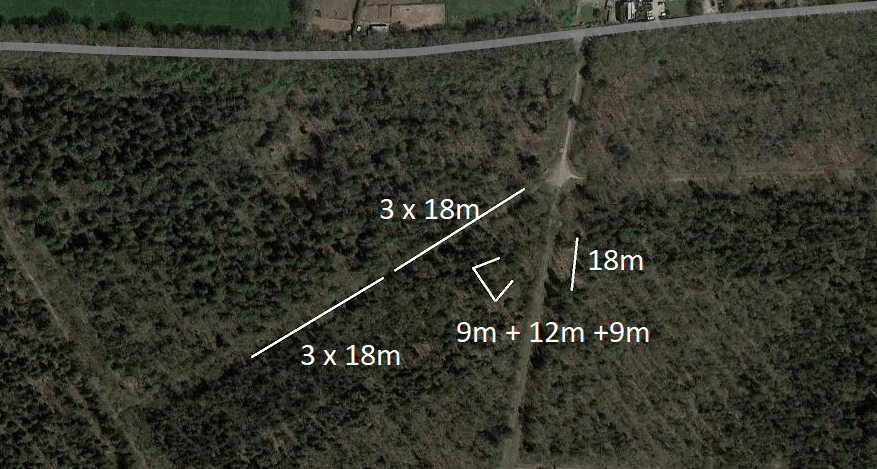
As ever, it was a sell out: 20 adults and half-a-dozen children, and several others on a waiting list missing out. With people arriving for 9:00, I gave the team: Miranda, David and Rosie, a lie-in and we got together at 7:00. We set nets at the feeders, along the track and in a clearing down the main path:

Despite putting lures on all of the net sets, the only one that actually caught any birds was the 9m – 12m – 9m dogleg around the feeding station, so we could have saved ourselves a lot of work had we known.

We had all nets open by 8:30 and birds started arriving pretty much straight away. With all attendees on site by 9:00 it was good to have something to show them straight away. The catch was slow and steady and never too busy, a round of six birds and two four bird rounds were the biggest we had. Mind, the last ringing demonstration, at Blakehill Farm, only delivered seven birds from seven species (mind, they were all cracking birds, especially the second Tree Pipit for the site, and the attendees and organisers were delighted with what they saw) so the attendees were very happy with the 27 we managed to catch this Saturday morning.

The list for the morning was: Nuthatch 1; Blue Tit 7(1); Great Tit 3(2); Coal Tit 3(1); Marsh Tit (2); Long-tailed Tit 1; Dunnock 2; Robin 3(1). Totals: 20 birds ringed from 7 species and 7 birds retrapped from 5 species, making 27 birds processed from 8 species.

It was a surprise not to catch any Goldcrest, they usually come to the lure readily. Let’s hope that the freezing weather and snow on Wednesday and Thursday hasn’t taken a toll.

Throughout the morning we had a Red Kite floating around and about our ringing station. At one point, hawk-eyed Robin Griffiths drew our attention to a Sparrowhawk display flying. It was so high up it was barely visible without your binoculars. I love their display flight: smooth glide followed by frantic wing-flapping, continued time and again. Given that it is the woodland hunter supreme, to see them displaying so high in the sky is just amazing.

We also had a Raven flying around for quite a long period: calling regularly and showing off its distinctive kite-shaped tail.

The weather took a turn for the colder at 10:30 and, with children getting chilled, the event began to break up. We did our last round just before 11:00 and, once we had processed the birds, the organisers from SWG took the remaining attendees on a walk around the site, whilst the team took down the nets and packed away. We were all off site just before 12:30.

Webb’s Wood: Saturday, 4th March 2023

Third time lucky: originally we scheduled to do this on Wednesday, but it rained, then we rescheduled for Friday, but a short visit to A&E at 3:00 in the morning put paid to that, so we finally managed to get there this morning. I was joined by David and later in the morning the two families joined us again for the session.

We set a couple of extra nets up today, in the hope of enhancing the catch:

It was a decent catch, Blue and Great Tit heavy, as expected. The birds arrived regularly, never too many to make it too stressful for either the birds or the pair of us doing the extracting. Naturally, when I declared at 11:15 that we would shut the nets as we emptied them during the next round it triggered a larger catch in that round than we had in the rest of the morning. Unfortunately, three of those were same day retraps and we just had to let them go.

One of the benefits of not having a busy catch was that I could spend some time with young Adam, who was able to expand his ringing experience, adding another three to his list.

There were a number of highlights. With the exception of the landmark year of 2017, when we caught and ringed 10 Marsh Tits in Webb’s, we rarely ring more than two per annum in this wood, with four in 2022 being the only other year that has happened. This morning we caught our first for this year: equal earliest, with 2013, that we have ringed one in this wood.

Other highlights were finch based (at last). Chaffinch is another species that we rarely catch in this wood: just 33 ringed in the 10 years I have worked in Webb’s. This morning we caught another four. Unfortunately, one of them was showing possible signs of Fringilla papillomavirus: a pale dusting over the front of the leg. I couldn’t be sure but we erred on the side of caution. I know some ringers have stopped ringing Chaffinch on a “just in case” basis but, whilst I understand that position, I see it slightly differently. If it is FPV or a mite infection the result for the bird will be the same: eventually it will lose the affected limb or limbs. Putting a ring on it will not change that situation, but might give an opportunity to monitor the progress of the disease and provide some information on how it develops.

The last bird out of the net was a Lesser Redpoll. After the astonishing catch of the species in Webb’s in December 2021 (26 individuals), the numbers have slumped back to pre-2021 levels, so catching one in March for only the third time since records began is pleasing.

The catch for the day was: Blue Tit 16(3); Great Tit 7(6); Coal Tit 1(4); Marsh Tit 1(1); Dunnock 1; Robin (2); Chaffinch 3; Lesser Redpoll 1. Totals: 30 birds ringed from 5 species and 16 birds retrapped from 5 species, making 46 birds processed from 8 species.

With the last birds processed just before midday, we packed away and left site by 12:30 (the benefits of having David’s dad Trevor, Mark and his son Adam all mucking in to help get things packed away).