Ringing Recoveries

We have added three pages to our site: Warbler Ringing Recoveries; Other Migrant Recoveries and Resident Recoveries.

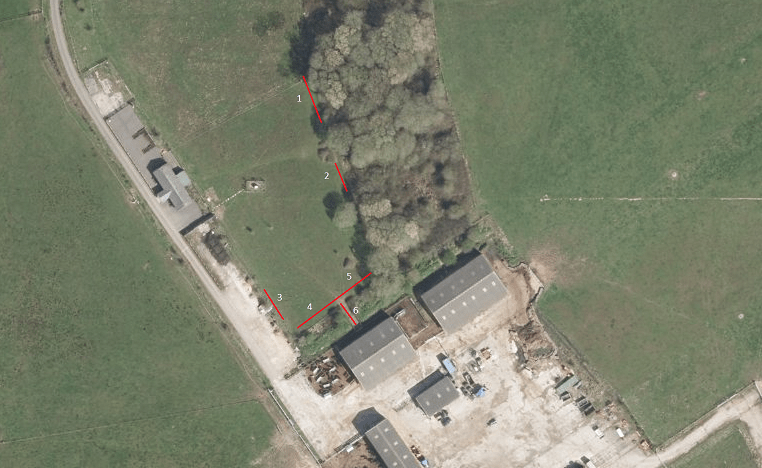
Each page contains a species identifier, a map of the movements of birds recovered and a table of the recovery information.  Recoveries are numbered and correspond to the appropriate entry in the table.  Birds ringed by the group and recovered elsewhere are shown in blue, birds recovered by the group are coloured red.

Movements are, generally, of birds travelling over 50km from place of ringing to place of recovery.  Some exceptions are made for interesting recoveries, regardless of distance.

All of the hard work has been done by Jonny Cooper.

Garden CES Trial: Sunday, 3rd May 2020

This has been mooted for a long time and is now, as a result of lockdown, being trialled within the UK: the BTO are asking us to run a constant effort site (CES) in our gardens. As you will have seen from my previous garden posts, I have a medium sized garden that attracts a reasonable number of birds and so I have volunteered to trial the scheme, whilst missing my Lower Moor Farm CES.

One of the benefits of a garden session is that you can safely set and furl your nets the day before, meaning that a 4:30 start could be avoided.  Sunday morning I was up at 5:15 and had the nets open by 5:30.  Unfortunately, the first bird was not caught until 6:30.  However, I was regaled by the dawn chorus, on International Dawn Chorus Day, whilst waiting.  A Magpie did get in the net at 6:15, but managed to extricate itself before I could get to it.

It wasn’t a huge catch but worthwhile nonetheless.  To date, in 2020, I have caught 21 Greenfinches in my garden, with three more caught on Sunday. If I compare that with last year, we caught none in the same period at any of our sites.  In 2018 we caught just the one in our northern sites, again in my garden, so our catch to date looks remarkable.  Over the last 6 years I have caught 93 Greenfinches in the garden: the vast majority, though, have been juveniles caught in the last 6 months of the year.

The actual highlight of the session was catching my first garden Stock Dove. They have been joining the Woodpigeons in the garden, to hoover up the spill from the feeders. My only concern was that they have also been joined by the odd Feral Pigeon, of the Rock Dove type and colouration, and they can look remarkably similar, apart from the wing bars.  I didn’t rush the identification and it was definitely a Stock Dove.

I also caught my fifth Woodpigeon of the year.  The list for the day was: Woodpigeon 1; Stock Dove 1; Blue Tit (1); Coal Tit (2); Blackbird 1(1): Greenfinch 3; Goldfinch 4(1).  Totals: 10 birds ringed from 5 species and 5 birds retrapped from 4 species, making 15 birds processed from 7 species.

April 2020 Results

As this was the first full month of lockdown, with everyone confined to ringing in their gardens and ringing in external sites banned, I was interested to see how we would get on.  The results were surprising: we actually ringed more birds this April than we did last, but recaptured fewer.  The big difference, unsurprisingly, was that we didn’t catch the number of migrant warblers we would normally do, being confined to our gardens. There were still some nice results though.  I haven’t done individual session statistics because, I don’t know how everybody else does it, but my back garden ringing is very ad hoc, and is rarely what I would call a formal session. For one thing, the nets tend not to be opened until after breakfast! Clearly a habit that will have to be broken post-lockdown.

apr20

It seems that Greenfinches are making something of a comeback in this area.  In my area it is pretty clear that they are very much attracted to gardens these days. However, in the Chippenham area they seem to be attracted out to the farmlands around the towns.

Actually. let me qualify that.  My garden birds: all 12 Greenfinches caught this month, were caught in my little back garden in Purton.  There are more, as I had 6 on the feeders this morning at least 3 of which were unringed. I suspect that, if I was able to get out into the surrounding farm and woodland, we would find that is where they are primarily nesting and foraging.

Goldfinch numbers were excellent (26 of the 29 in my garden – am I coming across as a bit too smug yet?) and I do know that there is a plentiful throughput of unringed birds.  I was pleased to catch my first Great Spotted Woodpecker ever in the garden this month.  They have been fairly regular visitors to the feeders but always managed to avoid the nets.  I have also managed to ring 4 Woodpigeons this month. All bar one was mist-netted in a 6m Merlin net. They aren’t the best build quality but they certainly hold larger birds well and both nets survived the encounters without damage: so pretty good for the price.  The other (finally) was caught in one of the 4 Potter traps that have been regularly ignored by them to date

Blue Tits, Great Tits, Blackbirds, Robins and House Sparrows were well represented, as one would expect in a garden-based scenario.

Still in the garden: 3rd to 15th April 2020

The last couple of weeks have been quite testing, with catches being very unpredictable.  On 3rd April I opened the nets for a couple of hours and caught the rather woeful total of 3 birds: I ringed a House Sparrow and recaptured a Blackbird and a Dunnock.

My next session was on the 8th April and was a much more rewarding effort.  The highlight of the session was my first Blackcap of the summer, but there was a reasonable amount of other activity, with 11 Goldfinch and 3 Greenfinch, a Starling and a Blackbird caught and ringed.

A brief session on the 14th April delivered 4 more Goldfinch, another Greenfinch and a Blue Tit ringed plus recaptures of a Blackbird and a Long-tailed Tit.  Prior to opening my nets that morning, whilst stood looking out of the kitchen window drinking a cup of tea,  I couldn’t help noticing that there was quite a lot of activity on the feeders which had dissipated by the time I opened my nets half-an-hour later, so I resolved to get up early and open the nets at daybreak on the Wednesday.

At 5:55 I opened the nets and watched and waited, and waited. At 6:40 a lone Starling ended up in the net.  At 7:10 it was a new Blackbird and at 7:50 a retrapped Blackbird.  The rest of the was similar, with the odd bird flying in and getting ringed. Between 8:00 and 14:30 I caught and ringed 3 Goldfinch and recaptured a Robin, and then, at 14:35 this turned up in one of my nets:

WWODP

The irony of this is that I have set in my garden two walk in traps, baited with sunflower hearts and seeds, specifically for catching Woodpigeon.  They have been opened every other day and have caught not a thing, despite the pigeons walking up to them and around them but never going in.

That was it until I went to shut the nets at 18:00.  Picking up food from around the traps was this:

COLDO

I have not caught many: this is only the third I have ringed and the first one I have caught since one almost exactly 4 years ago.

Marsh Tits in the Braydon Forest

Although the Marsh Tit, Poecile palustris, is a common resident bird in woodlands and forests around Europe, due to the parlous state of our woodlands and lack of cohesive forest, it is a red-listed bird in the UK.  In the north of Wiltshire is the once royal hunting area of the Braydon Forest.  Nowadays it comprises a number of woodlands of various sizes interspersed mainly by farms, with grassland fields grazed by cattle, sheep and the odd horse.  There are also excellent hedgerows that are, largely, well-maintained and extensive, helping to knit the woodlands together.

Braydon Forest

Since August 2012,  working solo at first, and then, as I gained experience and permission from the BTO to work with and then train other ringers, I have been running a colour ringing project on the species.  Colour ringing enables casual birders to add their observations to our totals.  In return, I can tell them exactly when and where the bird was ringed and if and when it has been recaptured.  This photo, taken by Dave Gilbert, shows Marsh Tit number ACJ5800, ringed as a juvenile in Ravensroost Wood  on 12th November 2019 and photographed by Dave on the 23rd March this year.

  Marti

The project is focused on the Forestry Commission properties of Red Lodge, Webb’s Wood and Somerford Common and the Wiltshire Wildlife reserves at Ravensroost Wood and the Firs.  Our results since the start of the project are shown below.  The project year runs from 1st April to 31st March for all years bar the first, which ran from September to March inclusive.

Table 1: New birds caught and ringed by year by site:T1

Table 2: Other individuals retrapped by year by site:T4

Table 3: Annual totals of individuals caught by site:t2

What these tables show is that Ravensroost Wood is a stronghold for the species, closely followed by Red Lodge and Somerford Common.  Webb’s Wood, although the second largest by area, has been somewhat less productive than one would have expected. However, I believe that is because we set our nets in the same places each session and it reflects the number of territories covered, not the total number in the wood.  The Firs was the first place that I caught a Marsh Tit for the project, in September 2012, and then we did not catch another there until 11th November 2015, over 3 years later.  In the interim there was significant work thinning the wood and opening up a number of butterfly glades, plus the installation of two wildlife ponds on the site.

The longest lived Marsh Tits that we have found in our study was one ringed as an adult in Webb’s Wood on the 2nd February 2013 and then captured there for the sixth time on the 15th February 2019.  The other was ringed as an adult Ravensroost Wood on the 13th October 2012. It has been recaptured in every subsequent year until 6th January 2018.  Conservatively, they were both at least 7 years old at the last occasion (so far) that they were caught.  The longevity record for the Marsh Tit is 11 years and 3 months from date of ringing, so they could both still be about.

Our plans for this year were to map each territory in the woods, using a sound lure given to me by Richard Broughton, who is the UK’s most active and leading Marsh Tit biologist. That was planned for March and April but the combination of needing to catch up for lost time in January and February, and then the Covid-19 restrictions has put paid to that.  So, deferred for now, but planned for next spring.

As ringers, we are rather used to being challenged over the value of what we do.  Obviously, the Forestry Commission and the Wiltshire Wildlife Trust see the value, as I send them (inundate them) with reports and recommendations based on our ringing results. Last year the Forestry Commission put forward their 10-year plan for the Braydon Forest and, I am pleased to say that, based on the information we have provided over the years, they have made the Marsh Tit their priority bird species within that plan.

Goldcrest: A Small Bird With Big Journeys

My report analyses for the work my team does in the Braydon Forest runs from the 1st April of the current year to 31st March of the following year.  By doing so, we have consistency of reporting and cover not just the seasons but also the key movement times of our birds.  For example, we can effectively compare winter figures in a way that you cannot if you use the calendar year as your guide.  Whilst we are in this state of lockdown I will use some of those analyses as the basis of some blog posts.

As anyone who has been birding for any length of time knows, the Goldcrest is our smallest resident species.  Over the course of the year we will catch birds with weights between 4.5g and 6.0g.  To put this into perspective, a two-pence piece weighs 7.05g.

20130921 Webbs Wood

We had a particularly good year for Goldcrest in the Braydon Forest this year, 2019/20.  Our previous best catch was a total of 95 birds ringed in 2016/17.  Generally we catch and ring between 50 and 70 of them each year.  Recovery rates are quite low compared to other species within the Forest, but we regularly recapture around 15 individuals each year.  This year we caught and ringed 146 birds and recaptured 42.  Naturally, some of those recaptured birds were birds that had been ringed in the period, and some birds were caught more than once. In reality, we processed 157 individual Goldcrest this year: a 50% increase on our previous largest catch.  The vast majority were processed in the last 6 months of the year, and were mainly juvenile birds.

Whilst it is always encouraging to see ringing catches improve over time, what set this year apart for Goldcrest is what was recaptured.  Goldcrest are renowned for flying long distances for such a small bird.  Many of the northern European population either fly across the North Sea or down the west coast of mainland Europe, to cross to the UK much further down to over-winter.  The longest ringing recovery of Goldcrest was back in 2010, when a bird ringed in the Orkney Islands was recovered 29 days later, 830km away in Suffolk.

Having access to all of our ringing group’s records, through the BTO’s DemOn on-line recording and retrieval system, I had a look at the recovery records for Goldcrest, going back 20 years, to see if we had any unusual recoveries before this year.  All previous recoveries were of birds ringed on our allocated ring series.

On the 19th October 2019 we carried out a ringing session in the Firs nature reserve and had a modest catch of 8 Goldcrest ringed and one recovery. However, the recovery did not have one of our rings on it.  When the information came through from the BTO a couple of days later, it showed that this bird was ringed as an adult male on the Calf-of-Man, at the Bird Observatory, on the 7th April 2019.   That in itself is interesting: the Calf of Man is not renowned for its conifer forests and at that time of year that bird would be heading northern latitudes for breeding.  Ending up in the Firs in October is quite something.  It means that the minimum distance it flew to get there was 338km in 169 days. I suspect it had flown a lot further than that, bred and ended up in the Firs on its subsequent autumn migration, for the reasons given previously.

On the 3rd November 2019 we caught and ringed 7 Goldcrest in Ravensroost Woods and recaptured one more. Astonishingly, this bird, a juvenile male, had a very similar ring number to the one caught in the Firs, and had also been ringed on the Calf-of-Man, this time on the 5th September 2019, and had flown 335km to get to our site.  This was its first trip south.

I don’t know what it was about this period last year but to go from never having recaptured a Goldcrest from “out of town” to recapturing two that had clearly migrated along the west coast of the UK was very exciting.

As I was putting the finishing touches to my annual report, I received notification from the BTO that an adult female Goldcrest that we had ringed in the Firs, in that session on the 19th October, had been recovered at the Bardsey Island bird observatory on the 26th March. Clearly there is possibly a western flyway for Goldcrest along the west coast of the UK.  Why we have started to get evidence of that in Wiltshire this year I have no idea, but I am hoping that we can get a lot more evidence to support the hypothesis over the next few years.

Garden Ringing: 23rd & 25th March, 1st April

With the government lockdown coming into effect, the BTO issued instructions that all survey work that could not be done from your garden was to be cancelled. For bird ringing this is hard on our T-permit trainees, but it is impossible to adequately practise social distancing and monitor their activities or check their work.  This has meant that all trainees, except those who have a C-permit or are lucky / unlucky enough to be the children of trainers, will have no chance to develop and practise their skills until this period is over.

I am lucky enough to have a reasonable sized garden, in a rural location, with fields, allotments and trees all around.  My garden is also, no doubt to the chagrin of my neighbours, with their immaculately kept wildlife deserts, left very much to its own devices.  The “grass” is cut no more than once a month and wildflowers encouraged.

I have a feeding station offering sunflower hearts (opium for the bird masses) and fat balls plus a peanut feeder in my apple tree.  The garden isn’t huge but I manage to set three nets: a 9m and 3m dog-legged and a 6m.  Diagram below:

Garden

A bit messy but I’ve never been an artist!  The pond was full of frogs and toads, it now has a few frogs, lots of spawn (the most we have ever had), which is now hatching, and plenty of Smooth Newts, come for the feast.  It must be a hard life being a female toad in the mating season:

Frog Ball

I have made the decision not to overdo the ringing in the garden: to keep it to my usual two sessions per week, when the weather allows.  The key benefits of garden ringing are that it is largely unhurried, especially as my electronic cat scarer, backed up by a well-primed Super Soaker, is more than enough to deter the neighbourhood cats and tea, coffee and biscuits are on tap.

Unfortunately, the masses of birds we had coming to the feeders has dropped off considerably. Presumably they have more pressing matters: nesting, mating, incubating and rearing.  However, I am still catching birds, and it does make a nice change from the hundreds of Blue and Great Tits we have been getting in the woods.

Over these three sessions I have caught the following: Blue Tit 1(1); Coal Tit 2(1); Long-tailed Tit 1; Dunnock 2(1); Robin (1); Blackbird 2(4); Chaffinch 1; Goldfinch 11; Greenfinch 6; Starling 1; House Sparrow 1.  Totals: 28 birds ringed from 10 species and 8 birds retrapped from 5 species, making 36 birds processed from 11 species.

It is a decent variety, even if they are not the biggest of catches.  The difference is, when I am out with the team I do far more supervising than ringing. Any session where I have more than one trainee with me, I do no ringing at all, so it is nice to have it all to myself sometimes.


Sessions Before Lockdown: 7th to 21st March 2020

As of Tuesday, 24th March 2020 the BTO has suspended all surveying activities until the government lift the lockdown status in the country. This means that all permit holders above the basic T-permit for trainees can continue to ring if their garden is suitable for such activities.  There will be no more site visits until we are advised otherwise.

Prior to this necessary precaution, we did get in a few sessions at our sites that I have not yet blogged about.  This is a brief summary of what happened where.

Webb’s Wood, Wednesday, 7th March: I was joined by Alice at Webb’s Wood. It is the one site this winter that I had not set up a feeding station.  A combination of factors but, basically, I didn’t want to buy any new ones this winter, with squirrels destroying some, humans stealing others, sometimes you just think “is it worth it?”.  If you put out expensive squirrel-proof ones some tea-leaf will help themselves to it, cheap ones: squirrels just eat them.  Even bird tables hammered into the ground aren’t immune: I have had them ripped up and thrown into ponds, or removed and used as a bivouac support by an unauthorised “forest school”. All of which is a long-winded way of saying that we did not have the biggest catch of the winter.

The list for the session was: Blue Tit 3; Great Tit 3(2); Wren (1); Robin 2; Goldcrest 1(1). Totals: 9 birds ringed from 4 species and 4 birds retrapped from 3 species, making 13 birds processed from 5 species.

Jonny Cooper and I followed that up with a visit to Red Lodge on Friday, 13th March: good job we aren’t superstitious.  We had a decent session: 30 birds of which 12 were Blue Tits! It is not really surprising, as they were caught at the feeding stations set up there, and Blue Tits love a free feed.

The list for the session was: Nuthatch 1; Blue Tit 11(1); Great Tit 5(3); Coal Tit 1; Long-tailed Tit 2(3); Robin (1); Wren (2).  Totals: 20 birds ringed from 5 species and 10 bird retrapped from 5 species, making 30 birds processed from 7 species.

Alice joined me again for a trip to Somerford Common on Tuesday, 17th March. Although I did have feeders in place, it was a small catch: mainly because the wind got up and we had to close the nets early, after just a couple of hours. In some ways it was a remarkable catch: of 14 birds only 2 were unringed.  The list for the day was: Great Spotted Woodpecker (1); Nuthatch (2); Great Tit 1(6); Coal Tit (1); Marsh Tit (1); Goldcrest 1; Siskin (1).  Totals 2 birds ringed from 2 species and 12 birds retrapped from 6 species, making 14 bird processed from 7 species.

What was notable about this session: not a single Blue Tit to be had. I cannot remember ever doing a ringing session at a winter feeding station that did not have any Blue Tits in the catch.

More excitingly, the Siskin that we caught was the female we ringed at the last session.  Although I have caught Siskin right up to the end of March in the Braydon Forest, this is the first female that I have caught here that was coming in to breeding condition.  They sued to breed at Somerford a long time ago but since I started my ringing activities there and in Webb’s back in 2012, this is the first with any sign of potentially breeding here.  I have had several of the Siskin I ring recaptured elsewhere: mainly up in Scotland, where they breed regularly. If we manage to catch a newly fledged juvenile in July or early August I will take that as a positive sign of local breeding, as we found with Lesser Redpoll at Ravensroost a couple of years ago.

My last pre-lockdown session was on Saturday, 21st March at Ravensroost Woods.  I felt comfortable that I could avoid contact with people, as the nets are set away from the main paths and the track they are on is far too muddy for most people.  It was a decent session, with our first Chiffchaff of the year arriving on site.  Two were birds returning from last year.  At this time they are predominantly males, singing their hearts out as they set up territories in the wood.  Who knows when we will be able to have another ringing session in any of our sites, so I plan to enjoy the memory of that one.

The list for the day was: Nuthatch (3); Blue Tit 7(7); Great Tit 7(2); Marsh Tit (2); Robin 1; Song Thrush 1; Chiffchaff 4(2); Goldcrest 1(1).  Totals: 21 birds ringed from 6 species and 17 birds retrapped from 6 species, making 38 birds processed from 8 species.

In those last two ringing sessions virtually every male bird was showing signs of being ready to breed. That is quite early.  The Marsh Tits that I caught in Ravensroost were a definite pair. They were in the same net, at the same height, no more than 6″ apart.  One was male, showing a well-defined cloacal protuberance, and the other a female, with a very definite brood patch in development.  The females lose the feathers from their chest and belly, to provide a warm patch to incubate the eggs and nurture the nestlings. This one was still in the process of losing feathers, but it was a very definite development.

The team and I will continue to blog: as most of us can continue to ring in our gardens and, being mainly rural, there is always the chance of a good catch.

Garden Ringing: Friday, 5th March 2020

With the forecast being for a decent day I decided to set some nets in the garden.  To save time in the morning, I set them up on Thursday night.  As luck would have it, there was a frost overnight, and any time I might have saved was used up getting them to open.

The beauty of garden ringing is that you can watch from the warmth and comfort of your own home. Food and drink is on tap, and I could do some work in between net checks.

It was a really good session: a good number of birds from a decent variety of species.  The list for the day was: Blue Tit 4; Great Tit (1); Coal Tit 1; Long-tailed Tit 1; Dunnock 1(1); Robin 1(1); Blackbird 3; House Sparrow 4; Starling 1; Chaffinch 1; Goldfinch 12(2); Greenfinch 4.  Totals: 33 birds ringed from 11 species and 5 birds recaptured from 4 species, making 38 birds processed from 12 species.

Given that there is an excellent population of House Sparrow in Purton,  a few pairs nest in the roof of my house, I rarely catch them in my nets, so to catch four was a definite highlight.  Also, after the calamitous reduction in the population of Greenfinch, as a result of the Trichomonosis parasite.  It has been a relief not to have seen any evidence of it in the birds frequenting my garden in the last three years.  I regularly see half-a-dozen of them around my feeding station and to catch four today was very encouraging.

The birds from both these species have quite a bite on them and, as you can see from these photographs, have a bit of attitude about them:

Greenfinch

House Sparrow

Somerford Common: Tuesday, 3rd March 2020

Taking further advantage of the break in the bad weather, Jonny, Alice and I went for a session at Somerford Common this morning.  We set just 4 x 18 metre nets around the feeding station, as the forecast was for it to be breezy. Fortunately the wind stayed very low for most of the morning (when you start at 6:30 and the wind gets up at 10:45, that is “most of the morning”) until, at 10:45 there was a bit of a squall: a sharp shower and some high wind, followed by some light rain, had us taking the nets down.  Annoyingly, by the time we had the nets down the rain had stopped, the wind had dropped and the sun had come out!  Even more annoyingly, a largish flock of Goldfinch arrived in the trees around the ringing site. We decided not to set up again.

It had been a really good session, starting with a couple of Siskin and our first ever Reed Bunting for the site in the first round.


Reed Bunting

The list for the day was: Great Spotted Woodpecker (1); Nuthatch (2); Blue Tit 10(5); Great Tit 8(8); Coal Tit 5(3); Marsh Tit 1(1); Long-tailed Tit 1; Robin 1; Chaffinch 5; Siskin 2; Reed Bunting 1.  Totals: 34 birds ringed from 9 species and 20 birds retrapped from 6 species, making 54 birds processed from 11 species.