The Firs: Saturday, 13th April 2019

We had hoped to get to Brown’s Farm on Saturday but the weather forecast was breezy, which makes the exposed fields at Brown’s impossible to work with, so we changed venue to the Firs.  The weather was clear – and very cold, with a temperature of minus 2 degrees Celsius at the start.  Although the sun came out, the breeze was from the north east and very cold and the ringing area just did not warm up until late morning.  This rather depressed the bird movements (and didn’t do a lot for Jonny and me either).

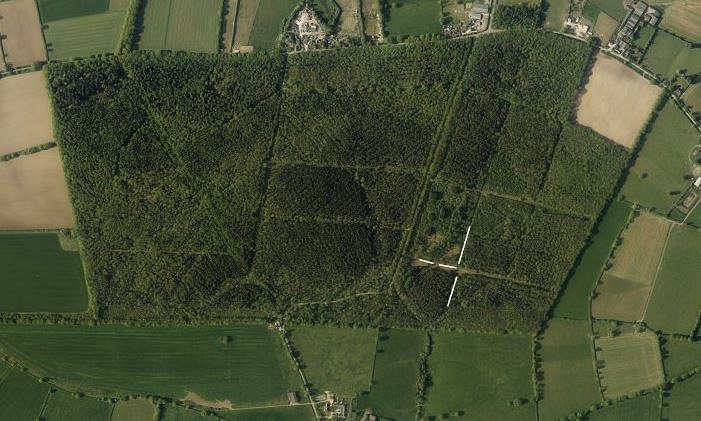
We set our nets down the main ride as usual, plus a couple of additional net sets: one into the bottom of the wood and another off into the newly thinned ride to the east.

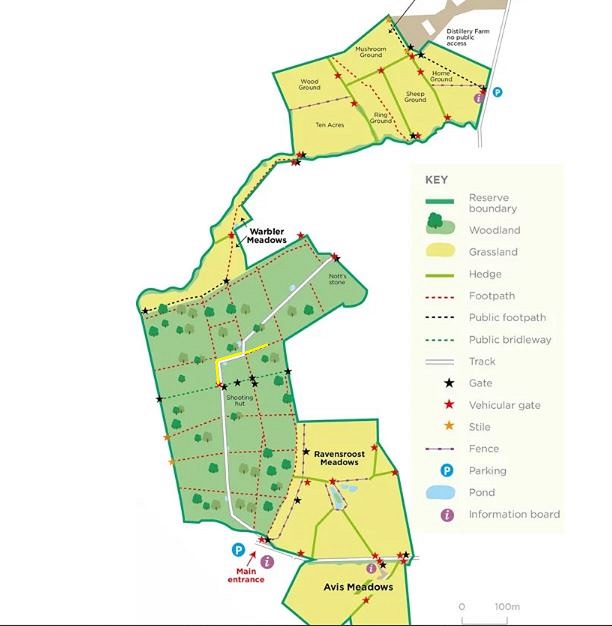
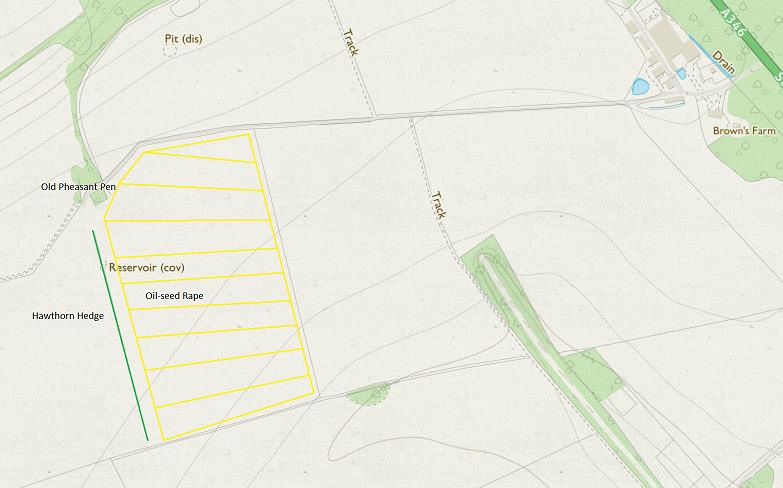
The Firs

What you cannot see from this diagram is that the Firs has a taxing slope downwards from the gateway to the start of our net rides.  At the start of the session it is fine but it does become a bit of a slog by the fourth or fifth round.  The catch was light throughout the morning, with just one or two birds per round.  We did a lot of net rounds.

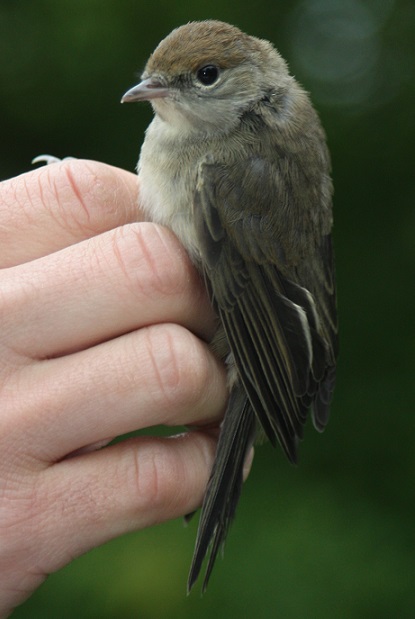
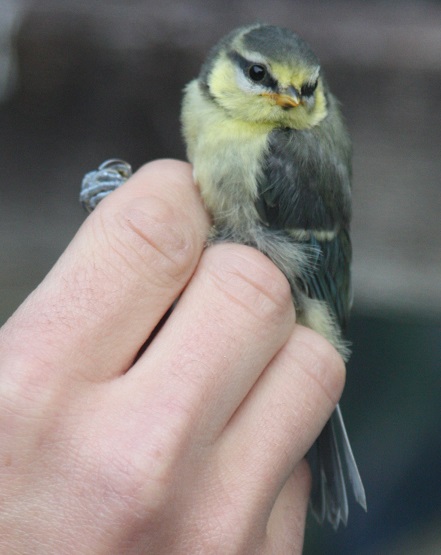
The catch started with a few Chiffchaffs and Blue Tits, with a Blackcap and Robin.  This was pretty much the way of things until the last round: when we caught 3 Goldcrests and 2 Marsh Tits.  The list for the day was: Blue Tit 2(7); Great Tit (2); Marsh Tit 1(1); Wren 3(1); Robin 2(1); Blackcap 1(1); Chiffchaff 3; Goldcrest 1(2).  Totals: 13 birds ringed from 7 species; 15 birds recaptured from 7 species, making 28 birds processed from 8 species.

We could identify at least 3 Marsh Tit territories from singing males.  This is an encouraging development: the Firs has been the least likely of our woodland sites to produce Marsh Tits, but they are becoming more evident there with every passing year.

2019_04_13Marti

As the area around the ringing station warmed up the movement of birds increased (I was tempted to set an opportunistic net, but decided against) and the level of bird song increased.  We had been treated to a Song Thrush and several Nuthatches singing for most of the morning, but the absolute highlight for me was when a male Lesser Spotted Woodpecker sparked up in song in the trees immediately behind where I was sat.  This seems to be such a regular occurrence in the Firs I am really hopeful that we might get proof of breeding in the near future.

Red Lodge: Wednesday, 10th April 2019

A cold session at Red Lodge this morning where I was helped by Jonny and David (back from University at Aberystwyth for the Easter).  Unfortunately, with no-one in the vicinity of the University willing to help out, the only ringing David currently gets is in the holidays.  We have reached out to people but to no avail. Fortunately, he has a fantastic memory and picks the thread up again very quickly.

There is a significant issue with getting enough people to give training to potential ringers. Having said that, there is also an issue of people saying they would like to train to ring and then never turning up for even a taster session. I must have had 20 applications in the last three years, only 2 of whom have turned up at all. Neither of those has continued (I reckon it is the early mornings, it can’t be my charming personality).  In fact, all of my team have come through ringing demonstrations, or just meeting us when we have been out ringing and becoming fascinated by what we do.  This morning we were joined by a young lad of 12, along with his father, for a taster session. He came through contact with the Wiltshire Bird Recorder, Nick Adams.  We started by showing him how to safely handle and release the birds and then let him progress to ringing and measuring a few of them.  He did extremely well for a first session.  Hopefully he will have enjoyed it sufficiently to want to come again.

This morning highlighted that we are on the cusp of the seasons for our bird life. Most of the birds we processed were showing signs of developing breeding activity: males with cloacal protuberances and females developing brood patches.  One female Blue Tit had a fully developed brood patch and weighed in at 12g with no fat. She must be already laying eggs, or is close to doing so, and is ready to brood them.  There was a lot of song and calling, as males were proclaiming their ownership of territories. However, at about 8:30, a flock of some 40 Fieldfare flew across the wood, heading in a north-westerly direction.  One would have expected them to have already left for their breeding grounds.

The catch was a mix of resident and summer migrant species: Treecreeper 1; Blue Tit 1(1); Coal Tit 2; Wren 4(1); Dunnock 1; Blackbird 1; Blackcap 6; Chiffchaff 5; Goldcrest 1(1).  Totals: 22 birds ringed from 9 species; 3 birds recaptured from 3 species, making 25 birds processed from 9 species.

The highlights of the day were: my first Orange Tip butterfly of the year and a lovely Oxlip plant in amongst the Primroses:

Oxlip

Also, there were plenty of Dog Violet flowers out in the undergrowth:

Violet

All in all, it was a cold but interesting session. It is always good to see the Chiffchaffs and Blackcaps returning. Hopefully we will have better numbers of each species this year than we did in the last couple.  The initial portents are encouraging.

First Willow Warbler of the Year: Somerford Common, Saturday, 6th April 2019

With the forecast for the morning to be dry but a bit breezy, with the breeze coming from the east, Jonny and I had a session at Somerford Common.  The area of the site where we do the majority of our ringing has undergone some major transformation in the last year.  If you look at the plan below you will see the area bordered on the north by one ride and on the east by another. That block of land is a fenced off paddock and over the last two winters it has been extensively cropped to leave some hazel coppice stools plus a number of stands of conifers and silver birch.  It is a very open area and the way that the undergrowth is establishing itself is making us quite excited about what might turn up there later in the year.  Certainly Nightjar would not look out of place there.  When I surveyed the area for the BTO’s 2007 – 2011 Atlas that area was alive with Garden Warbler.  It is not there yet, but I would think that within two years it will be perfect for them.  I am hoping that we might find some Grasshopper Warblers on passage through there as well.  It looks as if it has just the right mix of scrub and perches for them.

We put up our nets along the main north-south ride as usual, plus one set adjacent to our ringing station in the car park:

Somerford

When we arrived the place was alive with birdsong. Particularly, there was a plethora of Willow Warblers singing in the wood plus quite a few Chiffchaffs calling as well.  Our first round produced a crop of 8 birds, including our first Willow Warbler of the year:

2019_04_06Wilwa

Whilst the trees were alive with the song of summer visitors, we were also aware of several flocks of Lesser Redpoll flying around the site.  We caught a female but she wasn’t really in breeding condition yet. Having caught a male in breeding condition in Webb’s Wood last Wednesday, we are hoping that we might catch some more later this month and into May, confirming a potential breeding population.

Unfortunately, soon after the first round the temperature dropped significantly and the bird activity dropped with it.  We ended up with a catch of 18 birds: Blue Tit (1); Long-tailed Tit 2; Wren (1); Blackbird 1(1); Blackcap 4; Chiffchaff 3(1); Willow Warbler 1(1); Lesser Redpoll 1; Bullfinch 1.  Totals: 13 birds ringed from 7 species; 5 birds recaptured from 5 species, making 18 birds processed from 9 species.

The retrapped Willow Warbler was ringed as an adult in July 2017.  So that means that it has done the trip to and from sub-Saharan Africa on at least four occasions: that’s a lot of miles for a 10g bird.

It didn’t warm up again until we closed the nets at 11:30.  Although recent catches have been small, I have compared them with recent years and they are very much in line with the previous 5 years.  Expansion of the catch is imminent – and I can’t wait!

It’s Oh So Quiet! 30th March to 3rd April 2019

It is not often I quote Björk, but it is entirely appropriate for our ringing activities at the moment.  Hopefully, like the song, it will explode into action very soon.

On Saturday Jonny, Annie and I set up on the western side of Blakehill Farm.  With Jonny and I having disturbed a number of Snipe at Lower Pavenhill on the previous Monday, we were hoping there might be a few still around at the ponds at Blakehill, so we got there early and set our wader nets.  Unfortunately, our optimism was misplaced.

To be honest, the rest of the day wasn’t up to much either.  The catch was Great Tit 1; Wren 1; Dunnock 1; Robin 1; Blackbird 1; Chiffchaff 3(1).  Totals: 8 ringed from 6 species, 1 recapture, making 9 birds processed from 6 species.

Wednesday I was joined by Andrew Bray at Webb’s Wood.  It was a somewhat bigger catch, but still not what we are used to at this time of year in these woods.  We put on lures for Siskin and Lesser Redpoll, just on the off chance.  There was no sign of Siskin but we were very pleased to catch a cracking male Lesser Redpoll.

2019_04_03Lesre

Not only was he a super looking bird, he was already showing that he was in breeding condition.  Recent records of Lesser Redpoll breeding in Wiltshire are very scarce, effectively non-existent in the last 20 years, until we recorded two newly-fledged juveniles at Ravensroost in early August 2016.  Hopefully, this bird is planning to stay around, find a female and add to / create any locally breeding population.

The list for the session was: Treecreeper 1; Blue Tit 4(1); Great Tit 1; Coal Tit 1; Long-tailed Tit 1(1); Chiffchaff 6(1); Goldcrest 2(1); Lesser Redpoll 1.  Totals: 17 birds ringed from 8 species; 4 birds recaptured from 4 species, making 21 birds processed from 8 species.

Late Leaving Redwing: Thursday, 28th March 2019

On Monday Jonny and I headed for Ravensroost Woods.  The weather forecast was for fine and settled weather. We set 10 nets and the first couple of rounds were quite surprising, with three each of Treecreeper and Chiffchaff caught.  After a couple of retrapped Blue Tit and a Wren, unfortunately an unexpected wind got up, and came from the north westerly direction, blowing the nets into the trees.  This brought a quick and early end to our session.  It was doubly unfortunate, as I was going to show one of the many Wiltshire Wildlife Trust’s Well-Being Groups the science and practices of bird ringing.

We spent the next hour looking at potential Curlew breeding sites in the Braydon Forest.  My main Curlew site has only had a single calling bird heard so far this year.  However, as we did a quick reconnaissance we put up 8 Snipe – something of a surprise, as I had expected them to have left for their breeding grounds by now.

Thursday saw me at Tedworth House for my monthly Help4Heroes session.  As is often the way at this time of a year, it was a relatively quiet session.  However, it was not without interest. The highlight was a very late Redwing.  This is the latest staying Redwing that I have found in our database of 1,611 individuals since 2002.

The list for the day was Great Spotted Woodpecker (1); Nuthatch 1(1); Blue Tit 1(5); Great Tit (1); Coal Tit 3; Dunnock (1); Robin (2); Redwing 1; Blackbird 2(3); Goldfinch 1.  Totals: 9 birds ringed from 6 species; 14 birds retrapped from 7 species, making 23 birds processed from 10 species.

Of these birds, two of the Blue Tits, all of the Blackbirds, both Nuthatches, both Robins and the Dunnock all were showing breeding changes, from cloacal protuberances in the males to brood patches in various stages of development in the females. The female Blackbird and the two Robins (both females) had extremely well-developed brood patches, indicating that they are already either incubating eggs or, potentially, brooding young.

Lower Moor Farm: Saturday, 23rd March 2019

After a couple of weeks of inclement weather and last week spent in north Devon (nice views of Wheatear being the highlight, the almost complete absence of Buzzards being a real nadir) it was good to get out for a ringing session at Lower Moor Farm.

I was joined by Ellie Jones for the session: always handy having the reserve manager as one of your C-permit holders and for dealing with the members of the public.  In the event it was a quiet, but very enjoyable, session.  We managed to establish our favourite movies of all time, discussed in depth the acting qualities, or lack thereof, of Tom Cruise and Keanu Reeves, and process a few birds over the course of 5 hours.

Any session during which an Otter swims sedately past, diving to release the tell-tale stream of bubbles as it approached the pipe between Mallard Lake and Swallow Pool, is a good session, no matter how few birds you catch.

The birding highlights were: a good number of Chiffchaff already on site, one a retrapped bird from last summer.  Unfortunately, you never know with early Chiffchaffs whether they are actually early migrants or if they over-wintered here.  There are always some to be found in the Cotswold Water Park over the winter: one ringed at Lower Moor on the 7th January 2017 was clearly an over-wintering bird.  We recaptured a Blackcap that was ringed as an adult at Lower Moor three summers ago. This bird is almost certainly a returning summer visitor: and the earliest recorded at the site.  Over-wintering Blackcaps have been shown, from ringing records, to be primarily from central Europe, but I suppose there is always the chance that some of our summer visitors do remain behind, given how mild our winters have become.

The final birding highlight was a singing male Cetti’s Warbler.  After a stunning first set of catches in 2015 the numbers ever since have been disappointing.  Last year, although we did catch and ring one specimen, there was no singing male on site.  Like the Blackcap, this is the earliest that we have caught one on site by two months.

2019_03_23LMF

The list for the day was: Blue Tit 1; Great Tit (1); Long-tailed Tit (2); Wren (1); Dunnock (1); Robin 1; Cetti’s Warbler 1; Blackcap (1); Chiffchaff 6(1).  Totals: 9 birds ringed from 4 species; 7 birds retrapped from 6 species, making 16 birds processed from 9 species.

Blakehill Farm: Friday, 8th March 2019

A somewhat odd day today.  Because of the reports of early returning Spring migrants three of us (Andrew Bray, Ellie Jones and me) went to my migration spot at Blakehill Farm just to see if any of these early migrants had reached north Wiltshire yet.  The forecast was for very low winds from the west / west south west direction, getting stronger by the afternoon. I did a recce yesterday mid-morning and there were lots of birds around, so I was hopeful of a reasonable catch.

We got there nice and early and had the plateau nets open just after daybreak. It was a nice treat to have the Short-Eared Owl flying around the central plateau area, giving excellent views. Also, at least one Curlew has returned to the site already: fingers crossed for a successful breeding season.

The catch just wasn’t there: we caught a dozen birds between 7:00 and 9:30 but then an unforecast north-westerly wind got up and there were no more birds caught.  We decided to close the nets, as they were just blowing out completely. There is no cover on this site, We did catch a Meadow Pipit that was ringed but not by our team. One of the nice things about the new on-line data entry system at the BTO (known as Demon, being short for “Demography Online”) is that when you enter a bird, even if it is not one that you have ringed, if the data has been entered by the ring owner, you get immediate confirmation that the bird is what is should be (or not, which is why we photographed the bird and the ring for proof).

IMG_20190308_091043160

As we were packing up the session took a definitely weird turn. I have learned to be a very careful about counting bird bags, guy ropes, spikes and matching up pairs of poles, so when Andrew Bray found the bottom two sections of a BTO pole buried in the vegetation, I was at a loss to explain it.  I have 30 sets of poles: I still have 30 sets of poles and, to my knowledge, nobody else has ever had permission to ring this site: so where did it come from? (Cue “Outer Limits” music.) If it is one of mine (I am sure it isn’t) it means a top set is also missing and I should have 31 sets – but I know I have only purchased 30. Spooky!

**I had an immediate report back on our recaptured Meadow Pipit.  This bird was ringed as a recently fledged juvenile on the 20th October 2018 on the Isle of Wight. It has flown 110 km north-north-west in 139 days.

Red Lodge: Saturday, 2nd March 2019

With the weather looking really dire for the rest of this week, I moved Wednesday’s projected session at Red Lodge to Saturday.  I was joined by my most experienced trainee, Jonny Cooper, for the session.  It was dull and overcast to start, with a couple of short showers of extremely fine, mist-like rain.  Not long enough or heavy enough to warrant shutting the nets but irritating nonetheless.  As the morning wore on the cloud broke and the sun came out but, unfortunately, the wind also got up – no doubt the forerunner to storm Freya – and we had to close the nets at 11:30 to avoid potential injury to the birds.

The primroses were out in full bloom: entirely appropriate for the second day of the meteorological Spring.  We didn’t have one of our larger catches: I think that this unusual weather has got the birds less interested in food and more interested in setting up breeding territories.  It was still an interesting morning though.  The catch was: Nuthatch (1); Blue Tit 7(2); Great Tit 4(7); Coal Tit 1; Marsh Tit (1); Long-tailed Tit (1); Robin 1(1); Blackbird (1); Goldcrest 3(1); Chaffinch 3.  Totals: 19 birds ringed from 6 species; 15 birds recaptured from 8 species, making a total of 34 birds processed from 10 species.

Of interest: both the Blackbird and the Long-tailed Tit were males, showing a well-developed cloacal protuberance, i.e. ready to mate already.  Blackbirds are multi-brooded and, weather-permitting, will sometimes start breeding as early as March.   Long-tailed Tits are single-brooded, and frequently start breeding in March.

Farmland nr Chippenham: Friday, 1st March 2019

This is a post by Jonny Cooper:

Friday (1st March) saw me undertake a session at my farmland site just outside Chippenham.  This site is very open, meaning that it can be difficult to get sessions in if there is any wind. The forecast for the morning was low wind and overcast with some sunshine, perfect ringing weather for this site.

I aimed to have all the nets open as the sun was rising which meant that I arrived on site quite early to set the nets. All the nets were open by around 6:45. The first round proper delivered 12 birds; this round often catches 40-50% of the total catch at this site so I was expecting a catch of 20-30 birds. However, as the morning progressed the rounds continued to produce 10 or so birds each time leading to a total of 71 birds being processed across the morning.

The total catch was: Blackbird (3); Blue Tit 4(3); Chaffinch 9(1); Dunnock 4(1); Goldfinch 3; Great Tit 3(2); Greenfinch 11; House Sparrow 6; Linnet 1; Reed Bunting 6(1); Robin 4(1); Yellowhammer 7(1). Totals: 58 new from 11 species and 13 recaptured from 8 species, making 71 birds processed from 12 species.

There were many highlights to the catch, the single Linnet was a new bird for the site, I have often seen them around but not been lucky enough to catch them before:

53200990_2247394352215541_6153749263907028992_n

6 House Sparrow was also unexpected, with only a single bird being caught before the session. There were also reasonable numbers of Chaffinch, Greenfinch, Reed Bunting and Yellowhammer; the last two being key farmland bird species that are on the UK Red List.

53357847_384259092399412_6016753877477490688_n

Overall a very pleasing session that continues to show the excellent farm management for wildlife undertaken on site.

Health & Well-being at The Firs: Wednesday, 27th February 2019

A large part of the Wiltshire Wildlife Trust’s work is through their Education and Well-Being programme.  Christine Crookall-Fallon, the Trust’s Education and Well-being Officer, asked me if she could bring along a group of 13 and 14 year-old youths from Devizes School to our session at the Firs today.  We know the value of our ringing work to conservation but, increasingly, are made aware of the contribution it can make to the education and well-being of young people.  Given how much we get out of it,  I suppose it should be obvious.

Jonny and I arrived at 6:30 and had the nets set up by 7:30.  As we were walking down the central glade to our ringing area I looked up and was surprised, and rather delighted, to see a Brown Hare run through the clearing at the bottom of the glade. The weather was glorious, if a fair bit colder than it has been recently, but bright and, eventually, warm. Whilst processing our first round we heard a shrill triple call.  At first we persuaded ourselves it was a Song Thrush mimicking another species: Lesser Spotted Woodpecker.  After processing our second round we heard the unmistakable drumming of the real McCoy.  Cue a quick scramble for our binoculars and some good views of the Lesser Spotted Woodpecker.  It flew around the tree-tops adjacent to our ringing station before disappearing.  Unfortunately, it was immune to the lure we played for the rest of the morning.

A bit later, and before the Devizes crew arrived, a Sparrowhawk paid a brief visit to the wood, flying through at tree-top height. It landed briefly in one tree before disappearing into the distance.

Christine had a put a full programme together for her charges, so that they were on hand for any birds we caught, but were active on other things in between rounds and after we packed up for the day.  They arrived on site at 9:30, just as we were returning from a round with a good number of birds.  We processed the birds, pointing out ageing characteristics and how to sex those species (where possible).  Those that wanted to were given instruction on how to hold a bird in the ringer’s grip and then to release it safely.  By the end of the session all bar one youngster had held and released at least one bird.  One of the girls was extremely reluctant to get involved but was eventually persuaded.  After her first experience there was no further reluctance, and she coped excellently with being pecked by Blue and Great Tits thereafter and handled a good number of birds.  The highlight of the first round the students saw was a recaptured female Great Spotted Woodpecker.

The list for the morning was: Great Spotted Woodpecker (1); Nuthatch 1(2); Treecreeper 1(1): Blue Tit 10(7); Great Tit 10(10); Coal Tit (2); Wren (2); Robin 1(1); Goldcrest 1; Chaffinch 2.  Totals: 26 birds ringed from 7 species; 26 birds recaptured from 8 species, making a total of 52 birds processed from 10 species.

The last round yielded the new Treecreeper, the Goldcrest and one of the Wrens: much to the delight of the students.  People’s first experience of Goldcrest is always framed by how small they are.  When you tell them that birds of this species, weighing all of 5 grams, fly across the North Sea from Scandinavia to winter in the UK, and return across the sea in the spring to breed they find it hard to believe.

We closed the nets and took down at 11:30.