I Didn’t Expect to Find a Zebra: Friday, 20th June 2025

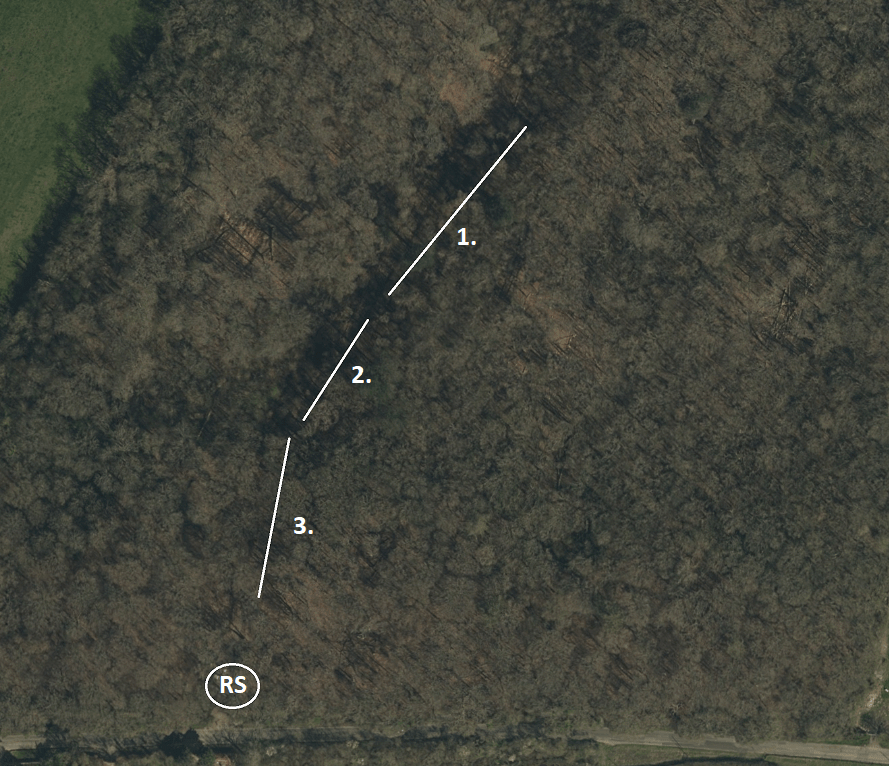
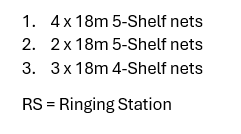
With Laura’s two boys being off school today, and busy at the weekend, I agreed to run an extra session at Lower Moor Farm this morning. Because of the possibility of extreme temperatures and, later, rain, we started a bit earlier (at 6:00) and planned to finish at 11:00, with nets set in shaded areas. We set the following nets:

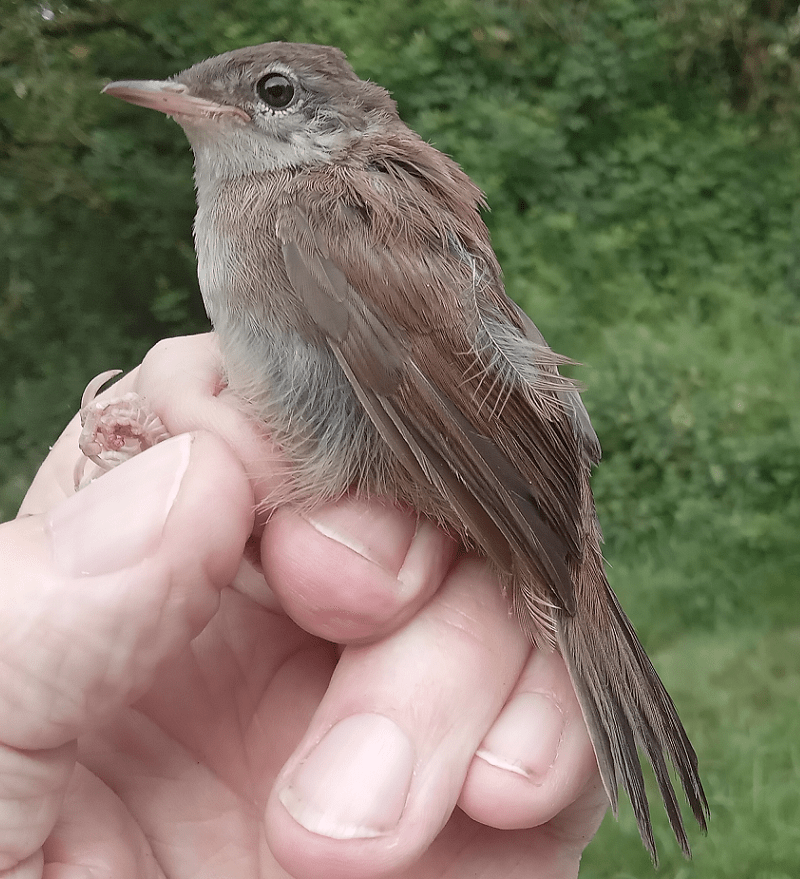
We caught our first bird straight away: a Garden Warbler, which was quickly followed by three Blackcaps and this:

Juvenile Cetti’s Warbler, Cettia cetti

Another first for the year for my team! Always nice to catch.

The next round produced another decent haul and by 7:40 we had 13 birds processed from six species. Adam and Daniel were quite excited, Laura and I were rather trepidatious as this almost exactly mirrored what had happened on Wednesday! Our trepidation increased as time ticked on and we caught nothing else. I did say that if things had not improved by 10:00 we would give it up as a bad job. Then, at 9:00, we caught another two birds and, for the next eight rounds we caught at least one bird in every round, ending up with 24 birds processed, as follows: Blue Tit [2]; Great Tit [2]; Wren [2]; Dunnock [1](3); Robin [3]; Song Thrush 1; Blackbird (1); Cetti’s Warbler [1]; Blackcap 3[1](1); Garden Warbler 2; Chiffchaff [1]. Totals: 6 adults ringed from 3 species, 13 juveniles ringed from 8 species and 5 birds retrapped from 3 species, making 24 birds processed from 11 species. Not the biggest or best catch but a pretty enjoyable morning.

So to the reason for the hyperbolic title:

Zebra Spider, Salticus scenicus, one of the jumping spider group

I fell in absolute awe of this little fellow: jumping from bag to bag, across cracks in the table, and being hugely entertaining for a good five minutes before he disappeared. These were the last 30 seconds before he toddled off!

There was a lot of bird song all morning, Merlin was having a lovely time (we never did find the Redstart) but the loudest and longest was a male Song Thrush. Why they are called Song Thrush and not Cacophony Thrush I do not know! Anyway, he did not shut up all morning, until we caught him in one of the nets at 11:00: our penultimate bird of the session. He then remained strangely quiet until we had everything taken down and left site at 11:40.

There was some nice other stuff going on: a Little Egret over the other side of the lake – still fairly uncommon at Lower Moor Farm. A male Cuckoo still calling around the site. We had a Black-tailed Skimmer land on Laura’s packet of custard creams before flying off. Then we had the pleasure of watching a pair of them copulating as they flew around the ringing station. As ever, there were hundreds of blue damselflies. I didn’t take the time out for speciation today although, when taking down the last net, I saw the smallest bright blue damselfly I have ever seen. It looked half the length of any others around.

We saw quite a few froglets, and were exceptionally careful to ensure that we didn’t step on any.

One particularly nice sighting though was a large number of these lovely butterflies:

Large Skipper, Ochlodes venata, photo courtesy of Laura

By 11:00 it was getting hot and oppressive and there were a few spots of rain, it was very humid and uncomfortable, so we got on with taking down after a very pleasant, if not very busy, session. It does support my decision to not continue with the Constant Effort Site there.

More Juveniles: Somerford Common; Wednesday, 18th June 2025

With temperatures forecast to be rather high, I wanted to go somewhere a bit sheltered from the sun and the forecast breeze and Somerford Common seemed like the best bet. Laura joined me at 6:30 to help set up and, hopefully, ring some birds before she had to leave at 9:00.

I chose not to set a lot of net as I knew that I would be taking them down on my own and that it would be hot by then (and I am lazy). We had the first nets (white) set up by just gone 7:00, as follows:

All nets were 5-Shelf. Rides 1 and 2 comprised 1 x 18m + 1 x 12m each. Ride 3 was 2 x 18m + 1 x 9m, ride 4 was 1 x 18m and ride 5 was 1 x 9m. I will explain the colour difference in a short while.

Whilst Laura was pushing up ride 2 and then 1, I went to get another furling stick to push up ride 3. Only, as I was walking past the ride, I noticed our first bird of the morning. I was pleased it was another juvenile Garden Warbler. It seems to be turning into a good year for them in the Braydon Forest. We have only ever ringed 21 juveniles in the forest since January 2013, 10 in Ravensroost Wood and 8 at Somerford Common. When I whittle it down to those not yet undergoing post-fledging moult (moult code J) we have only ever had six, three of them this year.

We did our first round proper at 7:30 and, delightfully, extracted 11 birds out of rides 1,2 and 3. Ride 2 produced the one bird: our first juvenile Wren of 2025:

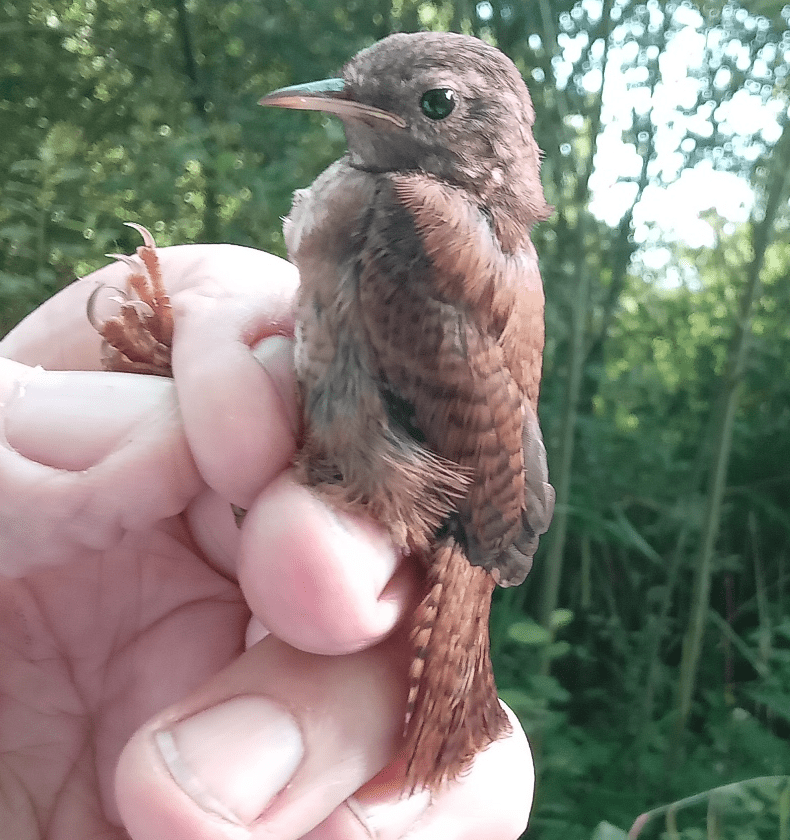
Juvenile Wren, Troglodytes troglodytes

This one still has a little bit of gape on show. Not really surprising as it hadn’t started its post-fledging moult yet. There are lots of ways of ageing Wrens but, at this time of year and this level of development, the easiest way is to look at the undersides:

Nice, warm brown tones. As they get older the undersides acquire white spotting but at this stage there is none. All 11 of the birds we extracted in this round were juveniles.

A good start we thought, only then it stopped! By 8:30 we hadn’t caught another bird, which is when I decided to set up rides 4 and 5. Unfortunately, we still didn’t catch any other birds until after Laura left at 9:15. Hanging on in hope!

By 10:00 I had had enough, it was getting very hot, and I decided to start packing up. Ride 2, the furthest away, was where I was going to start. I thought I would do a check on rides 4 and 5 before closing it down. Rides 1 and 3 were always visible from the ringing station, so I knew they were empty. Imagine my surprise when I found three of these all together in ride 4:

Juvenile Coal Tit, Periparus ater

Another species with our first juveniles of the year in the Braydon Forest! (Laura has just reminded me that we caught one in her garden last Sunday – but that’s in Gloucestershire!) They were accompanied by another juvenile, a Robin. That was it for another 30 minutes, so I started the take down: ride 2 first. As luck would have it, I had the first net just about down when a Robin flew into the second net. I extracted it and finished taking the ride down. I processed it, our only retrap of the morning, and released it.

Next I took down ride 1 and, as I was carrying the equipment back to the car another bird flew into ride 3. That was the final bird of the session: an adult male Chiffchaff. The list for the session was: Blue Tit [5]; Coal Tit [3]; Long-tailed Tit [2]; Wren [1]; Robin [1](1); Garden Warbler [1]; Chiffchaff 1[3]. Totals: 1 adult ringed, 16 juveniles ringed from 7 species and 1 bird retrapped, making 18 birds processed from 7 species.

Both of the Long-tailed Tits were still very definitely in juvenile plumage, lots of brown where one would expect black in an adult or a fully moulted juvenile and lots of body moult going on. However, one of them was undergoing a moult of its secondary flight feathers already: one feather at stage 1 (just the tiniest tip of the feather emerging from the pin) and another at stage 2 (up to one-third emerged from pin), the rest were all what they came out of the nest with.

I would have liked a bigger catch but was happy to get the juvenile Wren and, even happier, to get the juvenile Coal Tits. Whilst we have caught juvenile Coal Tits in May in 2015 and 2019 in the Forest, it is still uncommon to catch any number in June at my sites. As for the juvenile Wren, there have been none in May and only three caught earlier in the month of June – all in 2014. In 12 years we have actually only caught 17 juveniles in June prior to this one. So this is quite a nice find.

I had everything packed away by 12:20 and was home at a decent time for lunch.

Home Sweet Home, or is it? Monday, 16th June 2025

For the first time in ages the weather was calm enough for me to set nets in my garden, so I thought I would take advantage. I set the nets around my feeding stations. Pole A had a peanut feeder, a fat ball feeder and two mealworm trays; pole B had two Sunflower Heart feeders, a mealworm tray and a half coconut shell filled with fat and minced peanuts. The trees are as follows: i = Apple; ii = Plum; iii = Crab Apple; iv = Conifer; v = Holly; vi = Cherry. The rest of the area is full of shrubs, herbs and flowers, a magnet for moths and other insects.

I set the following nets (all 5-Shelf singles): 1 = 6m; 2 = 3m; 3 = 9m.

I had set the nets up the night before and opened them at 6:30. Between then and 10:00 I saw one bird in the garden: a Woodpigeon, and caught none. I caught my first birds at 11:00 two Blackbirds and two Goldfinch. That was followed by a juvenile Chaffinch at 11:45; a Goldfinch at 12:10; three Starlings: one each at 12:15; 13:00 and 13:30. This memorable morning was topped off with a final Goldfinch. One of the Blackbirds was a three year old retrapped female. All of the rest were new birds. Besides the Chaffinch, two of the Starlings were also juveniles.

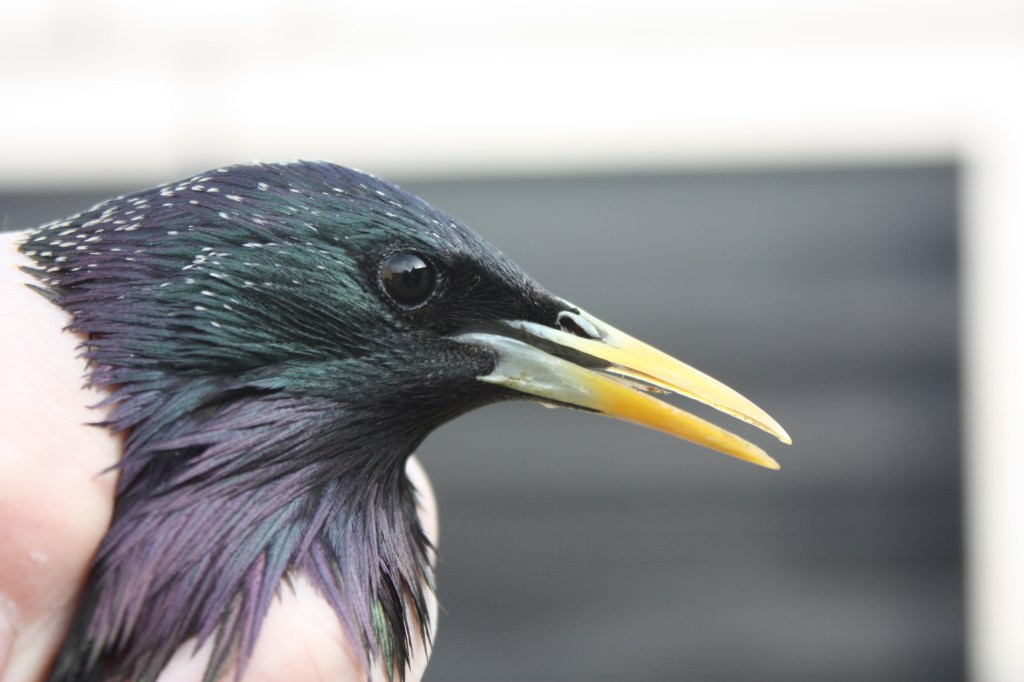
Adult male Starling, Sturnus vulgaris
Juvenile Starling, Sturnus vulgaris

The first Starling out of the net was a beautifully marked adult male. Astonishingly, it was absolutely quiet and calm during extraction and processing. The first juvenile made a bit of noise but the third was very loud. Interestingly, though, there was an absolute cacophony of Starling shouts and calls whilst I was extracting it. It was a bit like a scene from the Hitchcock film “The Birds”, with a dozen or more sat on the adjacent telephone wires shouting at me until I released junior. Once it joined them, they all flew off away from the garden in their little flock.

So a less than stunning catch of Blackbird 1(1); Goldfinch 4; Chaffinch [1]; Starling 1[2]. 6 adults ringed from 3 species, 3 juveniles from 2 species and 1 retrap, making 10 birds processed from 4 species.

With all that time on my hands between catches I spent a delightful hour net mending (he lied – delightful it is not) and it is nice to have decent coffee on tap! Anyway, it is my worst ever garden catch, who knows why! I regularly have 30+ birds from seven or eight species in the garden: Great Spotted Woodpecker; Woodpigeon, Stock Dove, Collared Dove, Rook, Jackdaw, Magpie, Greenfinch, Wren, Blue Tit, Great Tit and Long-tailed Tit have been in pretty regularly recently, feeding well and costing me a fortune. Less often during this time of year: Goldcrest, Green Woodpecker and Sparrowhawk. One in a blue moon: Grey Heron.

Preston, nr Cirencester: Sunday, 15th June 2025

We were scheduled to be at Somerford Common this morning but I woke up to find it was blowing hard, so I contacted Laura to say “Sorry but..” only she replied that it was nice and calm in her garden. So we agreed that I would head to hers and we would get set up. We have been trying to do so for a while but, like my garden, it does need calm conditions. It was a good job that I sent the message when I did, as they were just getting into the car to leave for Somerford.

We set the following nets:

All nets are single 5-Shelf nets. Nets 1, 4 and 6 are 12m, nets 2 and 5 were 9m and net 3 was 6m. Inside the open triangle of nets 1, 2 and 3 were several seed feeders with variously, nyjer seed, mixed seed, peanuts and water.

With my arriving a bit later than we intended to start we had the nets open by 7:30 and started catching straight away: with a juvenile Blue and Great Tit at 7:45 and, five minutes later, an adult Dunnock,

We were never inundated with birds, but one or two pretty regularly throughout the morning. There were some notable first for the year. Our first first was this beauty caught at 9:00:

Juvenile Goldfinch, Carduelis carduelis

I have had plenty in my garden but it has just been too windy to set nets there, so this was a lovely first for the year.

That was then followed 30 minutes later, by this stunning addition to the list. Again, our first for the year:

Juvenile Great Spotted Woodpecker, Dendrocopos major

The wind started to get up at about 10:40, so we closed the nets (a delicious bacon bap (thanks Mark), fabulous coffee) and a couple more birds later, at 11:20, took down and packed away. I was home before midday.

The list for the morning was as follows: Adult [Juvenile]: Great Spotted Woodpecker [1]; Blue Tit 1[4]; Great Tit [8]; Coal Tit [1]; Dunnock 1; Robin 1[1]; Chaffinch [1]; Goldfinch [2]; Bullfinch 1. Totals: 4 adults ringed from 4 species and 18 juveniles ringed from 7 species, making 22 birds processed from 9 species.

Now to what might have been. We had multiple birds, mainly Chaffinch and Goldfinch avoid the nets altogether as, although we moved one of the nyjer feeders into the open triangle, where it had originally been positioned the messy little what names had dropped more than enough on the floor to keep them fed all morning and put of the nets. We also had a Pied Wagtail, Collared Doves, another Great Spotted Woodpecker and other birds bounce off the nets and avoid the pockets. Flying over or flying through were Carrion Crow, Jackdaws and a Sparrowhawk.

To make it worse, we had these two unringed birds that we couldn’t ring:

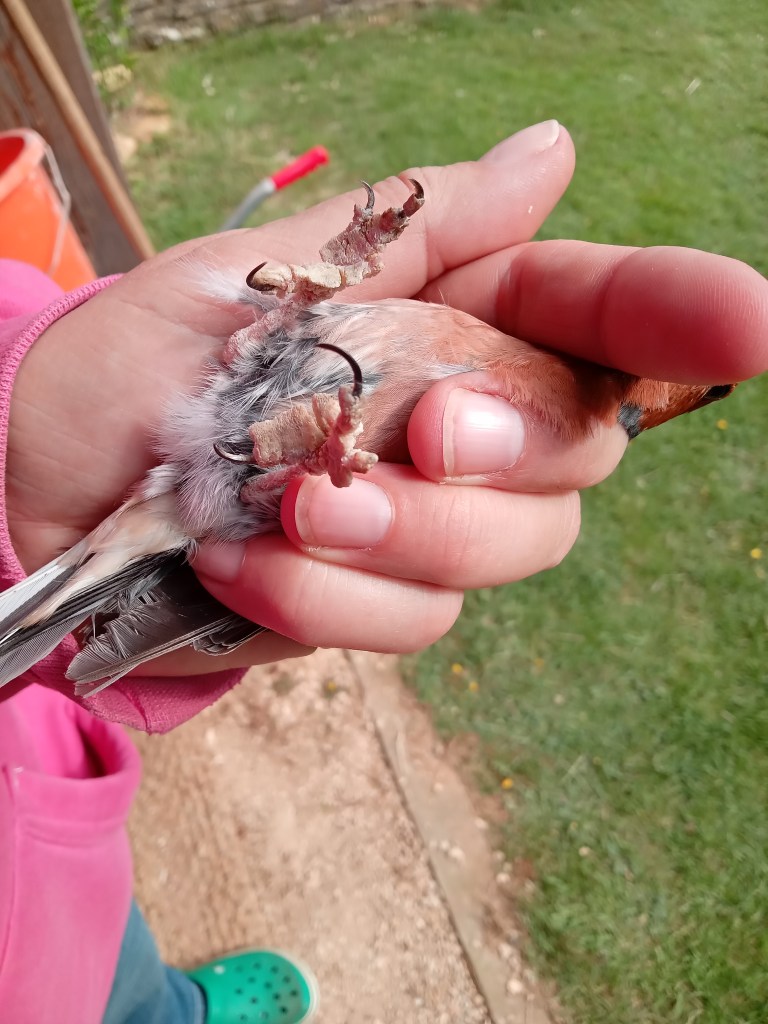
Adult male Chaffinch, Fringilla coelebs
Second year male Bullfinch, Pyrrhula pyrrhula

Both of these birds were suffering from Fringilla papillomavirus and so could not be ringed. However, their suffering is nothing compared to this poor soul:

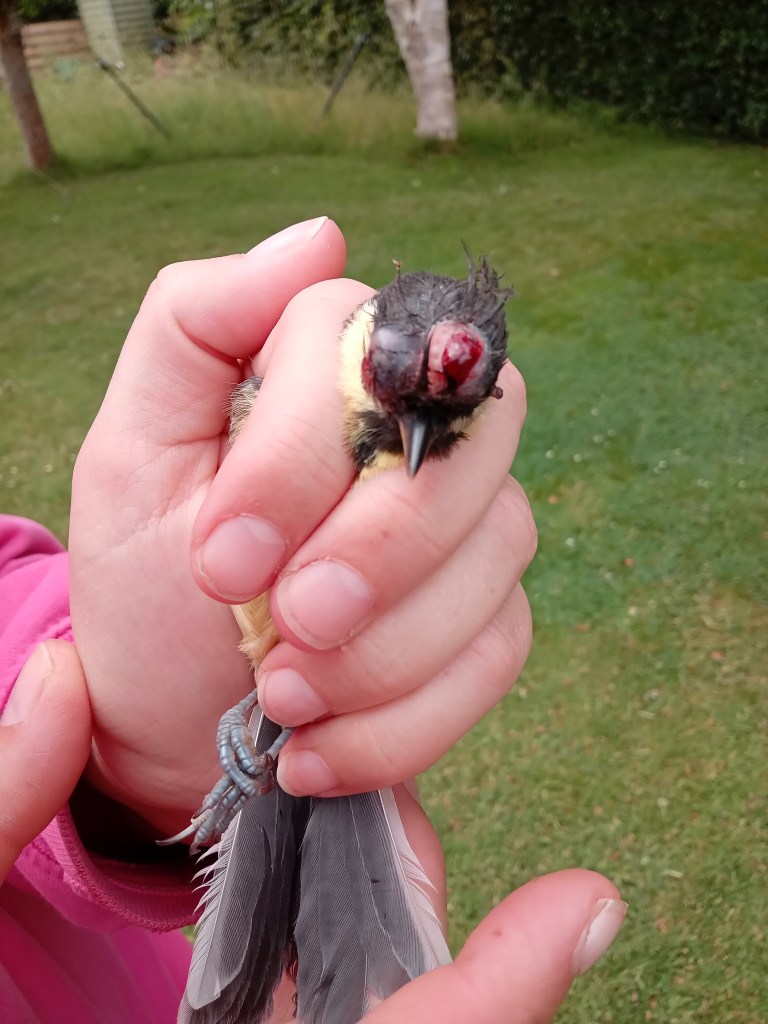
Juvenile Great Tit, Parus major

This youngster is not suffering from illness but looks to have had a close encounter with the neighbourhood Sparrowhawk: not while it was in our net, I hasten to add, just in case anyone thinks that’s how it got caught by the Sparrowhawk. Laura watched it fly into the net and immediately extracted it. We didn’t ring it.

I made the mistake of looking at the forecast for tomorrow and, apparently, it is going to be pretty calm in my garden tomorrow, so I guess the lie in is out of the question: I quite fancy some juvenile Greenfinches!

Little Owls or Burrowing Owls: Saturday, 14th June 2025

Today Miranda and I joined Dick and Jon at Westdown Camp before heading off to check a number of boxes on Salisbury Plain between there and Warminster. It was another fascinating session and it gave Miranda, like Ellie two weeks ago, a chance to get involved with the young of some species that we don’t (yet) cover in our Braydon Forest and beyond area.

We were out and about between 8:30 and 16:00 and checked on 25 boxes. These were as follows: 10 Barn Owl boxes, 3 Little Owl boxes and 12 Kestrel boxes. Of the Barn Owl boxes four were occupied by Barn Owls, one with a sole roosting adult, three with pairs occupying boxes but, as yet, no eggs or chicks.

Four of their boxes were full of Jackdaw nesting material but no sign of young. The Jackdaw breeding season is just about over now so the nesting material was cleaned out ready for occupancy by the late running Barn Owls. The other box was full of squirrel drey rubbish, which was also removed. Fortunately, Jon did all of the dirty work: I had my fill with my own boxes on Friday.

The three Little Owl boxes were all doing their job. One had an Owl on eggs, the other two held Little Owl chicks. The first was nice and easy to find, as it was in the box. As we approached the third box we saw the adult fly off. This was an interesting setup, to say the least. A couple of photos to explain the situation:

This wall was about 30′ long and 6′ tall. It then had a 90o turn, leading to the pillar at the far right of the photograph. The entire wall was topped with large flat coping stones. So, we checked the box for chicks, eggs having been found previously. Nothing to be found. Now Jon, knowing the place well, lifted a couple of the coping stones, which revealed a gap between each of the outer wall stones. We checked the stones, those that would open, and we found them: three stones away from the pillar pictured:

Little Owl chicks, Athene noctua, hiding in a channel under the coping stones of the wall

They had clearly left the box and climbed along the top of the wall, found a gap and climbed down into it. This was Miranda’s opportunity to ring her first ever Little Owl:

Little Owl chick, Athene noctua, phot courtesy of Jon

I love that “You wait until I get hold of you!” look.

The twelve Kestrel boxes were busier in the main, although only five of them were actually occupied by the target species, only one other had been occupied at all: with another squirrel drey to clear out.

In total, we ringed 14 Kestrels from those 5 boxes:

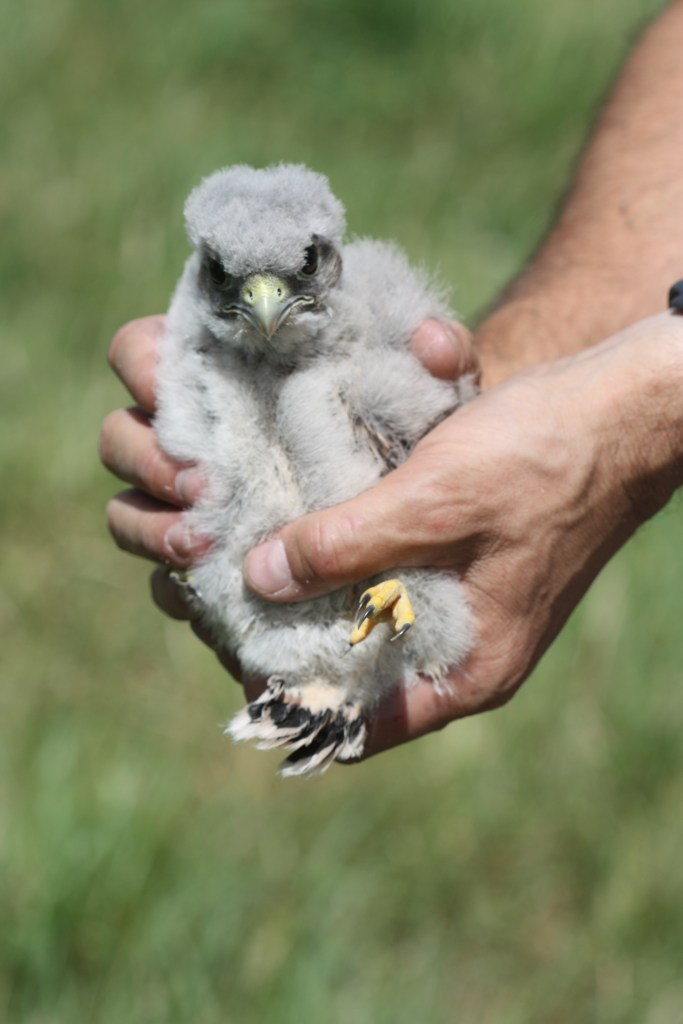
Kestrel chick, Falco tinnunculus

Most of them were showing signs of more development than the chicks ringed on both the Plain two weeks ago and in the Lower Wylye Valley on Tuesday. The primary and tail feathers are growing very nicely:

Kestrel chick, feathers medium.

All in all, a long day, but very satisfactory, and Miranda can add two new species to her experience. I am looking forward to the next one. Mind, I will need to ring the odd Kestrel chick otherwise they might end up with more records for Kestrel chicks than me!

Braydon Forest Barn Owl Boxes: 13th June 2025

Continuing my busy week, today I ought to check on what is happening in my personal Barn Owl boxes, having spent three sessions checking on the situation on Salisbury Plain and the Lower Wylye Valley. My thought was that we were likely to be further behind than the Plain, because they are usually a couple of weeks ahead of us with their Barn Owls. Laura met me at 9:00 at my place. We had to take her car: I have to get a new roof-rack as my old one doesn’t fit. Fortunately, her Kuga has a proper Ford (i.e. expensive) roof-rack that can be quickly fitted, so we loaded up the ladder, ringing gear etc and headed off.

Our first ports of call were two sites on the edge of Webb’s Wood / Echo Lodge. The first one is such a regularly successful site that I was hugely disappointed to find that it was full of Grey Squirrel rubbish. Absolutely no sign of the owls. I emptied it all out in the hope that, as the summer goes on, the Barn Owls will try again. So we went over the road to a box in Echo Lodge Farm. In all of the years that I have been doing this I have occasionally found adults roosting but only one occasion have I found and ringed a brood of chicks there: on the 12th September 2019. So I was delighted to find two of these:

Barn Owl chick, Tyto alba

A bit too young to be ringed yet, so we will come and have a look at them again in two weeks time.

From Echo Lodge we headed to Somerford Farm to finish off what we started when my car decided to die on me for the last time. The first box was absolutely full of squirrel drey material, which I had the privilege of clearing. Good grief, it was awful. I wouldn’t mind but: 1) it was cleaned out last autumn and 2) there was no sign of breeding. It is the end of the Jackdaw breeding season, so I suppose they could have fledged, but it really didn’t have any debris I would associate with successful breeding (poo, etc). I did find a bright blue egg, speckled with dark spots. I have worked my way through two field guides since, I can’t find it. It was about 30mm long and 25mm at its widest. Afraid, it got lost in the debris, so I have no photo.

From there we went to the second box along the farm lane: that was the saddest part of the day. The box had been cleaned out in the autumn and, on first opening, there was a thin layer of nesting material and nothing else. Laura had a feel around and found this tucked up in the corner:

Female Barn Owl, Tyto alba

She was completely desiccated. There was no sign of trauma: perhaps it has been a hard year for adults all round. We then headed to Upper Waterhay Farm. The first thing we did was check on the Swallow nests. It looks as though all of their first broods have fledged and flown. Under each nest was an astonishing amount of guano! There are still plenty of adults flying and around the nest sites, so I am expecting to see second clutches laid soon. We will make sure we keep a close eye on their progress and ring these birds before they fledge. From there we went to check on the owl boxes. The north box was the first, where we found three of these:

Juvenile Jackdaw, Coloeus monedula

They were so close to fledging, not predated, I would suggest starved. Either abandoned by the parents, due to them not finding enough food, or perhaps one or both adults were themselves predated. Of the three other boxes, the west box showed signs of Jackdaw breeding success, the Chancel box had some non-Jackdaw nesting material, so there is hope there – but no pellets or Barn Owl feathers. The paddock box had a part-built Jackdaw nest but no sign of an actual breeding attempt. All four boxes are now clean and waiting (and hoping) for some Barn Owls to occupy them.

So far, so like the experiences elsewhere! Our next port of call was Plain and Drill Farms (both worked by the same farmer). They are regularly productive sites. We went to the Drill Farm box first. As we approached the male flew out. Holding of breath!!

We opened the box to find the female sitting on four warm eggs! A proper clutch at last. She only caused a little damage as I extracted her and Laura put a ring on her. I was absolutely delighted. So to Plain Farm and a decent chat with Malcolm, the farmer, who is going to put up a couple more boxes for me, and a worker from Thames Water who let me know that there was a water main burst affecting the village I live in. There was I, covered in dust and goodness knows what else, and all I had been looking forward to for the last hour was getting home and having a nice long shower to get rid of the muck!

Anyway, Malcolm suggested we could drive all the way down to the box, as he has put down a makeshift track! He did warn us though about his Houdini calf. She clearly doesn’t like sharing space with her compatriots and has proven impossible to keep penned, so he is just letting her roam around the farmyard:

She really wasn’t bothered by the car. We drove down to the Plain Farm box and checked in on it. As we approached, the female flew out, and we opened the box to find:

Barn Owl chicks, Tyto alba

Sorry about the quality of the photo but we didn’t want to disturb them from their sleep. Ironically, before we actually opened the box, after mum had flown, we could hear them hissing, and yet, that is how they were.

In the end we checked 10 boxes, three of which are looking potentially productive for Barn Owls: a 30% “success” rate, which is somewhat better than the figures for elsewhere. I have another 15 to 20 to check, fingers crossed! I know that two of them had roosting pairs and I will be checking them next week. So a mixed session, but some good hopeful results.

You will be pleased to know that the burst water main was not affecting our water supply and I had a very pleasant cool shower to clean off all the muck and to cool myself down. Off to the Plain tomorrow: hopefully we will get a similar success rate. Kestrels are a certainty, Little Owls a possibility and let’s hope there is good news on the Barn Owl front.

Nest Box Checking: Lower Wylye Valley, Tuesday, 10th June 2025

I spent Tuesday with Justine and Mark driving around the villages of the Lower Wylye Valley. We were checking boxes to the east of Warminster, taking in farms and areas around the villages of Sherrington, the Codfords and the Langfords.

The primary objective was to carry out a recheck of several Barn Owl boxes done at the start of the season. Unfortunately, we only found one Barn Owl on eggs: just two eggs so far. That will be rechecked in about 10 weeks, as there should hopefully be at least two more eggs to be laid and they will have hatched and be ready for ringing.

Overall, though, it is still very poor on the Barn Owl front. With the recent change in the weather we are hoping that there will be a run of later broods, in effect their first brood, when they would usually be thinking about their second. The cold dry spring affected the grass growth, which was negligible. That had the effect of slowing the availability of key prey species, particularly the breeding of the various species of vole and mouse. This meant that there has not been enough prey for the Barn Owls to get into breeding condition.

It doesn’t help that several boxes contain nesting Jackdaws or squirrel dreys. One regular and productive site for Barn Owls that we checked had been taken over by honey bees. The box itself was full of honeycomb with absolutely no chance of owls taking over, so a visit in winter will be needed to clear that out ready for the spring.

Seven more Barn Owl boxes had either roosting pairs or were empty. One such, the most difficult to access, with the long ladder extended to its fullest extent, held one roosting adult male. Mark climbed the ladder and Justine and I held it firm to ensure no mishaps. Only, we hadn’t reckoned on the owl disgorging a considerable amount of guano as it left. Everyone got some but me, being directly under it as it left, caught it in my hair, down my arm and neck and down the back of my T-shirt. Nicely wet and smelly!

One other box we checked was empty. Mark had mentioned that both Kestrel and Barn Owl had taken advantage of the support girders to nest in last year. Sure enough, he had a look to see and a pair of Barn Owls flew out of the end of the girder and headed across the field. There was no sign of a nest or eggs. It is fortunate that Barn Owls are multi-brooded. Another positive point: Jackdaw young will have fledged within the next week or so, those boxes can be cleaned out, giving more opportunities for Barn Owls to select for breeding.

There is much better news on the Kestrel front. When checking their boxes we found one with a clutch of eggs, which will be checked in a few weeks time to see what has hatched and how they are progressing. Another with small chicks and an unhatched egg:

Kestrel chicks and egg, Falco tinnunculus, photo courtesy of Mark

We had three boxes with young in that were too small to ring:

There was one brood of five, of which we ringed four. One was much smaller than its siblings and we are all rather of the opinion that it was unlikely to survive, unless the parents could provide a decent amount of food.

The one at the front was the runt of the brood, photo courtesy of Mark

As with my post about the box checking on Salisbury Plain, I think that the Kestrels greater flexibility in taking prey species is probably why they are having more success than Barn Owls. This time we found the remains of a juvenile Robin in one box and these outside another box:

Possibly Skylark, initially I thought Song Thrush, any suggestions gratefully received

We went to check on a few Little Owl boxes as well. As we approached the last one we saw an adult sitting on the gate post at the entrance to the site. It flew off and disappeared around the back of the barn as we got closer. However, it was a prelude to the highlight of the day:

Little Owl chick, Athene noctua, photo courtesy of Mark

We found this lovely little owl. It was so cute that three grown adults went totally soppy over it. It was lovely and docile – and I got to ring it, only my second ever. There were originally 4 eggs in the box, so it was either the only one to survive, or the last to fledge. I hope it is the latter. It is close to fledging. Little Owls are disappearing fast from Wiltshire, for whatever reason.

We were out from 9:00 until 4:00: a long day, a lot of driving and stopping and taking ladders on and off the vehicle, climbing the ladder, checking the boxes, bringing down the chicks to check and ring and health check, do the biometrics etc. Should I put that another way: that’s what Mark did, Justine and I gave moral support and ringed a couple of birds! Good job he is fit!

Anyway, it was a satisfactory day for Kestrel, and a somewhat more hopeful day for Barn Owls, we shall see how it goes.

A big thanks to Justine for sending the details through of what we covered in the period and for allowing me to use it for the blog.

Ravensroost Meadows: Wednesday, 11th June 2025

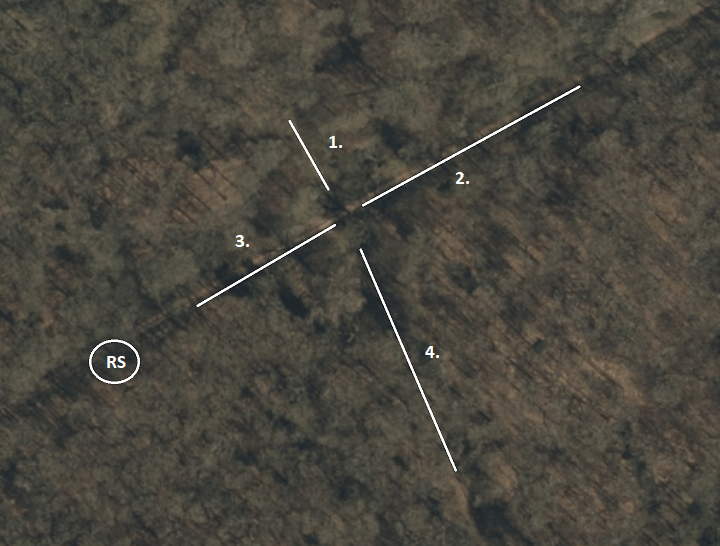
This my first visit to Ravensroost Meadows this year. Funnily, our first visit last year was on the 12th of this month. I am not sure why we didn’t do a May session, as that is often pretty good at this site as well. Anyway, because we hadn’t been there since last Autumn, I told the team to have a lie-in and join me at 6:30, whilst I got up considerably earlier and went strimmed out the rides. After the long, dry May, followed by some considerable rainfall, and back to sun, needless to say that the vegetation has grown considerably. The weather is still a bit of an issue, with sun all day, but an Easterly / East-South-East wind gusting to over 20mph mid-morning and 30mph by lunchtime. The good thing about this site is that there are very good, thick hedgerows that block winds coming from that direction. I was joined by Laura and Ellie and we set the following nets:

Mariana, from the Zoological Society of London joined us again to take samples from migratory birds. The study is looking at whether migratory birds arriving in the UK are carrying mosquito-borne exotic diseases, particularly West Nile Fever, as it is spreading across Europe and is likely to be arriving here soon, if it hasn’t already. There are no known cases of home-caught illness, and just seven travel-related cases recorded in the UK but climate change could make that more likely.

It was a nice start to the session, with three birds caught before the nets were open: juvenile Robin and Chiffchaff and adult Wren. In our first round proper we had an excellent drop of 18 birds: nine Chiffchaff, one poor worn-out female Willow Warbler and our first five of these for the year:

Juvenile Whitethroat, Curruca communis

One of the four was a retrapped female. She was ringed as a juvenile at this same site in July of last year. The youngsters were all caught together, all at the same juvenile moult stage, possibly along with Mum, as she was in the same group. Possibly just recently fledged as a group. Two rounds later we caught an adult male in the same net, was it the whole family?

Anyway, it was a good session. We had birds in every round, and a nice variety. We could have added another species but the rather beautifully plumaged male Chaffinch had a mite infection on its legs: it looked like it was wearing white socks!

The list for the day was Adult [Juvenile](Retraps): Blue Tit [5]; Great Tit [4]; Wren 2; Dunnock 1[1]; Robin [2]; Blackcap 1; Garden Warbler [1]; Chiffchaff 2[14](1); Willow Warbler 1; Whitethroat 1[4](1). Totals: 8 adults ringed from 6 species, 31 juveniles ringed from 7 species and 2 birds retrapped from 2 species, making 41 birds processed from 10 species.

The breeze started having an impact on ride 4 at about 10:30, and more generally by 11:00 so I declared that the 11:20 round would be our last and we would close up as we were checking for birds. It was clear that the birds had also decided it was time for us to pack up as there were none in the nets. So we closed up and took down. I introduced Ellie to how I like my nets to be taken down and packed away. She took to it like a duck to water and we had the nets down and were away from site before midday! Most unusual but, then, unlike a lot of ringers, I don’t set lots of nets. I like my team to enjoy themselves and not feel pressured by numbers. We do get the odd 100+ catch, but always by accident, not design. Mariana remarked upon how relaxed and pleasant our sessions are. She got a lot of samples today for the research project, which is being carried out on behalf of an absolute alphabet soup of government departments, ZSL Institute of Zoology and the BTO. We hope to see her again soon.

Nice To Get Out At Last: Webb’s Wood, Sunday, 8th June 2025

It has been a very frustrating couple of weeks. In between having to replace my car, followed by some abysmal weather: if it wasn’t raining, it was blowing a gale, I haven’t managed to get out for one of my ringing sessions since 22nd May at the Firs – and that wasn’t the best session we have ever had, it was just good to get out. The forecast for today was for it to be dry but for it to have steadily increasing base speed and much higher gusts, gusts reaching 30mph by midday. I chose Webb’s Wood because the wind was forecast to be a westerly. Ravensroost Wood was scheduled for today but all of the rides there run west to east, whereas at Webb’s I can set the nets along some north – south rides. They got the forecast pretty well right, but the wind didn’t start getting up until just after 10:00.

I was joined by David, Ellie, Laura, Adam and Mark. I decided that we would have a lie-in and start at 6:30. Upon arrival we did find that the supporting gate post had broken off at the base: it looked rotten, rather than vandalised. Perhaps someone backed a car into it accidentally, as many do park in front of the access gate:

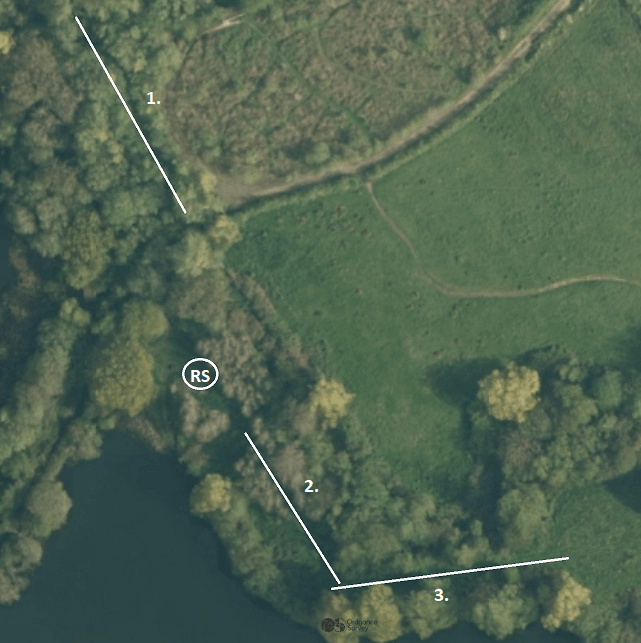
We set the following nets:

The first round gave us a false sense of security: a couple of juvenile Great Tits, a juvenile Chiffchaff and two adult male and one juvenile Blackcap. Unfortunately, it then went very quiet, with a couple of birds here, a couple there for the next two hours. I was getting a little despondent by 9:30, so I said to the team that we would give it until 10:30 and if it wasn’t any better we would pack up early.

To be fair, it was a nice catch as most of what we were catching were juvenile Chiffchaffs: our first of the year!

Juvenile Chiffchaff, Phylloscopus collybita

In that early round we also caught our first Blackcap of the year. We ended up with two.

Ride 1 did not catch a thing all session, which was disappointing as, last time I used it, it caught well. Also, ride 2 was catching absolutely nothing so, after that somewhat defeatist discussion, I got the nets moved from the left-hand side of the ride to the right-hand side. Astonishingly, that simple manoeuvre produced good results.

The first good thing in that net was: having had our second ever Garden Warbler in Webb’s Wood at our 10th May session, today we had our third. This time, a juvenile. There is something definitely unusual happening with Garden Warblers this year. I don’t know when they started arriving back but this is our second juvenile of the year: our first being ridiculously early in Ravensroost Wood on 18th May.

The second was this:

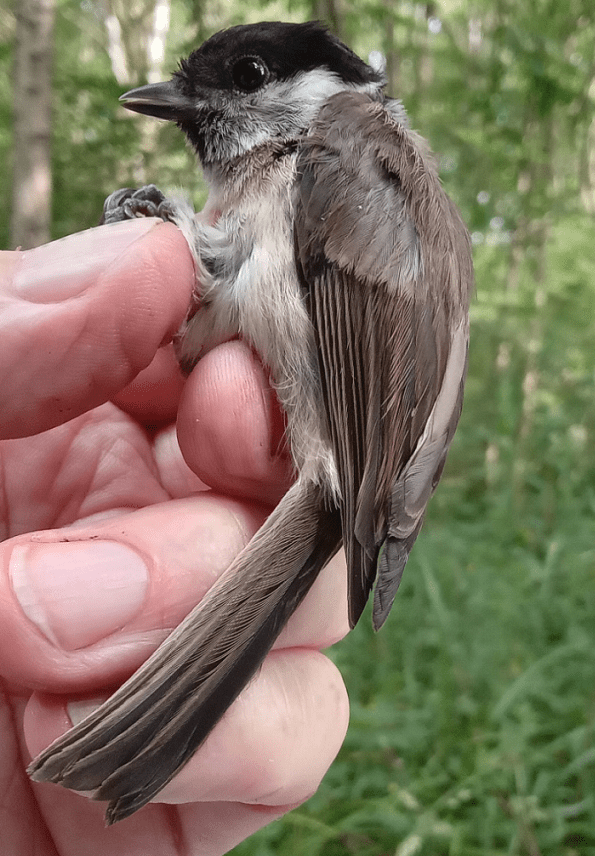
Juvenile Marsh Tit, Poecile palustris

Our first juvenile Marsh Tit of the year, caught in the net alongside an adult female with a well-developed brood patch. Mum, perhaps? It is looking rather good for Braydon Forest Marsh Tits this year. So far we have ringed 12 and retrapped 23. This is how it compares with the first full six months of each preceding year since I started ringing in the Braydon Forest:

This year has started extremely well for my keynote species. This juvenile is the earliest that we have ever caught and ringed (okay, let’s not get carried away: only by one day, from two caught and ringed in 2022 at Ravensroost Wood).

These were followed by another juvenile Chaffinch, carrying on from the two caught in the previous session in the Firs. With the wind getting up at 10:30, and some nets starting to billow, we decided to shut the nets after our 11:30 round.

The list for the day was: Adult [Juvenile](Retraps): Blue Tit [1]; Great Tit [4]; Marsh Tit 1[1]; Robin [3]; Blackcap 2[2](1); Garden Warbler [1]; Chiffchaff 1[8](1). Totals: 4 adults ringed from 3 species, 21 juveniles ringed from 7 species and 2 retraps from 2 species, making 27 birds processed from 7 species.

The irony of this morning’s session was that the dominant species singing all around us was Willow Warbler and we didn’t catch a single one! It was rather good to see a decent group of about 20 Swifts flying overhead

We had lots of very pleasant interactions with the public this morning: more people with their dogs on leads than I ever see in the nature reserves where they are supposed to be on leads. The friendliest French Bulldog we have ever met. Her name was Lily and she wouldn’t let her owner pull her away until she had been stroked and petted by every one of us! It was a lovely morning and, with the six of us to take down and pack away we were off site around about midday.

West Wilts Ringing Group Results: May 2025

An interesting month: if incredibly frustrating (and expensive) for me personally.  Without moaning on about it any more: the details are on my 31st May blog post!  The weather was a bit weird: a couple of weeks of dry heat and sun, a few days of wind and rain, then back to sun and strong winds, particularly in my part of the county.   I don’t think that I would have been able to set nets in the last 10 days even if I had a vehicle to get to site. I think most people were affected, excluding Jonny’s pullus ringing, we only managed 16 full and proper sessions plus one composite from Andy’s forays into his garden.

Added to the list for this month were adult Collared Dove, Grasshopper Warbler and Stonechat plus Jackdaw and Swallow pulli.  However, missing from the list were Bullfinch, Coal Tit, Grey Wagtail, Jay, Spotted Flycatcher and Tawny Owl adults, plus two Canada Geese youngsters and a brood of six Kestrel chicks. That said, Ellie L. got to ring her first Tawny Owl and two Kestrel chicks on our trip out with the Salisbury Plain Raptor Ringing Group.  She also ringed her fist Jackdaw chick on our box checking expedition (just before the car stranded us).

Jonny was, once again, hugely busy ringing Blue Tit, Great Tit, Swallow and Tree Sparrow pulli. Nearly the same numbers as last year, just a different mix: more Blue Tits and fewer Great Tits the key difference.

Talking of chicks: Ian ringed four of these beauties:

Stone-curlew Chicks, Burhinus oedicnemus, photo courtesy of Ian

Their numbers are growing on the Plain but they are also spreading.  According to correspondence that I had with the warden at RSPB Winterbourne Downs, they have four pairs nesting on their reserve this summer, alongside a few of these:

Lapwing chicks, Vanellus vanellus, photo courtesy of Jonny

Again, ringed at three sites around the county.  Two of them were also recaptured after having been ringed last month, so hopeful signs for survival.

Not in the same class as those above but I was very happy to get these in the Firs:

Juvenile Chaffinch, Fringilla coelebs, posing for the camera!

One other issue: Barn Owls – nesting efforts so far have proven to be non-existent on Salisbury Plain and in the Lower Wylye Valley.  Like in the Braydon Forest: a few pairs in boxes but no real sign of eggs, and certainly no chicks to be found so far this year.  Last year we had eight active nests in May, we actually ringed one brood and a couple of adults in May, the Salisbury Plain team ringed 16 broods in May last year but none this May.  Hopefully we will find some nesting activity, eggs and, hopefully, some chicks.  One good thing about late breeding: the Jackdaws will have finished and their young fledged before the Barn Owls get seriously involved.

It looks like we are heading into some more hot weather so what impact that will have we will find out this month.