Blakehill Farm: Wednesday, 30th October 2024

I decided to have another trip to Blakehill Farm, as the weather was perfect for the site and I am always happy to ring a few Meadow Pipits. Actually, what got me going were the reports of Black-faced Bunting turning up around the country. The odds were ridiculous to one, but if one was going to arrive in Wiltshire (there is one in Glamorgan), Blakehill seemed a potential spot. Obviously, no such luck.

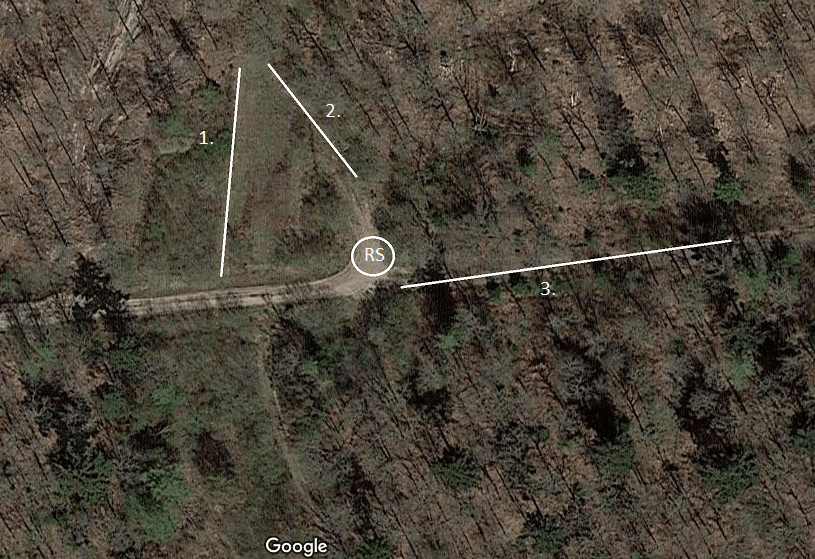
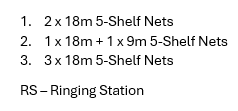
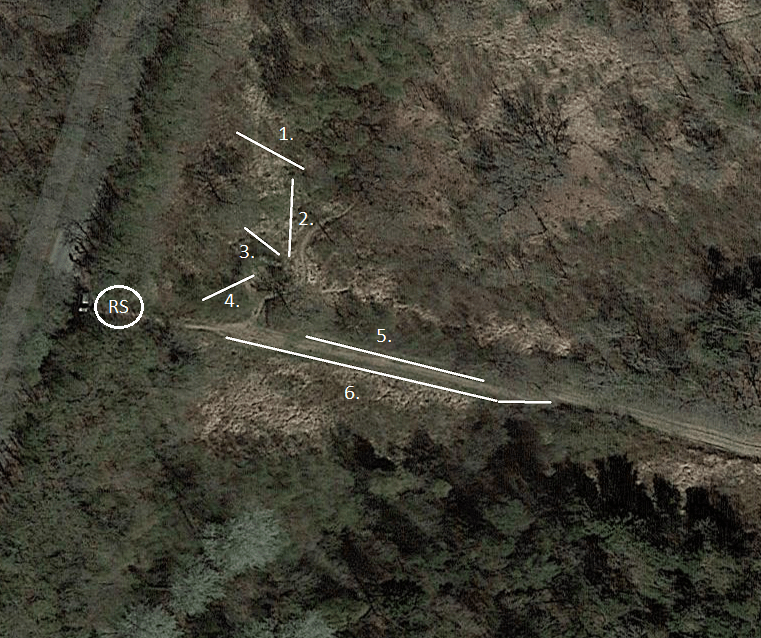
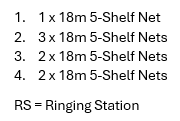
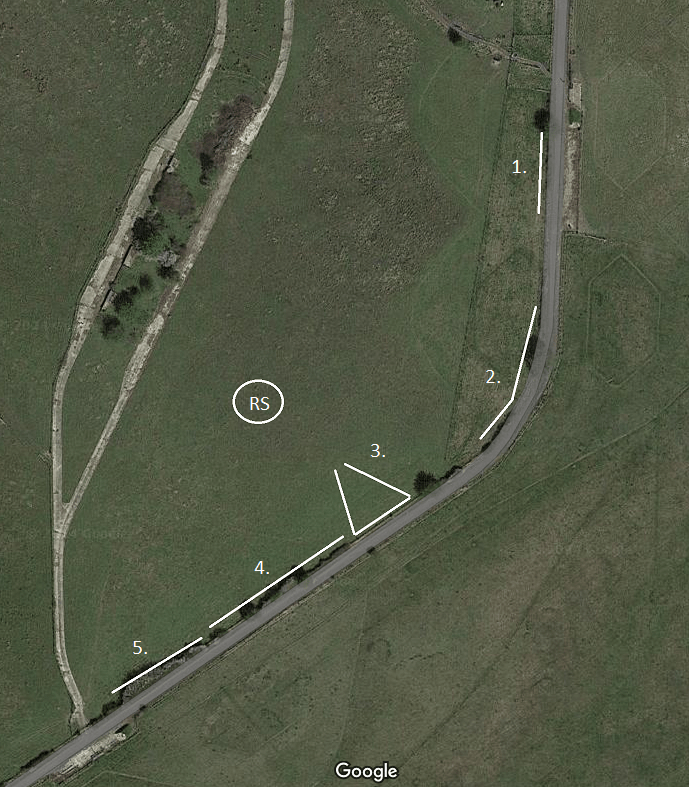
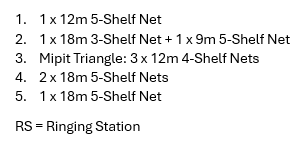
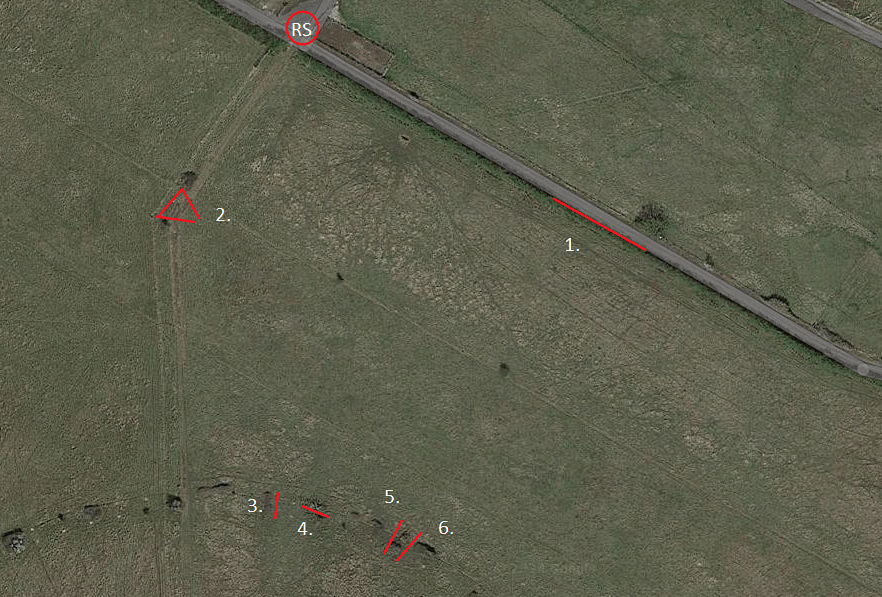
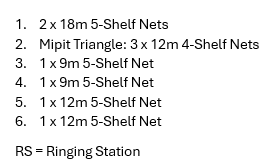
I was joined by Rosie, Miranda and Sarah for the morning. Rosie had to head off at 9:00, for work at the Trust, and Miranda had to head off at 11:30 to collect her offspring and head off to introduce them to the, soon to be, newest member of their family: a gorgeous black Cocker Spaniel puppy (I have seen the photo), not yet ready to leave its mum or litter mates. We met at 7:00 and set the following nets:

Once again a Wren, this time joined by a Robin, decided to get into the nets before they were fully open: both in ride 5. For once Rosie got a chance to process a few birds before going off to work: two Robins and a Meadow Pipit.

It was a quiet morning: a bit cold, very overcast and dull, and the little breeze there was came from the south-west, rather than the forecast north-east. Annoying because the nets were set for a north-east wind and it meant we had a few issues safely taking the nets down at the end of the session. Nets and bramble and blackthorn do not play well together, and that was today’s situation. From the first two birds at 7:30, we didn’t catch anything else until 8:30, when we caught six birds, and then nothing else for another hour, until we got another three. It was like that all morning. The best round was at 10:55, when we caught eight birds, but the others were just one, two or three at a time.

I had hoped to run some nets along the perimeter track side of the hedgerow. Unfortunately for today, the Trust and the BTCV (British Trust for Conservation Volunteers) team had been in and carrying out some more of the hedge-laying being completed this winter.

A brief moment of nostalgia: I started working in IT back in 1983. In 1984 the BTCV moved to offices in Wallingford, Oxfordshire, and I set up a number of their office computer systems and databases as part of my then job for them.

The red line on the diagram above shows how far they have got with their work. By the end of the winter it will have reached the gate to the plateau. It is great that it is happening and I am hopeful that it will have a positive impact on a few species but, in particular, the Linnets on this part of the site. The simple fact is that we have not had decent catches of Linnet at Blakehill for nigh on 10 years. In 2015 we processed 42, 2016 it was 25 and 2018 it was 16. Since 2020 inclusive, we have only caught two in any one year at Blakehill. The only downside is that my usual area for setting nets for catching Redwing is exactly where the red line is. The solitary tree in that area is where they would congregate before responding to the lure and I would catch a number in my nets. Today, whilst they have done a great job of the hedge-laying, they haven’t got around to removing the piles of brash and I didn’t fancy getting my nets snarled up in there. There were plenty of Redwing around, but they were in the trees at the edge of the Blakehill complex. We only knew how many when one of the model aeroplane club members came along and flew his aircraft along the tree line, sending them flying away from the disturbance.

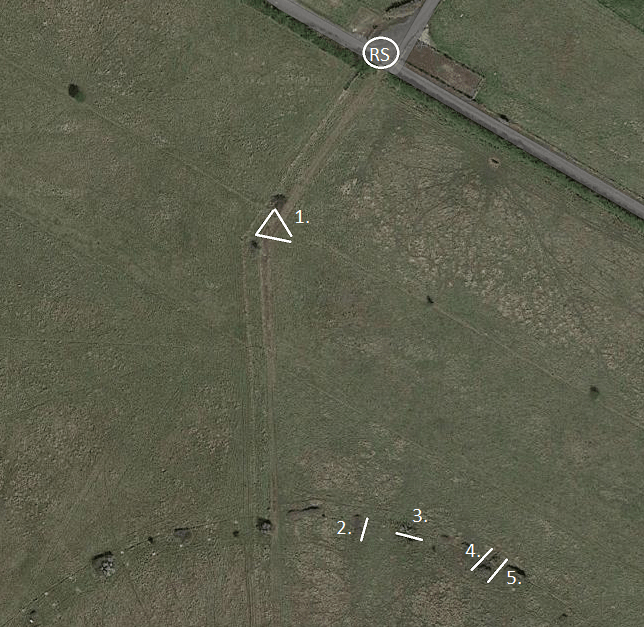
The Mipit triangle did a decent job again and a few were also found in the other nets. However, the number flying around was much lower than even just a week ago. Again, there was a distinct lack of flying insects at the site.

With the numbers having fallen away, Miranda having toddled off, Sarah and I decided to close the nets and take down at 11:45. Naturally, that meant that we took another three birds out of the nets to finish the session: a Reed Bunting, Meadow Pipit and, to top and tail the session, a Wren.

The list for today was: Blue Tit 1; Wren 3(1); Dunnock 1; Meadow Pipit 12(1); Robin 2(1); Song Thrush 1; Linnet 1; Reed Bunting 2. Totals: 23 birds ringed from 8 species and 3 birds retrapped from 3 species, making 26 birds processed from 8 species.

There were a couple of interesting interludes: one was a contractor who arrived pulling a trailer full of wood chippings, from the forestry works going on at Ravensroost Wood. He has expressed an interest in joining one or more of our sessions. The second was a very large tipper truck which, I understand, was depositing significant amounts of hardcore prior to another Trust project starting up. To say that his manoeuvring came within centimetres of our ringing station and vehicles would be an understatement but he got past without mishap.

We had the nets down and everything packed away by 13:00.

The Firs: Saturday, 26th October 2024

I have managed to get in decent number of session recently, despite some awful weather in October. This meant that we had gone round all of our standard sites and it was back to the Firs. It is known locally as the “Braydon Bog” because it is usually so wet underfoot, and I was really expecting it to be as bad as usual, as we have had so much rain recently. Amazingly, it was drier than Webb’s was on Thursday. I was joined for the session by Ellie, her first outing with me since her promotion to a full A-permit, plus Justine and Mark, taking time out from their Avon Valleys raptor work to get to grips with some smaller stuff. We met at 7:30 and set the following nets:

As ever, the first bird out of the nets was a Wren! It is astonishing just how often that is the case. I might have to do the statistics on that! The first round proper had a promising 12 birds, including another five Long-tailed Tits. It has been quite a month for this species: our third best catch since 2013. A quick analysis of the catches shows that October is “the month” for Long-tailed Tits in the Braydon Forest, with more than double the number caught in any other month:

Unusually, the catch of Long-tailed Tits did not include a single retrap.

The catch was largely what I expected. I did put on lures for both Redwing and Lesser Redpoll. They were both more in hope than expectation. The Firs has always been our poorest site for these two species in the Forest. Only 43 Redwing have ever been caught in the Firs since August 2012, and only one has ever been caught in October previously, in 2021. So to catch one this morning was a bit of a bonus.

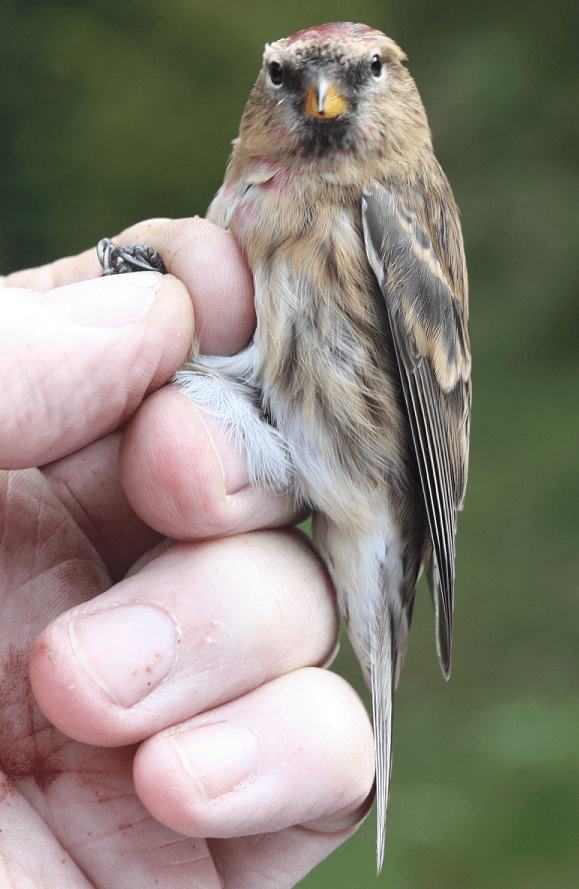
Lesser Redpoll are caught even less often, with only four ever caught inside the Firs: two in November 2016 and two in February 2022. So not catching one in this session was not a surprise. Just across the road, in Webb’s Wood, where our ringing site is about 600m away from our Firs site, the last three years have seen it become the main site for our Lesser Redpoll catches. Hopefully they will spill over into the Firs. As posted for Thursday’s session, we caught our first two of the winter there that day. It will be interesting to see if they spread across Wood Lane into the Firs.

The session was reasonably busy, with birds in every round, and the catch was as follows: Blue Tit 7(8); Great Tit 4(3); Long-tailed Tit 7; Wren 2(1); Robin 2(1); Redwing 1; Blackbird (1); Chiffchaff 1; Goldcrest 2; Bullfinch 1. Totals: 27 birds ringed from 9 species and 14 birds retrapped from 5 species, making 41 birds processed from 10 species.

It was a very pleasant session, even if it was Blue Tit heavy. Interestingly, a Blue Tit that we ringed on Thursday, BFF1788, was recaptured at the Firs in this session just two days later. In my analysis of movements of titmice within the Braydon Forest, that is the only regular movement: between the Firs and Webb’s Wood. Is 600m a “significant movement”?

The juvenile female Bullfinch was everyone’s favourite bird of the morning. During the course of the session we were joined by a cyclist who stopped off to chat. He had started out from Swindon, was heading towards Malmesbury, before going on to Cirencester, then back to Swindon. Sounds too much like hard work to me! Later we had a group join us on the site looking for fungi. The group leader said that he had been to all of the other woods in the Forest but that none of them compared to the Firs. He also said that, despite them all carrying baskets, they would only be taking the odd representative specimen. All I can say is that they were still there and still collecting when we left.

We emptied and shut the nets at 11:45, processed the last eight birds and then took down, leaving site at about 12:30.

Webb’s Wonder: Thursday, 24th October 2024

I am having a busy week this week. Miranda was away and unable to make the usual Wednesday slot, so I suggested that we do a session at Webb’s Wood this morning. Rosie joined us to help set up, but had to disappear very early. The nearest she got to processing a bird was extracting our first Redwing of the morning, whilst Miranda and I were setting up our last net ride. We set the following nets:

I was hopeful that we would catch a few Redwing and set a suitable lure on ride 2. Straight away we started to get one or two in the nets, and it continued like that all morning, with a boost of nine at 11:00. 2024 seems to be a good year for Long-tailed Tits: our best year for five years with just under two and a half months to go. Today we caught two in the first round at 8:30 and then another 12 at 9:30, and then no more.

Things started to get very interesting at 11:30 just after we had decided to start taking down, as the wind was getting up and net ride 3 was just filling up with leaves: hundreds of them. We started extracting the leaves from the first of the three nets in ride 3. Once that was clear and closed, I started clearing the other two nets whilst Miranda went to check the other rides. We processed the birds she got from the round, finished clearing the second and third nets, whilst Miranda carried out another round. I then took down ride 3, and went to check ride 1 for birds whilst Miranda was busy with ride 2. I found this in ride 1:

Adult male Lesser Redpoll, Acanthis cabaret

I love the Paddington hard stare. This is our first of the autumn. Miranda hadn’t seen it as she was busy extracting two Marsh Tits from ride 2. We left ride 2 until last and, whilst taking down ride 1, I looked across and there was a second sat in the 9m net of ride 2. Since Forestry England carried out a significant thinning of Webb’s Wood over winter of 2019 / 2020 it has become our best site for the species. It has taken that mantle over from Somerford Common.

It was also gratifying catching a decent number of Redwing. Last week at Somerford Common we caught seven out of many tens of them flying around. Today we didn’t see flocks flying around but we did manage to catch a total of 18 in this session.

The list from today was: Blue Tit 4; Great Tit 3; Coal Tit 1; Marsh Tit 2; Long-tailed Tit 12(2); Wren 1; Redwing 18; Goldcrest 3(2); Lesser Redpoll 2. Totals: 46 birds ringed from 9 species and 4 birds retrapped from 2 species, making 50 birds processed from 9 species.

Removing the leaves from the nets took us an age, but it is a necessary evil. We finally got away from site at 13:45. It was a thoroughly enjoyable session for the second day in a row.

Going Solo: Blakehill Farm; Wednesday, 23rd October 2024

With the weather forecast for it to be dry with a light wind, I decided to have another go at Blakehill Farm, get a few Meadow Pipits and see what else is out there. I had agreed with one of the team that they would join me for the session: when they hadn’t arrived by 8:00 I assumed they were not coming and, for once, assume did not make an ass out of me. To spare their blushes, no names, because they simply forgot. After a bad night’s lack of sleep last night, had I known ahead of time I would have stayed in bed, but then I would have missed a very pleasant session, so just as well. Unfortunately, there is no mobile signal out on the plateau so neither of us got our messages to each other until 12:30, when I got home. O2 is rubbish but I am not sure that any other provider is any better!

I got to site at 7:30 and started setting up. When I realised that I was going to be working solo, I cut back on the number of nets I had planned, so nothing was set along the perimeter track this time.

As is, it seems, obligatory, the first bird out of the net was a Wren that flew in as I was opening the nets at 8:30. Thereafter, it was a busy morning for an old man (I will be 70 in just over two weeks time). I am pleased to say that I caught several Meadow Pipits in the Mipit triangle, but they weren’t fussy and were happy to be caught in net 4 as well.

The third round was highly productive with a good haul of Long-tailed Tits. They were the largest cohort in the catch, followed by Meadow Pipits and then Blue Tits. I am always somewhat surprised at how many Blue Tits we catch out on the plateau. I always think of them as birds of the woodlands and hedgerows but they regularly turn up in the sparse plateau bushes. Today they were caught in three groups of three, one group each in nets 3, 4 and 5, each on different net rounds, actually starting at 3 and ending at 5.

The list for the session was: Blue Tit 6(2); Great Tit 4; Long-tailed Tit 9(1); Wren 3(1); Meadow Pipit 9; Blackcap 1; Chiffchaff 1; Bullfinch 1; Reed Bunting 4. Totals: 38 birds ringed from 9 species and 4 birds retrapped from 3 species, making 42 birds processed from 9 species.

The Long-tailed Tits were in a single flock: eight of them in net 4 and one in net 3. The retrapped Long-tailed Tit was ringed three years ago, almost to the day, at Blakehill Farm on the Chelworth Industrial Estate side.

Net three did pretty well. The best catch was a stunning female Bullfinch: such fresh plumage, but with lots of brown fringing to the grey feathers in the lesser covert area. and above the alula. Another Blackcap, probably coming here to overwinter, as it weighed in at less than 18g, was also caught in ride 3. I usually have a gap between the end of September and the beginning of November with Blackcaps, which makes it much easier to decide whether they are coming or going.

I do have a bit of a strange sense of humour. Because I use the Breeding Bird Survey 2-digit codes when recording my data, instead of the 5-digit ringing scheme codes (why use five when two will do), it always amuses me that the bird we catch most of with a specific MP3 lure and specific net set is the Meadow Pipit which, when juveniles are recorded on my datasheets, are recorded as MP3. Just me is it? (For non-ringers: 3 is the BTO code for a bird that fledged this year.)

The wind was quite weird: it started a bit breezier than forecast, then dropped to dead calm for an hour, then it blew quite strongly, billowing out the nets, for half-an-hour, in which I didn’t catch any birds, then dropped again to dead calm, then it actually went to the forecast of low breeze with occasional gusts. Anyway, the catch dropped away rather quickly after 10:30. At 11:00 I did a completely empty round so, did another round at 11:15. As it too was empty I decided to shut the nets and take down at 11:30. Almost to order, as I started dismantle ride 2 it started to rain. It was light drizzle, but it persisted until I had finished taking down all of the nets.

Once I had finished taking down and packing away the ringing station, I was away from site by 12:15. That’s one benefit of not setting many nets. Mind, had we managed to get the perimeter nets open, with lures for Redwing and Starling, the catch might have been considerably larger.

First Autumn Redwing: Somerford Common; Friday, 18th October 2024

With the weekend looking wet and windy, I decided upon two early mornings in a row: yesterday at Red Lodge and today we went to Somerford Common. I was joined by Laura, David and Rosie. We met at 7:30and set the following nets:

Rosie had to leave for work at 8:00, so we quickly put up net ride 5 with a lure for Redwing, as there were a lot flying around. Unfortunately for Rosie, the only bird out of the net before she had to leave was a Wren, which she got to process.

Given that we only caught 21 birds all morning at Red Lodge yesterday (even if one was a Firecrest), I was hoping for a better catch today. Yesterday we didn’t catch our first bird until 9:00: today we had caught 19 birds before 9:00 and 28 by 9:30. I had hoped that we might catch some Redwing this morning, having narrowly missed our first of the Autumn at Ravensroost Wood back on the 24th September. I have never caught one as early as that and the one escaping the net before we could extract it was disappointing. The earliest we have caught them in the autumn was the 9th October 2021 at Blakehill Farm. We did catch our first of this Autumn this morning:

Redwing, Turdus iliacus

We caught seven in total: two adults and five juveniles.

The list for the morning was: Blue Tit 11; Great Tit 3(2); Coal Tit 2; Long-tailed Tit 12; Wren 1; Dunnock 1; Robin 1; Redwing 7; Chiffchaff 1; Goldcrest 8(1). Totals: 47 birds ringed from 10 species and 3 birds retrapped from 2 species, making 50 birds processed from 10 species.

It was a decent catch given that we are not supplementary feeding yet. Not unusual for this site at this time of year but, given how sparse some of our catches have been this year, something of a relief to have 50 birds.

There were a couple of interesting things. The first was this Blue Tit:

The wings are shot to pieces, the alula is also very old. The primary coverts are blue but there is no sign of wing moult. I don’t think that it can be a juvenile, the wear is just too great, but possibly a second year bird that hasn’t started its post-breeding moult. Any suggestions, I would be grateful.

The second point of interest: I found one of my bird bags, empty and open lying on the path up where we set nets 1,2 and 3. It had clearly been there since our last visit on the 10th August: it was soaking wet and covered in crud. Having taken it back to the ringing station I noticed something odd sticking up from the top edge of the bag:

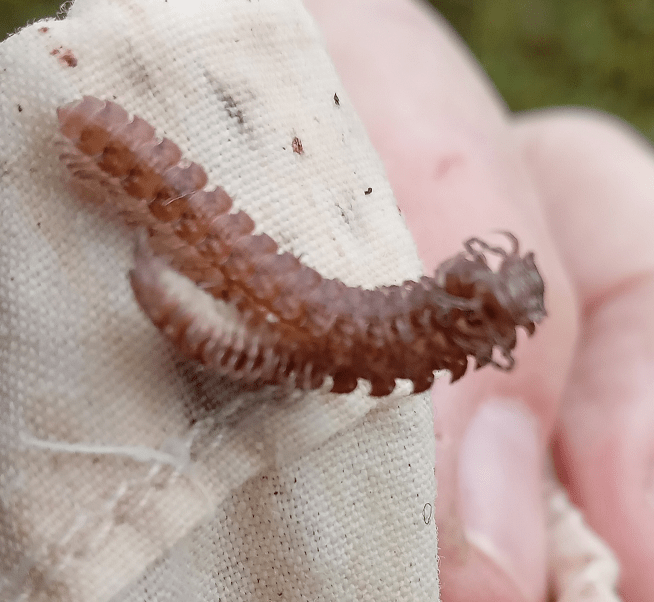
It took a while to work out what it was:

A pair of mating millipedes! I have never seen anything like it before. One more to add to my collection of different animals mating seen whilst out bird ringing, following on from the pair of slugs at Ravensroost Meadows and the Caddis Flies at Lower Moor Farm. (Apologies for the quality of the photo: not a great macro function on my phone.)

With the catch having died away we started packing away at 11:40 on 49 birds. We took down rides 1 to 4. It took very little time with four of us (David’s dad, Trevor had arrived and joined in to help take down) and at 11:55 we went to take down rides 5 and 6 – to find a final Blue Tit in ride 6, giving us a nice round 50 birds from 10 species for the morning! We were all packed away and off site by 12:45.

Red Letter Red Lodge: Thursday, 17th October 2024

After several days of bad weather, and this weekend looking like a washout, it was great to get out today. I went to Red Lodge because it is some six weeks since I was last there. The forecast was for dry but to be breezy, which is why I went for a woodland site. In fact, the site has been rather neglected, as the catch numbers seem to have declined rather more than most when there is no supplementary feed on offer. In fact the last proper session yielded just 17 birds and one evening session just six. For the effort required the return has not been good enough to warrant more visits.

In terms of numbers, today was still well below what one would like to catch in a session with the following nets set:

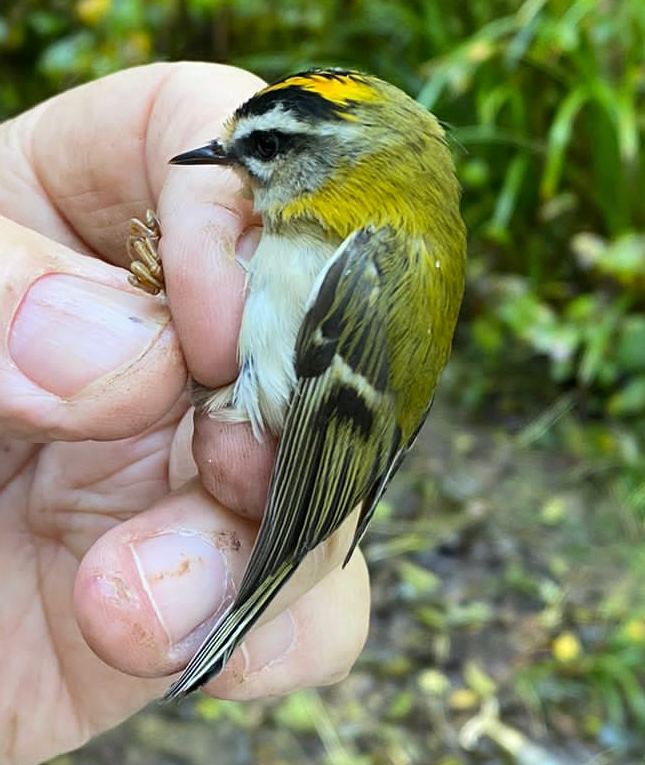
I was joined for the morning by Miranda. We met at 7:30 and set the nets. The nets were open by 8:30 but we didn’t see our first bird until 9:15: a retrapped Goldcrest. At 9:45 we caught a Chiffchaff and another retrapped Goldcrest. It wasn’t looking good but, at 10:15, we did another round and whilst Miranda was extracting a Great Tit, I extracted another Goldcrest and this:

Juvenile male Firecrest, Regulus ignicapilla (Photo courtesy of Miranda)

I used to catch them fairly regularly when I was doing my Help4Heroes sessions at Tedworth House back before it closed but, until today, there had only been two caught in the Braydon Forest. The first was not only the first ever caught in Ravensroost Wood but, I was told by the warden, Robin Griffiths, was the first ever sighting record of the species in the wood. Several people twitched it and got to see it. Because I am a kind individual, I let my then trainee, now fully qualified, ringer, Jonny Cooper, process it. To be fair: he was the one who found it in the net and extracted it, so it would have been churlish to do otherwise. That was back in November 2015. The second was in Red Lodge in November 2019. On that day I was assessing a trainee from the North Wilts Group for his C-permit, and it was nearly the last bird we caught. It was certainly the first Firecrest he had ever processed. My most recent capture of a Firecrest prior to this was at Lower Moor Farm in January 2022. That prompted quite a few local birders asking exactly where it had been caught. I think that shows just how uncommon they are in this area of Wiltshire.

Today’s catch was Miranda’s first ever sight of one, let alone being given the opportunity to process the bird. After that we caught a couple more Goldcrest, a couple of Great Tits, a Long-tailed Tit and retrapped a Nuthatch. To be honest, if it hadn’t been for the Firecrest I would have been more than a little frustrated by the session by the time that Miranda had to leave at just after 11:30, as she had the plumber coming to fix the central heating.

However, the very next round I caught not one but two juvenile Marsh Tits! That is 15 ringed so far this year: on track for our regular 20 ringed each year. Not spectacular but remarkably consistent for such a threatened species.

The list for the session was: Nuthatch (1); Treecreeper (1); Blue Tit 3; Great Tit 3(1); Marsh Tit 2; Long-tailed Tit 1; Chiffchaff 1; Goldcrest 5(2); Firecrest 1. Totals: 16 birds ringed from 7 species and 5 birds retrapped from 4 species, making 21 birds processed from 9 species. That is a pretty good variety in such a small catch, plus a star bird.

I did try a lure for Redwing: pretty standard at this time of year but there was no sign of them anywhere.

I started closing and taking the nets down after I had processed the last two birds: a Goldcrest and a Marsh Tit. That was just after 12:30, and I got away from site about an hour and a quarter later, having removed several hundred leaves from the nets! That’s autumn: great birds, annoying trees.

Blakehill Farm Perimeter Track: Sunday, 13th October 2024

I love working at Blakehill Farm. Despite it being, essentially, a grassland farm, grazed by sheep and cattle, there are plenty of different microhabitats within the site.

These are the five areas within the site that I have run ringing sessions. Area 1, the Chelworth Industrial Estate side is my key area. The fields either side of the Whitworth Building, area 4, is my secondary area. Being close to the farm buildings produces a very different catch to what we get at area 1. The ponds and surrounding fields at area 3 I use early in the year, as it is where I am most likely to catch Snipe and Jack Snipe, plus it is a good area for Redwing. For some reason I have only done area 5 once: it was highly productive but, crucially, there always seems to be cattle out there when I think it could be worth a go. Finally, today we went to area 2. It comprises sparse hedgerow with even sparser trees, but the fenced off area, that you can make out from the photograph below, was seeded with a large variety of weedy seedy flowering plants in an experiment which, unfortunately, didn’t work out, but it has left behind a great deal of thistle seed-heads, which can attract in a number of finches, particularly Goldfinch. Unfortunately, this time the plants have all gone over, and there was very little evidence of available seed-heads in the paddock, so we extended quite a way out from there with our net setting.

I have carried out two previous sessions at this part of the site: 21st September 2022 and 15th September 2023. Both sessions gave reasonable returns, with 30 Meadow Pipits and two Stonechats in the former and 22 Meadow Pipits in the latter. Because of the weather issues in September I didn’t manage to get back to the site until today (the Chelworth side has to take precedence, based on results over the years).

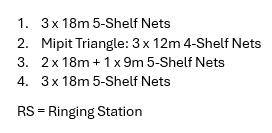
I was joined for the session by Laura, Mark and Adam Childs and we met up at 7:30. Laura and Adam are trainees and Mark is a very helpful addition, helping with the set up and take down, and we have good conversation besides when things are a little quiet. We set the following nets:

I had to carry out quite a lot of scrub strimming along the lines that were going to carry rides 1 and 2. Unfortunately, the left-side handle and arm of my brush cutter decided to break off. and it became a somewhat difficult job, and took a lot longer than expected. This meant that we didn’t actually get the nets open and the lures playing until 9:00. That said, there was not a lot of movement at the time: probably the 2oC temperature didn’t help.

To say it was a slow start would be an understatement. We caught a Wren at 9:15 and then absolutely nothing until 10:00. At 10:00 we caught a Blue Tit, two Dunnocks and two more Wrens. We had a discussion and agreed that if we hadn’t caught anything else by 11:00 we would pack up. As luck would have it, at about 10:30 we started to see Meadow Pipit flocks flying around. That was the problem though: they kept flying around and weren’t coming down. I cranked the volume on the lure up to just under maximum and it did start to attract a few down and at 10:45 we caught five of them, plus a Reed Bunting and another Blue Tit. Thereafter, between 11:00 and midday, when we packed up, we caught another nine birds.

The entire list for the session was: Blue Tit 2; Great Tit 1; Long-tailed Tit 2; Wren 3; Dunnock 2; Meadow Pipit 9; Reed Bunting 2. Total: 22 birds ringed & processed from 7 species. Not our best session by any means, but it could have been a lot worse.

We did have a couple of very pleasant interludes: a ramblers group for people of a certain age (mine, just about) came by, and I spent a very pleasant 15 minutes talking to them about bird ringing, They were very interested, particularly as, whilst they were there a couple of Long-tailed Tits got caught and I extracted them in front of the group. Not something that I do very often: I prefer not to risk any complications, giving the wrong impression. Fortunately, it all went well.

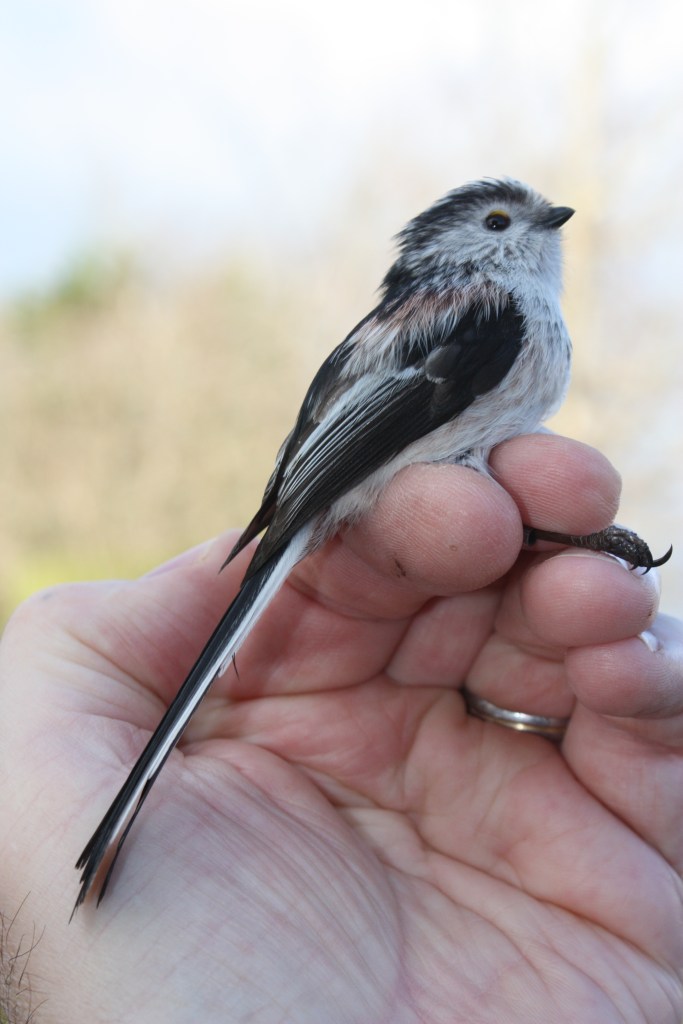
Long-tailed Tit, Aegithalos caudatus

They are such fabulous birds. We had quite a lot of other passing foot traffic, so plenty more chatting and explaining. Nicely, everybody was interested and positive: we had no negative interactions.

From 10:30, until we left site at just after 13:00, we saw so many Meadow Pipits, flocks of 20 to 50 flying around, but so few landing on the grassland. The difference this year from recent years is the lack of Craneflies. Meadow Pipit catches were pretty small in the first three years of my working at Blakehill Farm: 6, 18 and 14 respectively from 2014. However, in 2017 the Wiltshire Wildlife Trust changed their management of the plateau, and reduced the amount of grassland cropped for hay. This left the areas where I do most of my ringing just to be grazed by the cattle over the year until winter, and not to be cut. The impact was immediate: so many more insects, particularly Craneflies, in the autumn. We now regularly catch 100+ each year. Even this autumn, with the rubbish weather and (anecdotally) a huge reduction in the insect population, we have still caught 68 so far – and there will probably be another two sessions there before the end of the month. But right now it seems the birds are spending a lot of time on the wing searching for food.

We started packing away just after 12:20, it was quick and easy and we were off just after 13:00.

Lotti Moor Farm: Friday, 11th October 2024

This was my first visit to Lower Moor Farm since the last CES visit at the end of August. With the odd one being in the area, and one having been ringed nearby, I rather hoped that I might get a repeat of eight years ago, when I caught and ringed only the second Yellow-browed Warbler for Wiltshire. They have become much more regular on migration at coastal sites but are much more scarce inland.

Yellow-browed Warbler, Phylloscopus inornatus

Oh well! We didn’t catch one but it was a lovely session regardless. I was joined by David and Miranda for the session. I don’t usually do Friday sessions but at the beginning of the week the weather forecast was dire for the whole week, except today and Sunday. As you might have noticed from the last blog post: it changed, and we got out on Wednesday. Originally we were going to go for Somerford Common today, but the amount of standing water at Blakehill Farm on Wednesday suggested that any of the woodland sites would be a quagmire, so I changed the location to Lower Moor Farm.

We set the following nets:

We all woke to find frozen windscreens on our vehicles. Is Autumn over already? As it is the one site where there is seating available, in the picnic area where we set the ringing station, because I am a thoughtful trainer (whatever others might say about me) I took three seat cushions with me, so that we could all it without getting frozen or wet backsides whilst processing.

We met at 7:30 and started putting up the nets. For some reason, this morning it turned out to be a real pain and took far more time that usual. They were finally opened by 9:00, but we did start catching straight away: a Wren for openers. It is surprising just how often the first bird out of the net is either a Wren or a Robin. I might do some statistics next time I have nothing better to do.

It was a nicely busy session, and we had a lot of interaction with the general public, all of which was positive. A lot of people were happy to get the opportunity to see a good variety of birds up close and get a few photos. The weather warmed up quite quickly and it was a very comfortable temperature to work in.

There were two highlights: Meadow Pipits and the reasons behind the punning title. Back in September 2014 we caught our first ever Meadow Pipits at the site, with our Mipit triangle set in the same place on the location photo above, as we have done ever since the first successful effort. However, we didn’t catch another on the site until we caught one in September 2020. We caught them in the September of each year since, until this year, but that wasn’t surprising, as we didn’t have a session there last month. Today we caught one at 10:30. As I have done a few at Blakehill recently, and David and Miranda haven’t made those sessions, I got them to draw lots for the right to process it. David won. Fortunately, at 11:00 we caught another two, so we all got to do one.

The real highlight though was the Long-tailed Tits: 21 of them. We caught three in the first round, then no more until our last three rounds between 11:00 and closing up at 12:00. It was also a nice catch of Goldcrest. Our largest single catch of them was nine back in October 2016, since then we have had several catches of six in a session, which we matched today. These two species were the biggest hits with our transient audience. I think we explained the difference between Goldcrest and Firecrest at least three times.

Our list for the morning was: Treecreeper 1; Blue Tit 1(1); Long-tailed Tit 16(5); Wren 2(3); Dunnock 2; Meadow Pipit 3; Robin 1(1); Blackbird (1); Blackcap 1; Chiffchaff 1; Goldcrest 5(1); Bullfinch 1. Totals: 34 birds ringed from 11 species and 12 birds retrapped from 6 species, making 46 birds processed from 12 species.

So far this month we have caught two Blackcaps: one on Blakehill Farm and one this morning. They weighed 17.7g and 17.5g respectively. If they were intending to migrate south for the winter I would have expected them to weigh over 20g, so I suspect that they are arrivals from Central Europe, to overwinter in the UK. I am not aware of any evidence of our summer visitor Blackcaps staying on for the winter, as Chiffchaffs are now known to do. It is a relatively recent phenomenon, proven by ringing recaptures, and a change from one of their previous migration routes, thought to be due to the garden bird feeding habits of the British population.

Miranda had to leave before the last round, she was spending the rest of the day setting up bat detectors for the wildlife group she is very active with in the Marlborough area (I suspect she is the driving force). David and I did the last round at 12:00, shutting the nets as we went, extracting the last few birds and processing them before taking down and packing away. We got away from site at about 13:00, after a very satisfying session.

Dodging the Rain: Blakehill Farm, Wednesday, 9th October 2024

Having missed the only decent day of the previous seven, because I was attending our fourth school reunion (51 years since we left our secondary school – yes, I am that old) in the Portsmouth area, I am finding this weather hugely frustrating. On Sunday all of the forecasters I use (the Met Office, Meteo (both directly and via the BBC), xcweather and weather.com) said it would rain all week until Friday! So I arranged a ringing session for Friday and another for Sunday, because Saturday was also forecast to be wet. On Monday they all changed to say that it would be dry on Wednesday, with light winds, so I decided to head to Blakehill Farm on that day. Everybody in the team was otherwise engaged, although Laura and Rosie were able to join me first thing, but both had to leave by 9:45, as they had other arrangements.

We met at 7:30 and set the following nets:

Ride 1 was set on the track side of the perimeter hedge. Ride 3 was a new net position – and it turned out well, as I will explain later.

The weather was weird: it was dry but there was a lot of moisture in the air for a lot of the morning. The breeze got up more quickly and stronger than forecast but we never got any actual rain. However, I took precautions just in case: putting paperwork and equipment undercover when I went off to do rounds.

We started catching straight away, with a Wren being caught in net 6 before we had managed to open it. Overall we had a nice mix of species. Before they had to leave, we caught Blue Tit, Chiffchaffs, Meadow Pipit, Reed Bunting, Robin and Wren. They got to extract and process 19 birds between them. Unfortunately, (for Laura and Rosie) in the first round after they left, I caught my only Blackcap of the session, and then, more interestingly, in new net ride 3, I caught:

Adult male Stonechat, Saxicola rubicola

In the next round, I caught another in that same net and, in the last round, I caught another, again in that net. It suggests that this blackberry bush is just the right height for Stonechats to perch on. For once my hunch paid off. This takes our 2024 total at Blakehill Farm to nine: our best there to date. Blakehill Farm is the only site that I have where they are found.

The list for the session was: Blue Tit [2](1); Great Tit [7](1); Wren 2[3]; Dunnock [1]; Meadow Pipit 1[4](1); Stonechat 3; Robin [1](1); Blackcap [1]; Chiffchaff [6]; Reed Bunting [3](1). Totals: 6 adults ringed from 3 species, 28 juveniles ringed from 9 species and 5 retraps from 5 species, making 39 birds processed from 10 species.

With wind getting up far more strongly than was originally forecast (sorry, boring!) I was rather pleased that I had had the foresight to set all nets, bar net 5, to the leeward side of the bushes. That meant that I could keep them open for as long as I needed. I started closing up at 11:45, only as I went to close the plateau nets I found six additional birds in them, so I extracted them and closed the nets as I went. However, I had to process them before finally taking the nets down. Eventually, I had the nets down by 13:15 and was off-site soon after. I had forgotten that it is hard work taking down and clearing away the equipment after a few hours of trekking around the plateau and up and down the perimeter track. Usually I have a small team to share the workload. Not today!

Raptor Ringing in the Wylye, Till & Nadder River Valleys: 2024

The following report has been compiled by Justine Hadfield of the Salisbury Plain Raptor Ringing Group. Justine became a C-permit trainee with me at the beginning of the year when Nigel Lewis, her trainer and the individual responsible for setting up the SPPRG, retired from ringing. She and Mark Fisher, who has now joined me as a T-permit trainee, have worked hard to manage the boxes on the sites adjacent to these three rivers. This is her report:

This year is my 5th  year  with the owl group, and my first leading the ‘off plain’ team, which covers the Wylye, Till and Nadder Valleys. Myself and Mark Fisher have helped Nigel Lewis with this area for the last two years, so I was hopeful that I would know at least some of the area. It’s been rather a large learning curve, having to learn how the various recording systems worked, both internal and that used by the British Trust for Ornithology: still a work in progress!

Our checks started in early April, and it appeared that although it had been a wet spring, the fact that it  had been relatively warm seemed to work in favour of the birds. Most of the boxes we checked in the first few weeks….kestrel, little owl and tawny owl, had full clutches of eggs, or near full. We put that down to a plentiful supply of voles.

We only have a few tawny owl boxes off plain, with three healthy young birds found in one box. This turned out to actually have four young, one having already fledged ahead of its smaller siblings. One barn owl box which had housed a tawny for a few years, had the correct barn owl inhabitant this year, wonder where the tawny ended up!

Little owls have not fared well at all this year. We have five boxes, and all have been successful previously…not so this year. Only one had four healthy young, and I have since heard and seen these youngsters flying and calling.  Two other boxes only had one and two chicks, and the final two boxes had three young each predated. Very sad indeed considering Little Owls are in decline in the UK.

Kestrels appear to have done very well, with most boxes having full, or near full broods…so fives and sixes of healthy young…kestrels do seem to make very good parents. Once again, I’ve seen a few families of youngsters hunting and flying in their box areas.

Finally, barn owls. The apparent good vole year (unless you are a vole) seems to have provided a good food source for the birds, with broods doing well, most boxes having three or more young. One box had seven young, but when we went back to ring them, only three had survived…one large chick had walked out of the box and fallen to his death…the box has now been replaced with a Lewis design box which minimizes the risk of this with an internal corridor. On average we have had broods of three and four young, with some fives, and a wonderfully healthy six….the youngest of which is still returning to the box, where a camera is installed, several weeks after fledging.

This year we have had reports of drowned barn owls, found in water troughs on farms. On investigation, it turns out that this is the second biggest killer of barn owls. There is a project promoted by the Barn Owl Trust, to advise landowners how to make floats for the troughs that are within a couple of hundred yards of owl boxes. I have taken this on as project to promote this to farmers and landowners. We have made some floats, done a talk to a farmers cluster meeting, and sent emails to DIO to forward to farmers on Salisbury Plain, as well as emailed information to other landowners who have contacted me re found dead owls in their water troughs.

While this year has certainly been a challenge, Mark and I have enjoyed the work we have done, and are very proud to be carrying on the work Nigel has done over the previous forty years.

The following are the results of our efforts this year (with some second brood Barn Owls to be processed next week).

Barn Owls: 154 ringed, from 47 boxes. This averages out at 3.27 per box. There was a brood of 7, one of 6 but mostly 4’s and 3’s with a couple of 2’s and 1’s.

Little Owls: Only 7 ringed from 3 boxes. An average of 2.33 per box. Two regular boxes had their young predated, and two boxes had fewer young than in previous years.

Kestrels: 70 birds ringed from 14 boxes. An average of 5 per box, most boxes had 6’s and 5’s with one 4 and one box with 1.

Tawny Owls: 5 birds from 2 boxes, average of 2.5 per box. We only have a couple of Tawny sites…and one Barn Owl box that has been used for several years by a Tawny, has reverted to Barn Owl use this year.

Justine Hadfield

As well as her hard work on checking and managing the owl boxes, Justine has been working with the local farmers / landowners to try and reduce Barn Owl mortality from drowning. Unfortunately, Barn Owls are attracted to cattle troughs to bathe, after being stuck in the nest box with the young. (If you have ever seen the inside of a Barn Owl nest box you would want to bathe as well!) They get in and cannot get out again. Justine is working to get floating platforms installed in those troughs as a preventative measure and, so far, has had a very positive response. Justine did a talk to the farmers’ cluster group. They have sent out information to their members and are already building floats for deployment.