Webb’s Wonder: Thursday, 9th October 2025

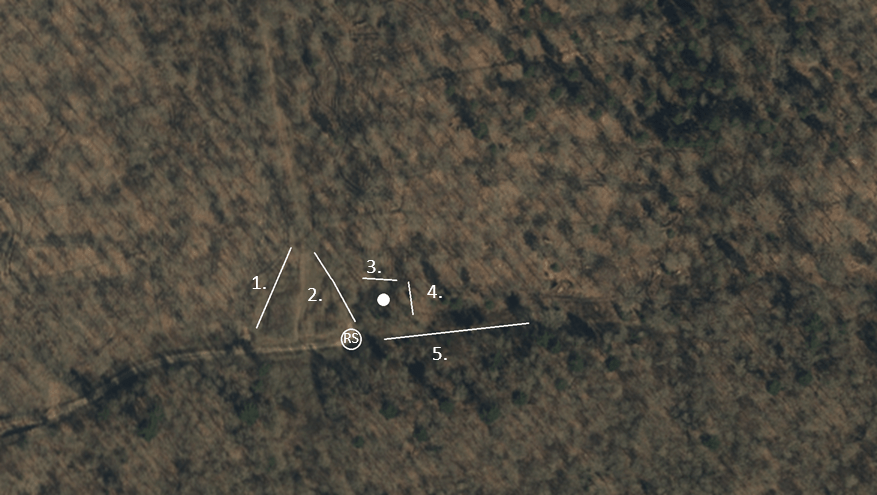
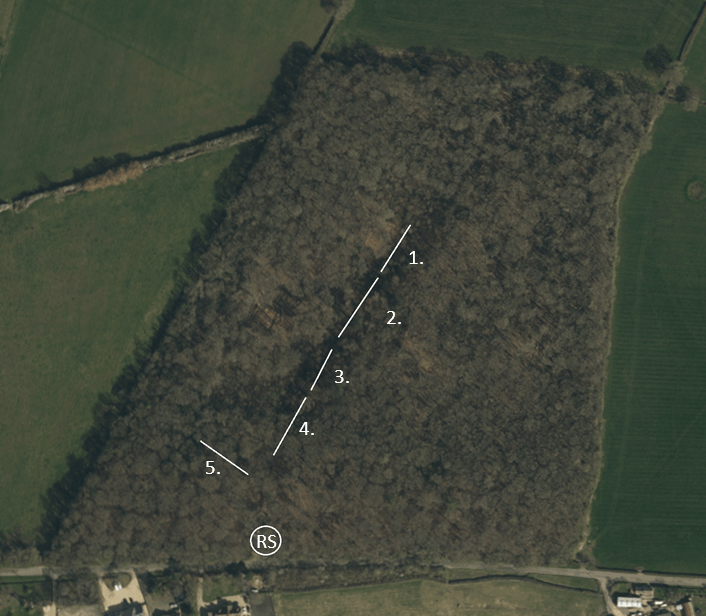
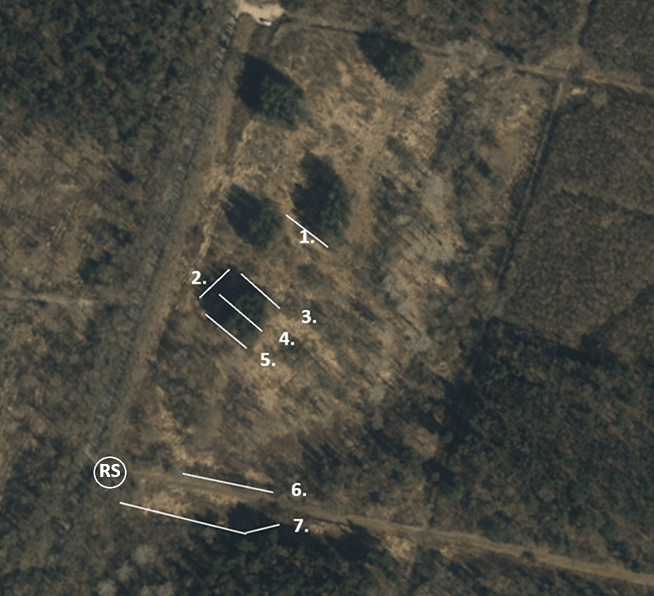
We had to postpone our session from yesterday because of rain. Fortunately my mid-week team of Laura, Miranda and Ellie could all make this morning and I think we are all pretty pleased that we did. We met at 7:00 and went back to our usual feeding station area. That was mainly because the entrance gate is broken open and Miranda beat me to site and, because she hasn’t been with us at the recently used rides, she went to the area she knew. In the event it was very fortunate!

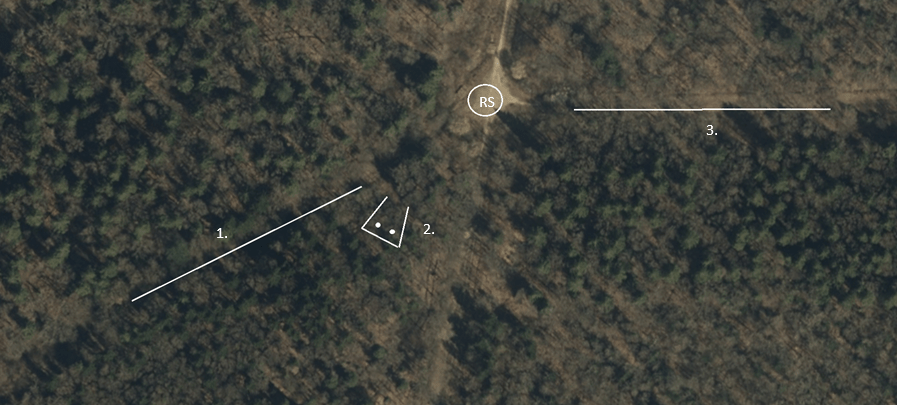
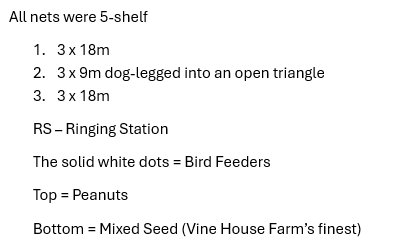
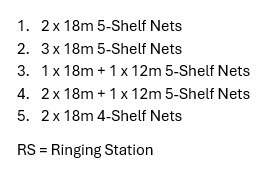
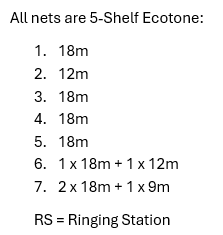
We set the following nets:

We had the nets open by 8:00 and started extracting straight away. The obligatory Wren flew into net 2 before it was open! They really are the most frequently caught bird in the nets before they are opened, followed by Robin.

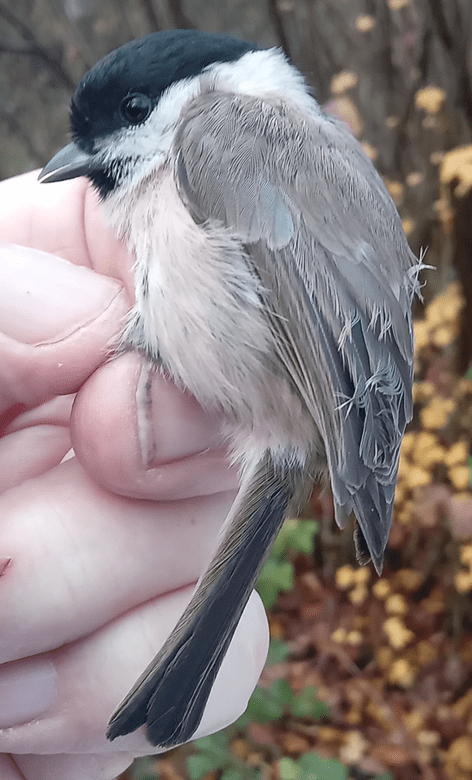
It was nice to have a regular flow of birds. The first round proper produced six birds: a Blackcap, Coal Tit, two Goldcrest, a Great Tit and our 22nd Marsh Tit of the year! Looking good for them this year! Next round was a single Coal Tit, but the next three rounds produced 14, 14 and 20 respectively. The third of those produced another two Marsh Tit juveniles: up to 24, really hoping for 30+ this year. The make up of those catches was interesting: in the first round of 14 we caught eight Long-tailed Tits and three Goldcrests. Our next round of 14 was bulked out by another five Goldcrest and the round of 20 was down to 10 Blue Tits and 5 Great Tits.

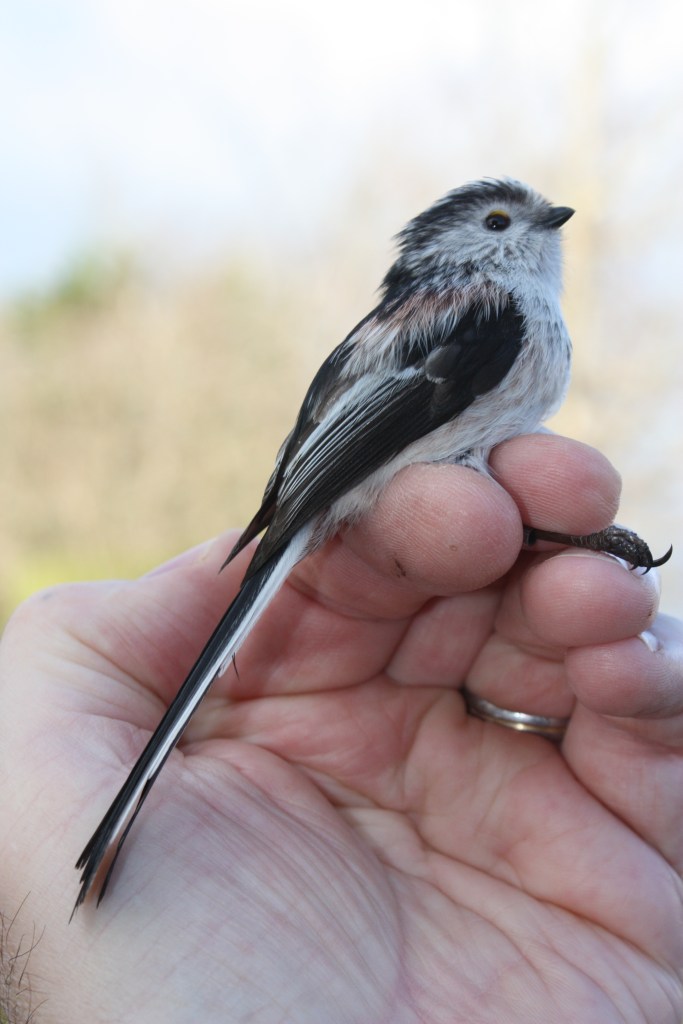
Two rounds later, with no disrespect to our Marsh Tits, we caught the highlights of the session:

Adult Male Redpoll, Acanthis cabaret

October is the earliest that we have ever caught Redpoll in Webb’s Wood. Across the Braydon Forest, apart from two juveniles caught in Ravensroost Meadows in August 2016, October is the earliest month in which we catch them.

The list for the session was: Blue Tit 21(2); Great Tit 10(1); Coal Tit 5; Marsh Tit 3; Long-tailed Tit 8; Wren 3; Robin 2; Blackbird 1; Blackcap 1; Chiffchaff 2; Goldcrest 13; Redpoll 2. Totals: 71 birds ringed from 12 species and 3 birds retrapped from 2 species, making 74 birds processed from 12 species. This is our largest catch in Webb’s Wood, with or without a feeding station in place, since August 2018. Prior to that we did have two sessions that were larger, but they were due to the provision of supplementary feed. I haven’t set any feeding stations yet this year as the weather is decent and there is still plenty of wild food available.

We emptied and closed the nets at 11:45. Processed the last seven birds and then we had everything packed away and were off site by 12:30 after a very satisfying session.

West Wilts Ringing Group Results: September 2025

Just our best month ever.  Prior to this month our best ever single month was in September 2023, with 1,802 birds processed.  This month we have broken the 2,000 mark. As usual. most of this is down to Jonny’s efforts.  He does seem to have discovered some seriously productive new sites: particularly two sites just to the west of New Zealand (a village in Wiltshire, he hasn’t emigrated)!  One is a highly productive woodland, the other is a boggy patch surrounded by hedgerows and trees.  Mind, it seems every site he discovers turns out to be highly productive.  Unfortunately, my contribution this month was considerably lower than I wanted, with five sessions cancelled for a variety of reasons. 

This was the catch for the month:

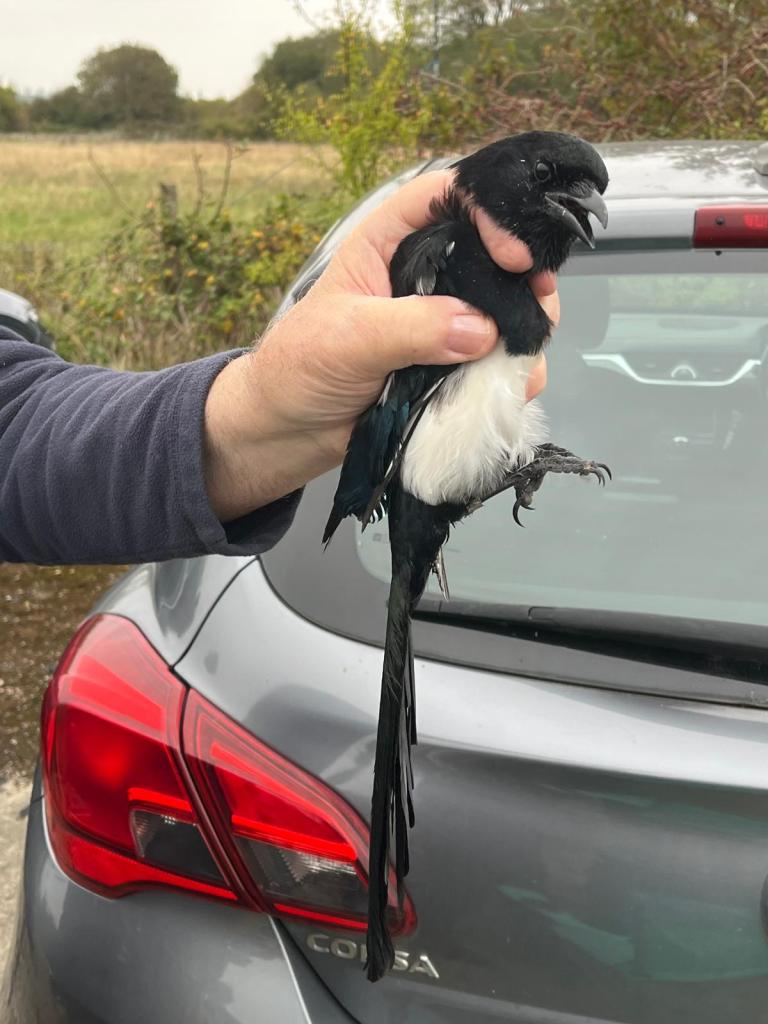
Added to the list compared to this time last year were Firecrest, Garden Warbler, Kestrel, Magpie, Mallard, Skylark and Woodpigeon.  Missing from the list this year were: any pulli, House Martin, Linnet, Moorhen, Pied Wagtail, Stock Dove and Tree Pipit.  The complete lack of Swallow, after 182 ringed and 4 retrapped last year, was perhaps the most surprising.  There were also significant falls in the numbers of Goldfinch and Reed Bunting.  The number of Meadow Pipits were also much lower than usual.  That is almost all down to our failure to catch them at our normal levels at Blakehill Farm with just two caught in the month. Not that there weren’t plenty around: we saw plenty, sitting on the top strands of the net or on the poles, but not coming down to the ground to get caught.

Where there was a huge increase was in both Blue and Great Tits, Blackcaps and the astonishing catch of 530 Chiffchaff: over 200 more than in any other single month, and we are already at over 1,200 for the year. Last year, our previous best year, was over 200 fewer than we have caught so far this year, with the chance to add another 200 or so before the end of the year.

Smaller numbers but nice increases in Greenfinch, Whitethroat and Willow Warbler.  Jonny added two more Skylark to our list: taking the total to just 14 since 2013.  Actually, we only started to catch any since 2019, and have had between 1 and 4 every year since, except 2022. 

The Kestrel catches were nice: since 2015 we have caught one fledged Kestrel per year, with 2019 missing out but, so far this year, we have caught 3.  My team’s was, predictably, at Blakehill Farm, Jonny’s was at the same farm near Hilmarton where he caught one last month.

Kestrel, Falco tinnunculus

Three Firecrest in one month is our best ever catch. Although we have had a total of 18, it is usually one per year, with two in 2015, until last year when we caught three: one in April and two in October. So far this year we have caught five: one in April, one last month and three this month! (Little bit of egotism: my sites have produced 11 of the 18 the group have caught, although Jonny caught all three of this month’s cohort, each in a different site.)

A quite brilliant month all round.

Bleakhill Farm: Saturday, 27th September 2025

Not a spelling mistake: not what I had planned for this morning. To the context, this morning was a ringing demonstration for the Malmesbury & District Natural History Society. We had the choice of Ravensroost Wood or Blakehill Farm. Our last visit to Blakehill was 19 days ago, with 32 birds from 11 species. That included a nice mix of autumn migrants and the one species we missed out on was Meadow Pipit. We saw that they were there but they avoided the Mipit triangle. I wondered if the issue was that the lure wasn’t loud enough. Perhaps with a better lure we might catch a decent number, so that’s what we decided to go for. With the weather forecast for it not to be too windy, after discussion with the organisers, we decided to go for Blakehill Farm. That had always been their preference.

I was joined at 6:30 by Miranda, Ellie and Adam and we set the same nets that we have done in the last few sessions. As I went out to set up the various lures at the nets I extracted our first bird of the morning: a juvenile Whitethroat. The first group of visitors arrived at 7:30, in time to see the Whitethroat. Unfortunately, the catch was slow and very light. The Whitethroat was followed by our first Chiffchaff of the session and our first Meadow Pipit of the autumn:

Juvenile Meadow Pipit, Anthus pratensis

You can identify that it is a juvenile from the pale fringing with the dark spike on the median coverts. We also had our first Reed Bunting of the autumn. Despite the name, they are very much a farmland bird outside of the breeding season. September and October are our best months for catching them.

For group one, we did catch another three Chiffchaff. Despite my disappointment at such a small catch for the attendees, they were very happy. In particular the young lad who got to hold and release the Whitethroat, and the two older participants who got to release the Reed Bunting and the Meadow Pipit. I was also asked by two of the attendees from the first group about training to become ringers! One of them was actually once a C-permit holder, but that was decades ago.

Group two arrived for 9:30. They, unfortunately, got to see just three birds processed: Chiffchaff, Wren and Meadow Pipit number two. We did recapture the original Whitethroat ringed first thing this morning, which we could show to them before letting it fly off again.

As for the Meadow Pipits, they responded extremely well to the lure. Unfortunately, apart from the two that we ringed, we must have seen at least 50 of them: mainly sitting on the tops of the net poles or the top strand of the nets or hopping around the path: anything but getting into the nets.

We all agreed at 11:00 that, as the wind was beginning to get up, we were unlikely to catch any more birds, so we closed up and took down. The members of group two were every bit as happy as those of group one, particularly the young lad who got to release Meadow Pipit two! His mum was pretty happy as well. Ironically, as we were closing the nets, I found another Chiffchaff in one of them.

The concern is that, although the attendees did enjoy themselves, I have another demonstration scheduled there for the 5th October, for the Swindon Wildlife Group. I think I might have to seed the area with some dried mealworms over the next couple of weeks and keep my fingers crossed.

The list for the morning was: Wren (1); Meadow Pipit 2; Whitethroat 1; Chiffchaff 5; Reed Bunting 1. Totals: 9 birds ringed from 4 species and 1 bird retrapped, making 10 birds processed from 5 species. All of the birds, including the retrapped Wren, were juveniles.

Busy Again: Lower Moor Farm, Wednesday, 24th September 2025

After yesterday’s excellent session at the Firs, today was our standard scheduled session, with Lower Moor Farm next on the agenda. I was quite happy that we would not be setting a lot of net and was not expecting a huge catch. So far this year, the largest catch has been 29 and the average catch size was just 21 birds.

I was joined for the session by Laura and Ellie again, plus Miranda from my team. We were also playing host to Mariana, for the Zoological Society of London, continuing her sample collection for the investigation of mosquito-borne diseases from migratory birds, primarily Blackcap and Chiffchaff.

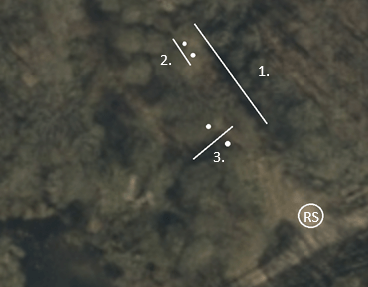
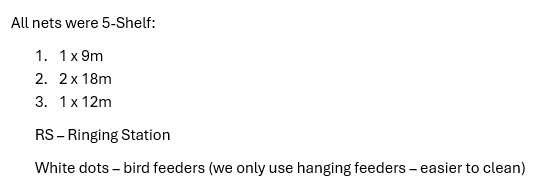
We met at 7:00 and set the usual nets:

We had the nets open by just past 8:30 and started catching almost immediately. At 8:45 we took a nice introductory catch of eight birds from five species. Not a bad start compared to our usual recent sessions there. We were not expecting what happened next. At 10:30 on our net check we found 32 birds from seven species. Key to the size of this catch were two components: 11 Long-tailed Tits and 10 Blackcaps. There were also four each of Blue Tit and Chiffchaff.

This catch coincided with the arrival of several of the children and helpers / teachers from the care farm. We were so busy processing these birds, and swamping Mariana with samples to take, that we didn’t have a lot of time to spend with them at first. As we got further through the catch, we did take some time out to let the children get more involved, appreciated by them, as ever.

The next couple of rounds were a lot quieter, until we decided that we would make the 11:15 round our last, whereupon we caught another 10 birds from five species.

The list for the session was: Treecreeper 1; Blue Tit 5(2); Great Tit 1; Long-tailed Tit 8(4); Wren 1; Dunnock 1; Robin 1(2); Blackbird 1; Blackcap 22; Chiffchaff 14; Goldcrest 3. Totals: 58 birds ringed from 11 species and 8 birds retrapped from 3 species, making 66 birds processed from 11 species.

Of those both ringed and retrapped, those we could age, only one of the Blackcaps ringed, and the Treecreeper and one of the retrapped Robins were adults. All of the Long-tailed Tits had completed their moult, with just a couple still having a little bit of body-moult, so it is now impossible to differentiate between adults and juveniles in the hand at this time of the year.

It has been far and away our best catch at Lower Moor Farm since 25th September 2021! Mind, when you compare it with the best ever catch there: 157 birds from 16 species, that’s pretty poor, but that is far and away the best I have ever had. The reason for raising this is that all of those birds were caught in the three nets that comprise ride 1. Today, only one of the birds was caught in that ride: the Wren! What I would give to be able to have that ride returned to its former glory! It would take a lot of work to bring it back to that state: a lot of tree thinning and topping for a start.

Just to wind it up even further, this was the list from that session: Kingfisher 1; Blue Tit 20; Great Tit 20; Long-tailed Tit 21; Dunnock 1; Robin 4; Song Thrush 1; Reed Warbler 2; Blackcap 36; Garden Warbler 8; Whitethroat 2; Lesser Whitethroat 7; Chiffchaff 26; Willow Warbler 5; Bullfinch 1.

Anyway, with the nets closed today just after 11:45, we cracked on and got everything packed away by 12:15 and off site soon after. A very good session: two in a row. Let’s hope that Saturday’s session for the Malmesbury Natural History Group goes as well as these last two.

One thing I do need to mention: last time we were having a session at Lower Moor Farm I was eulogising over seeing the Great Crested Grebe humbugs for the first time ever. Now, for the first time, I saw the youngsters swimming for themselves, still hassling their parents for food. It was wonderful.

Swindon Well-Being in the Firs: Tuesday, 23rd September 2025

One of the key contributions that the Wiltshire Wildlife Trust makes, outside of owning and managing their nature reserves, is the amount of their activities that focus on people. From their Watch groups, enabling children to become involved in nature, to their care farms, providing educational and nature involvement for children with challenges, physical, mental and behavioural, plus enhancing the mental health of vulnerable adults. I have been involved in these activities whenever they ask me to be, both my bird ringing and, more recently, mothing. Sometimes that means stepping outside of my usual Wednesday / Saturday scheduling. Hence, my most recent foray to the Firs for the Marlborough Men’s Mental Health Group, back on Monday, 8th September. Today it was the turn of the Swindon Well-being Group, again, at the Firs.

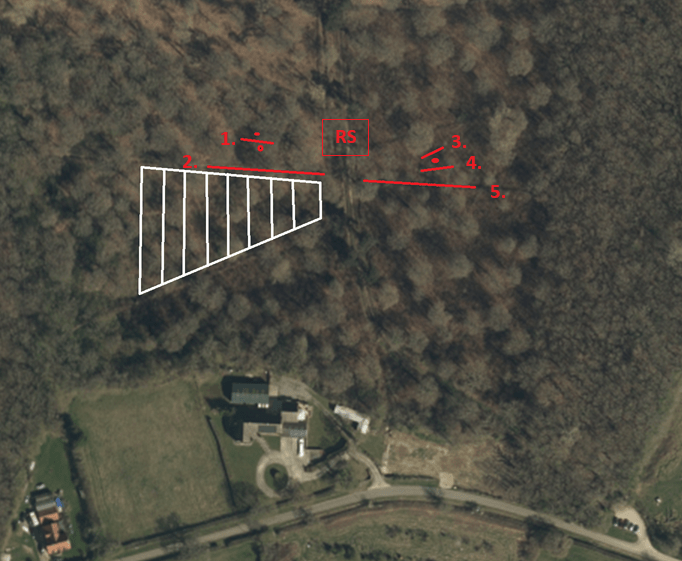
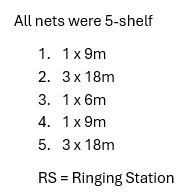
I was joined for the morning by Ellie and Laura at 7:00 and we set the following nets:

With the nets open by 8:00 we hoped for a good catch, but not too early, as the Swindon Well-being Group arrive at 11:00. That said, we were just a bit worried at how the catch started off: with no birds caught until 8:45 and just 1, 3, 1 and 5 birds being caught in the first four rounds. However, at 10:30, just before the group arrived, we had a decent round of 10 birds from five species. That looked healthier, starting with 20 birds from eight species in the first 2.5 hours (we have had worse !). Whilst Laura and Ellie were extracting that last little lot the group arrived.

I did my usual spiel on the ringing scheme, how it works, what information it can provide and the benefits that derives for our birdlife. I was beginning to get a bit concerned about what was holding Laura and Ellie up, when they turned the corner at the bottom of the hill, with the first good haul of the morning. Unusually, today I let the team do all of the processing, restricting myself to scribing, checking, and pointing out salient points on moult, ageing, sexing etc. That also gave the two of them the chance to develop their demonstration skills, important for their future development.

As usual, the attending group were a lovely bunch. Very interested in everything, keen to get photos and, eventually, persuaded to learn how to safely hold and release birds – and how much Blue Tits can hurt when they get that beak into your fingers! Basically, all but one of the attendees took the plunge (and she promised she would next time!).

It took a wee while to get everything processed, so I sent my collection team straight off to check the nets again. They came back with another six birds. It was nice to add some variety to the catch, with our first Blackcap and Long-tailed Tits of the morning. We processed them and off they went to check the nets again. After 10 minutes, as I was just wondering whether I needed to go help out, I got a telephone call from Laura: they had run out of bags and needed some more. Several of the attendees volunteered to take the bags down and I wandered down to see if I could be of use: they didn’t need me. It was taking time because they had 24 birds to extract, including this beauty:

Juvenile Treecreeper, Certhia familiaris (NB a bit of a cheat, one of my stock photos, I managed to let the bird go while trying to put it into the photographer’s grip, but it was same age as this)

The list for the days was: Treecreeper 1; Blue Tit: 12(4); Great Tit 4(1); Coal Tit 2; Marsh Tit (1); Long-tailed Tit 8; Wren (1); Dunnock 1; Blackcap 2; Robin 1(2); Chiffchaff 4; Goldcrest 5(1). Totals: 40 birds ringed from 10 species and 10 birds retrapped from 6 species, making 50 birds processed from 12 species.

We closed the nets whilst extracting this last batch, and took them down once we had completed processing. Anyway, our guests were very happy with what they experienced. We left them having their lunch, getting away by 13:00.

Ravensroost Meadows: Friday, 19th September 2025

I cannot remember the last time that I went so long between sessions: a combination of ill health and abysmal weather has led to an eleven day hiatus. I did try to get out to the Meadows on Tuesday but the wind was just too ferocious to safely set nets. So, after an early start, I had a very early finish. Unfortunately, being doped up on painkillers and anti-spasm pills, I probably shouldn’t have been driving, underlined by the fact that I misjudged the entrance to my driveway when I got home and am now waiting for my friendly local mechanic to quote on the repair work! This morning I decided to put up with whatever my body threw at me and left the pills in the box. Pleased to say, there were no incidents to report.

So, we arrived on site at 7:00. It immediately became clear that we would not be able to set all of the nets that I wanted. Although the wind wasn’t as bad as Tuesday, it was still quite fierce and so we set very few nets. As a result, we caught very few birds.

They were all juveniles and they were all unringed, but there were only 11 of them: Great Tit 1; Wren 1; Robin 2; Blackcap 5; Chiffchaff 2. Totals: 11 juveniles ringed and processed from 5 species.

Not the most exciting session, but it was enjoyable. We did have lots of time to watch the large number of Swallows streaming around the meadow. I would have set a net, but I am pretty sure that a net wouldn’t do well with the attention of a dozen Belted Galloway steers. I must find a way of blocking their access to that part of the meadow next time I plan to run a session there!

Apart from that, we had several Magpies fly over, a juvenile Jay making an awful lot of noise behind one of the nets: it actually sounded like it was caught in the net, but it wasn’t.

There was a lovely display of Dragonflies this morning, fabulous Emperors:

Male Emperor Dragonfly, Anax imperator

plus Common Darter and Southern Darter.

We packed up at 11:45, with not a lot to take down, we were away by 12:30.

Mental Health & Bird Ringing: Monday, 8th September 2025

As is pretty much a given these days, getting people out into the countryside and involved is known to improve mental health. Involving members of the public in what we do is very important to my ringing activities. A lot of it is ad hoc: explaining to people going past what we are doing and why! Spread the knowledge, reduce the ignorance / antagonism. However, we also carry out a number of scheduled sessions for specific groups.

In the next few weeks I have sessions coming up that will bring people from all sorts of backgrounds into contact with bird ringing. Soon we will be doing a ringing session with the Swindon Wellbeing Group in attendance, and at the end of the month it will be the Malmsbury Natural History Society. Today it was the turn of the Marlborough Men’s Mental Health Group. I had been contacted by my old friend Dave Turner, with whom I worked to run monthly bird ringing sessions at the Help4Heroes recovery and rehabilitation centre at Tedworth House, between 2013 and 2020, when it closed. He is now helping organise other groups and getting them out into nature When he asked for us to host this group, I didn’t hesitate.

I was joined for the morning by Miranda and Ellie. We met at 7:00 and we set the usual nets down the central glade. We had the nets open by 8:00 (I managed not to forget anything this time) and they started catching straight away. Unusually for recent sessions: it was Blue Tit heavy.

Our first round, at just after 8:00, was 10 birds strong. The most remarkable thing about it was that we caught a juvenile female Great Spotted Woodpecker. That is not what was remarkable about it: Ellie extracted and processed it. What was remarkable is that the Great Spotted Woodpecker is the noisiest bird you ever handle when extracting it from a net, handling it to fit the ring, and then to take the biometric measurements. Not a peep from the bird at any stage from extraction to release! I guess Ellie will now be our go to Great Spotted Woodpecker processor.

The Marlborough crew turned up about 9:30, whilst we were working our way through a rather large batch of birds, as we had just taken another 11 birds out of the nets. As ever, the first few minutes was me talking about the ringing scheme, why we do it, how the results are used, etc, and then showing the audience the processing that we carry out. I then asked who would like to be shown how to safely handle and release a bird (okay, I said “Who wants to be bitten by a Blue Tit?”) and several of the group volunteered. Throughout the rest of the session every member of the group got to hold and release two birds. Even the most reluctant of them finally overcame their worries and took part.

The session was busy and we had a good haul of birds: Great Spotted Woodpecker 1; Nuthatch (2); Blue Tit 26; Great Tit 11(1); Marsh Tit (1); Long-tailed Tit 1(1); Wren (1); Dunnock 1; Robin 3; Blackcap 11; Chiffchaff 15(1); Goldcrest 1. Totals: 70 birds ringed from 9 species and 7 birds retrapped from 6 species, making 77 birds processed from 12 species. Almost all of the birds processed were juveniles, although it is now almost impossible to age Nuthatch and Long-tailed Tit at this time of year, as both adults and juveniles have moulted into full adult plumage, the retrapped Long-tailed Tit was a bird of this year. We also ringed one definite adult each of Blackcap and Blue Tit.

It was great to be able to show so many different species to the attendees and the certainly appreciated it. This just happens to be our biggest September catch in the Firs by some degree, and our second largest ever without the use of supplementary feeding.

One thing that came to my attention last year was the tendency of Great Tit juveniles to moult their tails. Today we had a couple of them in tail moult, one of which showed that recent weather has been a bit difficult for these young birds, with prominent fault bars across the tail feathers: unfortunately, not as faulty as my attempt to photograph it! Too embarrassed to post it!

We closed the nets and took down at 12:30 and were off site by 13:30, leaving the attendees to spend the rest of the day in the wood.

Braydon Forest Marsh Tits: How Insignificant is Insignificant?

For issues that might become public in the near future, depending upon a couple of responses I am waiting on, got me back onto my favourite hobby horse: the Marsh Tit population of the Braydon Forest.

Marsh Tit, Poecile palustris

We have had a good year so far. Some recent correspondence got me thinking, once again, about the actual status of the Marsh Tit in the Braydon Forest and how that compares with both a local and a national profile. Having been studying them since I started ringing in the whole of the Braydon Forest in late 2012, it is rather important to me. Having persuaded Forestry England to make the Marsh Tit their priority bird species for management of their areas in the Forest, it is doubly so. So I had a look at the available records both locally and nationally. Unfortunately, we are still waiting on the 2024 ringing records to be published, so I have focused on the data published up to the end of 2023. Nationally, the BTO do not publish the number of retrapped birds, so I cannot do a national or Wiltshire analysis of individual birds, but I have done so for the Braydon Forest. I can tell you that 2024 was on a par with previous years in the Braydon Forest, and that 2025 is looking to be significantly better, but I don’t have the comparison for 2024 yet, although it should be published soon, given that the 2023 figures were published in September 2024. Obviously, we have another just under four months to go for 2025 data collection, but October and November are usually our best months for the species.

The first thing I did when analysing this was to look at the woodland make up of Wiltshire and then, for what I initially thought would be a bit of a joke, how that looks on a national scale. I was pleased and surprised to find how readily available those figures are from the Forest Research group. I took my figures from their latest paper for 2025. Of course, it is impossible to actually identify what proportion of any of the woodlands are suitable Marsh Tit habitat, but that applies across the whole of the UK, Wiltshire and the Braydon Forest itself, plenty of which is still farmed for conifer, parts of which, like Ravensroost Wood, are managed on coppice cycles. For example, Ravensroost Wood is a 40ha wood, approximately 10ha is 8-year coppice, some 15ha is 25 year coppice and 15ha is “ancient woodland”. So, by taking the figures as a whole, carries the same magnitude of error across the board. As Christopher Perrins noted in his esteemed volume on British Tits, Marsh Tit are almost exclusively a broad-leafed woodland species. Fortunately, I was able to separate broad-leaved woodland from conifer thanks to publicly available data from Forest Research. All area measurements are in hectares.

So the Marsh Tits found in the Braydon Forest are actually recorded in an area of 0.15% of the entire broad-leaved woodland of Wiltshire, and less than 0.005% of England’s broad-leaved woodland. Bearing in mind that Marsh Tits are the least mobile of the four Paridae species now found in the Braydon Forest, I think that we can be reasonably confident that what we find is genuinely representative of the local population.

The next thing I looked at was how the population of the Braydon Forest compared with Wiltshire and England as a whole:

Table 2: Marsh Tits Ringed as a Proportion of Fledged Marsh Tits Ringed in Wiltshire & England

To put that into perspective: over the 11 year period of my study to date, 33.4% of all Marsh Tits ringed in Wiltshire are ringed in 0.15% of the woodland covered by my ringing activities. More importantly, 2.2% of the national population ringed is ringed in less than 0.004% of the national woodland cover, and less than 0.005% of what might be considered suitable habitat. That is quite astonishing in my view. Unfortunately, whereas the Forest Service paper does breakdown the difference between coniferous and broad-leaved woodland, I cannot find a definitive breakdown for the whole of Wiltshire. This table, that I have lifted from that paper, does show the following:

Table 3: this is table 1A in the quoted paper, on page 10 of the document

My calculations are, therefore, based on those woodland proportions for England and applied to the woodland profile of Wiltshire, so bear that in mind,

Moving on from the population versus occupied area statistics used above, I thought I should have a further look at the population trend for the Braydon Forest against the whole of England.

Fig. 1: Marsh Tits Ringed in Braydon Forest vs Total in England

The trend is clear: whilst the national trend is downwards, the Braydon Forest trend is upwards, but the numbers in the Braydon Forest are not large enough to affect the overall trend. Not only is it upward but it shows a five point increase over the period. However, when you look at the figures on a proportionate basis, the trend against the England totals is identical, but against the rest of Wiltshire, it is somewhat downward:

Fig 2: Proportion of Marsh Tits Ringed in the Braydon Forest vs Wiltshire as a Whole

What this shows is how proportionality in a relatively small cohort can distort the overall picture: 2013 to 2015 inclusive had low ringing rates for the species in Wiltshire, and slightly lower than average ringing rates in the Braydon Forest, producing higher proportions in the Braydon Forest for those years, so I excluded them and redid the graph:

Fig 3. Why academics cannot pick and choose their data!

It’s okay: I am not trying to con anyone, I leave that to some of the less scrupulous academics. My cherry-picker has been too busy picking plums, apples and quince!

I fully expect the addition of the 2024 and 2025 data to correct the initial imbalance shown in fig 2 and omitted from fig 3. Expect more in the not too distant future. In conclusion: I contend that the population of Marsh Tits in the Braydon Forest is a significant proportion of the Wiltshire population, and is a small, but significant, part of the England population, given that it is reversing the negative trend across the country, and that the woodland management of the Braydon Forest is an important indicator of how the population’s position within England could be improved.

Citation: Robinson, R.A., Leech, D.I. & Clark, J.A. (2024) The Online Demography Report: Bird ringing and nest recording in Britain & Ireland in 2023. BTO, Thetford (http://www.bto.org/ringing-report, created on 4-September-2024)

Forest Research: Provisional Woodland Statistics 2025, 26 June 2025

Perrins, C. M. 1979: British Tits, The New Naturalist Series, William Collins & Sons & Co, Glasgow

An update: the BTO has just released the 2024 ringing totals for the UK. In the insignificant population of Marsh Tits in the Braydon Forest we ringed 19 birds out of 44 ringed in Wiltshire, or 43.2% of the total. There were 633 fledged Marsh Tits ringed in the UK this year, making our contribution 3% to the national average. To put that in perspective: that is 3% in 0.005% of the suitable habitat for the species in England, and 43.2% in 0.15% of the suitable habitat in Wiltshire. I would like to know, however, what percentage of Wiltshire and England’s broadleaved woodlands are covered by bird ringing.

Stumbling & Bumbling: Blakehill Farm, Friday, 5th September 2025

Quite the most disorganised, staccato session I can remember. Sitting here writing this whilst absolutely wrecked. Having not been able to get out all week, today was a good opportunity to get to Blakehill: low wind speed, with some moderate gusting from 11:00. Laura was coming along to help set up, but would be leaving about 11:30 as she had a work training session this afternoon. We met at 6:30 to set up. First problem: I had packed the car the evening before, only I forgot to pack the guy ropes. It isn’t far to home so I shot back off to the house to collect the ropes. We had decided to set the ringing station out on the plateau, save all of the walking backwards and forwards when we didn’t need to, as we weren’t setting up any hedgerow nets.

We set up the Mipit triangle on the way out to the plateau nets. Second problem: the lure I had been using last time was too quiet, so I sorted out one of my older MP3 players, with a couple of really good speakers. Charged them all fully the night before, and charged a backup battery for the MP3 player, plus a second pair of speakers. Set them going in the middle of the triangle: everything started playing – for two cycles and then stopped. Nothing could persuade it to work again. That was the end of that. We left the triangle in place: you never know what you might catch.

We then most of our usual plateau nets:

It was quite a long process getting the nets sorted, and we didn’t have them open until 8:30. However, as we were finishing off net 8, Laura looked over and said “Birds in the Mipit nets”, so I asked her to go and extract them whilst I finished of net 8. She came back with six Blue Tits, a Chiffchaff and a Willow Warbler from the Mipit triangle; I returned with a Blue Tit, a Wren and a Willow Warbler. Not a bad first round one would have thought. We ringed and released the birds.

Problem 3: we must have extracted each of those same Blue Tits at one time or another from every net we had set out on the plateau: Laura must have done over 50 extractions today and actually ringed just 14 birds. It did teach me something though: I won’t be setting up my ringing station anywhere near any bushes in future! It was the worst session ever for same day retraps in the 16 years of my ringing career.

Despite the lack of a Mipit lure, and the lack of Mipits, that triangle was the hit of the session. At least it had the big hit of the session: this chased a couple of Dunnocks into the net and got itself caught:

Juvenile female Kestrel, Falco tinnunculus

This was Laura’s first Kestrel extraction and processing. I showed her the “cuddle grip”: how to hold the bird without getting clawed or ripped by the beak, which she mastered quickly, and escaped with only very minor injuries! As it was Laura’s first experience, we spent a deal of time working out age and sex: thanks to Geoff Baker’s excellent book for steering us in the right direction

The Dunnocks were unharmed and processed as well – and let free long before the Kestrel was released.

We had a couple of small catch rounds after that, and then, at 11:00 a nice fall of Chiffchaff and another two Whinchat juveniles. What was really good about these two was that their median coverts were textbook juvenile male and female.

Soon after we had processed those birds, Laura had to leave, at about 11:30. I thought to leave things open for another 30 minutes but, almost immediately, the gentle breeze with the occasional gust became a full scale blow out and I had to close the nets. Apart from the Mipit triangle which was, thankfully, isolated from any close bramble bushes so, when closed, they were safe. Unfortunately, one of them was badly affected, and I spent over an hour extracting it from some rather annoying, and painfully spiky, bushes. i.e. problem 4!

Anyway, the list for the session was: Kestrel 1; Blue Tit 12; Wren 1, Dunnock 2; Whinchat 2; Blackcap 1; Whitethroat 1(1); Lesser Whitethroat 1; Chiffchaff 7; Willow Warbler 2; Reed Bunting 1. Totals: 31 birds ringed from 11 species and 1 retrapped bird, making 32 birds processed from 11 species. Every bird processed, except the Reed Bunting, was a juvenile.

Having finished the processing I started packing up. With the net extraction issue, plus somehow losing two bungee cords that never left my car, and seemingly having fewer pole tops than bottoms, I was a long time leaving site: getting away at 15:00. Here’s hoping that tomorrow is better organised (on my part) and that we also get a decent catch!

One hopeful sign: finally I saw some craneflies flying around. It seems that Tipulidae are a key prey species for Meadow pipits. At least, the abundance of Meadow Pipits does seem to coincide with the emergence of the craneflies.

One slightly disappointing issue: apparently there has been a large number of Yellow Wagtails associating with the cattle. With no cattle on the plateau today, there was no sign of Yellow Wagtails. However, from next week there will be cows and calves on the plateau, so fingers crossed that there might still be some about!

West Wilts Ringing Group Results: August 2025

What can I say: our best ever August and our second best ever monthly catch, behind September 2023.  That is not to say that there weren’t a couple of surprising omissions.

aug25.jpg

There are so many points of interest this month, it really has been a good set – even for those of us not landing large catches.  In my case, it has definitely been quality over quantity.

New to the list, compared to 2024, were Firecrest, Great Spotted Woodpecker, Jay, Kestrel, Magpie, Sparrowhawk, Spotted Flycatcher, Swift, Whinchat and Yellow Wagtail.  Somewhat surprisingly missing from the catch were Meadow Pipit, Reed Bunting and Starling!  Not so surprising was the lack of Hobby in the list this year.

In my opinion, the most remarkable catch of the month were the 11 Redstart! To start with, this is our best ever year for the species: with 14 so far.  It is also our best ever monthly catch. What’s behind it? Well, no one site dominated: evenly spread across Salisbury Plain, farmland to the east of Chippenham and, to my absolute delight, for the first time ever, three of them at Ravensroost Meadows!  With the news that the Wildlife Trust, after just 15 years of nagging by me, have budgeted to reconstitute the largest pond and clean out around the causeway ponds, I am actually getting excited about the potential for this site next year. If we can get it back to the situation I encountered when I first started birding there: with breeding Sedge and Reed Warblers plus Moorhen, and Swallows and House Martins buzzing the causeway ponds, I will be delighted.

image.png

The Firecrest was a pleasant surprise in an otherwise disappointing session at Ravensroost Wood. It is only the second caught there and the fifth in the Braydon Forest, the others being caught two in Red Lodge and one on Somerford Common. Being in the right place at the right time: Miranda got to ring her second, and a family of four got a really interesting close up view of an uncommon bird.

image.png

Even more exciting though was Jonny’s first Yellow Wagtail:

image.png

This is only the third caught by the current group since my two at Brown’s Farm back in 2021 and last July.

As for Ian and Andy: the Nightjar hauls just keep getting better. Ian has given me the secret of his success, which I plan to test out at Blakehill Farm this coming week.  It is the nearest area I have in habitat to the Salisbury Plain sites.  Just have a look at the video, filmed by Ian, and be enchanted. 

European Nightjar, Caprimulgus europaeus, courtesy of Dr Ian Grier

The suggestion is that the autumn migration has started early this year. Just looking at some of our warbler numbers would seem to support that contention: a 40% increase in the number of Blackcaps, a 200% increase in the number of Lesser Whitethroat and a 100% increase in the number of Whitethroat caught this month compared to last.  The Whitethroat catch is our second best ever for July. As seems to be the same for a lot of species, the best July was in 2020, after lockdown.  Our Lesser Whitethroat catch is the best ever for August, following our best ever July for the species. Ironically, someone who likes to speak for the whole of Wiltshire, was on Facebook bemoaning what a terrible year it has been for Lesser Whitethroat. Well, with September and October to go, we are on 80 individuals: a 157% increase on last year, which was, itself, our best year to date for the species.  To be fair, August is always our best month for Lesser Whitethroat. However, the 33 this year is 83% higher than the previous best, August in 2022.

Alongside these, it was surprising to catch four Whinchat on Blakehill, in an otherwise quiet session (okay, we also had four Lesser Whitethroat and a couple of Willow Warblers, so hard to complain).  September is the key month for the species on Blakehill. This is only the third time we have caught them there in August: seven back in my first autumn at Blakehill in 2015, and two in 2020. We actually caught none at all on the site in 2022 and 2023, so I am always happy when we catch a few more. The fifth for the month was on the Imber Ranges.

image.png

Although Stonechat are a regular catch on the Salisbury Plain sites, this is only the second time that we have caught them in August on Blakehill.  September to November are usually our best months for them there. 

So, an excellent month. Let’s hope September lives up to its usual good catch.  For one, I am hoping that our Meadow Pipits, instead of hopping up on the fence posts and tops of the various bushes, will start hitting the nets. They were just taking the mickey this month: teasing us and avoiding the nets.