Great Spotted Woodpeckers in the Braydon Forest: 2013 to 2021

It is wet, it is windy, no ringing, no fun, so I thought I would spend some time today having a look at some data. As regular readers will know, I have recently done some analysis of Blue Tits in the Braydon Forest, as a result of a paper by Shutt et al1, which was followed by an article in January’s British Birds2, expressing concerns about the impact of garden bird feeding on vulnerable species. Although I expressed no criticism of the source paper and, in fact, was at pains to make that point several times in my post, it certainly ruffled enough feathers for me to be attacked on Twitter. I am not going to go into details of the individuals concerned, but I hope that they put more rigour into their science than they did into their criticism of my post. One critic was particularly egregious, criticising me for something that I never claimed, and then getting his data and analysis so horribly wrong that, when I pointed it out, he did what any self-respecting academic would do and admitted he was in error (don’t be silly – he blocked me). My post pre-dated the article in British Birds, and I only got the chance to read it during the criticisms, not that it was relevant to the points I was making anyway. It helped that I have over 9 full years of data for me to analyse.

At the risk of sparking off more Twitter Wars, I thought I would have a look at the population of Great Spotted Woodpeckers in the Braydon Forest, as represented by my ringing data, as this species was one of the species identified as having had a significant increase in numbers and, being a successful nest predator, capable of impacting on populations of vulnerable species. Anyone who has watched recent Springwatch episodes in the last few years cannot have failed to have seen examples of their predatory behaviour. Particularly gruesome was the predation of Treecreeper pulli / near fledglings from their nest.

I have had regular visits of Great Spotted Woodpecker on my garden peanut feeder over the years. This year I am pretty confident that we have seen a juvenile that has matured into a fine looking male – but I cannot be sure it is a single bird. I did catch and ring a single male adult back in April 2020. It hasn’t subsequently been recaptured.

For this analysis I have looked only at the captures within the woodlands of the Braydon Forest, ignoring the wide open spaces of Blakehill Farm. Also, I have counted the total number of sessions in those woodlands in each year, not just the number of sessions in which Great Spotted Woodpeckers were caught, and analysed as per the total number of sessions.

Table 1: Percentage of visits in which GSW were caught per annum
Fig 1: Percentage of visits in which GSW were caught per annum

As you can see, over the nine years there has been a near 5% increase in the number of sessions in which we have caught this species. The next thing I looked at was the actual size of the catch:

Table 2: Average numbers caught, ringed and retrapped per session by year
Fig 2: Average numbers caught, ringed and retrapped per session by year, with the trend for number of birds ringed

As you can see from these figures, there was a significant spike in the number of birds ringed in 2017. Despite that, the overall trend shows a slight decline in the number of birds over the nine year period.

Next I looked at the proportion of the catch that are adults and juveniles over the period:

Table 3: Actual and average numbers of adults and juveniles ringed per session by year
Fig 3: Average numbers of adults and juveniles ringed per session by year

As this graph shows, whilst numbers of juveniles ringed each year are lower than those of adults, the trend for juveniles is a steadily increasing line. Conversely, the trend for adults ringed is steadily declining:

Fig 4: as per Fig 3 but showing the declining trend for adults ringed

Whilst I have analysed the numbers ringed and retrapped, a single bird can be recaptured multiple times over multiple years, so I have counted the actual number of individuals that have been processed per annum:

Table 4: Average number of individuals processed per session by year
Fig 5: Average number of individual GSW’s processed per session by year

As this shows, the actual incidence of interacting with individual birds shows a slow decline. In all of the figures shown, the 2017 spike has clearly had a positive impact on the population trend shown, so I have removed that spike from the data to see what impact it might have:

Fig 6: as Fig 5 but minus 2017

The impact is relatively minor: a reduction of 3% in Fig. 5 to a reduction of 4% in Fig 6, albeit from a lower starting point (27% as opposed to 30%).

Given that we carry out our sessions with consistent net positions and consistent, although seasonally variable, session lengths, this does not look as though it shows a population that is growing rapidly within the Braydon Forest. As per my previous posts, I make no claims about the validity of this analysis, outside of the specified geographical parameters and the limitations of bird ringing for analysing population dynamics.

References:

  1. Shutt JD, Trivedi UH, Nicholls JA : 2021 Faecal metabarcoding reveals pervasive long-distance impacts of garden bird feeding.

Proc. R. Soc. B 288: 20210480.
https://doi.org/10.1098/rspb.2021.0480

2. Broughton, RK; Shutt, JD; Lees, AC: 2022 Rethinking bird feeding

British Birds Volume 115 pp 2 – 6

Recovery Updates

Jonny Cooper has just updated the maps and data for the ringed bird recoveries, adding in those registered during 2021 and I have just uploaded them into the blog.

Highlights include: the oldest recovered Goldcrest in the UK (unless another, older one has been found since) and the second longest movement of a Blue Tit within the UK (okay, that’s a 2022 record).

Lowlights: the recovery of one of the Buzzards ringed on Somerford Common in November 2019 being found shot dead in a country park near Dudley in the West Midlands.

Sniping: Friday, 11th February 2022

Both Snipe and Jack Snipe regularly overwinter at Blakehill Farm. They can be seen pretty much anywhere on the site when the ground has been softened by the weather. One place that is a regular spot is the middle pond of the three on the west of the site. With lockdown and other issues, last year we didn’t manage to get out for a Snipe catching session. Our first go for these birds at the site was back in January 2019. We caught three Snipe and one Jack Snipe: I gave Andrew and Jonny a Snipe each, with one for me and my first ever Jack Snipe.

Remarkably, in January 2020 Jonny and I tried again and this time we also caught four birds: three Jack Snipe and one Snipe, so Jonny got to ring his first two Jack Snipe, I got my second and another Snipe. I did run another session in early February 2020, to see if we could catch some Snipe for other members of the team. Unfortunately, that day we drew a blank.

I was hopeful that there might be some Snipe about that we could have a go for this week. The forecast for today was for it to be flat calm: a lull in a windy week. On Monday, hoping that the forecast would be correct, I took a trip over to see whether there were any Snipe about. As I approached the middle pond six Snipe flew off. When I got a bit nearer, 3 Jack Snipe decided it was time to make their exit. That decided me: we would try for a session on Friday. The pond itself is very full and the birds were gathered in the swampy tussock grass at the eastern end. Three Stonechat showing really well were an added bonus.

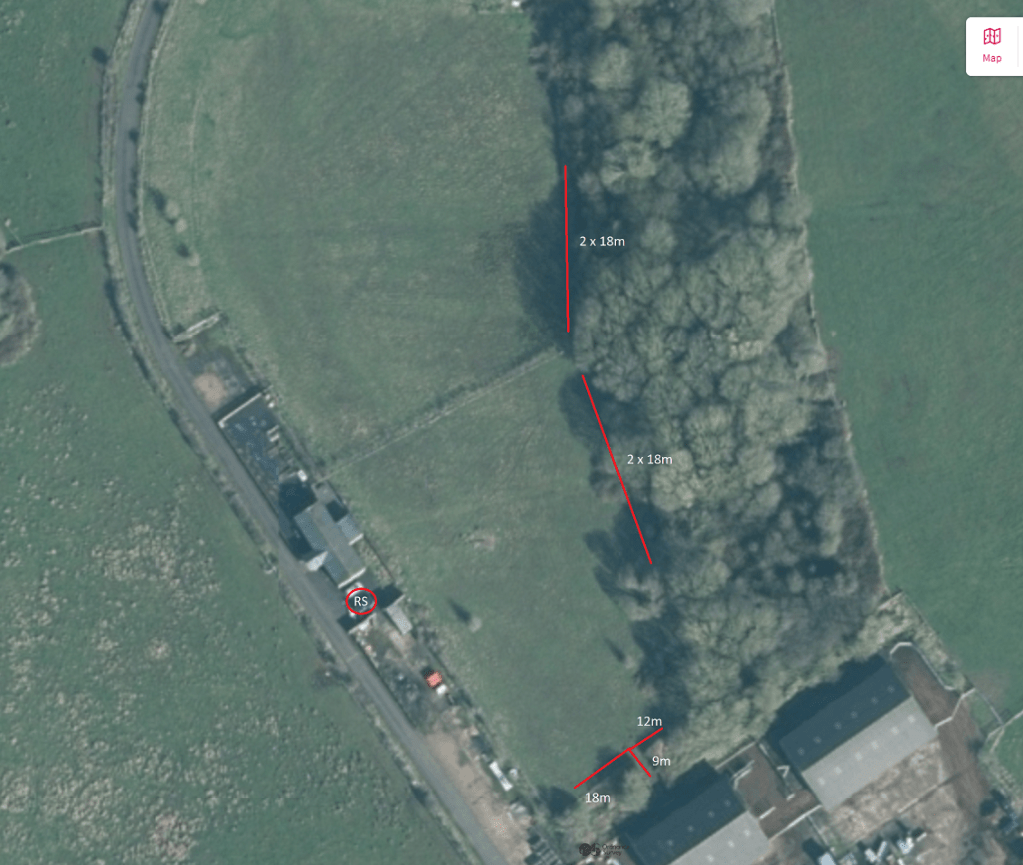
Knowing that I would be setting up in full darkness, and away from my usual positions, I decided to go back yesterday and use some bamboo canes to mark where each of the poles would be set for the 2 x 12m and 1 x 18m wader nets (50mm mesh size) I planned to use to form a cul-de-sac. As luck would have it, I flushed 15 Snipe.

I arrived on site at 5:40 this morning and was followed into the carpark by another car. I had agreed with Ellie and Tanya that they would arrive at 6:00 so, knowing Ellie as I have for a long time, I assumed it was Tanya. First time out, keen as mustard etc. Only, it was the police. Momentary trepidation dissipated as soon as they asked if I worked for Oak & Furrows. They were sharing the car with two Canada Geese that had been injured on a local road. They had tried calling the O&F phone line and were looking for their site. Lucky for them, I had the code for the padlock and could direct them to the facility.

I started setting my three nets, was joined by Ellie and Tanya at just after 6:00, as arranged, and we had the three nets open in short order. It was still very dark, so we set up the ringing station a couple of hundred metres away from the net set, and sat and waited for it to get light. Whilst setting up I flushed a couple of Mallard from the pond, but no Snipe (which I think was a good thing).

As it was beginning to get light, a couple of Canada Geese flew in and landed on the pond but away from the nets. At about 6:50 there was quite a lot of squawking from the geese and I could see the 18m net moving. My first thought was that one of the geese was in the net, so we ran over to try and rescue the net but, as we got closer, both geese flew off. There in the 18m net was a Snipe and in the adjacent 12m net, a Blackbird. I extracted the Snipe and Ellie took the Blackbird. There is an art to removing birds from these large mesh nets. It isn’t hard, just different from the nets we usually work with and you just have to be a bit more careful, particularly with freeing the wings.

Having missed out on them the last time she came along (because we all did), Ellie got to ring her first Snipe:

As it turned out, those were the only birds we caught all morning. A little later on we went over to look at the easternmost pond and, sure enough, two Snipe flew off. Forgetting the old adage about shutting the stable door after the horse has bolted, I decided to set my 2 x 18 2-shelf wader nets adjacent to where we had disturbed them. I shouldn’t have bothered. What I should have done was go with my initial instincts and set those nets up immediately after setting the first three, whilst it was still dark. Lesson learned.

Ellie had to leave just after 8:00 to get to work, and Tanya left a little later still to get to her job with the Wildlife Trust. I sat back and enjoyed watching the birds flying around. As the sun came up and the weather warmed, it turned into a beautiful winter’s day. I checked the nets regularly, but they remained empty, s0 at 10:45 I started to take them down and began to leave site at 11:15. I say began because I got some good birding in on my way out.

As I left the pond area I put up a mixed flock of Redwing and Fieldfare in the adjacent field. There were at least 40 birds. I haven’t seen any of either species for a while, so it was good to see. I plan to be back to try for Snipe again the next wind-free day, but I will also set nets for these thrushes. On my journey back to the main gate I saw three Stonechat and a superb male Kestrel. Despite only two birds caught, I thoroughly enjoyed this morning’s session.

What No Finches? Red Lodge, Wednesday, 9th February 2022

With the wind forecast to be gusting quite strongly from the south-west this morning I knew that the scheduled trip to Brown’s Farm would be a non-starter. I chose Red Lodge instead for two reasons: 1) I am doing Ravensroost Wood on Saturday and 2) my net rides in Red Lodge would be protected from the wind by the woodland and the rides running north to south.

Yesterday I topped up all of my feeding stations in the Braydon Forest. I ran into a very pleasant photographer called Mitch Harris at the Firs, whilst topping up there, who later sent me some lovely photographs, including 2 of my colour-ringed Marsh Tits, making use of the feeding station. The benefit of colour ringing these birds is that I can record sightings like these within the BTO’s on-line database, enabling the continued tracking of their survival.

Marsh Tit AAL0191, ringed on 21st February 2020. Photo copyright Mitch Harris
Marsh Tit ALN2254, ringed on 6th September 2020. Photo copyright Mitch Harris

Arriving on site at Red Lodge this morning I was pleased to see that the seed feeder had been reduced by one third since they were topped up at 13:00 on Tuesday. I hoped that this would augur well for a catch of some finches this morning. Unfortunately, that hope was not fulfilled: not a single finch of any description in the nets today. Instead it was almost entirely a catch of Blue and Great Tits.

What was surprising about this catch was that the vast majority of the Blue Tits were unringed when caught. At this time of the winter, at the Braydon Forest sites that I ring most regularly, I expect to find a majority of both Blue and Great Tits to be recaptured birds. The list today was: Nuthatch 2; Blue Tit 18(1); Great Tit 10(5); Coal Tit 1; Marsh Tit 1; Robin (1); Blackbird (1). Totals: 32 birds ringed from 5 species and 8 birds retrapped from 4 species, making 40 birds processed from 7 species.

It was a pretty straightforward session: never too busy, but never an empty round either. There were definite highlights: Rosie got to process half-a-dozen birds before having to leave for work, including a lovely female Nuthatch. A little later I got to process an equally gorgeous male:

Nuthatch Male

It is quite easy to tell male and female Nuthatch apart, if you can get a look at the under-tail coverts. As you can see from this photo, the male has a brick-red surround to the white parts of the feathers. The female has paler, buff surrounds. These colours are replicated om the underwing areas if you are watching them in flight.

I caught and ringed my second Marsh Tit of the year: colour ringed metal over black on the left leg and yellow over red on the right leg:

Colour-Ringed Marsh Tit AEX0926

The wind got up at just after 11:00, so I shut the nets and took down, and left site early (for me) at midday.

If you are interested in seeing more of Mitch’s work, you can find it at: http://www.flickr.com/photos/bymitch/

Webb’s Wood: Saturday, 5th February 2022

An enjoyable, if cold, session at Webb’s Wood this morning. I had a good sized team out with me : Adam, Alice, David, Rob and, able to join us for a full session for once, Rosie. Because of that, we set a few more nets than I would usually do.

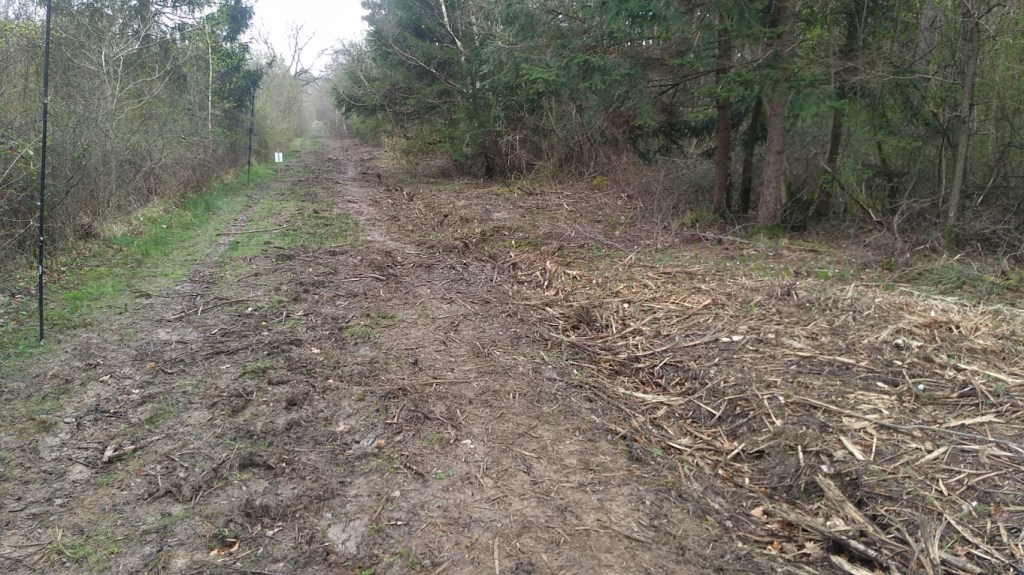
The 4 x 18m net line is one I haven’t used for a long time. There were two key reasons: firstly, it seemed to catch an awful lot of same day retraps with the ringing station set where we do (the red mark on the map) and, secondly, it had become very overgrown but this autumn it seems that Forestry England have widened the path and cut back the overhanging vegetation. Funnily enough, it was the only net that didn’t have a same day retrap in it.

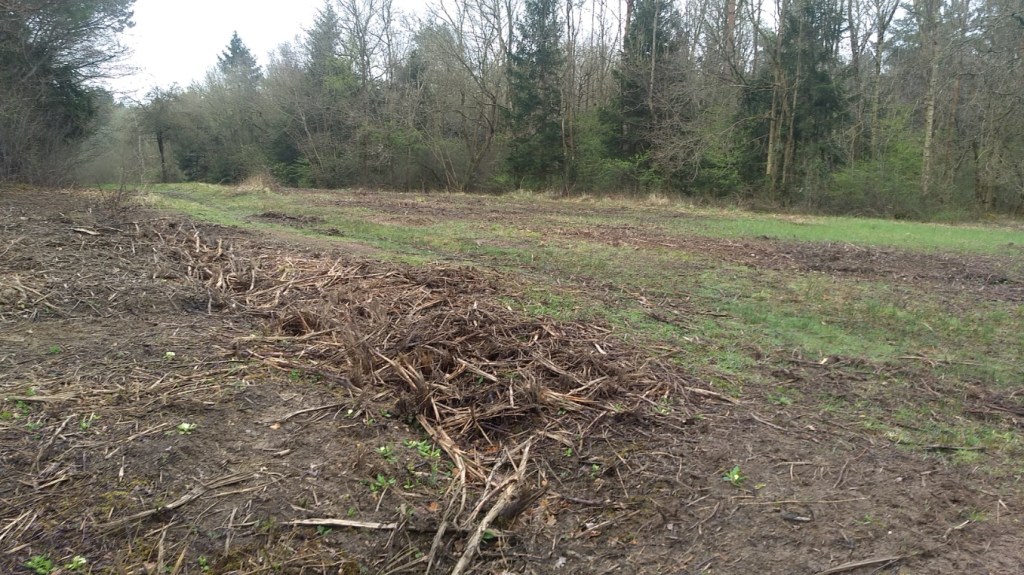
The photograph below shows just how it looked pre-thinning so you can compare and see just how much thinning has taken place in the wood. If you have a look back at previous blog posts, it looked like this:

It will be interesting to review in a year or two whether the avifauna has changed much as a result.

It was a very comfortable session inasmuch as we never had a glut of birds: it was a steady procession of birds hitting the nets and getting extracted. That was definitely a good thing, with David back after a 10 week hiatus, Rosie on her first full session for ages, Adam coming along whenever his busy schedule allows and Rob on his third taster session, nobody needed to feel under pressure. What wasn’t very comfortable were the underfoot conditions by the easternmost 2 x 18m nets: the mud was more than ankle deep all along there (it eventually claimed my left wellie boot as we were taking down, I had to laugh, it was funny, if cold, wet and very mucky) and the wind, which wasn’t very strong until we started to take down, but it was bitterly cold. So the ambient temperature was fine but we were still getting chilled.

Once again we lured for Lesser Redpoll, Siskin and Brambling. Once again, we caught some Lesser Redpoll but none of the others. Frustratingly, there were Siskin around, in the tops of the trees. Presumably there is still food up there for them and they don’t need access to our feeding station with its luxury finch food!

The list for the day was: Great Spotted Woodpecker 1; Nuthatch 1; Blue Tit 7(4); Great Tit 3(8); Coal Tit 3(1); Marsh Tit (2); Long-tailed Tit 1(4); Wren 1; Robin 1(2); Song Thrush (1); Blackbird 2(1); Chaffinch 1; Lesser Redpoll 2. Totals: 23 birds ringed from 11 species and 23 birds retrapped from 8 species, making 46 birds processed from 13 species. That is pretty decent variety in this woodland at this time of year.

The highlight was definitely adding another couple of Lesser Redpoll to the Webb’s total for this winter. It really has improved beyond anything we have had there before. Is this one improvement due to the thinning?

One of the benefits of having a good sized team out was that both setting up and taking down were much quicker than usual. We met at 7:00 and the nets were open by 7:45 and taking down took just 30 minutes. The nets were closed at 11:45 and we were leaving site by 12:15.

The Firs: Wednesday, 2nd February 2022

A nice, easy session in the Firs this morning, with a decent variety of species for this small woodland. I was joined for the morning by Miranda and for the early part of the session by Rosie. We only set 7 nets: 2 x 3 x 18m along the main glade and 1 x 12m behind the feeding station. Starting at 7:00, we had the nets open by 7:45 and extracted the first couple of birds as we returned to the ringing station. The first bird out of the net was an adult, female Chaffinch.

Having the nets open early meant that Rosie got to process a few birds before leaving to get to work, some hedge laying at Lower Moor Farm. Miranda has just recently started extracting birds from the nets. This morning I let her into the wonderful world of extracting Blue Tits. From the continuous pecking, the grabbing great claws full of net, twisting, double-pocketing and exploiting any small holes left unrepaired in the nets, they are the ultimate test of whether someone is going to make it as a ringer. She acquitted herself very well.

My training philosophy on extraction is simple: it is the only part of the process that can cause harm to the bird, so all of my trainees are told to do what they are comfortable with, and if they are at all concerned or having difficulty with any particular bird, to shout for help. I don’t subscribe to macho “carry on at all costs”, as that way birds can be hurt. Nor do I subscribe to the “you must do the feet and legs first, then the wings, then the head” as was the then mantra of my first trainer (that was a long time ago, so he might have changed since then – I hope so). For so many birds it is just not appropriate. If I can ringer’s grip a bird and lift it out of the net, that’s what I will do. Most often I “unwrap” a bird: lift it out by the thighs, then clear left foot and leg, left wing, head, right wing, right foot and leg, or vice versa. We must be doing something right because extraction injuries to our birds are an extremely rare occurrence (I cannot remember the last time it happened).

It was a very decent session for a small woodland: Great Spotted Woodpecker 1; Nuthatch 1(2); Treecreeper (1); Blue Tit 8(4); Great Tit 3(7); Long-tailed Tit 2; Dunnock 1(1); Robin 1(2); Blackbird 3; Goldcrest 1; Chaffinch 1; Bullfinch 1; Lesser Redpoll 1. Totals: 24 birds ringed from 12 species and 17 birds retrapped from 6 species, making 41 birds processed from 13 species.

The Lesser Redpoll was a nice surprise. Although we have been catching them in the other woodlands around the Braydon Forest, it is only the third ever caught here, and only the second occasion they have been caught in the wood: the other two were caught in November 2016. This bird was a juvenile / second year male. I took this photo to show the pink spotting on the breast that led me to identify it as a male. For the life of me, I cannot see a single one in the photo. Where did they go? No idea – hiding under other feathers presumably:

We worked out that each round involved a walk of some 800m, from the ringing station to the end of the net rides and back again. In 4 hours we will carry out a minimum of 8 rounds, plus the 2 walks erecting and then taking down the net rides: 8km per session. That’s pretty decent exercise for an old man! Today we closed the nets at 11:45, packed away and left site at about 12:30.

West Wilts Ringing Group: January 2022 Results

What seemed to be a quite remarkable month for us in January has actually turned out to be comparable with both 2019 and 2020.  I am not going to do my usual comparison with the previous year’s equivalent: that would be grossly unfair, given that we went into lockdown and were confined to our gardens after the 10th of the month, and only 207 birds were processed.  So I am going to compare with 2020: those halcyon pre-Covid days.  January 2020 was our second best January since the group split.  Our best to that time was actually 2019: 666 birds processed but, at 601, 2020 was pretty good.

This year we have had a 50% uplift on 2020: 958 birds processed from 34 species, compared to 601 processed from 29 species. However, we managed to fit in 20 full sessions this January, compared to only 13 in 2020. Presumably we have benefitted from the weather giving us more opportunity to get out and about.  In reality we have actually processed just 1.5 more birds per session this January compared to 2020.  January 2019 actually comprised 17 sessions, and 8 birds fewer per session than in 2022.

These are the results:

When you look at the bald figures Blue Tit numbers look so much higher compared to 2020.  However, the actual number processed per session in 2022 is 17.6 and the number processed per session in 2020 was 17.6! This is pretty similar with most of our commonly caught species.

However, there were clear increases in the numbers of Wren, Robin, Song Thrush, Reed Bunting, Chaffinch and Redwing caught this month (despite Redwing showing very little interest in the lure this side of Christmas) and an excellent catch of Lesser Redpoll. 

This is our best ever January catch of Lesser Redpoll, going back through all of the records in DemOn, which has records for the species from 2003 onwards, 19 years ago.  The majority were at Somerford Common, and another 7 at Webb’s Wood and 3 at Lower Moor Farm. 

Jonny caught 4 Chiffchaff (2 each at East Tytherton and Langford Lakes), which is our best for recent times. Funnily enough, he caught two at Langford Lakes on New Year’s Day 2021. The only other January catch of modern times was at Lower Moor Farm in 2017.

Individual highlights include: Jonny’s Water Rail at Langford Lakes and his Green Woodpecker and Brambling, both firsts for his East Tytherton site; my first Firecrest for Lower Moor Farm, my second ever Pied Wagtail at Brown’s Farm (actually, just getting out there was a delight, it is as difficult to get out there as at Blakehill Farm, it is every bit as exposed and the slightest breeze puts it out of contention), Andy got his second ever Corn Bunting for his SPTA site and Alice got her second Lesser Redpoll for Hogacre Eco Park.

Unfortunately, due to an outbreak of avian flu in Castle Eaton on the 10th December, Steph couldn’t ring her garden and I could not get to Blakehill Farm, nor a large part of Red Lodge, as both were inside the 10km surveillance zone (it was lifted yesterday).  To be honest, the only reason I was at Lower Moor Farm was because the avian flu outbreak had meant that I was, potentially, overdoing it at the available sites.  The outbreak meant that I couldn’t carry out my usual attempts for Snipe and Jack Snipe at Blakehill, as happened so successfully back in 2020 (1 Snipe and 3 Jack Snipe in one session).  

There was one significant reduction compared with 2020. Greenfinch. In 2020 Jonny’s East Tytherton and Sutton Benger sites produced all 36 birds. This year all bar one was at Sutton Benger, a third of the catch there in 2020, one at Melksham, and none at East Tytherton.

Anyway, a very interesting month, let’s hope February is as good.

Ravensroost Wood: Sunday, 30th January 2022

Not trivialising it but, being on the fringes of storm Malik, we had wind speeds gusting to 40mph on Saturday, so I had to shift Saturday’s session to Sunday. Unfortunately, that meant that I would be working solo as my three putative helpers were unavailable today. Having filled the feeders on Tuesday, when I did the other Braydon Forest sites, I did my usual of going to top up the feeders at my target site the day before. I have two medium sized peanut feeders and one 2.5l seed feeder at this site. Working on the possibility that the session would be on Saturday, I went back on Friday, just three days later, to find all feeders empty. That was indicative that we would have a busy session. I filled them ready for whenever the session took place. Our last session there. on the 9th January, produced 36 ringed and 33 retrapped, with lots of tangled, difficult extractions. I was rather concerned at what might happen this time, especially as I would now be working solo. Arriving on site at 7:00, I started erecting the nets and had them all up and open by 7:45. My concerns about the potentially busy nature of the session were further heightened by the fact that those feeders were, once again, empty.

I set 6 nets: 2 x 18m along the main ride plus 2 x 9m nets and 2 x 6m nets around the feeders:

Net Setup plus Feeders

The two yellow crosses (nearest the top) are the peanut feeders and the bottom green cross is the seed feeder. Given the current discussions regarding feeding: the seed I feed is a small seed, finch mix, with no wheat. I refilled them for the third time in a week.

It was a much less busy morning than last time. Given the rate at which the feeders were being emptied, and given that there is no sign of squirrel involvement, I was surprised that it wasn’t busier. Perhaps they are all fed to capacity! I am not complaining, I ended up processing 40 birds and every round was unpressured and enjoyable. There was a lot footfall in the wood today and a lot of people stopped to chat. I rarely find people are antagonistic when they see you processing the birds. It gives me the chance to explain about how we catch the birds, and helps them understand about how the nets work, removing that potential source of conflict.

The undoubted highlight of the day was my first new Marsh Tit of the year. It was a second year bird. Alongside it we also retrapped three others: two of which were the same age as the one ringed today, the other is a year older.

I didn’t catch a single winter visitor species. There was no sign of any Redwing, Lesser Redpoll or Siskin. In fact, the only winter visitor I saw, and didn’t catch, were a couple of over-flying Fieldfare. There were a few birders who stopped to chat and, upon their return from scouting the wood, confirmed that it was devoid of those winter species.

The list for the day was: Blue Tit 8(10); Great Tit 7(6); Coal Tit (2); Marsh Tit 1(3); Robin 2; Chaffinch 1. 19 birds ringed from 5 species and 21 birds retrapped from 4 species, making 40 birds processed from 6 species.

I closed the nets at 11:45 and left site by 12:45.

Titmice in the Braydon Forest: 2013 to 2021

As I have recently written a couple of pieces on Blue Tits in the Braydon Forest I thought I ought to have a look at the rest of them, as well as revisiting the Blue Tit figures. Previous work, because it was focused on the single species, only counted sessions in which Blue Tits were caught. This doesn’t work when incorporating other species into the equation, so I counted every session within the Braydon Forest carried out between 1st January 2013 and 31st December 2021. However, I also decided to exclude the sessions carried out at Blakehill Farm. It would massively skew the results against both Coal Tit and Marsh Tit, as there is no woodland to speak of where I ring at that site and no Marsh Tits have ever been seen there and we have only ever caught a single Coal Tit, in the hedgerow.

Despite the restrictions imposed on our ringing activities by Covid, and the restrictions placed on us by the Wildlife Trust, due to interference from members of the public with the increased footfall at Ravensroost Wood during and after lockdown, I have decided to include both 2020 and 2021 in the results, as they will have impacted all four species covered in this little analysis. These are the results:

Blue Tit:

Table 1: Blue Tits Ringed by Session

Unsurprisingly, these are the commonest of the titmice in the Braydon Forest. What is interesting is that there is no commonality between annual catches. We know that both 2016 and 2021 were poor breeding seasons for Blue Tits and the results show that.

Fig 1: Blue Tits Ringed by Session + Trend Line

As you can see from the chart, whilst the numbers ringed do go up and down on an annual basis, the trend (the red line) over this period has remained pretty well static.

Great Tit:

Table 2: Great Tits Ringed by Session

Not quite the same swings in numbers as seen with the Blue Tits. Of interest is the ratio of adults to juveniles. Unusually, more adults than juveniles are ringed each year. I will look at this in more detail at the end of the piece.

Fig 2: Great Tits Ringed by Session + Trend Line

As you can see from the trend line, the population is stable with a slight increase over time.

Coal Tit:

Table 3: Coal Tits Ringed by Session

I suspect I could massively increase the numbers of Coal Tit caught and ringed if I did sessions in the western part of Somerford Common, which is predominantly a conifer plantation. I might test this out in 2022.

Fig 3: Coal Tit Ringed by Session + Trend Line

As you can see from the graph, although at a lower density than Blue or Great Tits, the dynamic in the numbers caught follows a similar trajectory. What is concerning about this chart is that the trend is showing a decline in the catch over time. This might be habitat related which, as indicated above, I might well test out this year.

Marsh Tit:

Table 4: Marsh Tits Ringed by Session

Undoubtedly, to me this is the most important species of Tit in the Forest, being a Red-Listed rapidly declining species. I make no claims about the population size, as I have not done full surveys of each site. What I do know is how many we catch each year. Unfortunately, due to the restrictions imposed on my activities in Ravensroost Wood, a site where I would normally expect to ring eight or more birds per annum, it seriously impacted on my numbers for this year. It also wasn’t helped by my not getting access to Webb’s Wood until July. Obviously, that impacted my catch of all species but when you are dealing with an uncommon species with small numbers the impact can be magnified.

Fig 4: Marsh Tits Ringed by Session + Trend Line

As you can see from this, although it is starting from a very low base, it is the one species of Paridae in the Braydon Forest that is showing a positive upward trend in its population. Both Forestry England and the Wiltshire Wildlife Trust have committed to managing their sites sympathetically for this species, perhaps it is having an impact?

Adult to Juvenile Ratios:

Given that this analysis has primarily been based on the balance between adults and juveniles ringed by year, I have put together a table for comparison:

Table 5: Ratios of Adult to Juvenile Ringed by Species by Year

As you can see from table 5: we ring a greater proportion of Juvenile Marsh Tits than for any of the other three species. Obviously, the numbers are smaller, so the opportunity for a wider variance than in those species with much higher numbers of records is there, and I haven’t carried out the appropriate statistical analyses (yet – next rainy day maybe, once I have learnt R and / or Mark!). As previously mentioned, what is also interesting is that we ring more adult Great Tits than juveniles. I would never have guessed that would be the case.

Red Lodge: Wednesday, 26th January 2022

I have been avoiding Red Lodge since the 10th December as a large part of it is inside the 10km Avian Flu surveillance zone after an outbreak on a farm at Castle Eaton. Blakehill Farm was inside the zone and part of Red Lodge was also. Although my ringing site was actually about 400m outside of the zone, I thought to err on the side of caution. I removed my feeding station for the duration. However, there have been no further outbreaks and I am conscious that I am getting high retrap volumes at my other sites. I like retraps, that is where the science is, but I am also aware that I don’t want to visit any of my sites more than once per month. So, on that basis, I decided to reopen the feeding station at Red Lodge on Monday and ring there today.

I was joined for the session by Rosie, doing her usual of helping set up before heading off to work, and Miranda. Fortunately, this time Rosie got the chance to ring nine birds before heading off. Not only that, she didn’t have to handle a single Blue Tit. When you see the make up of the entire catch you will realise how lucky she was!

I should have realised straight away that we were in for a titmouse heavy session: both peanut feeders had been emptied in less than two days and the seed feeder had hardly been touched. I am aware that the Grey Squirrels are likely to be taking a proportion of the peanuts, but we didn’t see one at all this morning. Of 40 birds caught, 24 were Blue Tits, 7 Great Tits and 3 Coal Tits.

We were joined at 9:30 by mum Jenny and her two tiny tots George and Lily, so they could see some birds at close range. They were lovely children, and didn’t moan at all about the cold breeze that was making the adults feel much less than comfortable. They stayed with us for an hour-and-a-half, during which we managed to show them a few species other than just Blue Tits, including the solitary Lesser Redpoll we managed to catch. After they left we did our last round and I made the fatal mistake of voicing that fact. Needless to say, Miranda and I extracted another 11 Blue Tits and 2 Great Tits!

The list for the day was: Blue Tit 19(5); Great Tit 6(1); Coal Tit 1(2); Dunnock 1; Robin 1(2); Song Thrush 1; Lesser Redpoll 1. Totals: 30 birds ringed from 7 species and 10 birds retrapped from 4 species, making 40 birds processed from 7 species.

The only unusual bird in our catch this morning was this juvenile Blue Tit:

As you can see, its left foot is badly deformed, with just one claw. I have no idea what might have caused this, but one does hear about these sorts of injuries being the result of claws getting bound by hairs used to line the nest. I will make the point, because ignorant people have tried it on before, we ring birds on the right leg, not the left, so this injury has nothing to do with our bird ringing activities. We did, however, ring it, and I hope we catch it again in the next couple of years, to see if it has survived. It was certainly at an average weight for Blue Tits at this time of year, so seems to be coping.

We packed up and left site by 12:45.