Blakehill Farm: Saturday, 20th March 2021

For the second session in a row: no Blue or Great Tits. To be fair, both sessions had small catches but it is still noteworthy. I was joined for the session this morning by Ellie: getting an opportunity to ring at one of the nature reserves that she manages. Ellie had an early appointment, so I was setting up on my own (I love those 5:30 starts – looking forward to them getting earlier (he lied))

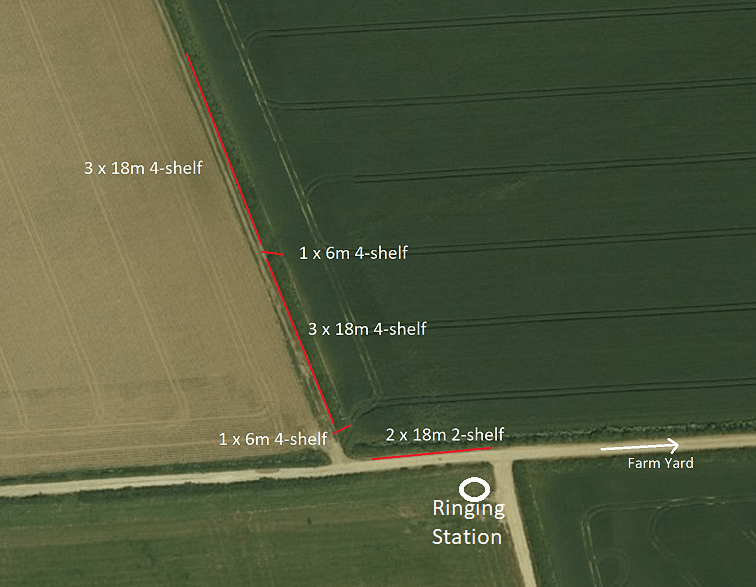
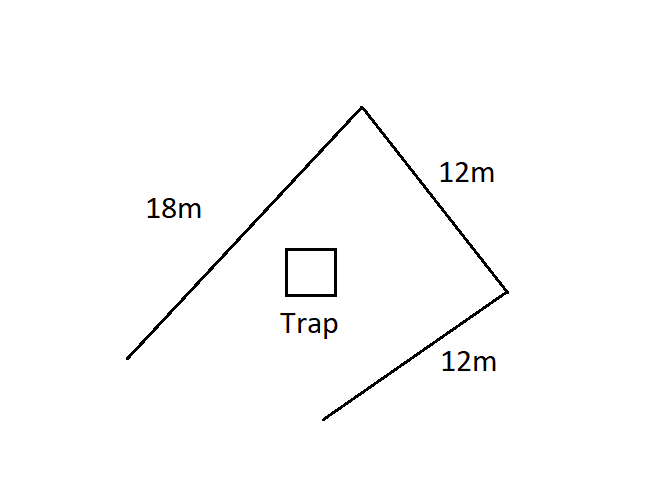
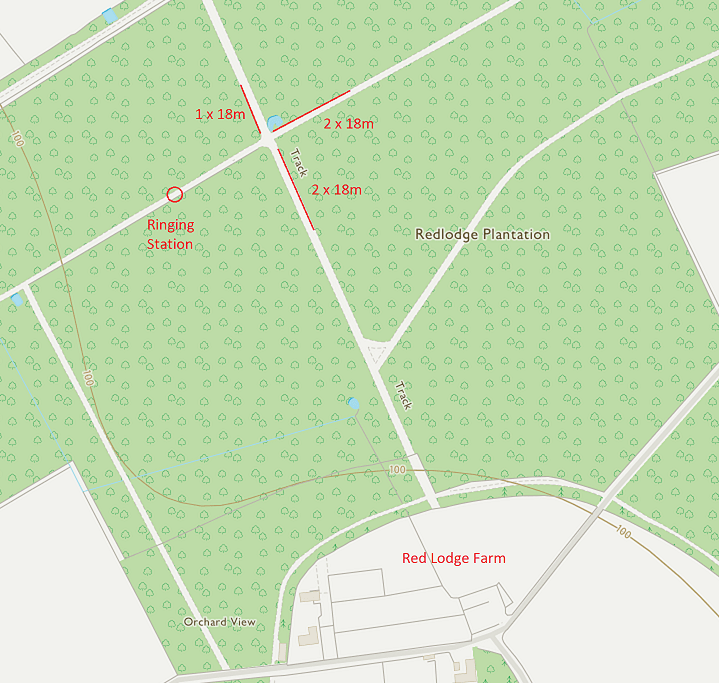
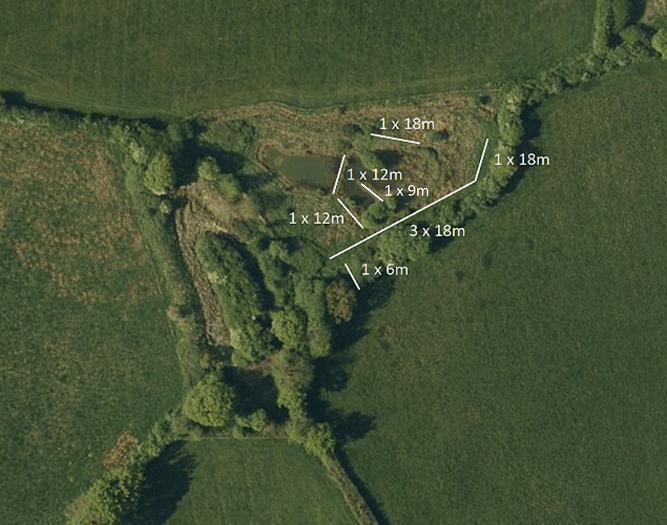
It is hard work at this site when solo or duo, so I only set five nets around the plateau bushes (2 x 6m; 2 x 12m and 1 x 9m) and a single set of 3 x 18m nets along the perimeter track. Whilst I was there in the pre-dawn dark the Skylarks started singing and, as the sky lightened, they took to the skies. They were ever present from then on and there had to be at least 20 singing males in the area within which we were working.

I put lures for Wheatear, Stonechat and Meadow Pipit out on the plateau and Redwing on the perimeter track. Clearly, I was hoping we might get some of the winter visitor Redwing that are still hanging around the area. The latest Redwing the group has ever caught was one on the 28th March 2019 at Tedworth House by yours truly, so late Redwing are possible.

I was also hoping for an early Wheatear, as we know they are currently arriving in the country. However, we have never caught one in the Braydon Forest and the earliest any have been caught was one in mid-April back in 2004.

Initially, the only lure that worked was the Meadow Pipit. Later on I changed the Redwing lure to Linnet and, I am pleased to say, it worked almost immediately.

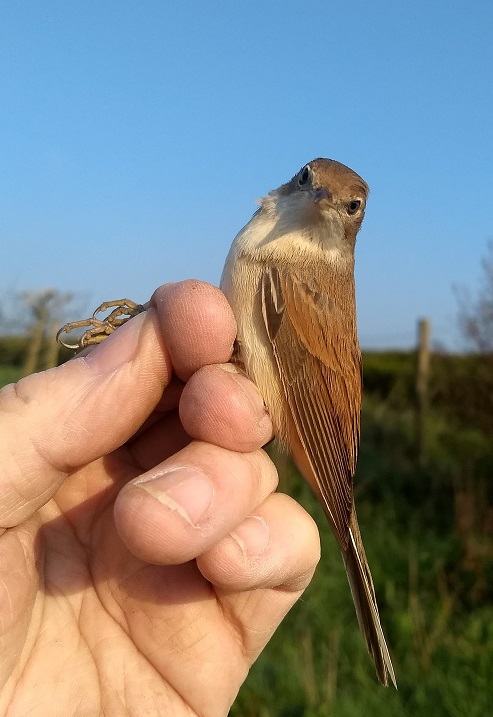
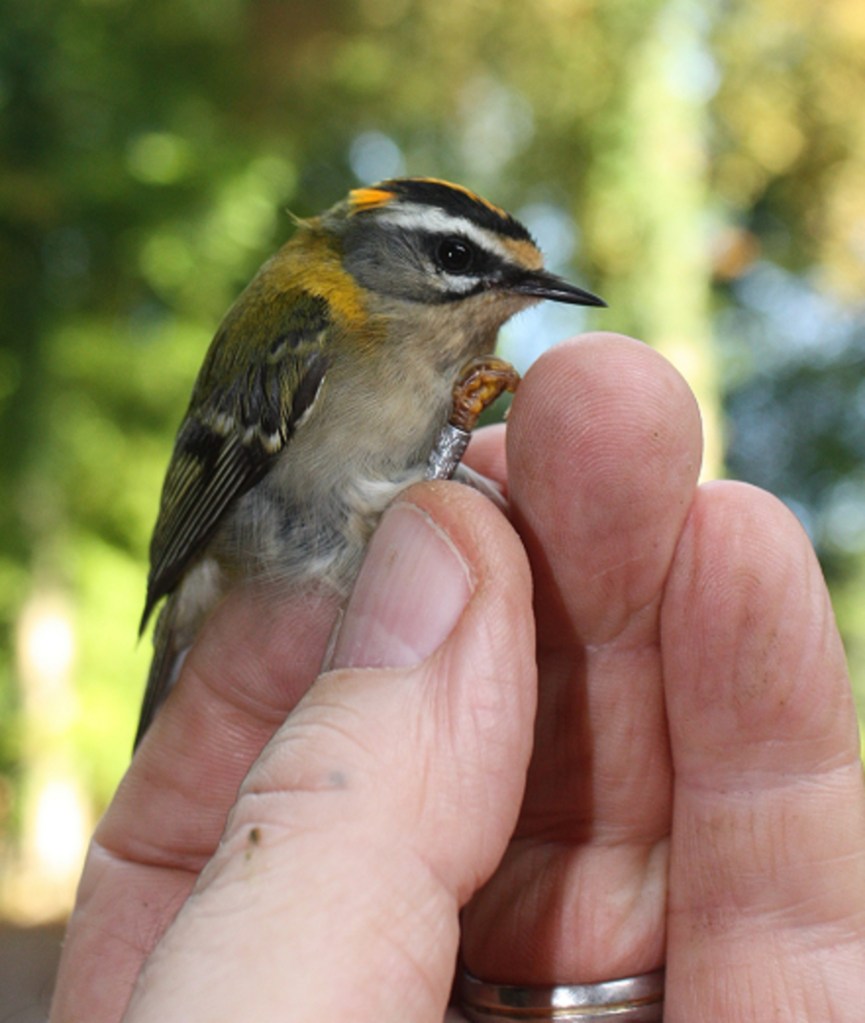
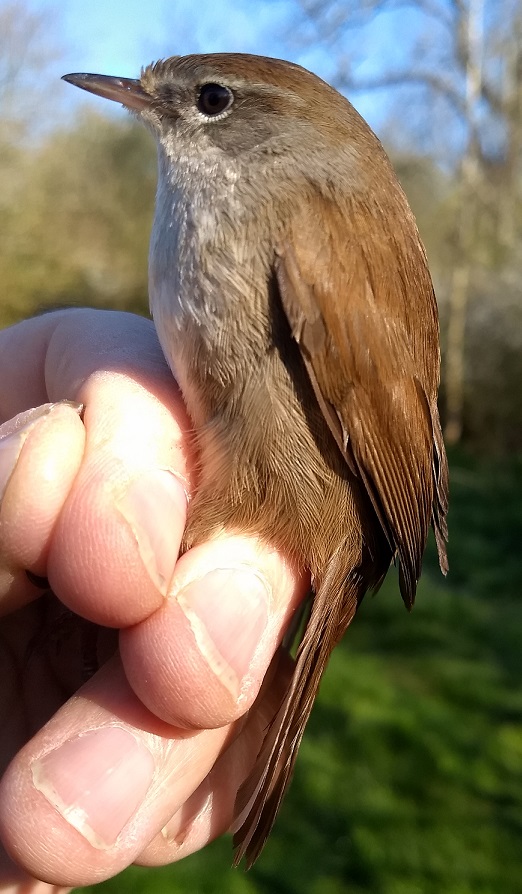
It was a nice catch: Long-tailed Tit 1(1); Wren (1); Meadow Pipit 2; Dunnock 1; Robin 1; Chiffchaff 1; Linnet 1; Reed Bunting 1(1). Totals: 8 birds ringed from 7 species and 3 birds retrapped from 3 species, making 11 birds processed from 8 species.

The highlight of the catch was a Reed Bunting, Z936307, which was ringed as a juvenile back in October 2015. It had not been seen again until today, five-and-a-half years later.

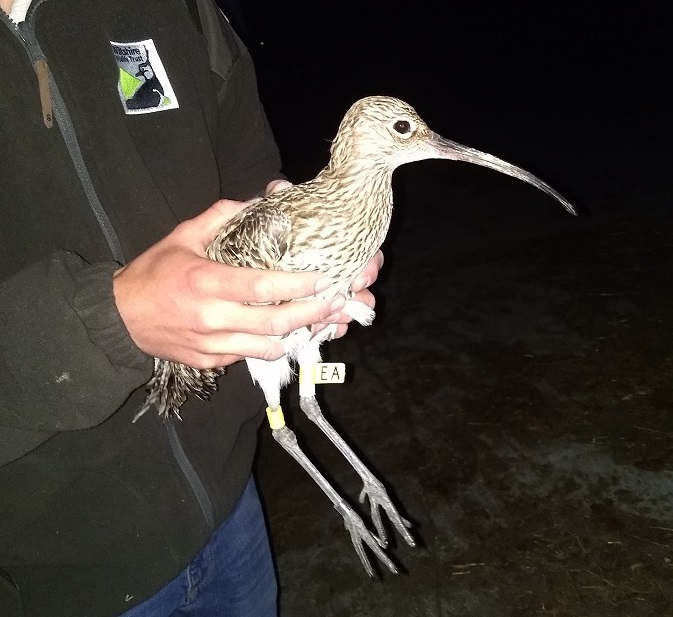
Alongside the ringing, we were delighted to see the return of Curlew for another breeding season. It is known that two pairs nested at Blakehill last year, with one pair thought to have successfully raised their brood and the other, sadly, being predated by the local foxes (the key predator of Curlew eggs and chicks). Jonny Cooper is running the lowland Curlew monitoring project in north Wiltshire, and we are hopeful that the nests can be identified and protected this year. The use of thermal imaging technology should help in that.

It was quite funny how the Curlew manifested themselves this morning. In the paddock behind the perimeter track is a small group of Herdwick sheep. I walked along the track to the nets to extract a Robin that had been caught. The sheep followed me along and, as I turned away from the net ride I heard a sort high-pitched mewing coming from, what seemed to be, the group of Herdwicks. I spent quite a few seconds looking to see which of the sheep was making the noise when a Curlew flew off from behind them. It flew up, flew around and started the much more familiar bubbling call. This was answered by another bird and, all of a sudden there was two of them. We saw and heard them regularly throughout the morning.

One of the reasons for the small catch was the weather. It stayed particularly cold all session, which was exacerbated by an unforecast breeze coming from the north-east, so, Skylarks apart, there was not a lot of movement around the site. I had to close the plateau nets early, as they were billowing and catching in the bramble and blackthorn. Blackthorn is a particularly bad net killer – and I have enough mending to do from normal wear and tear without the added issue of blackthorn damage. We packed the plateau nets away by 11:00, when Ellie had to leave.

I went to take down the perimeter track net ride and found the Linnet sitting almost on top of the lure. I love it when a plan comes together. Returning to the ringing station I was pleased to find Jonny had turned up to check out the Curlew. He very kindly lent a hand with the packing away of the ringing station and I was away before midday.

Lower Moor Farm: Wednesday, 17th March 2021

The starts are getting earlier, waiting for the clock to spring forward at the end of the month. I set the alarm for 5:45 but, unfortunately, was awake by 5:30 and out of the house before 6:00. By the time I got to site, 15 minutes later, it was full daylight. Clearly, some earlier mornings are needed!

I was joined by Lucy at the agreed time of 6:30, by which time I had the first ride set and was two thirds through the second ride. These two rides and one along the lakeside were all we set.

It wasn’t a huge catch but it was a very pleasing one. 17 birds and no Blue or Great Tits is most unusual. Arriving on site there were plenty of Chiffchaffs calling from the trees and brush alongside the stream. The first round delivered our first Chiffchaff of the year, a few Long-tailed Tits, a new Blackbird and a retrapped Song Thrush.

First Chiffchaff of 2021

The Song Thrush was ringed at my last session at Lower Moor Farm, and I found it difficult to age then: even more so now. It’s plumage is absolutely pristine. Had it not had a clear cloacal protuberance today, indicating it was a breeding condition male, I would have thought that it was a recently fledged bird. All I can think is that the bird fledged late on in 2020. I would love to know what the minimum time is between fledging and sexual maturity. We know that they breed in the year following fledging, as do all (as far as I am aware) small passerines, but I wonder if anybody has managed to make that calculation?

Lucy has a thing for Lesser Redpoll and, despite joining me at least once a week, every week I have been out since she came on board, and despite our having processed 31 Lesser Redpoll in that period before today’s session, none of them were at Lower Moor Farm. In fact, we have only ever caught them previously at a feeding station in the education area on the other side of the reserve. Somewhere that I have not ringed since 2017. So at 9:30, as Lucy started extracting a Chiffchaff, I told her to leave it for me and to extract the bird I was looking at – her first Lesser Redpoll with me. It was a stunning male bird at that.

Male Lesser Redpoll

That was followed by a second at 10:00. I think it made her morning!

The list for the day was: Long-tailed Tit 2(3); Dunnock (2); Song Thrush (1); Blackbird 1; Chiffchaff 5(1); Lesser Redpoll 2. Totals: 10 birds ringed from 4 species and 7 birds retrapped from 4 species, making 17 birds processed from 6 species.

The morning kept threatening to warm up, with the sun peeking through the haze, but it was never strong enough to burn it off, the ambient temperature remained cold, and there wasn’t a lot of movement so, after two empty rounds, we packed up at just gone 11:00 and headed off to get warm.

The Firs: Monday, 15th March 2021

After an eight day hiatus it was good to get back out into the woods and to do some ringing. It is that time of year when the catches are at their smallest and, often, the least varied. The winter visitors are making their way back to their breeding grounds and the summer visitors are on their way, but are only arriving in small numbers at the moment. That was the case today. Not that I am complaining.

As I was working solo, I only set 5 nets: 2 x 2 x 18m nets down the main ride in front of the feeding station and a 12m net behind it.

Whilst I was setting up I had the good fortune to hear a Lesser Spotted Woodpecker drumming. I managed to work out which tree it was in, and then got good views of it flying to another tree and resume drumming. Even more exciting, it got an answer from the other side of the wood.

Over the course of the next couple of hours I also had excellent views of a couple of Great Spotted Woodpeckers, as well as their persistent drumming. Interestingly, the Great Spotted Woodpeckers did not start up until after the Lesser Spotted Woodpeckers had finished. Almost all morning two Green Woodpeckers were trading “yaffles” from either side of the wood. I did put on a lure for Green Woodpecker but, if I can anthropomorphise for a moment, I suspect both of them decided they were happy with what they had and couldn’t be bothered to investigate this stranger.

The first bird out of the nets this morning was a recaptured Marsh Tit. Always nice to know that they have survived the winter. This bird was ringed in February 2020. At mid-morning I met a birder, Brian Piercey, who has been fairly regularly spending time at the Firs, and we had a good chat about lots of things but Marsh Tits in this wood was a key part of that. It really has improved as a habitat for them since the Trust opened up the central glade and thinned some of the side areas. I told him about my colour ringing scheme. Brian went off for a wander and when he came back reported that he had managed to identify the colour rings on a Marsh Tit. You can guess can’t you: the same bird that I processed first thing. I am pretty confident that there are at least three territories in the Firs. Brian has expressed an interest in joining a few more sessions. He had a taste of ringing a few years ago, perhaps it is time to have another go.

There was then a steady progression of small numbers of Blue and Great Tits, broken only by a Treecreeper, a Robin, a couple of Coal Tits and some Chaffinches. The list for the day was: Treecreeper 1; Blue Tit 8(13); Great Tit 4(14); Coal Tit (2); Marsh Tit (1); Robin 1; Chaffinch 2(1). Totals: 16 birds ringed from 5 species and 31 birds retrapped from 5 species, making 47 birds processed from 7 species.

When Brian came back from one of his circuits of the reserve he mentioned that there were still some Redwing hanging around at the bottom of the wood. I put on a lure, to see if they could be enticed in but, as the catch shows, they weren’t interested.

The Firs is the best exercise that I get these days. Trudging up and down that hill, through the mud, a 500m round trip, fifteen or more times, is hard work. I estimate it at approximately 15,000 steps per session: not bad for an old, unfit ringer.

Two Sides of Somerford Common: Friday, 5th and Sunday, 7th March 2021

Somerford Common is my favourite woodland in the winter: I have a feeding station set up in the paddock on the east of Stoppers Hill Road and that is where I do most sessions. The paddock is a coppiced area with stands of Silver Birch and the odd conifer, as well as the Hazel coppice. However, to the west of the same road is a large commercial conifer plantation. We don’t ring there often but when we do it can be surprisingly good (two Buzzards in one session, for example) and is usually an excellent site for Coal Tit and Goldcrest. Indeed, at my last session on this part of the site, last December, of 31 birds caught 13 were Coal Tits and 11 were Goldcrests and only 2 were Blue Tits. To encourage birds to congregate in an area suitable for setting our nets, I set up a feeding station on that side of the wood on Monday, 1st March. The feeding stations (stars) and relative net positions (black lines) for both sessions are marked on the diagram below:

On Friday morning, Jonny, Steph and Lillie joined me for a session in the conifer planation area. We set two 6m nets either side of the feeding station and two sets of 3 x 18m nets along the ride in front of the feeding station. Unfortunately, it seems that the birds we were after had deserted that corner of the wood. It was a very small catch: Great Spotted Woodpecker 1; Treecreeper 1; Blue Tit 4(1); Great Tit 5; Coal Tit 4(1). Totals: 15 birds ringed from 5 species and 2 birds recaptured from 2 species, making a mere 17 birds processed from 5 species.

It was good for Lillie, who got to process her first Great Spotted Woodpecker. Apart from that the only highlight was the Ravens that were touring around the wood, hopefully looking for a nest site.

After doing some preparatory work at Blakehill Farm for the Braydon Forest Curlew project, Jonny stopped off at the coppice area to see what was still making use of the site. Although I had been out five times in the previous seven days, he having seen an unringed Brambling and a couple of unringed Marsh Tits, I let Jonny persuade me that it might be worth another go at the site today, Sunday. Jonny and I were joined by Lucy for the morning and we set up our usual nets, as described in previous posts.

The catch was not as varied as I had hoped, but it was not that the birds weren’t around: they were, but they weren’t coming down to the nets, either to the lures or the feeding station. Whilst sitting waiting, and watching, we had excellent views of a couple of flocks of Lesser Redpoll. Unfortunately, that is all we had: good views. They stayed up high and then flew off. I also had excellent views of a pair of Great Spotted Woodpeckers. Definitely a pair: a male and a female, flying into a large Oak tree and foraging together through the branches. They were the second and the third of the morning, as Jonny was busy extracting another one from the nets at the same time. Interestingly, the bird he was extracting was the female Great Spotted Woodpecker that Lillie ringed on Friday.

The list for the session was: Great Spotted Woodpecker (1); Blue Tit 3(3); Great Tit 5(5); Coal Tit 1; Marsh Tit (3); Wren (1); Dunnock (1); Song Thrush 1; Goldcrest 1; Chaffinch 3; Bullfinch (1). Totals: 14 birds ringed from 6 species and 15 birds recaptured from 7 species, making 29 birds processed from 11 species.

Although it did warm up latterly, the activity never really warmed up in the way that it did at Red Lodge yesterday, and the birds just didn’t come in to the feeders as expected. As the catch numbers went to single figures, we did our last round at 11:30 and were away from site just after midday.

This will most likely be my last session until next weekend: tomorrow’s weather is okay but the car is off the road and it is looking wet and windy until next weekend.

Red Lodge: Saturday, 6th March 2021

A fairly quick return to Red Lodge this morning. I was joined by Lucy and David for the session and Richard Williams, a local birder with whom I have interacted on Twitter, came along to see what Red Lodge is all about. It was a cold start, with the temperature just below zero, and the birds did not start moving in any number until after 9:30, by which time it had warmed up (a bit).

It was, as expected, a rather Blue Tit heavy session, both with new birds to ring and a good number of retraps. However, there was one new bird that we could not ring:

As you can see, the lower right leg and the foot have atrophied. There was no sign of disease and no sign of anything cutting off the circulation to the leg. Those of us who handled it did a precautionary sanitising of our hands once it had been released. It seemed perfectly fine in every other respect, so is obviously coping with its problem.

Apart from that, Lucy mentioned that she hadn’t yet had a chance to extract and / or ring a Goldfinch. As seems to be the way at the moment, her wish was granted pretty soon afterwards. This was actually only the second Goldfinch that we have ever caught in Red Lodge. The first was caught in April 2017, so not common for us in this wood (although, as one of the residents of the Forest Cottages adjacent to the wood said, they get plenty in their gardens eating the sunflower hearts – my seed mix cannot compete).

My birding highlight of the session was a Coal Tit, D837461, which was ringed by me as an adult on the 22nd February 2014. So, over 7 years since it was ringed but has to be at least 9 years old (because it was a full adult when ringed it could not have been fledged in 2013, so it would have had to have been fledged in 2012 at the earliest). The longevity record for a Coal Tit is 9 years 2 months and 25 days from date of ringing. That bird was a first year bird. The survival rate for adult Coal Tits is just 43% and the typical lifespan is just 2 years. This is clearly a venerable example of the species.

Our list for the day was: Nuthatch 1(1); Blue Tit 20(8); Great Tit 3(3); Coal Tit 2(1); Marsh Tit (1); Song Thrush 1; Blackbird (1); Goldcrest 2; Chaffinch 2; Goldfinch 1. Totals: 32 birds ringed from 8 species and 15 birds retrapped from 6 species, making 47 birds processed from 10 species.

We closed up the nets at midday and left site by 12:30. I am sure Richard found it interesting. He was good company, and is welcome to join us again should he wish to.

Blakehill Farm: Wednesday, 3rd March 2021

Lucy and I met up at the entrance to Blakehill Farm Wiltshire Wildlife Trust nature reserve at 6:45 this morning. The plan was to see what birds were using the fields adjacent to the cow byres behind the Whitworth Building. I had a couple of mad ideas, the maddest of which was to set up a few Potter traps baited with mealworms and a lure for Wheatear, just in case any of them happened to be passing through and fancied a snack. Unfortunately, that drew a blank. One day!

We set the usual nets for that field:

My other slightly mad idea was to lure for Redwing, as there were still some of them and Fieldfare about the site. I put lures on for them on the 2 x 18m and the standalone 18m net. It didn’t work. However, at 10:20 we did catch one – in the 9m net in the complex adjacent to the farm. Needless to say, moving a Redwing lure to that area did not deliver any further examples of the bird.

All nets caught, which is always a good thing: it makes you feel that you made the right choices. The three net complex was most successful, particularly the 9m net. It is the site at which I most regularly catch House Sparrows and, sure enough, the first two birds out of the net were a male and a female.

The catch for the day was: Blue Tit 1(1); Great Tit 2; Wren 2; Dunnock 4(1); Robin (1); Redwing 1; Blackbird 2(1); House Sparrow 6. Totals: 18 birds ringed from 7 species and 4 birds recaptured from 4 species, making 22 birds processed from 8 species.

It wasn’t the biggest catch but it was big enough to be enjoyable and relaxed enough for some training. As it was the first time that Lucy has had the opportunity to process both House Sparrows and Dunnocks it meant we could take time over these species. Ageing Dunnocks is a real black art: there are so many slight variations of plumage and eye colour to take into consideration before coming to a conclusion. House Sparrows have always been considered to be incapable of being aged accurately once both adults and juveniles have gone through their autumn moult, whereupon young and adults adopt identical plumages for their particular sex. That was until recently when Laurent Demongin’s “Identification Guide to Birds in the Hand”, translated from the French by Oxford based, fellow ringer and all round good bloke, George Candelin, hit our shelves with the suggestion that second year male House Sparrows can be identified as such due to a characteristic of the median coverts: specifically that in the juvenile bird the white tips to the feathers retain a central black spike not seen in full adults, as seen in the photograph below:

I hate to say it, but we did have a fatality this morning. It doesn’t happen very often, perhaps once in every 1,500 birds, but this was particularly poignant. At 8:55 Lucy ringed our second Wren of the morning. It had been extracted from the 3 net complex. Our ringing station was relatively equidistant from each net set, about 100m from each. Having processed the Wren it was released at the ringing station and left to its own devices. Just after 10:00 we noticed a Kestrel come flying across the fields to the south. We watched it stop and hover a couple of times, and then it stooped. I knew it was heading for the net, so I ran for it. As is par for the course, I got over halfway there when it managed to free itself from the net and fly off. I knew it had to have been after something (Kestrels are just as happy to take small birds as they are to take voles and mice) so went over to check the net. Sure enough, it was the same Wren that Lucy had ringed over an hour earlier. Wren mortality is naturally in excess of 70% for juvenile birds and 50% for adults. We were checking the nets every 15 minutes this morning, so I don’t feel guilty about it, it is a very unusual occurrence for our group and my team in particular.

Hogacre Common Eco Park: Thursday, 25th February 2021

The following blog piece has been written by Alice Edney, one of the group’s C-permit holders, currently carrying out her PhD in Oxford – hence the current location of her activities.

At the start of lockdown three, I was determined to attract birds to my urban garden in Oxford. I built a makeshift bird table, topped up the feeders, and waited… And waited! And waited! It was no use.

There were plenty of birds out the front of the house, overhead and in neighbouring gardens, but alas, not a single one came into mine. A combination of next door’s cat and my housemate’s new puppy were clearly more of a deterrent than I had anticipated. I left the feeders up but reluctantly resigned myself to no ringing during lockdown three. (I should note, the puppy is adorable and has done wonders for house happiness during this challenging time, so I can’t really be annoyed about the lack of birds).

When I received an email in mid-February, to say that BTO guidance on bird ringing had changed, I was surprised and excited to say the least. After being granted permission to resume ringing at my local site, Hogacre Common, I planned my first session for the 25th February. Hogacre forms part of my local patch and I have been visiting it somewhat religiously since October and recording the wildlife seen. On the 18th November, I saw my first Lesser Redpoll here, and have had two further sightings since, all being spotted in the same patch of birch trees. On the morning of the 25th, I therefore decided to set up a net amongst the birch in the hope of catching my first Lesser Redpoll at Hogacre. The day previously, I had also seen my first Chiffchaff of the spring here, so I set a net in the area it was seen, along with two others at the feeding station.

The morning started off well, with a lovely little group of Long-tailed Tits along with the usual Blue Tits and Great Tits. Quite honestly, after a two-month ringing hiatus I would have been happy with that. However, at 08:20 one Lesser Redpoll was caught and at 09:50 a Chiffchaff – both firsts for the site.

In total, the morning yielded a modest catch of 22 individuals from 6 species: Blue Tit 5(2),  Great Tit 4(1), Long-tailed Tit 1(6), Robin 1, Chiffchaff 1, Lesser Redpoll 1. Totals: 13 birds ringed from 6 species and 9 birds retrapped from 3 species.

Overall, it was a lovely session, and I was very grateful to be able to get back out. My body, however, said otherwise. The following day every muscle seemed to ache, after a severe lack of exercise during lockdown and then suddenly asking it to lug a load of heavy equipment across a field. I guess I’ll just have to do lots more ringing over the coming weeks to get back in shape! I am excited to discover what species will visit Hogacre this spring. 

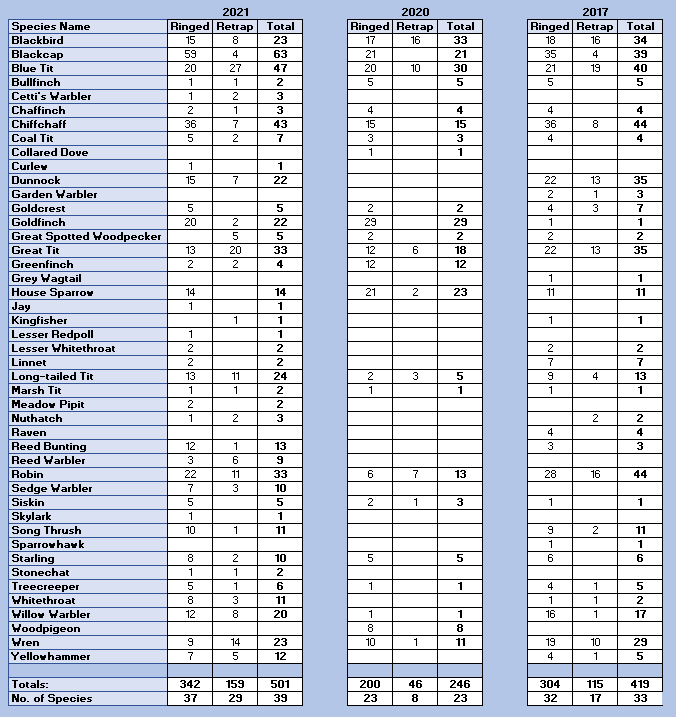
West Wilts Ringing Group Results: February 2021

After the BTO relaxed the ringing restrictions for England in an email on the 12th February, quite naturally the weather was then dreadful for about the next week, just adding to the frustrations caused by the lack of activity – and the lack of birds visiting my garden. It is as if they knew!

Perhaps more surprising: despite the restrictions and the weather, we actually carried out more sessions than we managed in 2020!  The average catch wasn’t much bigger, but overall it was a happy return to activity. As the Beast from the East was in 2019, I really cannot remember why February 2020 was so bad: we weren’t in lockdown by then, it must have just been bad weather.

The results for the month were:

There were quite a few highlights: Alice caught her first Lesser Redpoll for the Hogacre Common Eco Park, Ellie got to ring her first ever Siskin. The colour saturation on a male Siskin’s wings and tail are superb:

David found, extracted and ringed his first ever Brambling. The Brambling catch was very welcome. They have never been a common bird for us: two caught in 2018 by Jonny and Andy, near Chippenham and Warminster respectively, being the first two since the group split at the end of 2012, and they had only been caught three times since then in the Braydon Forest: twice at Somerford Common and once at Ravensroost, all in 2019. Last year was a blank, so, even though it was only one, to get another at Somerford was very pleasing.

I was pretty delighted to catch my first Sparrowhawk of the year in my first outing since New Year’s Day, even if the photograph did spark a lot of other ringers on Facebook telling me we were asking to get spiked by its talons because they are so mobile (my little team has ringed 14 in 5 years, which is a good average for catching free-flying Sparrowhawks, without any undue injury from their talons, I am pleased to say). Everyone’s an expert!

As blog followers already know, March has started well – but that’s a story for next month’s round up!

The Firs: Monday, 1st March 2021

With the continuing good ringing weather, I decided on a trip to the Firs this morning. I was joined for the session by Jonny and Lucy.

Lucy had hoped that we might catch a couple of Lesser Redpoll as she hasn’t ringed any of them yet. Unfortunately, we didn’t, but she did get to both extract and process her first two Great Spotted Woodpeckers: one new and one retrap.

Male Great Spotted Woodpecker: Lucy’s first extraction and ringing of this species

When Lucy looked at the tail feathers she noticed that there was some unusual matter collected along the feather shafts:

Picture by Lucy Mortlock

I have asked for opinions on the ringers’ group on Facebook and had a few suggestions: a mix of resin and lichen particles from one, algae plus bark debris from another. I thought it might be the result of feather mite abrasion and someone else suggested the products of abrasion. Any other suggestions are welcome.

The list for the session was: Great Spotted Woodpecker 1(1); Nuthatch 4(1); Blue Tit 11(9); Great Tit 11(13); Coal Tit 2(3); Long-tailed Tit (1); Wren (1); Robin 4; Song Thrush 1; Blackbird 1; Goldcrest 1(2); Chaffinch 4(1). Totals: 40 birds ringed from 10 species and 32 birds retrapped from 9 species making 72 birds processed from 12 species.

We seem to be doing quite well for Chaffinch in the Braydon Forest. At a time when many ringers are saying that they cannot ring Chaffinch because of the prevalence of Fringilla papillomavirus, we have not seem a case of it in Chaffinch for a long time. In the last two sessions we have ringed eight and processed one retrap, all of which had completely clean legs and feet. The retrapped bird was ringed as an adult at this time last year, so has survived at least 3 years without catching it.

It was another good catch of Nuthatch. Unlike Saturday’s catch, in which all four were recaptures, all bar one of today’s were new birds.

My highlight of the session was a Coal Tit ringed by me as a full adult in April 2016. This makes it at least 6 years old. The oldest known is 9 years 2 months but the typical lifespan is just 2 years. It is doing well.

One other point of interest: it is not often that Great Tit outnumbers Blue Tit in the catch.

With the catch falling off after 10:30, we closed up and took down at 11:15.

Somerford Common: Saturday, 27th February 2021

After yesterday’s cold start, today’s was every bit as cold! When I was anticipating going to Somerford Common on Wednesday I went and topped up the feeders Tuesday lunchtime. The seed feeder there is rather large: it holds 8 litres of seed mix. As the wind put paid to that session, I rescheduled for today and yesterday, after the Lower Moor session, I went to top up the feeders again. The big seed feeder was EMPTY! I was quite surprised, and was a little concerned that we might be a bit overwhelmed this morning. Fortunately, we had a good session with a decent sized, but entirely manageable, catch.

I was joined for the session by Ellie and David. We started on site at 6:30, in minus 2 degrees Centigrade. It warmed up slowly, and by the time we were ready to close up, it was positively warm!

Ellie was very keen to get the chance of her first ever Siskin, and this is the site most likely to deliver it since the original Webb’s Wood feeding station area was thinned by the Forestry Commission. It was the double-edged sword of the laudable act of removing non-native conifers to replace with new native species, but which haven’t yet established enough to provide the same attraction to this species.

The first highlight of the morning was about 9:30 when David shouted “Brambling”, and got to extract his first! This is only the fourth time this species has been caught in the Braydon Forest, with the first and third catches of two birds each being at Somerford Common in February 2019.

As I like to be fair, I insisted on drawing lots to see who, between the two of Ellie and David, would get to process the bird. David won that as well, so his first Brambling extraction and processing. It was a beautiful adult male.

I put a lure for Siskin on at the feeding station and, because we could hear them squabbling in the trees, Jay on the nets on the main path. Neither lure looked like it was going to work and I changed the Jay for Lesser Redpoll but left the Siskin lure running.

Perseverance paid off: at 10:25 a little flock of Lesser Redpoll arrived and four of them flew straight into the net by the lure. A fifth was chuntering away in the tree line behind the net. I removed the four and went off to see how David and Ellie were getting on with the Blue and Great Tit extractions. As I walked up to the feeding station net, where Ellie was extracting aforesaid titmice, I suggested to Ellie that she might like to take a bird out of the top shelf. To be fair, the sun (by then) was in her eyes but she couldn’t understand why I was expecting her to remove a Blue Tit when I was just stood there. So I extracted her Siskin for her!

She did process it. So, two firsts for two of my team this morning has to be pretty good.

As we went back to the ringing station I noticed that the fifth Lesser Redpoll had ended up in the net, so I extracted that as well:

All in all, it was a cracking session. The list for the day was: Great Spotted Woodpecker 1; Nuthatch (4); Treecreeper (1); Blue Tit 13(3); Great Tit 9(3); Marsh Tit 1(3); Long-tailed Tit (1); Dunnock 2; Goldcrest (3); Brambling 1; Chaffinch 4; Goldfinch 1; Lesser Redpoll 5; Siskin 1. Totals: 38 birds ringed from 10 species and 18 birds retrapped from 7 species, making 56 birds processed from 14 species.

That is a tremendous variety for our woodlands at this time of the year. We closed the nets at 11:30 and left site by midday (the beauty of only having 6 nets set and 3 of you to do the work). I went along to the Firs and topped up the feeders for Monday’s session. Who knows? Perhaps more of the same on Monday!