A very happy new year: Langford Lakes Reedbed, 1st January 2021

This is a blog post by Jonny Cooper:

Last summer I began regular ringing sessions at the reedbed at Langford Lakes WWT Reserve to monitor the birds using the habitat during the breeding season. Over the last few months I have been curious as to the birds using the reedbed during the winter.

Reedbeds are used as a winter roost by a variety of species, including Reed Bunting, Pied Wagtail and Starling. A session on 9th December last year yielded 19, 1 and 5 of these species, respectively. I was keen to get out again to the site and figured an afternoon session was as good a way to kick of 2021 as any.

I arrived on site just after 1pm and set up the nets playing lures for Pied Wagtail and Reed Bunting. The first round produced 5 birds including a stunning Kingfisher that wowed several passing families (from an appropriate distance of course). After that, each round produced a couple of birds.

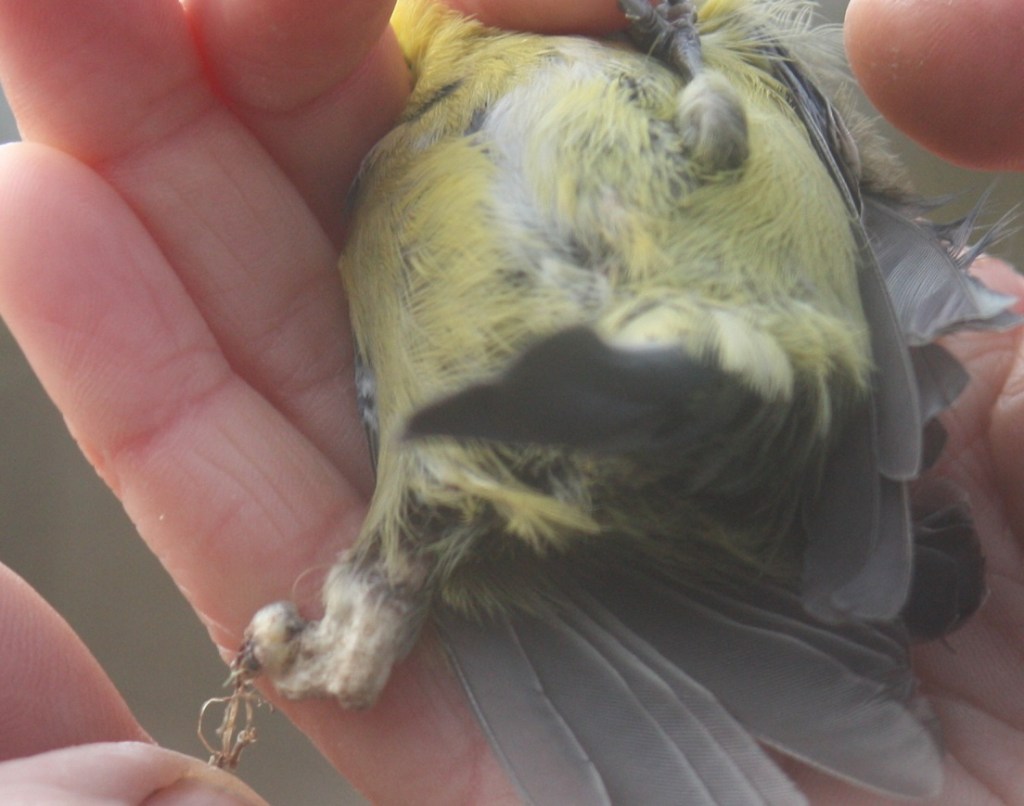
All afternoon I could hear Water Rails squealing in the reedbed and elsewhere on site and I thought to myself ‘that would be a nice bird to see up close’. A little while later this showed up in the net:

The first Water Rail I have processed and the first ringed at the site as well as the first ringed by anyone within the ringing group at the ringing group sites since 2009. (Editor’s note: but I did ring my first one on Skokholm in 2019.)

The total catch was as follows: Water Rail 1, Kingfisher (1), Blue Tit 2, Great Tit 1, Cetti’s Warbler (1), Chiffchaff 2, Wren 2, Starling 1, Blackbird 1, Redwing 1, Dunnock 1 and Reed Bunting 1. 15 new birds from 11 species and 2 re-traps form 2 species giving a total of 17 birds from 13 species.

Aside from the Water Rail the two Chiffchaff were nice to catch. This migrant is wintering in the U.K in increasing numbers. And of course, Kingfishers are always a joy to see up close.

Overall a session defined by its quality rather than the quantity. What a fantastic start to the year.

West Wilts Ringing Group: December 2020 Results

A pretty excellent December: our biggest catch in that month since the group split at the end of 2012.

image.png
image.png

Clearly we were much more active this December than in previous years: just 10 sessions last year.  This is almost certainly a by-product of Covid-19 restrictions. Regardless, it is a pretty decent catch.  Looking at those species that we have more than doubled since last year (because we have done more than double the number of sessions), it is great to find an increase in Long-tailed Tit numbers. Alongside that we have definite increases in numbers of Nuthatch, Great Tit, Dunnock and Starling. 

Compared with last year, the species added to the list for December were: good numbers of Reed Bunting, plus Jay, overwintering Blackcap, overwintering Chiffchaff, Goldcrest, Pied Wagtail, Stonechat, Lesser Redpoll and Treecreeper. Missing from last year’s list is Grey Wagtail and Meadow Pipit.  


Somerford Common: New Year’s Day, 2021

With the forecast being for a bit of snow overnight but an icy start to the morning, I was hopeful that it might be possible for us to run a session at Somerford Common. In the event, the temperature was just on freezing but there was no wind, so no wind chill factor. I decided we could set the nets: just the 4 at the feeding station and the Redwing nets on the main path. The feeding station was topped up on Thursday, ready for today.

On my way to site, as I was approaching the entrance to the car park at Somerford Common on Stopper’s Hill, I saw my first bird of the new year: a Woodcock. That was a good start!.

I was joined by Lucy for the morning. The birds started arriving whilst we were still setting the nets, even though it was only just daylight. It was busy between 8:00 and 10:30 but died off quickly after that. There was a light snow shower between 8:30 and 9:30 but that just warmed the place up, and didn’t even settle on the nets.

Having missed out on Redwing at Ravensroost and Red Lodge, it was good to find that there are still some about. We caught eight and a couple of Blackbirds, in the appropriate net ride with a lure playing.

The list was: Nuthatch (1); Blue Tit 6(8); Great Tit (8); Coal Tit 2; Marsh Tit 1(4); Robin 1(3) Redwing 8; Blackbird 1(1); Chaffinch 2(1). Totals: 21 birds ringed from 7 species and 26 birds retrapped from 7 species, making 47 birds from 9 species.

It is always nice to start the year with a Marsh Tit or two, to start with five, including a new bird was a real bonus.

We cleared away at 11:30 and were off site by midday – the benefits of not setting up lots of nets.

Some Observations on Blue Tits, Cyanistes caeruleus, in the Braydon Forest

I started my ringing career in January 2009. Having been a keen birder up to then, and Ravensroost Wood being one of my key local patches since I moved into the area in 1997, I was keen that we should get to ring in the site. I set about persuading the Wiltshire Wildlife Trust to allow us access. I provided the rationale, and swapped loads of data with the Trust, from my 11 years of birding there, and they gave me the information gathered from regular breeding season surveys that had been carried out, and the agreement was reached. My trainer provided a project plan and a risk assessment, and we gained access after Natural England approval (it is a SSSI) and first ringed there in July 2009.

To be fair, it wasn’t my trainer’s favourite site, and it was agreed that, when I got my C-permit and could take it on, it would become my site to manage and work. I got my C-permit in June 2012 and took over the site, with a new project plan, in September 2012. Soon after starting work there I bumped into a staff member from the Forestry Commission and I enquired about getting access to their Braydon Forest sites. They were really helpful and welcoming and I got access to Somerford Common, Webb’s Wood and Red Lodge Plantation soon after. Since then the vast bulk of my ringing has taken place in this area.

Unsurprisingly, the commonest species in my catch is the Blue Tit, Cyanistes caeruleus. People who don’t understand ringing often ask “Why bother with such a common species?”. Some ringers choose not to ring them (at 27p per ring cost one can understand the reluctance for those who do not get external funding for their rings, although I largely fall into that category, my view is that if I have “inconvenienced” them by catching them, the least I can do is ensure that we get some data back from them). The argument itself is fallacious: once upon the time the BTO would not allow House Sparrows, Passer domesticus, to be ringed, because they were so common. That worked out well, didn’t it? Besides, it seems the whole rationale for the Edward Grey Institute at Oxford University is studying Blue Tits, and if it is good enough for them, who am I to argue?

The key thing about Blue Tits: you are going to get a good sample size upon which to make judgements on trends. So, with the vagaries of the weather disrupting my ringing activities more often than I would like at the moment, I have been having a look at my Blue Tit records since I took over the ringing in the Braydon Forest, with complete years from 2013 onwards. The numbers caught have been as follows:

Fig 1: Number of birds ringed by year by age group

This year’s numbers have possibly been skewed a bit by lockdown, but only really in March / April, and I have managed to get sessions in every wood in just about every month of 2020.

One of the perennial questions ringers have differing opinions on is about sexing Blue Tits on wing length. They are a sexually monomorphic species, so the only reliable way of telling the sexes apart is in the breeding season, when the females develop a pronounced brood patch and the males cloaca becomes engorged and is known in the trade as a cloacal protuberance. I have analysed my data for males and females sexed by their breeding condition and mapped the numbers against wing-length to see whether it is possible to reliably sex them on that biometric outside of the breeding season:

Fig. 2: Number of identifiably male and female Blue Tits ringed by wing-length

As you can see, a Blue Tit with a wing-length of 62 mm is almost certainly female, and an individual with a wing of 66mm and longer is almost certainly male. In fact, amongst my catches I have had 1 male with a wing of 62 mm and one female with a wing of 66 mm. Some ringers look at a combination of wing-length and brightness of plumage but I prefer to err on the side of caution.

With Blue Tit broods being typically 8 to 10 eggs, with perhaps 6 to 8 nestlings surviving to fledging age, one would expect the numbers of juveniles ringed each year to be significantly higher than the number of adults and, as figure 3 shows, that is usually the case. From looking at figures 1 and 3, it is clear to see that 2016 was a terrible year for Blue Tits in the Braydon Forest. Not only were the numbers down significantly across the board, but the breeding success was remarkably poor.

Fig 3. Numbers of juvenile and adult Blue Tits ringed by year

It was a particularly wet spring in 2016, and the summer wasn’t much better. Other species also suffered in the Forest, particularly Long-tailed Tits, Aegithalos caudatus. Whilst Blue Tit numbers have recovered somewhat, Lotti’s are taking a longer time to build up again. However, 2020 looks to be the second worst for juveniles and the best year for new adults.

Whilst the bald numbers in figure 3 are themselves of interest, what really stands out is when you show adults vs juveniles as a proportion of the total, as shown below in figure 4:

Fig 4. Ratio of juvenile to adult Blue Tits ringed by year

As mentioned above, this shows that 2020 has been a depressed year for juvenile production as a proportion of the whole, but not as bad as 2016 was. What is surprising is that this was not how it felt whilst ringing juvenile birds in the summer, so I had a look at how this split might have occurred by analysing the proportion of birds ringed in the breeding season (May to August inclusive), as shown in figure 5, and those ringed in the early winter (October to December inclusive), as shown in figure 6.

Fig. 5: Ratio of juvenile to adult Blue Tits ringed in the breeding season

This shows that, proportionately, 2020 in the breeding season was very much in line with all years, except the remarkably different years of 2016 and 2017.

Fig. 6 Proportion of juvenile to adult Blue Tits tinged in early winter

Figure 6 does show the ratio to be depressed compared to all years except 2016, but not significantly so. So why the overall variation in numbers? I thought that it might have something to do with adult survival over the winter of 2019 / 2020 being better than in previous years. So I have graphed up the numbers of birds ringed over each complete winter, using the months November to December in the preceding year and then January to March in the following year.

Figure 7 shows the numbers of juveniles and adults ringed in that period:

Fig. 7: Numbers of juveniles and adults ringed over a full winter

As you can see, these numbers are second only to the winter or 2013 / 14. The proportion of juveniles to adults is also somewhat interesting:

Fig. 8: Proportion of juveniles to adults ringed over a full winter

Essentially, it is consistent with all previous years except 2012 / 13, which was the first year of study, and the winter following the awful breeding season in 2016. I suppose that what I am saying is: I have no idea what has caused the change in the balance this year. Blue Tits might be common, but they are interesting.

A Different Somerford Common: Sunday, 20th December 2020

The last few sessions have been at my usual woodland sites, with feeding stations in place. This has meant that they have been based very heavily on large catches of Blue and Great Tits.

As it was forecast to be a bit windy this morning I knew I would be woodland based. To be honest, I wasn’t really looking forward to another big catch of Blue and Great Tits: you can have too much of a good thing. So I took the decision to head for the north western area of Somerford Common. This part of the site is on the edge of the large commercial conifer plantation. Being an ad hoc visit, there are no feeders set up.

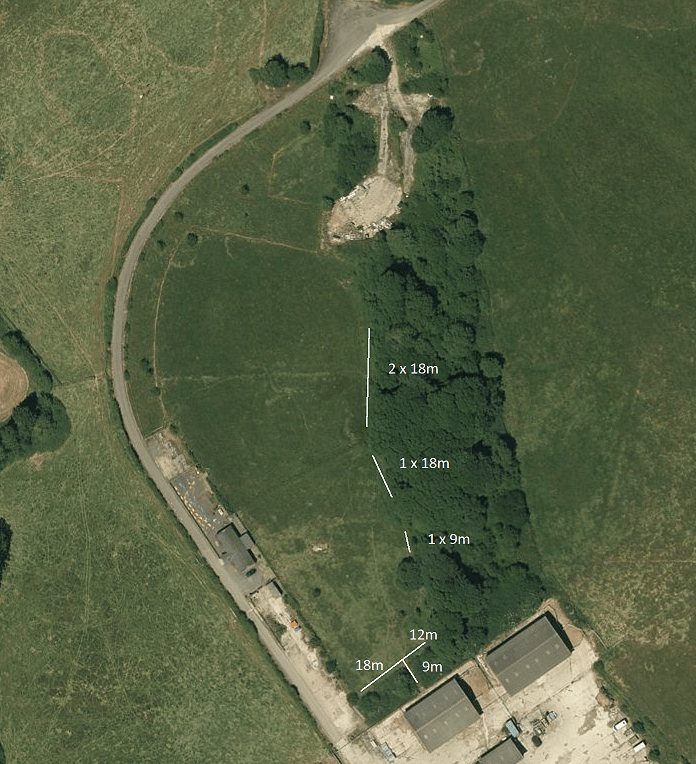
The underfoot conditions were appropriate for a re-enactment of the third battle of Ypres, also known as Passchendaele, so I was a little apprehensive about being too busy, as I was working solo. Because of that, I set up just 2 rides: 2x 18m and 3x 18m, and put on lures for Redwing (L1, L2 and L3). Just like at Red Lodge on Thursday, we didn’t catch a single one.

In fact, it was a really slow start: I didn’t catch any birds between 7:30 and 9:00, and was thinking that I should have stayed in bed. Instead I changed the lures: L1 to Coal Tit and the others to Lesser Redpoll. I didn’t catch any Lesser Redpoll but the Coal Tits did respond.

At 10:15 I changed L1 and L3 to Goldcrest, and they started to arrive in reasonable numbers. In the end it was a decent catch of Blue Tit 2; Coal Tit 13; Wren 3; Robin 1; Blackbird 1; Goldcrest 11. Total: 31 birds ringed / processed from 6 species.

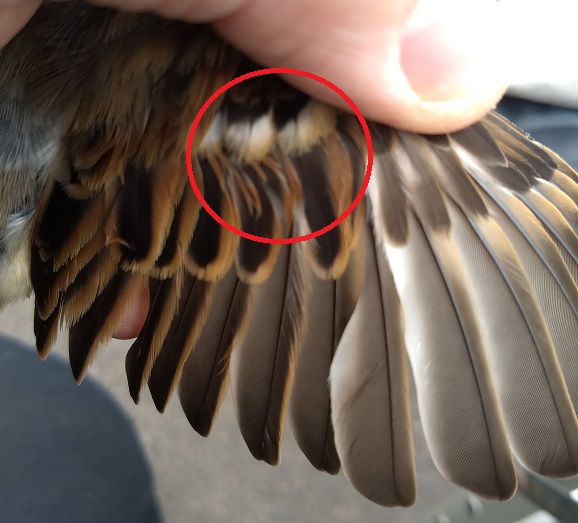
So not the biggest or most varied of catches, but a good relaxed session and an excellent opportunity to practice ageing Coal Tits (it’s all in the greater coverts!).

I packed up at 11:30 and was off site by 12:15. I have a feeling that this will be my last session before Christmas.

What, no Redwing? Red Lodge: Thursday, 17th December 2020

On Friday last I went to set up a feeding station at the Forestry Commission site at Red Lodge, planning to get out to the site this Thursday. The weather in the run up to Christmas is pretty bad, with Tuesday, 15th and Thursday, 17th currently looking like the only days likely to be dry and not too windy before Christmas Eve. Unfortunately, on arriving at the Red Lodge site I found that the standard padlock was not in use, and there was a combination padlock in place.

Rob, the Beat Forester, sent me the code and so, after my session at Lower Moor Farm on Tuesday, I went over to Red Lodge and set up the feeders: peanuts in two and a seed mix in the other two. Ironically, had I looked closer on Friday I would have seen that the contractor for whom it was set up hadn’t actually used it to lock the barrier, had just balanced the barrier on the lock post and I could have got access on Friday.

For this morning’s session I was joined by Lucy and Alice. We had a late start: 7:30, but were only setting up a few nets, which we had managed by 8:00. I warned them that, with the feeding station only being set up Tuesday lunchtime, the catch probably wouldn’t be huge. 101 birds later my bluff was called!

The first two birds out of the nets were a couple of Blackbirds. Needless to say, the bulk of the catch was made up of Blue and Great Tits, but the catch was a bit more varied than that. However, pretty well uniquely for my sites this winter, there wasn’t a single Redwing in the catch, despite 2 lures playing for most of the morning.

At 9:50 we had a small feeding flock of Long-tailed Tits caught in one net. We processed them and returned them to the catching bags so that they could be released together. I love watching them fly off, buzzing their contact calls as they disappear into the trees.

At 10:30 I changed the Redwing lure for a Goldcrest one, and we immediately caught a small number of them. They do come readily to the lure, so I never start it off before 10:30, until they have had plenty of time to get a feed in. Not that I have ever had a problem with Goldcrest’s being adversely affected by being caught and processed, but I never want to.

The list for the day was: Nuthatch 1; Blue Tit 39(14); Great Tit 13(2); Coal Tit 3(2); Marsh Tit (2); Long-tailed Tit 7(1); Wren (3); Robin 7; Blackbird 3; Goldcrest 4. Totals: 77 birds ringed from 8 species and 24 birds retrapped from 6 species, making 101 birds processed from 10 species.

The last bird out of the net was a Blackbird, immediately preceded by a Nuthatch.

Nice to top and tail the catch with some Blackbirds.

We started to pack up at just gone 11:30, just as the wind got up and were off site by midday (the benefits of not setting lots of net and having a crew to help).

Lower Moor Farm: Tuesday, 15th December 2020

With the forecast being pretty unsettled for this week, I decided to take advantage of the dry forecast for today and paid a visit to Lower Moor Farm. I was working solo – but I didn’t spend the morning on my own.

I was joined, all properly socially distanced, by some of the children from the Care Farm, with their carers for the day. One youngster was very keen on birds. He backed that up by identifying several of the species I was able to show him. He told me that it was his birthday in 5 days and that this was his early birthday present! Unfortunately, because of the precautions I couldn’t show him how to safely hold and release a bird.

His younger brother was also there, and his carer told me that he had never stayed that still for that long: which was evidenced by his sheer dynamism as they left. I know it is a cliché but children benefit so much from being out in nature.

I set up just 5 nets in 2 rides: it wasn’t going to be a big catch as I don’t set up feeding stations at Lower Moor, but it was a decent catch. The highlight had to be my first overwintering Chiffchaff of the year:

The obligatory Blue and Great Tits dominated the catch, but it was of reasonable variety. The Redwing were present, not in such good numbers as elsewhere, but there are probably better feeding areas for them on other parts of the site.

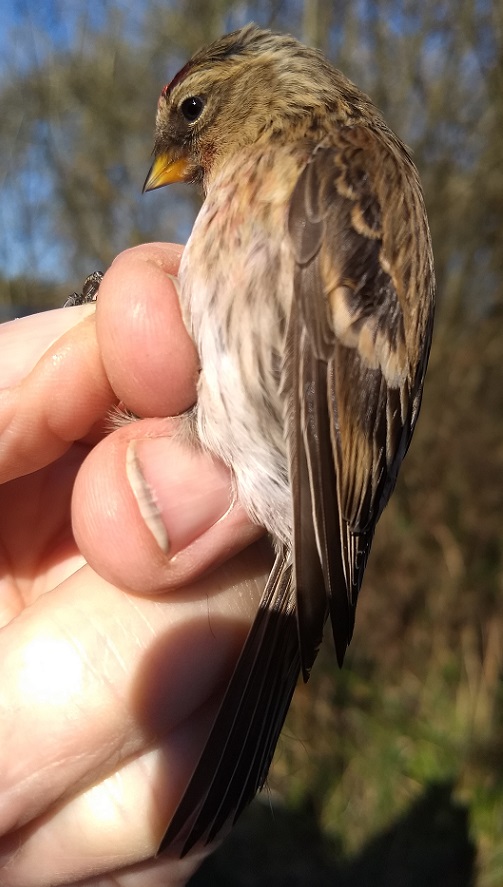
A female Bullfinch was another highlight. The biggest gripe of the photographers at Lower Moor is that they can never find a Bullfinch to photograph that doesn’t have a ring on it. This is one more they won’t want to photograph:

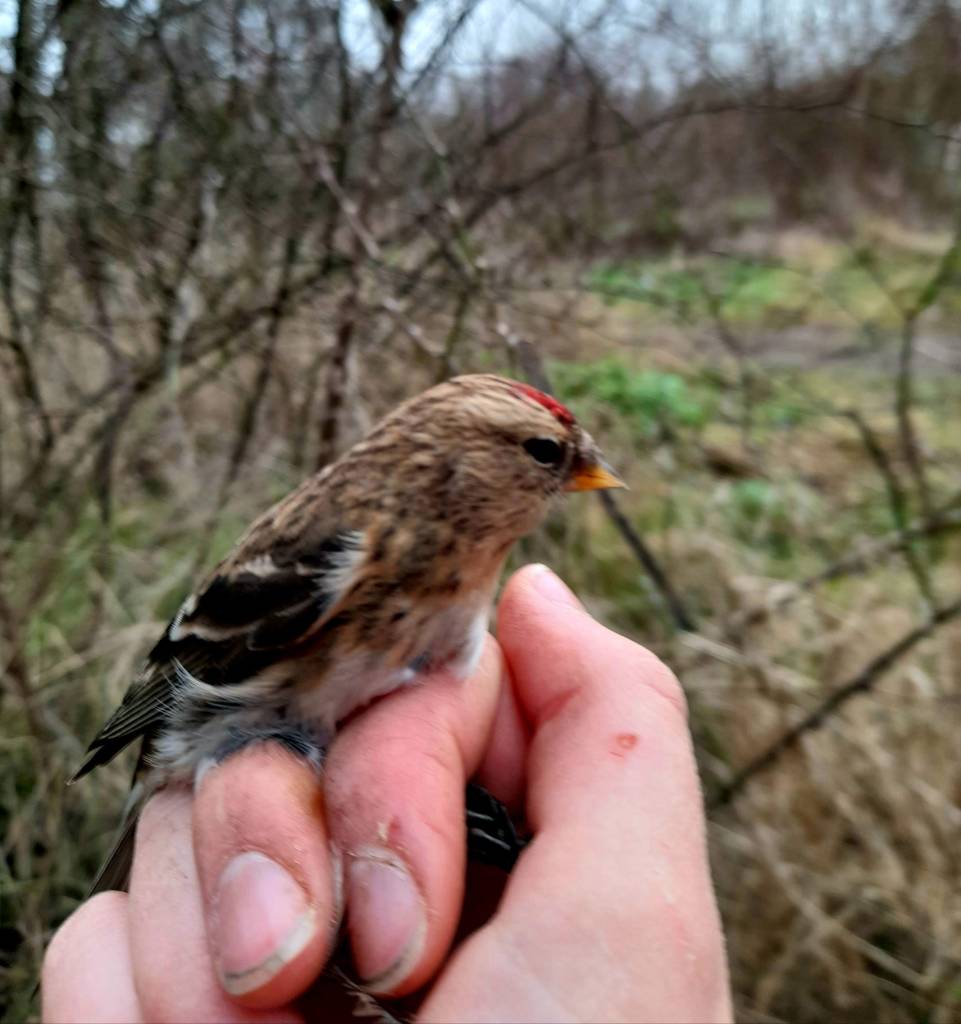
Today’s catch was: Blue Tit 3(3); Great Tit 4(4); Long-tailed Tit 2(1); Wren 1; Dunnock 1; Redwing 3; Blackbird 2; Chiffchaff 1; Goldcrest 3(3); Bullfinch 1. Totals: 21 birds ringed from 10 species and 11 birds recaptured from 4 species, making 32 birds processed from 10 species.

I started to pack away at 11:30. Quite astonishingly, whilst absolutely surrounded by clear blue sky, a small cloud decided to drop its bounty of rain exactly on my ringing station and I got wet putting it all away. Typical!

A Long Day: Saturday, 12th December 2020

This was my first Forestry England site session since the end of lockdown. As with the Wildlife Trust, I had to spend some time putting together updated risk assessments and having them accepted by FE before I could resume. Saturday started at Somerford Common. I had planned to go midweek but the weather put paid to that.  I had set up a feeding station on Friday, 4th December, and topped it up on Tuesday and again on Friday, during a break in the rain.  There are three feeders: one contained a seed and grain mix, one peanuts and one containing nyjer seed. 

One of the benefits of the new risk assessment is that it is no longer a 1 + 1 basis. To ensure that social distancing can be met, I don’t plan to do more than me + 2 until the all clear is given. I was joined for the day by Jonny Cooper and Alice Edney, two of my C-permit holders. We set nets around the feeding station, within the paddock, and just along the main path:

The nets were all 18m, except on the main path where the 18m was joined with a 12m net.  I played lure for Redwing on the main path until 10:30 and then Goldcrest until we packed up at 11:30.  Funnily enough, all Redwing and Goldcrests were caught in those nets.  Apart from a couple of Blue Tits and a Wren also in those nets, the rest of the birds were caught around the feeding station.  As I had help with my 2 C-permit holders, they had their own equipment and did all of the processing, whilst I did the data recording.  This is a simple way of ensuring that all appropriate Covid-19 precautions can be taken.

The session started brilliantly: two new Marsh Tits were the first birds out of the nets.  This takes the year’s total to 22 ringed in the Braydon Forest so far this year, showing that the species is still doing well in our area, especially as one of the strongholds, Ravensroost Woods, has been unavailable to me to work until very recently, due to the site becoming very busy post-lockdown, restricting activity to those small areas that can be closed off from the public.

The Redwing started coming in early on, soon after dawn, and continued throughout the morning in twos and threes.  Our catch ended up as follows: Great Spotted Woodpecker 1(1); Nuthatch 3; Treecreeper 1; Blue Tit 19(16); Great Tit 9(8); Coal Tit 2(2); Marsh Tit 2(3); Wren 2; Robin (1); Redwing 16; Goldcrest 3; Chaffinch 7; Lesser Redpoll 1.  Totals: 66 birds ringed from 12 species and 31 birds retrapped from 6 species, making 97 birds processed from 13 species.

This is my biggest catch of the year so far, and is what happens once you set up feeding stations: fewer nets and more birds from more species, but easier to manage.

Jonny and I had arranged to meet up at Blakehill Farm at 15:00, to set a couple of net sets to try luring for Redwing and Starling coming in to roost. As usual, Jonny was late, his reason (excuse): to pass the time he had gone over to the Cotswold Water Park and seen a funny looking bird on one of the lakes. Mind, to be fair, I think if I had been with him we would both have been late: it is a while since I have had the pleasure of watching a Black-necked Grebe.

I was setting the second net set when Jonny arrived. We set the lures going and waited to see what would happen as the light went. The first incident of note: two Woodcock flew over from goodness knows where into one of the fields on the edge of the nearby industrial estate.

It wasn’t long before the Redwing started to arrive and we had a regular catch of a couple of birds each time we checked the nets over the next hour. We didn’t have a huge catch but another 9 Redwing for the day was worthwhile. Unfortunately, the Starling lure drew an absolute blank. Although we do see a lot of them flying around the site, it is clear that they are not roosting in this particular area.

Once the Redwing stopped moving we decided to take down the nets. I sent Jonny off to close them while I moved the car adjacent to them, only for him to come back with an unexpected bonus: a nice male Stonechat. A lovely bird to finish the netting sessions on.

Having cleared away the nets, Jonny got out his thermal imager and we went for a wander around the perimeter track to see if we could locate the Woodcock. We couldn’t. Then we went for a wander over the plateau to see what birdlife we might be able to find out there. I had a hand net and my dazzling torch. Apart from the abundance of Hares, signs of birdlife were very few and far between. In fact, the only bird we found was a Robin roosting in a bush out on the centre of the plateau. We left it in peace.

We then headed over to the ponds, to see if there were any Snipe or Jack Snipe over there that we might dazzle. There weren’t, and so we packed up and went home, leaving site at 18:30.