Going Solo: Ravensroost Wood; Monday, 30th June 2025

After another car problem (see last post) I had to cancel Sunday’s visit to Ravensroost Wood, so I could check that the car issue had been resolved. It has, fortunately, and I got permission to run a session this morning at Ravensroost Wood but, unfortunately, none of my team could make it. I have to check these days as the Trust have employed a contractor to reduce the population of Roe Deer and Muntjac, in an effort to enable the understorey to regrow following Ash die-back remediation work, that also coincided with 25 year coppicing of a large part of the northern end of the wood. I am just hopeful that it will give the Bird’s Nest Orchids and the Violet Helleborines a chance to expand their somewhat tenuous status in the wood. It is not their usual habitat, which makes them being there even more special.

I arrived on site at 6:30 and set the usual nets: 3 x 18m nets in R 28 and 4 x 18m + 1 x 12m nets in R38. I had them open and the ringing station all set up by just after 7:30 and started catching at 8:00. I had only one round with a good number of birds, the third, with nine birds from six species at 8:30. Because of the heat, I did far more rounds, with less time in between, than I normally would: twelve rounds in three and a half hours. Fortunately, the net rides were properly sheltered from the sun, and I also managed to put the ringing station into the shade, so it was actually a very pleasant session and it didn’t get really sweaty until I started the take down (I am sure you all needed to know that).

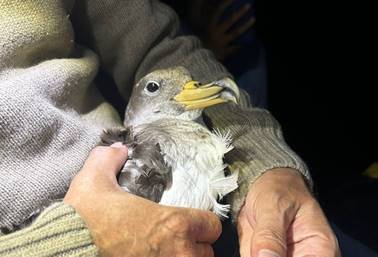
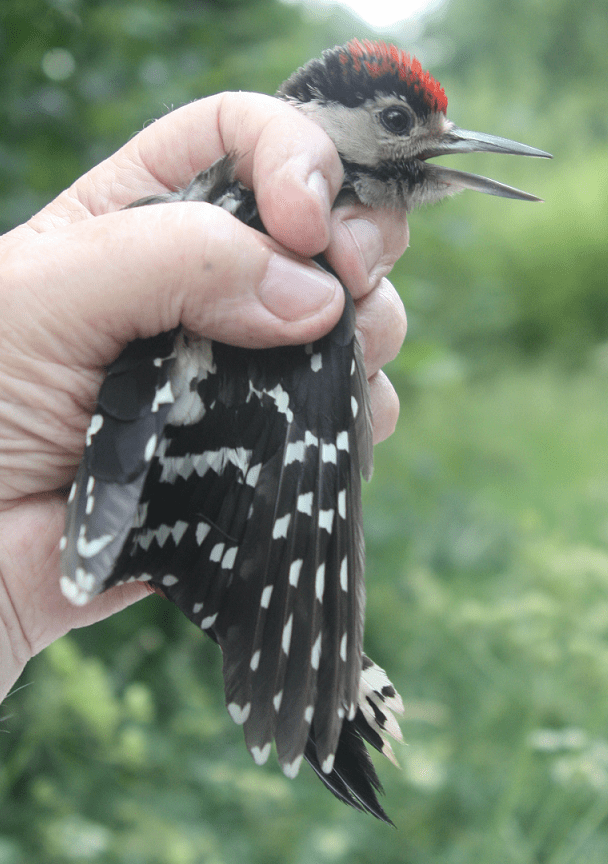
The highlight of the morning for me was this:

Juvenile Great Spotted Woodpecker, Dendrocopos major

We have had one visiting our garden for the last week or so, and Laura did ring one in her garden when we ran a session there earlier this month, but that was just outside Cirencester and very much in Gloucestershire. This is the first for the year by anyone in our Wiltshire ringing group.
The list for the morning was: Great Spotted Woodpecker [1]; Great Tit [1]; Wren [4](1); Dunnock 1; Robin 1[6]; Song Thrush 2; Blackbird [1]; Blackcap 2[4]; Garden Warbler [1]; Chiffchaff 1[3](2). Totals: 7 adults ringed from 5 species, 21 juveniles ringed from 8 species and 3 birds retrapped from 2 species, making 31 birds processed from 10 species.

It is clearly a good year for Robins: we have ringed 22 in the Braydon Forest so far: 21 in June and one in May. This table shows just how variable the breeding efforts of Robins are in the first six months of the year within the Braydon Forest:

Essentially, this is an above average year. Goodness knows what happened in 2014! Of course, the plague year was the best of them all proportionately. It is quite surprising how good the catches were that year, given the restrictions.

Anyway, it was a lovely morning. Lots of people out passing through almost all stopping to chat. Even the dog owners were keeping their pets on their leads. I think it is the first time ever that I have seen 100% compliance.

As I was working solo I did my usual takedown routine of: one set at a time, extract any birds and close, leaving the other rides open. Process birds, take down nets, repeat for each net set.

I had planned to be away by midday but with so many people wanting to chat about how things are going this year, on the birds, and what’s happening with the butterflies from the peeps with the big cameras. Answers: Silver-washed Fritillaries plenty, White Admirals noticeabel by their absence, Ringlets plenty, other common species doing well, Brown Hairstreak about on the edge of the woods, Purple Hairstreak not really showing yet. The big one, because it is so new to the area: Purple Emperor, possibly a couple seen so far.

In the end I got away from site just after 13:00 after a nicely satisfying session (and not a Blue Tit to be seen).

Salisbury Plain Training Area: Saturday, 29th June 2025

I met up with Dick and Mark at Westdown Camp this morning at 8:30 and we headed out to cover the south-west of the training area. It was certainly an interesting day: nearly everywhere you looked there were tanks, lorries, armoured cars, rocket launchers and soldiers! They had been on a major exercise for the last two weeks, i.e. since our last foray onto the Plain, and were now packing up and clearing away at the end of it before heading off to their home barracks area. I have to say, in that heat, in those uniforms and helmets, I didn’t envy them.

We had a busy session, and found quite a lot. The Barn Owl story is still very slow in developing this year. Today we checked on 11 Barn Owl boxes: thankfully, four of them contained adult Barn Owl pairs, but no eggs nor young in the boxes yet. Two boxes had Jackdaw nests in but they have fledged now, so we cleaned out the boxes and replenished them with wood shavings ready for Barn Owls to take up residence. It is a late start, but Barn Owls can breed late into the year, they often have two broods, so starting late is not such a big deal for them.

The saddest part of the Barn Owl boxes were the four that had been utilised by Stock Doves. That is a fairly standard occurrence. Two of the Stock Dove nests had healthy chicks, developing nicely, and should fledge within a couple of weeks. Another of the nests, however, had what was clearly a long dead adult (it was buried in the nesting material in the bottom of the box) and an infertile egg. The last Stock Dove occupied box had two predated adults in it. Their chest muscle had been picked clean. My thoughts are that they were predated by either Weasel or Stoat, Sparrowhawk / Goshawk would have made much more of a mess, as they rip their prey apart.

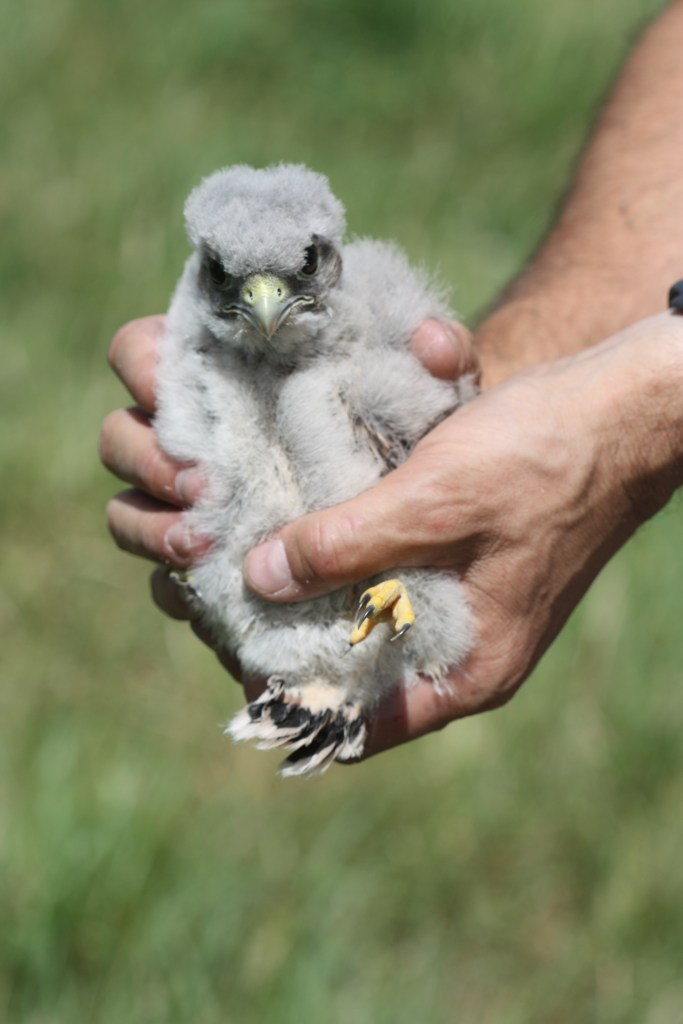
Now to the success stories of the afternoon: the Kestrels. We checked 16 Kestrel boxes and found four successful broods of Kestrel. The first brood were surprisingly small: just two small, downy chicks, but big enough to ring:

Kestrel pulli, Falco tinnunculus (Photo courtesy of Mark)

These were our smallest of the day. The next box had another two chicks to ring. These were a bit bigger:

If looks could kill…

At this stage they are a real handful: all beak and claws. We ringed four chicks in the next box. They were very close to fledging:

They were so close to fledging, in fact, so close that two of them flew from the box. Their flight isn’t that strong and we just monitored where they went, then Mark collected them and brought them back for ringing. When Dick put them back in the box it was done very carefully, controlling the access to the box, so that they didn’t panic and fly out again. Delighted to say that was totally successful.

The final Kestrel box with Kestrels in, actually didn’t. As we drove towards the tree within which it is sited we watched three juveniles fly off to trees elsewhere. There was one sat on the top of the box. We sat and watched until it also decided to follow its brood mates. So four broods, three ringed, comprising eight chicks. What is slightly weird is that each brood was at a later stage than the previous, from downy chicks just big enough to ring, to fully fledged and leaving the next box! Great script.

Alongside that, two of the boxes had Jackdaw nests, young probably fledged already, four had breeding pairs of Stock Dove in them and six of the boxes were empty.

Although Barn Owls are having a slow time of it, Kestrel are doing much better on the Plain: these eight ringed yesterday take the total of chicks ringed this season to 51!

We got back to Westdown Camp at about 15:45.

Postscript: Returning home after our pleasant day out on Salisbury Plain, as I got to Devizes a tyre pressure warning came on in the car.  I stopped at the garage on the way out of town, pumped up the tyres, off-side front being the worst and headed for home. Just before the Bristol, Marlborough, Avebury roundabout on the A361 the front tyre deflated rapidly. I pulled into the bus stop layby and the tyre was as flat as a pancake.  I couldn’t make head nor tail of the inflation kit, so called my friendly local recovery agent, who said he’d be there on 45 minutes. I looked at tyre shops that he could take me to to get a replacement, only to find that all, even Kwik-Fit, were shutting at 5.00, so no good. I canceled him and looked at mobile replacement services. I was just picking myself up from the floor at the price I had been quoted  when a white van pulled in behind me.  This guy climbed out, covered in tattoos and piercings and, in the broadest Wiltshire accent I have ever heard, asked “What’s the problem, mate?”   I showed him and he said he would sort it for me. He tried the tyre inflation kit but the valve remover is plastic and it just broke. So he said he lived locally and would head home and come back with his tool kit . 10 minutes later he got back, took out the valve, squeezed in the tyre sealant and put on the compressor to pump up the tyre.  Five minutes later it was still saying zero pressure in the tyre.  We rolled the car along a bit and found a rather large hole: 4mm at least. “Don’t worry” he said, “I am a biker and repair these all the time, I just need some more kit”.  He got on the phone and 6 minutes later his wife arrived with another box of tricks and a bottle of cold water for me, assuming I would need it having been stuck out in the sun all that time. Jan gets on with repairing the tyre, plugged the hole and sealed it. I said I would take it slowly on the way home, he said no need that repair will last as long as the tyre treads.  He was right.  He wouldn’t take anything for it and I am just awestruck that someone like that exists in this day and age: that there are two of them in a relationship is even better.  I have insisted they let me take them out to dinner next week but I suspect it won’t happen as they just didn’t think they had done anything out of the ordinary.

Barn Owls at Last: Friday, 27th June 2025

I had planned to go out and check Barn Owl boxes yesterday but, of course, the wind decided to gust up to 40+mph, plus a few heavy showers of rain, put paid to that, so this morning Laura, Daniel and I went to do what we had intended to do yesterday. Our first stop was Echo Lodge Farm where, on our last visit there, on the 13th June, there were two chicks that were too small to ring. Two weeks later and they were just right, so we ringed two chicks. We invited the landowner along to see what her land management was helping, and she was delighted. It turns out that she is friends with the other farmer whose land is currently supporting the other two Barn Owl nests we knew have either eggs or chicks.

We went from there to check that a Jackdaw at Somerford Farm had fledged and cleaned out the nest box so that it was fit for a Barn Owl. This box has been up for a good few years but last year was the first time that it was successful. Hopefully it won’t be too late for them to try again this year.

Our next stop was one that we couldn’t get near to last time due to some mental Belted Galloways in the field at Ravensroost who just wanted to chase our car all over the place. I have spent enough time wiping Beltie drool off my car to want to do it again! This time we parked up on the verge, climbed over the gate and carried the ladder down to the box. They were still bouncy and enthusiastic, but were also scared of the ladder it seemed, so they never got close. This was a sad encounter: as we opened the box an adult Stock Dove flew out. There were two chicks in the nest: one was recently dead and the second was very floppy. The dead one had clearly starved, it’s crop was absolutely empty. I removed the dead bird and left the other behind in the hope that the adult might be better able to cope with just the one. I will check again in a few days to see how it is getting on. We didn’t ring it.

From there we headed to the two boxes on the west side of Blakehill Farm. These were just about the first boxes we visited this year, way back on the 14th April. There were pairs of Barn Owl occupying each of the two boxes. However, there were no eggs, no signs of breeding, so we gave them a good long time to get down to business without being disturbed. I think it is a good job that we did. From first egg laying it takes, normally, 32 days for the eggs to hatch so, even if they had laid in the next few days, that would have taken to mid-May before they hatched. Once hatched they are in the nest for, typically, 53 days and they become able to be ringed at approximately 30 days post-hatching. That is once their feet have grown large enough for the rings not to slip off.

Arriving at our first box, in Pouchers Field, we nearly caught the female in our hand net as she came flying out of the box upon our approach: a hopeful sign. A much better signal was the hissing we could hear emanating from the box! Upon opening we found four chicks: three were the right size for ringing, the other will need another couple of weeks, so we ringed three of them.

Barn Owl chick, Tyto alba (photo courtesy of Daniel)

I know that some people who aren’t ringers worry about whether or not the birds are stressed by the experience. All I can say is that this one certainly wasn’t:

I suppose if I had eaten quite as much as this youngster has clearly done I would probably feel that sleepy myself. Just look at that belly!

Having ringed these three we then went off to Allotment Field to check on the box there. Absolutely delighted to find another three healthy and well-fed chicks.

Our final box of the day, final because the wind was really whipping up by then and Daniel, who will possibly be climbing rigging in these sorts of winds next week, was more than uncomfortable at the top of the ladder. This was at White Lodge. As we were driving down to the box, I have never seen the fields and sky so full of Jackdaws. Later, as Daniel was cleaning the box out, the sky became dark with two huge flocks of Jackdaw. We are not talking tens, we are talking hundreds of them! Unsurprisingly, this box had clearly been a successful Jackdaw nest again this year.

After this long delay in the commencement of Barn Owl breeding, it is such a relief to find that, of the 16 boxes we have checked so far this year in the Braydon Forest, we have ringed chicks in three, have another box to ring another three in in the next two weeks, and another on eggs which, hopefully, we will ring in about five to six weeks. It isn’t as though the other boxes have failed: although the Stock Dove probably will be a complete failure, at least three of them had Jackdaw chick success, with chicks ringed in two and one known Jackdaw failure plus, sadly, one containing a dead adult Barn Owl. However, five boxes out of sixteen containing breeding by the target species is a good proportion.

A big thank you to Laura for providing the car with a roof rack (how long does it take a roof rack to get to the UK from Belgium?) and to both Daniel and Laura for doing the vast majority of the grunt work today, in particular doing all of the dirty work clearing out emptied Jackdaw nests.

I am out with the Salisbury Plain team tomorrow: let’s hope we can get similar results tomorrow!

Our Best Session This Year: The Firs, Wednesday, 25th June 2025

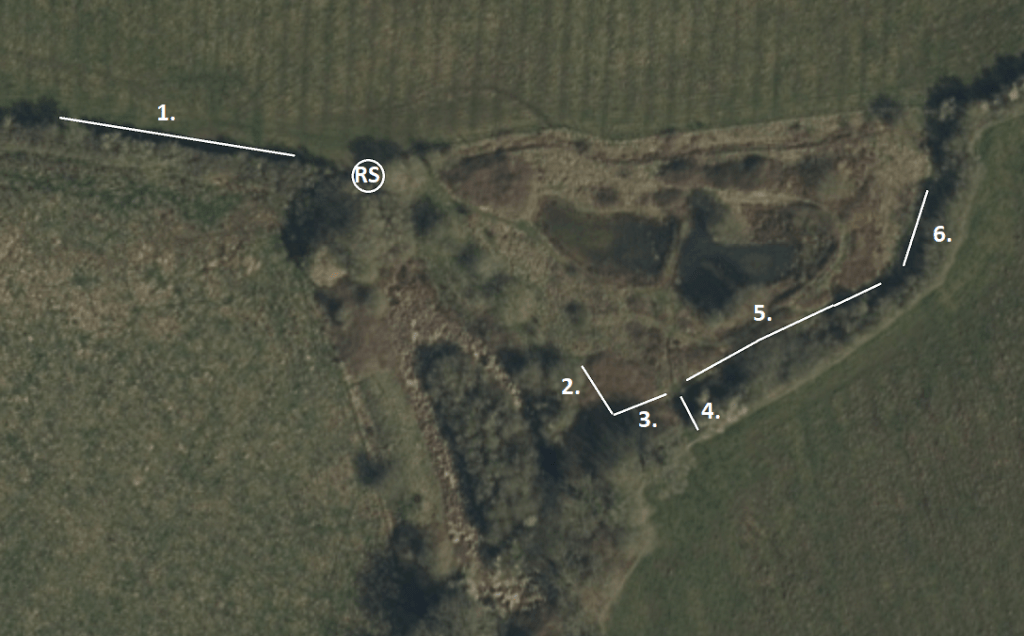
This is turning into a very nice week for me, Lapwing yesterday, hopefully Barn Owls tomorrow: and this morning was pretty good for Laura and Miranda as well. We have seen a significant improvement in the Firs since it reopened after the Ash dieback remedial work and opening up of the canopy. The three of us met up at 6:30 and set the following nets:

(One day the Ordnance Survey, Google Maps and Bing Maps will update their aerial views: this is OS and the best of the three.)

The wood is considerably more open since the Ash-dieback clearance in 2023 / 24. The Wildlife Trust had very helpfully mowed the central glade recently. Rides 1 and 2 are in the usual places for net setting in the Firs, ride 3 is on the slope down to the central glade / ponds area. Since the clearance the woodland on either side of the slope has developed a very decent understorey, including a bank of bramble down the eastern side, which is full of flowers, and I am hoping that will translate into a lot of blackberries in the autumn, and a significant catch of migrating birds, as happened in a similar habitat, with the same number of nets, at Lower Moor Farm in August 2014 (137 birds from 15 species). So I decided to set these three nets up to see how they went at this time. They performed better than I expected.

We had a few niggles with the nets and didn’t get them open until after 7:30. After taking the setting equipment back to the car, having a quick coffee to wake myself up, as the others did the same with their chosen poison, we did our first round. It was a good start: 17 birds from 8 species. Nobody was counting chickens, we have had reasonable starts recently that ended up with very little happening subsequently.

Once they had been processed we went off on round two: 19 birds from 9 species. Good grief: did this mean that we were going to end up with a decent haul? Well, yes. Over the next two hours we processed another 31 birds from 11 species. This is our best catch this year, and that includes catches inflated by the provision of feeding stations in the winter months. Out of 85 ringing trips to the Firs, since 8th September 2012, there have only been five bigger catches: each one fuelled by supplementary feeding.

Alongside the good number was an excellent variety, with lots of highlights. We ringed another three Marsh Tits, bringing the annual total for the Braydon Forest 16! Looks like it is going to be a bumper year for this red-listed species in the Braydon Forest.

However, the outstanding catch of the session was this beauty:

Adult Spotted Flycatcher, Muscipapa striata, photo courtesy of Laura

The story of ringing Spotted Flycatchers in the Braydon Forest is quite an interesting one. They have bred in the Ravensroost complex on and off for a long time: I saw my first ones, adults feeding young, in 2005 and have seen them on and off ever since. The Trust have put up nest boxes for them and we know they breed there. On several occasions, whilst Jonny was still training with me, we would watch them hawking insects, occasionally landing on the path 20m or so away from where we were sat ringing birds. To be fair, since the group came into its current structure at the beginning of 2013, we have actually only caught 12, until today. Of those, eight had been caught in the Braydon Forest, which is why it was such a pleasure to catch another today. Given that the Firs is the smallest of our woodlands, its record in Spotted Flycatchers is surprising.

As you can see from this graphic, the Firs is a tiny fraction of the woodlands we cover with our ringing activities.

Anyway, the first Spotted Flycatcher ringed in the Braydon Forest was a juvenile caught in the Firs on the 3rd August 2016: the first bird out of the nets in that session. Ironically, the second was the last bird out of the nets in that same session. That was followed by another juvenile in Red Lodge on the 21st of that month. The next was a juvenile caught at Somerford Common in July 2017, then a juvenile in Ravensroost Wood in August 2018.

Perhaps the most exciting find for me, because these juveniles caught could all have been on autumn migration, was in June 2019 when we caught another two in the Firs: a male and a female, both in full breeding condition. That was followed by a juvenile caught in a net triangle set for Meadow Pipits on the Blakehill Farm plateau, and then today’s catch!

So, to sum up, of the 13 Spotted Flycatchers caught by the West Wilts Ringing Group since 2103, nine have been caught in the Braydon Forest and five of those in the smallest site: the Firs! Because neither Laura nor Miranda have ever ringed a Spotted Flycatcher, I decided that they would draw lots for the privilege: Miranda won. Laura did the release.

Anyway, enough rambling, the list for the session was: Great Spotted Woodpecker (1); Nuthatch 3; Blue Tit [14]; Great Tit [2]; Coal Tit [1]; Marsh Tit [3]; Long-tailed Tit [1]; Wren [5](1); Dunnock [1](2); Spotted Flycatcher 1; Robin 1[4]; Blackbird [1](3); Blackcap 6[7]; Garden Warbler [1]; Chiffchaff 2[4](1); Chaffinch 1[1]. Totals: 14 adults ringed from 6 species, 45 juveniles from 13 species and 8 birds retrapped from 5 species, making 67 birds processed from 16 species.

We did the last round and closed the nets at 11:30, taking the last three birds out of the net, processed them, and then took down the nets and packed away, leaving site by 12:30, after a very satisfactory morning.

Always Nice to Get a New Species: Tuesday 24th June 2025

One of my productive Barn Owl sites is adding another string to its bow. The farmer, as well as providing lots of grassland, also sets aside large tracts for cover crops, and he is very keen on his wildlife, if a little reticent about advertising the fact, which is why, out of respect for his concerns, I am not going to give any pointers as to where it is.

Suffice to say that, of the ten Barn Owl boxes I have managed to check so far (roof rack for new car should be here in the next couple of days – it isn’t just Barn Owls who are a bit behind this breeding season!), he has two of the three with breeding in progress.

Last Wednesday he contacted Jonny and his project Peewit team and me to let us know that, whilst out deciding what to do about a failed cover crop, he saw some movement and identified four Lapwing chicks. He fenced off the area they were in, so the cattle couldn’t disturb them, and on Thursday evening the Peewit team and I went searching for them. It was very hot and they were well hidden and we didn’t find them. However, we did find this:

Lapwing, Vanellus vanellus, nest

The team said that they would return on Monday or Tuesday with drones, thermal imaging cameras etc to try and locate the chicks and they would give me a shout if they found them.

We told the farmer about the nest and Friday morning he asked for a What3Words location so that he could put an electric fence around the nest. Unfortunately, in this instance, the W3W location was inaccurate and he couldn’t find it.

After my rather disappointing Red Lodge session on Saturday (sorry Song Thrushes, you were lovely but…), I went to the farm to see if I could find the nest. I was a little concerned when I arrived to find a flock of about 50 Lesser Black-backed and Herring Gulls wandering around the field foraging, and three pairs of adult Lapwing circling and alarm calling. The gulls pushed off as soon as I got out of the car, which was a bit of a relief. I sat back in the car hoping that an adult would return to the nest, but after 15 minutes there was no sign, so I decided to carry out a grid search of the area where we had seen it. After an hour of searching I had to admit defeat. It was also starting to rain and I was conscious of getting out of the way so that Mum could come and protect her nest from the weather.

At 7:28 this morning I got a text from Jonny: “Morning, we have chicks”. By 7:35 this morning I had got up, got dressed and was on site and was privileged to ring and weigh these beauties:

I was home and breakfasting by 8:30: that’s the way to go ringing! A huge thank you to the Project Peewit team for allowing me the privilege of processing this little group. That brings my total of UK pulli species ringed to 31 and my total UK species ringed to 112. One day I really must do some overseas ringing!

It is good to know that two of my Barn Owl sites are also supporting Lapwing and Curlew. There are some very good farmers in the Braydon Forest area who are keen to support their wildlife and have signed up to project Peewit and the longer running Curlew monitoring project.

Red Lodge: Saturday, 21st June 2025

The longest day! Not quite the shortest list – but a close run thing! This is only the sixth time that I have actually carried out a June session in Red Lodge in 12 years. With more time available since I decided not to continue with the Lower Moor Farm CES, it was time for a session in Red Lodge. It has been more than a little hit and miss: last time was 2022, and we only caught five birds. The three June sessions in 2014, 2018 and 2020 showed a slow decline in catch size: 61, 41 and 36. The three since then have been much worse (2021 15, 2022 5, 2025: I will reveal later). The forecast was for it to be hot and dry but overcast with a negligible possibility of rain (<2%).

With just the two of us meeting at 6:00, we set the following nets:

We had the nets open by 7:00 but, as we were finishing off , I felt a few spots of rain! We took two Robin out of the nets and then the rain started in earnest, so we shut the nets and processed the birds and then sat in the car for the next 90 minutes as the rain fell! We reopened the nets at 8:30 and then did our next round at 8:45. There were 6 birds in that round, including our second juvenile Marsh Tit of the year, taking our total of Marsh Tits ringed in the Braydon Forest to 13 so far. To put that into context, this is the most we have ever ringed in the first six months of the year. The previous best was nine in 2013. Excluding 2025, our average is 5.75 for the first six months, so this is very encouraging.

Juvenile Marsh Tit, Poecile palustris

In these first two rounds, 95 minutes apart, we caught five juvenile Robins. They do seem to be having a good start to their breeding year.

Unfortunately, after that things went very quiet. Which is not to say that there were not highlights: no birds at the 9:00 round, two in the 9:15 round: a Nuthatch and this noisy beggar:

Juvenile Song Thrush, Turdus philomelos

Our first of the year, beautifully showing the markings that make juvenile Song Thrushes easy to identify. You cannot see the tail from this angle but it was, equally diagnostically, with very pointy tips to the remiges.

That was followed by a break of 45 minutes until our next capture, and then another 30 minutes until we caught our second juvenile Song Thrush of the year. I had always planned to pack up at 11:00, before the heat settled in. We took a final Wren out, as I was taking in ride 2, which David processed whilst David’s dad and I continued taking down the rest of the nets and packing up. Between us we were finished and off site by 11:30. The list from the session was: Nuthatch 1; Great Tit [1]; Marsh Tit [1]; Wren 1[1](1); Robin [5]; Song Thrush [2]. Totals: 2 adults ringed from 2 species, 10 juveniles ringed from 5 species and 1 bird retrapped, making 13 birds processed from 6 species.

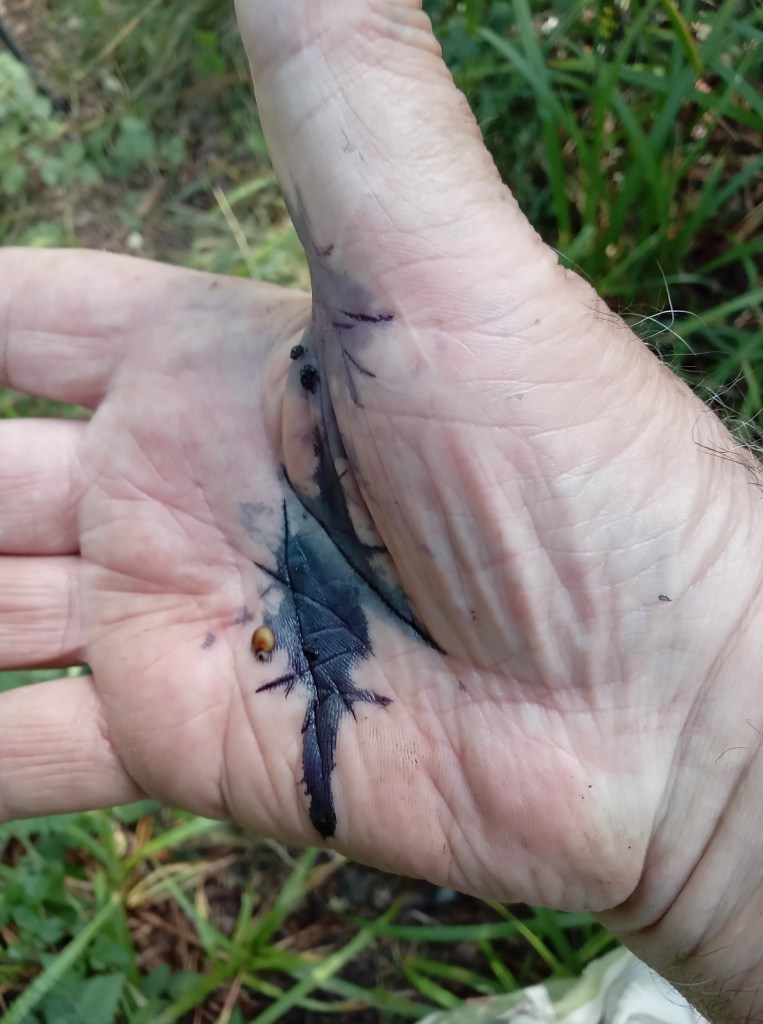
Following on from the fabulous Zebra jumping spider on Friday, I was rather pleased to find this little beastie, a long-horned beetle, crawling over my mobile phone case:

Grypocoris stysi (no common name associated with it)

Usually found on nettles in woodlands and, it would appear, mobile phone cases! Apparently common but I have never seen one before. I really must take my macro lens with me next time: my 70 – 150 zoom had a bit of trouble getting it in focus, either auto or manual (and I picked up my new glasses on Thursday, so my eyesight is just fine, thank you).

I Didn’t Expect to Find a Zebra: Friday, 20th June 2025

With Laura’s two boys being off school today, and busy at the weekend, I agreed to run an extra session at Lower Moor Farm this morning. Because of the possibility of extreme temperatures and, later, rain, we started a bit earlier (at 6:00) and planned to finish at 11:00, with nets set in shaded areas. We set the following nets:

We caught our first bird straight away: a Garden Warbler, which was quickly followed by three Blackcaps and this:

Juvenile Cetti’s Warbler, Cettia cetti

Another first for the year for my team! Always nice to catch.

The next round produced another decent haul and by 7:40 we had 13 birds processed from six species. Adam and Daniel were quite excited, Laura and I were rather trepidatious as this almost exactly mirrored what had happened on Wednesday! Our trepidation increased as time ticked on and we caught nothing else. I did say that if things had not improved by 10:00 we would give it up as a bad job. Then, at 9:00, we caught another two birds and, for the next eight rounds we caught at least one bird in every round, ending up with 24 birds processed, as follows: Blue Tit [2]; Great Tit [2]; Wren [2]; Dunnock [1](3); Robin [3]; Song Thrush 1; Blackbird (1); Cetti’s Warbler [1]; Blackcap 3[1](1); Garden Warbler 2; Chiffchaff [1]. Totals: 6 adults ringed from 3 species, 13 juveniles ringed from 8 species and 5 birds retrapped from 3 species, making 24 birds processed from 11 species. Not the biggest or best catch but a pretty enjoyable morning.

So to the reason for the hyperbolic title:

Zebra Spider, Salticus scenicus, one of the jumping spider group

I fell in absolute awe of this little fellow: jumping from bag to bag, across cracks in the table, and being hugely entertaining for a good five minutes before he disappeared. These were the last 30 seconds before he toddled off!

There was a lot of bird song all morning, Merlin was having a lovely time (we never did find the Redstart) but the loudest and longest was a male Song Thrush. Why they are called Song Thrush and not Cacophony Thrush I do not know! Anyway, he did not shut up all morning, until we caught him in one of the nets at 11:00: our penultimate bird of the session. He then remained strangely quiet until we had everything taken down and left site at 11:40.

There was some nice other stuff going on: a Little Egret over the other side of the lake – still fairly uncommon at Lower Moor Farm. A male Cuckoo still calling around the site. We had a Black-tailed Skimmer land on Laura’s packet of custard creams before flying off. Then we had the pleasure of watching a pair of them copulating as they flew around the ringing station. As ever, there were hundreds of blue damselflies. I didn’t take the time out for speciation today although, when taking down the last net, I saw the smallest bright blue damselfly I have ever seen. It looked half the length of any others around.

We saw quite a few froglets, and were exceptionally careful to ensure that we didn’t step on any.

One particularly nice sighting though was a large number of these lovely butterflies:

Large Skipper, Ochlodes venata, photo courtesy of Laura

By 11:00 it was getting hot and oppressive and there were a few spots of rain, it was very humid and uncomfortable, so we got on with taking down after a very pleasant, if not very busy, session. It does support my decision to not continue with the Constant Effort Site there.

More Juveniles: Somerford Common; Wednesday, 18th June 2025

With temperatures forecast to be rather high, I wanted to go somewhere a bit sheltered from the sun and the forecast breeze and Somerford Common seemed like the best bet. Laura joined me at 6:30 to help set up and, hopefully, ring some birds before she had to leave at 9:00.

I chose not to set a lot of net as I knew that I would be taking them down on my own and that it would be hot by then (and I am lazy). We had the first nets (white) set up by just gone 7:00, as follows:

All nets were 5-Shelf. Rides 1 and 2 comprised 1 x 18m + 1 x 12m each. Ride 3 was 2 x 18m + 1 x 9m, ride 4 was 1 x 18m and ride 5 was 1 x 9m. I will explain the colour difference in a short while.

Whilst Laura was pushing up ride 2 and then 1, I went to get another furling stick to push up ride 3. Only, as I was walking past the ride, I noticed our first bird of the morning. I was pleased it was another juvenile Garden Warbler. It seems to be turning into a good year for them in the Braydon Forest. We have only ever ringed 21 juveniles in the forest since January 2013, 10 in Ravensroost Wood and 8 at Somerford Common. When I whittle it down to those not yet undergoing post-fledging moult (moult code J) we have only ever had six, three of them this year.

We did our first round proper at 7:30 and, delightfully, extracted 11 birds out of rides 1,2 and 3. Ride 2 produced the one bird: our first juvenile Wren of 2025:

Juvenile Wren, Troglodytes troglodytes

This one still has a little bit of gape on show. Not really surprising as it hadn’t started its post-fledging moult yet. There are lots of ways of ageing Wrens but, at this time of year and this level of development, the easiest way is to look at the undersides:

Nice, warm brown tones. As they get older the undersides acquire white spotting but at this stage there is none. All 11 of the birds we extracted in this round were juveniles.

A good start we thought, only then it stopped! By 8:30 we hadn’t caught another bird, which is when I decided to set up rides 4 and 5. Unfortunately, we still didn’t catch any other birds until after Laura left at 9:15. Hanging on in hope!

By 10:00 I had had enough, it was getting very hot, and I decided to start packing up. Ride 2, the furthest away, was where I was going to start. I thought I would do a check on rides 4 and 5 before closing it down. Rides 1 and 3 were always visible from the ringing station, so I knew they were empty. Imagine my surprise when I found three of these all together in ride 4:

Juvenile Coal Tit, Periparus ater

Another species with our first juveniles of the year in the Braydon Forest! (Laura has just reminded me that we caught one in her garden last Sunday – but that’s in Gloucestershire!) They were accompanied by another juvenile, a Robin. That was it for another 30 minutes, so I started the take down: ride 2 first. As luck would have it, I had the first net just about down when a Robin flew into the second net. I extracted it and finished taking the ride down. I processed it, our only retrap of the morning, and released it.

Next I took down ride 1 and, as I was carrying the equipment back to the car another bird flew into ride 3. That was the final bird of the session: an adult male Chiffchaff. The list for the session was: Blue Tit [5]; Coal Tit [3]; Long-tailed Tit [2]; Wren [1]; Robin [1](1); Garden Warbler [1]; Chiffchaff 1[3]. Totals: 1 adult ringed, 16 juveniles ringed from 7 species and 1 bird retrapped, making 18 birds processed from 7 species.

Both of the Long-tailed Tits were still very definitely in juvenile plumage, lots of brown where one would expect black in an adult or a fully moulted juvenile and lots of body moult going on. However, one of them was undergoing a moult of its secondary flight feathers already: one feather at stage 1 (just the tiniest tip of the feather emerging from the pin) and another at stage 2 (up to one-third emerged from pin), the rest were all what they came out of the nest with.

I would have liked a bigger catch but was happy to get the juvenile Wren and, even happier, to get the juvenile Coal Tits. Whilst we have caught juvenile Coal Tits in May in 2015 and 2019 in the Forest, it is still uncommon to catch any number in June at my sites. As for the juvenile Wren, there have been none in May and only three caught earlier in the month of June – all in 2014. In 12 years we have actually only caught 17 juveniles in June prior to this one. So this is quite a nice find.

I had everything packed away by 12:20 and was home at a decent time for lunch.

Home Sweet Home, or is it? Monday, 16th June 2025

For the first time in ages the weather was calm enough for me to set nets in my garden, so I thought I would take advantage. I set the nets around my feeding stations. Pole A had a peanut feeder, a fat ball feeder and two mealworm trays; pole B had two Sunflower Heart feeders, a mealworm tray and a half coconut shell filled with fat and minced peanuts. The trees are as follows: i = Apple; ii = Plum; iii = Crab Apple; iv = Conifer; v = Holly; vi = Cherry. The rest of the area is full of shrubs, herbs and flowers, a magnet for moths and other insects.

I set the following nets (all 5-Shelf singles): 1 = 6m; 2 = 3m; 3 = 9m.

I had set the nets up the night before and opened them at 6:30. Between then and 10:00 I saw one bird in the garden: a Woodpigeon, and caught none. I caught my first birds at 11:00 two Blackbirds and two Goldfinch. That was followed by a juvenile Chaffinch at 11:45; a Goldfinch at 12:10; three Starlings: one each at 12:15; 13:00 and 13:30. This memorable morning was topped off with a final Goldfinch. One of the Blackbirds was a three year old retrapped female. All of the rest were new birds. Besides the Chaffinch, two of the Starlings were also juveniles.

Adult male Starling, Sturnus vulgaris
Juvenile Starling, Sturnus vulgaris

The first Starling out of the net was a beautifully marked adult male. Astonishingly, it was absolutely quiet and calm during extraction and processing. The first juvenile made a bit of noise but the third was very loud. Interestingly, though, there was an absolute cacophony of Starling shouts and calls whilst I was extracting it. It was a bit like a scene from the Hitchcock film “The Birds”, with a dozen or more sat on the adjacent telephone wires shouting at me until I released junior. Once it joined them, they all flew off away from the garden in their little flock.

So a less than stunning catch of Blackbird 1(1); Goldfinch 4; Chaffinch [1]; Starling 1[2]. 6 adults ringed from 3 species, 3 juveniles from 2 species and 1 retrap, making 10 birds processed from 4 species.

With all that time on my hands between catches I spent a delightful hour net mending (he lied – delightful it is not) and it is nice to have decent coffee on tap! Anyway, it is my worst ever garden catch, who knows why! I regularly have 30+ birds from seven or eight species in the garden: Great Spotted Woodpecker; Woodpigeon, Stock Dove, Collared Dove, Rook, Jackdaw, Magpie, Greenfinch, Wren, Blue Tit, Great Tit and Long-tailed Tit have been in pretty regularly recently, feeding well and costing me a fortune. Less often during this time of year: Goldcrest, Green Woodpecker and Sparrowhawk. One in a blue moon: Grey Heron.

Preston, nr Cirencester: Sunday, 15th June 2025

We were scheduled to be at Somerford Common this morning but I woke up to find it was blowing hard, so I contacted Laura to say “Sorry but..” only she replied that it was nice and calm in her garden. So we agreed that I would head to hers and we would get set up. We have been trying to do so for a while but, like my garden, it does need calm conditions. It was a good job that I sent the message when I did, as they were just getting into the car to leave for Somerford.

We set the following nets:

All nets are single 5-Shelf nets. Nets 1, 4 and 6 are 12m, nets 2 and 5 were 9m and net 3 was 6m. Inside the open triangle of nets 1, 2 and 3 were several seed feeders with variously, nyjer seed, mixed seed, peanuts and water.

With my arriving a bit later than we intended to start we had the nets open by 7:30 and started catching straight away: with a juvenile Blue and Great Tit at 7:45 and, five minutes later, an adult Dunnock,

We were never inundated with birds, but one or two pretty regularly throughout the morning. There were some notable first for the year. Our first first was this beauty caught at 9:00:

Juvenile Goldfinch, Carduelis carduelis

I have had plenty in my garden but it has just been too windy to set nets there, so this was a lovely first for the year.

That was then followed 30 minutes later, by this stunning addition to the list. Again, our first for the year:

Juvenile Great Spotted Woodpecker, Dendrocopos major

The wind started to get up at about 10:40, so we closed the nets (a delicious bacon bap (thanks Mark), fabulous coffee) and a couple more birds later, at 11:20, took down and packed away. I was home before midday.

The list for the morning was as follows: Adult [Juvenile]: Great Spotted Woodpecker [1]; Blue Tit 1[4]; Great Tit [8]; Coal Tit [1]; Dunnock 1; Robin 1[1]; Chaffinch [1]; Goldfinch [2]; Bullfinch 1. Totals: 4 adults ringed from 4 species and 18 juveniles ringed from 7 species, making 22 birds processed from 9 species.

Now to what might have been. We had multiple birds, mainly Chaffinch and Goldfinch avoid the nets altogether as, although we moved one of the nyjer feeders into the open triangle, where it had originally been positioned the messy little what names had dropped more than enough on the floor to keep them fed all morning and put of the nets. We also had a Pied Wagtail, Collared Doves, another Great Spotted Woodpecker and other birds bounce off the nets and avoid the pockets. Flying over or flying through were Carrion Crow, Jackdaws and a Sparrowhawk.

To make it worse, we had these two unringed birds that we couldn’t ring:

Adult male Chaffinch, Fringilla coelebs
Second year male Bullfinch, Pyrrhula pyrrhula

Both of these birds were suffering from Fringilla papillomavirus and so could not be ringed. However, their suffering is nothing compared to this poor soul:

Juvenile Great Tit, Parus major

This youngster is not suffering from illness but looks to have had a close encounter with the neighbourhood Sparrowhawk: not while it was in our net, I hasten to add, just in case anyone thinks that’s how it got caught by the Sparrowhawk. Laura watched it fly into the net and immediately extracted it. We didn’t ring it.

I made the mistake of looking at the forecast for tomorrow and, apparently, it is going to be pretty calm in my garden tomorrow, so I guess the lie in is out of the question: I quite fancy some juvenile Greenfinches!