I love working at Blakehill Farm. Despite it being, essentially, a grassland farm, grazed by sheep and cattle, there are plenty of different microhabitats within the site.

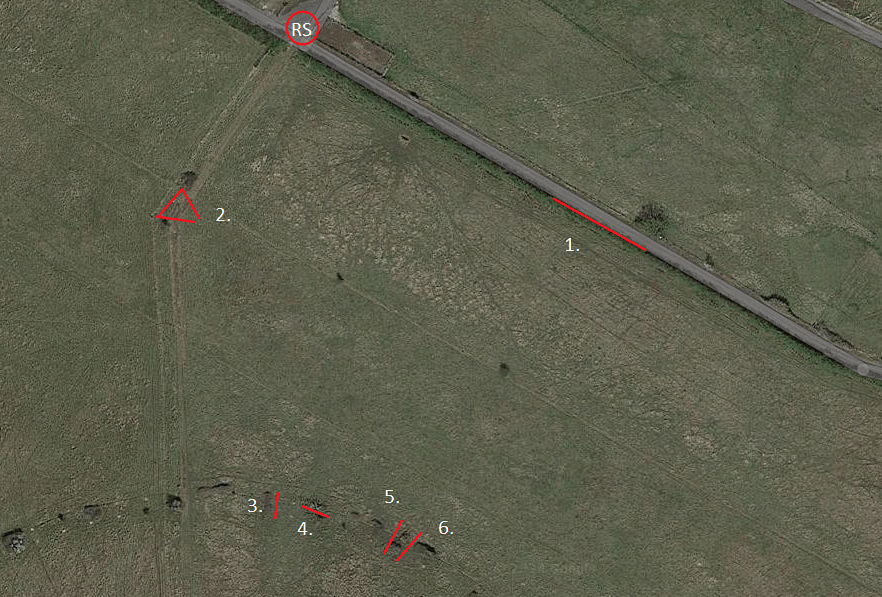
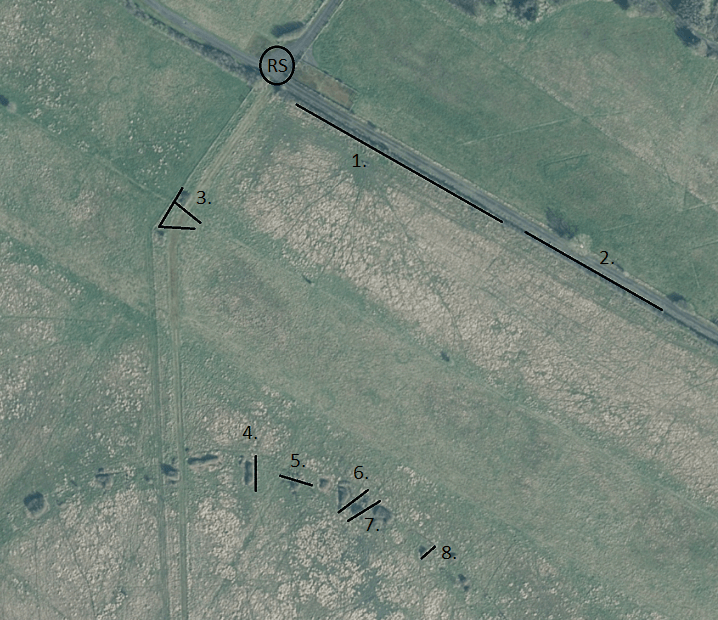
These are the five areas within the site that I have run ringing sessions. Area 1, the Chelworth Industrial Estate side is my key area. The fields either side of the Whitworth Building, area 4, is my secondary area. Being close to the farm buildings produces a very different catch to what we get at area 1. The ponds and surrounding fields at area 3 I use early in the year, as it is where I am most likely to catch Snipe and Jack Snipe, plus it is a good area for Redwing. For some reason I have only done area 5 once: it was highly productive but, crucially, there always seems to be cattle out there when I think it could be worth a go. Finally, today we went to area 2. It comprises sparse hedgerow with even sparser trees, but the fenced off area, that you can make out from the photograph below, was seeded with a large variety of weedy seedy flowering plants in an experiment which, unfortunately, didn’t work out, but it has left behind a great deal of thistle seed-heads, which can attract in a number of finches, particularly Goldfinch. Unfortunately, this time the plants have all gone over, and there was very little evidence of available seed-heads in the paddock, so we extended quite a way out from there with our net setting.
I have carried out two previous sessions at this part of the site: 21st September 2022 and 15th September 2023. Both sessions gave reasonable returns, with 30 Meadow Pipits and two Stonechats in the former and 22 Meadow Pipits in the latter. Because of the weather issues in September I didn’t manage to get back to the site until today (the Chelworth side has to take precedence, based on results over the years).
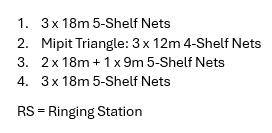
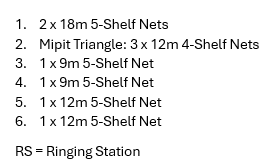
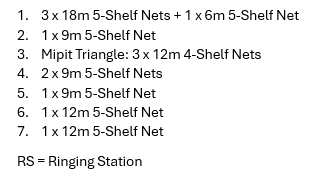
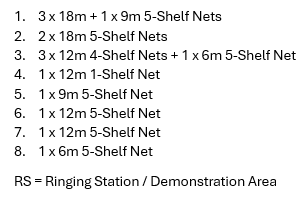
I was joined for the session by Laura, Mark and Adam Childs and we met up at 7:30. Laura and Adam are trainees and Mark is a very helpful addition, helping with the set up and take down, and we have good conversation besides when things are a little quiet. We set the following nets:
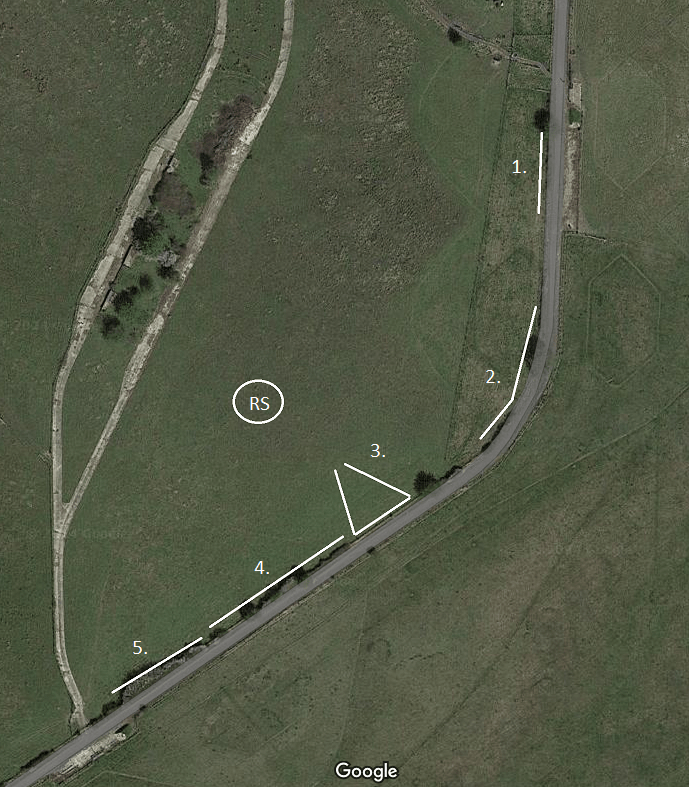
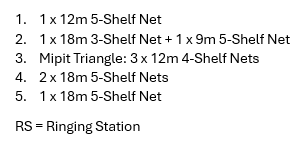
I had to carry out quite a lot of scrub strimming along the lines that were going to carry rides 1 and 2. Unfortunately, the left-side handle and arm of my brush cutter decided to break off. and it became a somewhat difficult job, and took a lot longer than expected. This meant that we didn’t actually get the nets open and the lures playing until 9:00. That said, there was not a lot of movement at the time: probably the 2oC temperature didn’t help.
To say it was a slow start would be an understatement. We caught a Wren at 9:15 and then absolutely nothing until 10:00. At 10:00 we caught a Blue Tit, two Dunnocks and two more Wrens. We had a discussion and agreed that if we hadn’t caught anything else by 11:00 we would pack up. As luck would have it, at about 10:30 we started to see Meadow Pipit flocks flying around. That was the problem though: they kept flying around and weren’t coming down. I cranked the volume on the lure up to just under maximum and it did start to attract a few down and at 10:45 we caught five of them, plus a Reed Bunting and another Blue Tit. Thereafter, between 11:00 and midday, when we packed up, we caught another nine birds.
The entire list for the session was: Blue Tit 2; Great Tit 1; Long-tailed Tit 2; Wren 3; Dunnock 2; Meadow Pipit 9; Reed Bunting 2. Total: 22 birds ringed & processed from 7 species. Not our best session by any means, but it could have been a lot worse.
We did have a couple of very pleasant interludes: a ramblers group for people of a certain age (mine, just about) came by, and I spent a very pleasant 15 minutes talking to them about bird ringing, They were very interested, particularly as, whilst they were there a couple of Long-tailed Tits got caught and I extracted them in front of the group. Not something that I do very often: I prefer not to risk any complications, giving the wrong impression. Fortunately, it all went well.
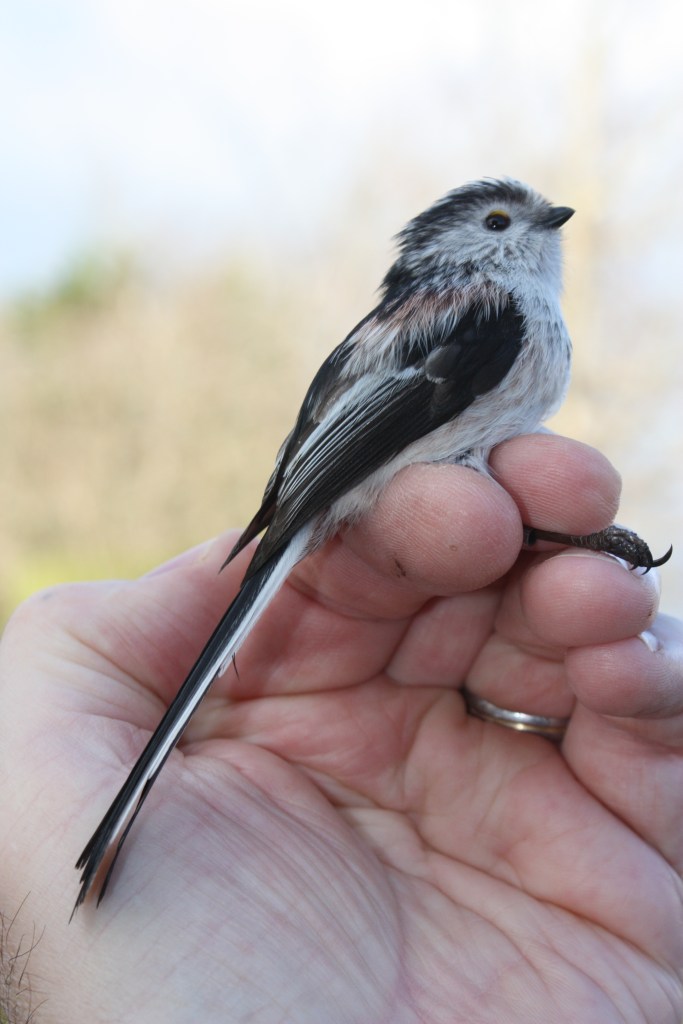
Long-tailed Tit, Aegithalos caudatus
They are such fabulous birds. We had quite a lot of other passing foot traffic, so plenty more chatting and explaining. Nicely, everybody was interested and positive: we had no negative interactions.
From 10:30, until we left site at just after 13:00, we saw so many Meadow Pipits, flocks of 20 to 50 flying around, but so few landing on the grassland. The difference this year from recent years is the lack of Craneflies. Meadow Pipit catches were pretty small in the first three years of my working at Blakehill Farm: 6, 18 and 14 respectively from 2014. However, in 2017 the Wiltshire Wildlife Trust changed their management of the plateau, and reduced the amount of grassland cropped for hay. This left the areas where I do most of my ringing just to be grazed by the cattle over the year until winter, and not to be cut. The impact was immediate: so many more insects, particularly Craneflies, in the autumn. We now regularly catch 100+ each year. Even this autumn, with the rubbish weather and (anecdotally) a huge reduction in the insect population, we have still caught 68 so far – and there will probably be another two sessions there before the end of the month. But right now it seems the birds are spending a lot of time on the wing searching for food.
We started packing away just after 12:20, it was quick and easy and we were off just after 13:00.












 Ringing In The Braydon Forest & Beyond