Spurn Bird Observatory: Summer 2021 (so far)

The following blog piece is by Lucy Mortlock. Lucy is the latest to join the team and has been ringing with me since the beginning of October last year. She spent summer 2020 working in Northern Ireland, as part of her degree course, which included her getting an introduction to ringing. There she got to ring a pretty exotic list of species: including a couple that I haven’t had the privilege of ringing yet (Curlew, Oystercatcher). She officially became my trainee in March of this year, and has packed in an awful lot of sessions in between and since. That she was also studying for her finals at Reading University (my alma mater), made her commitment to the cause really impressive.

This summer she volunteered for a role as an assistant warden at Spurn Bird Observatory. What follows is her story so far:

What an exciting week I’ve had. I’m working at Spurn Bird Observatory in East Yorkshire, as a Little Tern Warden. I help the team to monitor and protect the Little Tern colony here. It’s the only little tern colony in Yorkshire, and has had some excellent success over the past few years. The little terns have started sitting and my favourite part of the job is counting the sitting birds each day and finding new individuals on their nests.

Anyway, I know you’re not here for the little terns…

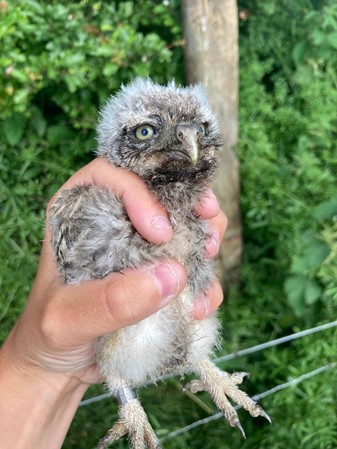
This week has been a bit of a mega one for me. On Wednesday I joined the head ringer here to check on the little owls in the nest box, and was given the opportunity to ring two of them. They are really lovely, placid birds in the hand with extremely thick tarsi. I think this guy is just the cutest, but someone else referred to him as an ‘unfinished muppet’. Interestingly, in the little owl box we found one of the ringed plover that had been sitting in the colony with the little terns. This has provided a valuable insight into how the little owls use the surrounding area. (Editor’s note: Little Owl: 21-23 cm long, wing-length 155-175mm, weight 160-200g; Ringed Plover: 18-20cm long, wing-length 125-144mm, 50-90g. Apart from the obvious weight difference, their biometrics are reasonably similar. That’s quite a catch for what is usually an ambush predator and is mainly described as feeding on beetles and earthworms!).
On Friday I was taken out to ring a buzzard pullus. The nest was right at the top of a yew tree, and contained only one chick. I was surprised at how placid it was. I was shown how to hold the bird so that it was comfortable and I had good control over those awesome taloned feet, and found that it’s a surprisingly natural and comfortable process.

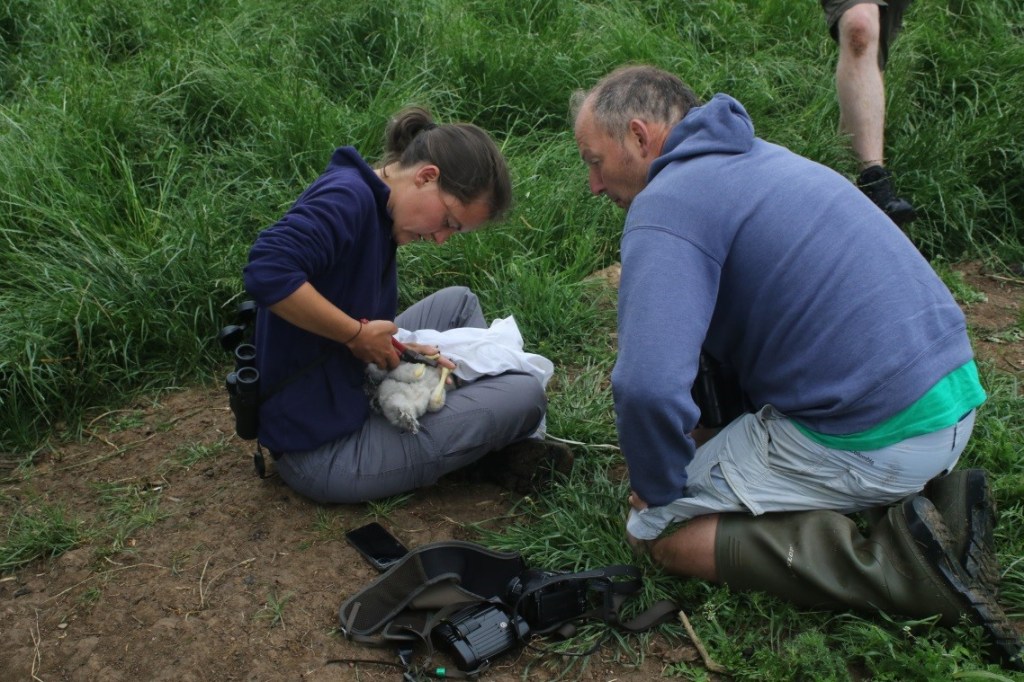
Lucy hard at work!

And finally, on Saturday, I was taken out to ring kestrel chicks! They were really loud, much more so than any of the other birds.
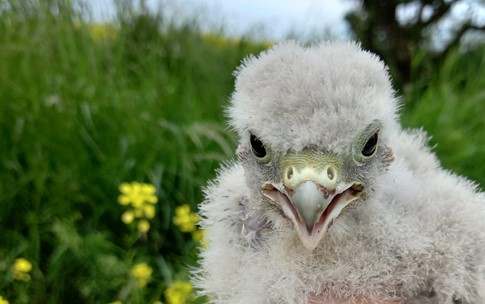
I’ve been really struck by how fragile these chicks seem and how much effort and energy their parents put into them to reach the point of fledging.

I’m very grateful to Paul, Jack and Simon for their help and advice, and the opportunity to ring these fantastic birds. I think I might have some new favourites…

(Biometric data from Baker, Jeff: Identification of European Non-Passerines, BTO Publications 2nd Revised Edition 2016)

In the Garden: Saturday, 26th June 2021

Having scheduled CES 6 for Sunday, so that Annie and Steph could make it, I decided that I would open a couple of nets and Potter traps in the garden on Saturday morning. I set them up Friday night, so I didn’t have to get up too early. The nets were furled, the Potter traps were locked open, so the birds could get used to them. I also had my moth trap out overnight as well. When, due to old man’s syndrome, I woke at 5:15, I went and closed up the moth trap. At that time the bait in the Potter traps was still intact. By the time I set them to catch 4 hours later, they were empty: so I was a little disappointed to only catch a single Starling in them over the course of the morning.

Knowing that Sunday morning would be a 3:30 start, I didn’t bother to set an alarm. Not being willing to stay up from 5:15, I went back to bed for a few more hours sleep. Consequently I didn’t open the nets until 9:30. Despite that I still caught more birds from more species in three-and-a-half hours than I did in six at Red Lodge on Wednesday!

My target for the morning were the juvenile Goldfinches hitting the sunflower hearts at my feeding station and the juvenile Great Spotted Woodpecker that has been regularly present on the peanut feeder for the last two weeks.

The first bird out of the nets was a female Greenfinch with a nicely ripe brood patch. Possibly first brood but, equally possible, given that I have seen juvenile Greenfinches in the garden, a second brood. This is where bad weather in May at the start of the breeding season, whilst usually disastrous for Blue and Great Tits, who rarely try for a second brood, is less of an issue for many other species.

The highlights of the morning were: my first juvenile Goldfinch of the year:

This was followed soon after by one of the rarer birds of this breeding season:

Only my third juvenile Blue Tit of the year! I also caught a juvenile Dunnock and three juvenile Starlings. There was only one disappointment really: the juvenile Great Spotted Woodpecker did get caught in the net but escaped before I could get to it. As usual, I did manage to catch a Woodpigeon in my nets. It is a mark of the strength of the Merlin nets I use in the garden that they can take the weight and strength of these birds without becoming damaged, as my other, more expensive nets, would.

The list for the session was: Woodpigeon 1; Blue Tit [1](1); Dunnock [1]; Goldfinch 2[1](1); Greenfinch 1; Starling 1[3]; House Sparrow 1. Totals: 6 adults ringed from 5 species; 6 juveniles ringed from 4 species and 2 birds retrapped from 2 species. As much as I enjoy my birds, mothing has tremendous variety and will be my failsafe / fall back when I can no longer go ringing. Some classy moths made an appearance overnight:

Elephant Hawkmoth
Privet Hawkmoth

With my neighbours on one side having some sort of garden party from noon and the neighbour on the other side having his usual Saturday afternoon play with his chainsaw, angle grinder or whatever other noisy equipment he can find to ruin the peace and tranquility of living in the countryside, I shut the nets just after 13:00 and retreated behind the peace and quiet of ultra-thick cottage walls and damned fine double-glazing.

Red Lodge: Wednesday, 23rd June 2021

This was my first visit back to Red Lodge since the problems encountered with a pair of vandals on the 24th April. I have not been back until one of my team was available to join me, as I feel I need to have support and witnesses when in public areas now. Fortunately, Alice was able to join me for the morning. Unfortunately, we didn’t catch many birds.

The list for the morning was: Treecreeper [1]; Great Tit [2]; Wren 1; Robin [3](1); Song Thrush [1]; Blackbird 1; Blackcap 2[2]; Chiffchaff 1. Totals: 5 adult birds ringed from 4 species; 9 juveniles ringed from 5 species and 1 retrap, making 15 birds processed from 8 species.

So, a small catch. Good to get a couple more juvenile Great Tits, tragic that this means that they have overtaken Blue Tits in the juvenile stakes: 3 to 2. Pathetically small numbers when compared with previous years. My catch between the 1st and 23rd June inclusive in 2018 was 13 Blue Tit, 22 Great Tit; in 2019 it was 44 Blue Tit, 17 Great Tit and in 2020, despite the restrictions imposed because of Covid, it was 11 Blue Tit and 19 Great Tit. However, compared to the disastrous year of 2016, it isn’t quite as bad: 1 Blue Tit and 2 Great Tit in that awful year for the young of these species.

It was a little frustrating as we could hear birds calling everywhere: Great Spotted Woodpecker, Nuthatch, Marsh, Blue and Long-tailed Tits and Goldcrest, all species we catch regularly at the site, were seen and heard but not caught.

We had chats with some of the regulars, all keen to ensure that we weren’t having any issues with “incomers”. Ian, walking Denver, the biggest, most muscular and friendly Black Labrador you are ever going to meet, and the man who found the dead Buzzard previously blogged about, told me about another Buzzard found badly injured in Red Lodge. This time it was the result of a collision with the overhead power lines. He took it to Oak & Furrows but I suspect it has been euthanised.

After a quick lunch, Alice and I headed off to Waterhay to check on the Barn Owl boxes there. Suffice to say, it was about as productive as our morning session. Box one (which we hadn’t managed to get to last autumn to clean out, as the fields were in use) was full of nesting material: both Barn Owl and Jackdaw. I cleared it out and, hopefully, it will attract in a Barn Owl pair for a later brood. The second box was as completely empty as it had been after cleaning it out last autumn, except for a couple of Jackdaw nest twigs. Although this box is seriously dilapidated, it is the most regularly used for nesting, and we ringed four nestlings there last year. The third box did deliver hope: as we approached an adult flew off from the box. When Alice climbed up to check she found 5 warm eggs in the nest. This looks like a complete clutch, so we will be back to check it again in a month. Hopefully they will be old enough to ring by then.

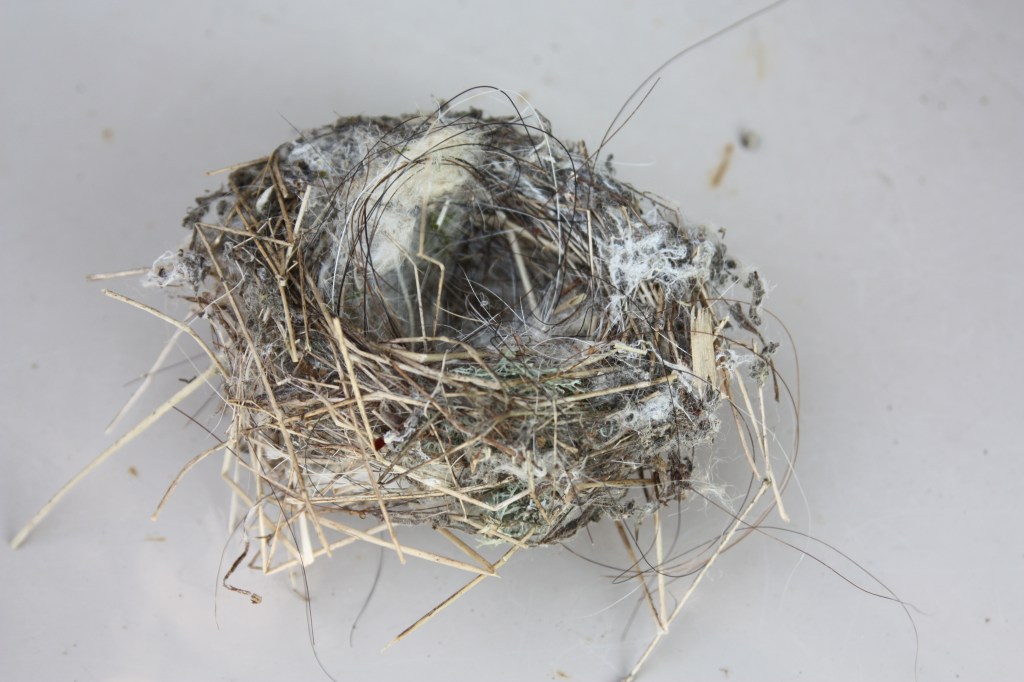
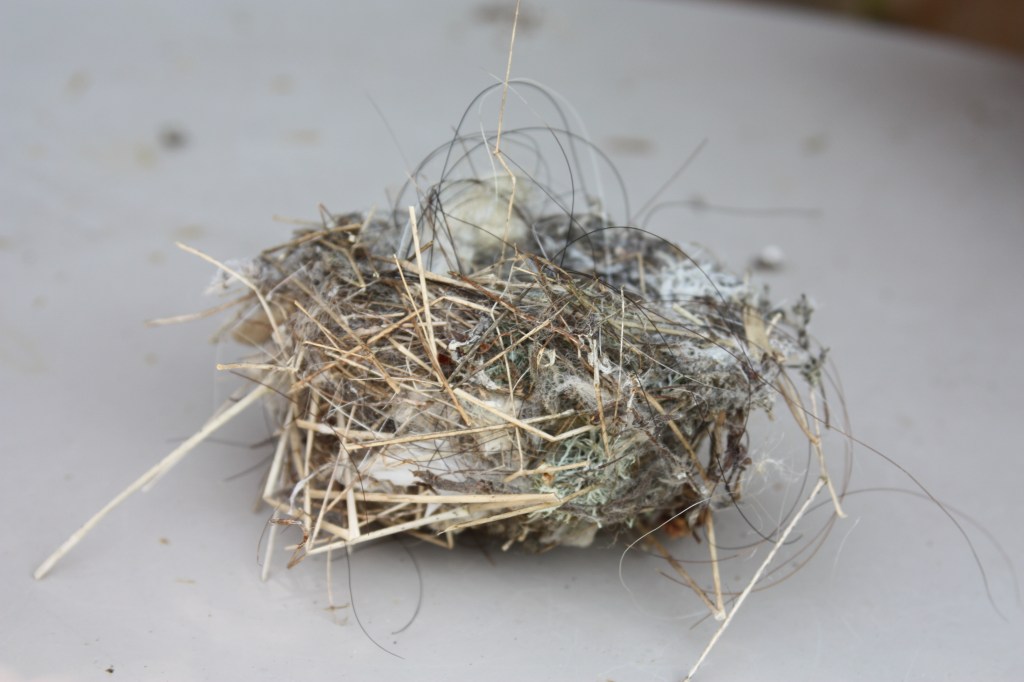
On the verge where we parked the car to visit box three, I found this on the ground directly under the tree it, presumably, was built in:

It looks like a Goldfinch nest to me. If anybody has a better idea I would love to hear your opinion – I am no expert on nests. I have no idea why it was on the ground. It didn’t look damaged by a predator. We have had young Goldfinch in our Purton garden for over a week now, so hopefully they fledged before it fell out of the tree.

It was a quiet day all round, but Alice is good company, and we have the information for some more productive sessions in a few weeks.

The Firs: Saturday, 19th June 2021

After yesterday’s torrential rain, which put an end to my plans to check even more Barn Owl boxes, I was rather worried as to what we would find at the Firs this morning. It was justified. I was joined by Ellie for the session, and we had far too much time to sit and chat, as there were few birds hitting the nets.

We set 7 x 18m nets down the central glade and all nets did catch but only 17 birds. The catch for the day was: Treecreeper [1](1); Blue Tit (1); Great Tit (1); Coal Tit (1); Wren 2(1); Dunnock 1; Robin [3](1); Song Thrush 1; Blackbird (1); Blackcap 1; Bullfinch 1. Totals: 6 adults ringed from 5 species, 4 juveniles ringed from 2 species and 7 birds retrapped from 7 species, making 17 birds processed from 11 species.

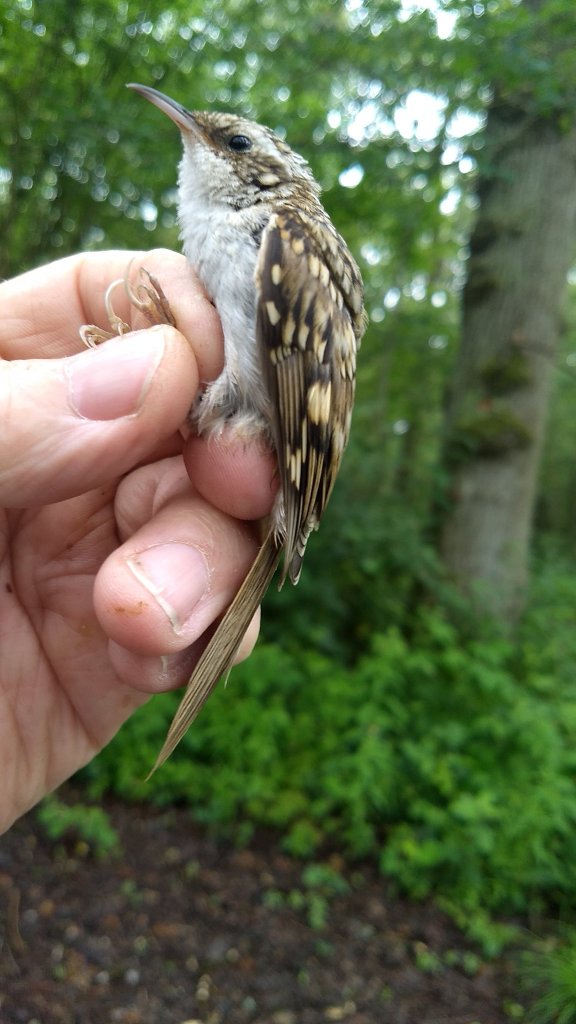
Conspicuous by their absence were any juvenile Blue or Great Tits. The highlight of the catch was our first juvenile Treecreeper of the year:

Not only the highlight but it was very obliging in posing for a photo. I so rarely take a decent photograph of this species: they tend to hunch in the hand and that, coupled with its seriously decurved beak, always makes them look so miserable, so I am pleased with this photo.

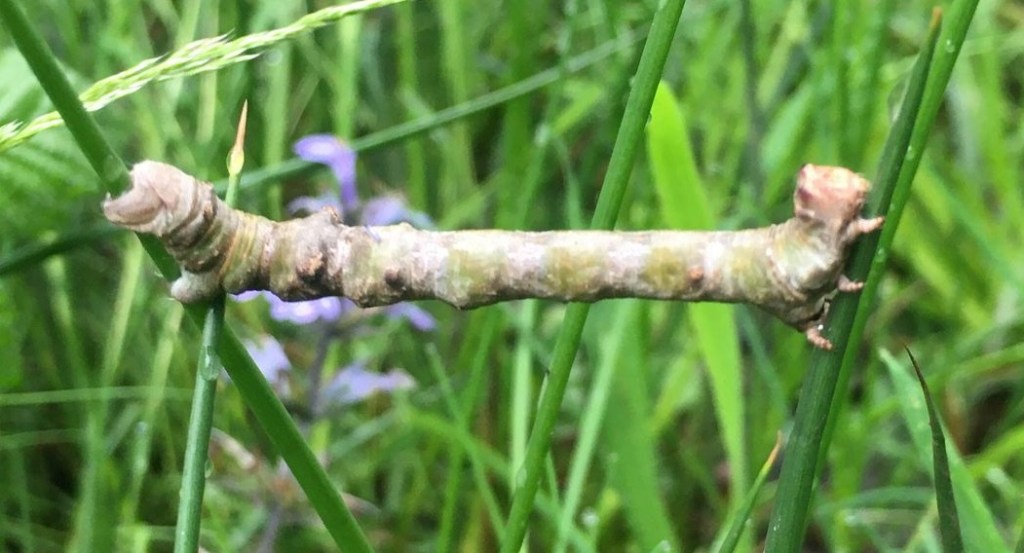
On one of our early rounds Ellie noticed this handsome creature straddling two plants:

Photo by Ellie Jones

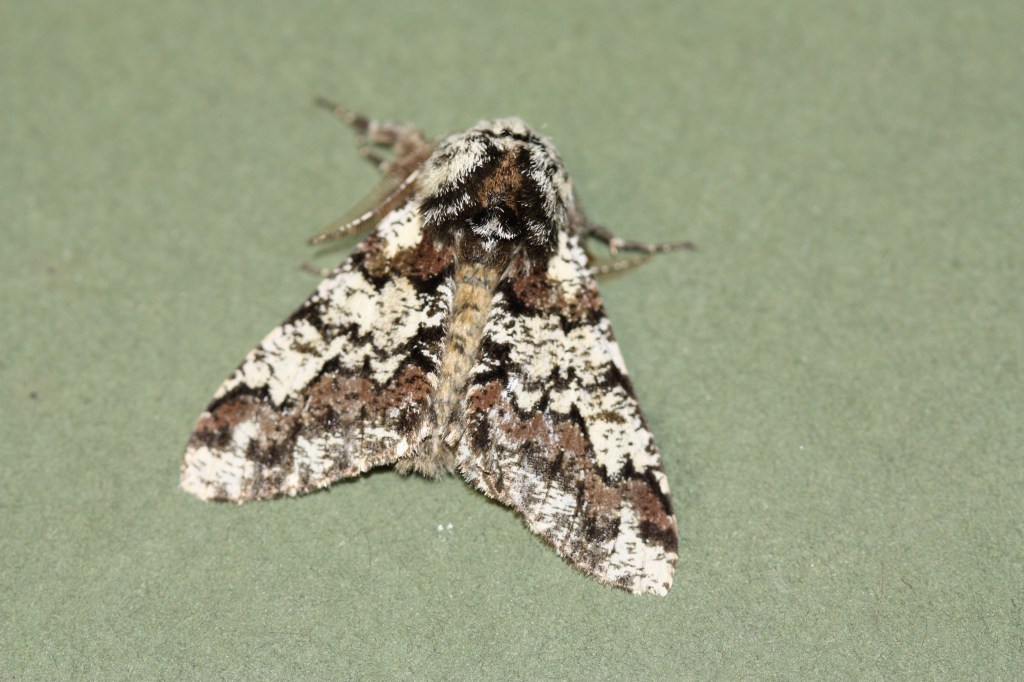
Neither of us are experts but, after reviewing our field guides and then checking photos on the internet, I agree with Ellie’s diagnosis of Oak Beauty, Biston strataria. Although most pictures show the caterpillar as grey, there are different colour morphs, and this fits one of those. Particularly diagnostic are the muted orange face and rear end and the various small protuberances along the body. Also, the habitat and timings are all fitting for this species. It should develop into one of these if it gets to pupate:

Caught at light in my Purton back garden

With the catch having dwindled away to nothing we took down at 11:30 and left site just after midday. Lovely chatting to Ellie, just need a few more birds next time!

More Barn Owl Checking: Thursday, 17th June 2021

Cracking session this morning checking owl boxes with Annie. We started out at 9:30 (my laziness after being up at 3:00 yesterday morning) and we only managed 4 boxes in 2.5 hours. What with travel, loading and unloading the ladder, and some emergency box maintenance, it was actually good going. Our actual time handling the birds was less than 5 minutes per box. They were all (bar one) very sleepy – probably because they have been up all night being extremely well-fed.

The breakdown of what we found was as follows:

Box 1: a roosting adult

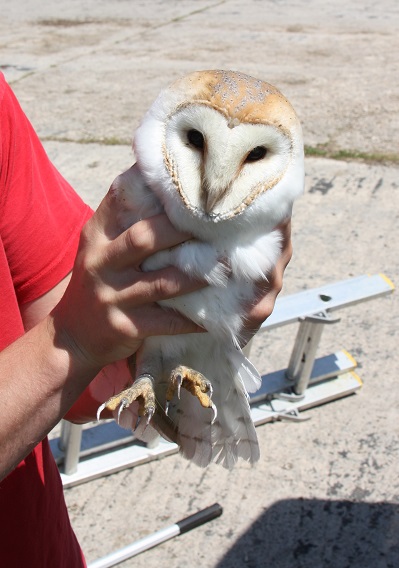
Box 2: 4 extremely well-fed juveniles, downy, some tail feather development. So well fed that they could afford to leave a dead short-tailed vole in the larder and 3 of the four could all expel some extremely messy projectile poo in my direction. Only one hit. We had to reaffix the back of the box, as it had come adrift. The landowner was extremely helpful: providing me with some fine wire and a pair of wire cutters to enable me to effect the repair. This was one of the four owlets in his box:

Photo by Annie Hatt

These landowners are so enthusiastic about the Barn Owls on their land. I know when I speak with them that they will be able to tell me chapter and verse on how the parents have been acting.

Strike One – photo by Annie

Box 3: 4 naked, very newly-hatched young and an adult. We didn’t think there would be anything in there, as the back of the box was missing. We looked all around for it and couldn’t see it. When I climbed up to have a look, the back was lying flat at the back of the box, absolutely covered in poo. I gave it as much of a clean as I could and managed to reaffix it so that, hopefully, it will last until we can make a permanent repair when we go back to ring them in a couple of weeks.

Box 4: 3 nicely developed young. Feathers medium, and they should fledge within the next two weeks. One, which I have called Hissing Sid appearing on Britain’s Got Talons, was a remarkably sparky bird. Had we left this another week I would not have been able to ring him, for fear of it fledging prematurely. He was hissing at me all the time until he was in the bag and did so again after I put him back and until I closed the box again. I say “he” because he had enough developed plumage to establish sex.

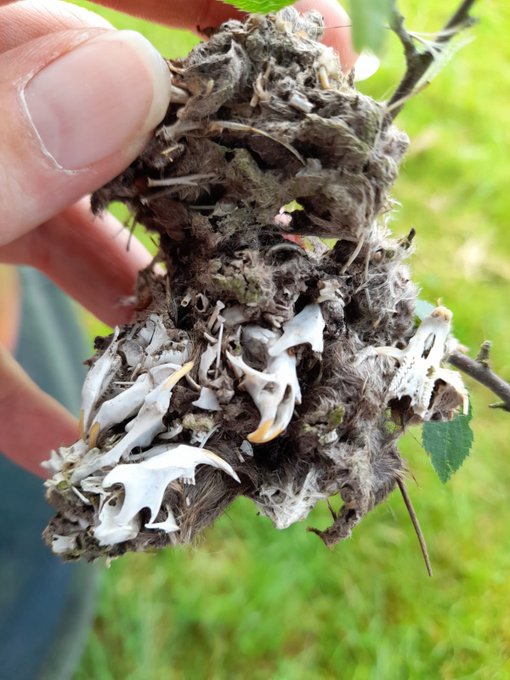
I suffer for my schedule 1 licence! My left hand has a number of new holes in it. This box too had issues with the back panel. It looked as if someone had taken a hammer to it and smashed it inwards. Again, I did a running repair to keep them safe until fledging. Outside box 4, as well as the pellets in the box, Annie found these masses of bones clumped in the bushes underneath.

Food mass – photo by Annie

This morning’s session just shows how variable Barn Owl nesting / breeding can be: 3 different broods at very different stages of development, never mind the intra-brood variation, all within the vicinity of Webb’s Wood in the Braydon Forest area.

CES 5: Lower Moor Farm, Wednesday, 16th June 2021

When I set up my CES site back in 2015 I initially thought that I would put up lots of net, but then I thought about whether that would be the sensible thing to do: I am not getting any younger and, whilst I have been spoilt by the degree of support I have had from my team, they are all getting jobs or continuing in education towards Masters, PhD’s etc, which takes them away from midweek sessions. Or else some fool (this fool) advances them to C-permit, so they have their own sites and projects that they want to work on. Today was one of those days when I was working the CES solo. Even with just 5 rides of 12 nets in total, that meant a 3:30 start, so I could get the first nets open by 4:30.

It was a fairly quiet morning on the bird front. I am pretty sure that the terrible weather in May has driven a lot of our migrants further east and away from the site. In 2019, the last time I could run the CES (i.e. pre-Covid) in the equivalent session I ringed 74 birds from 16 species and retrapped 21 birds from 10 species: making 95 birds from 17 species. Today was nothing like that.

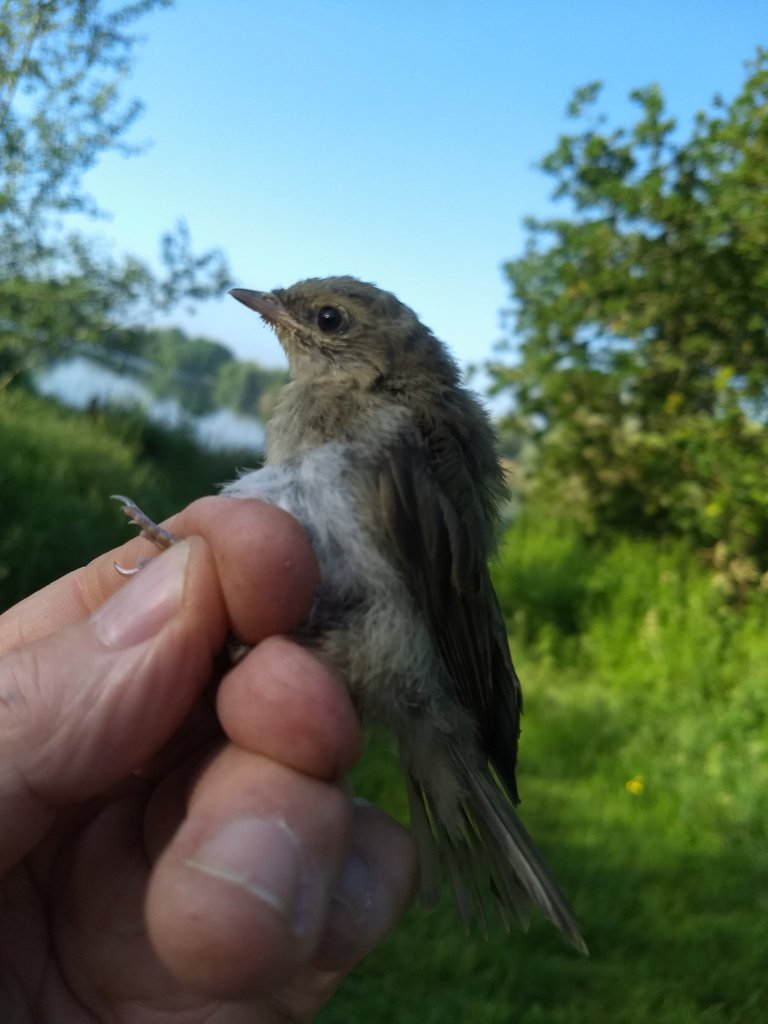
This is not to say that it wasn’t an enjoyable session: it certainly had its highlights. Key amongst them was my first juvenile Garden Warbler of the year:

It looks very fluffy, very scruffy, just out of the nest, and its tail and wing feathers were still growing. You can see the a couple of the under-tail coverts in pin. All consistent with a bird that has just left the nest, but under those wings and along the flanks there was significant levels of body moult, which suggests it left the nest over a week ago.

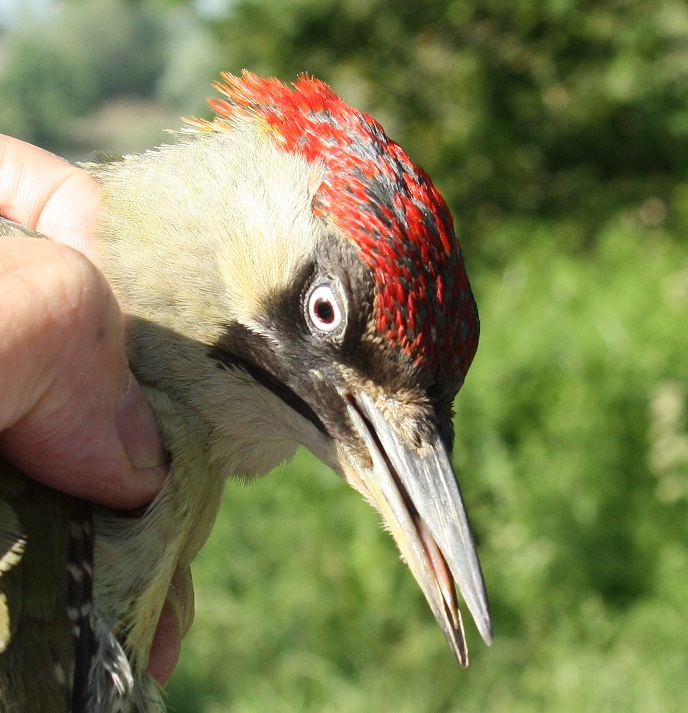
The second highlight was a Green Woodpecker:

This is a female. You can sex it on the malar stripe, which is all black. The male has a red flash through the middle of it. Underlining her sex: she had a well-developed brood patch. Given where she was caught (twice), I suspect that her nest is on the island on Mallard Lake, adjacent to the Wildlife Refuge. Lower Moor Farm is the place that I catch this species most often: 4 per year in 2018 and 2019 respectively: 30% of the county total for that species for those years.

At CES 3 on the 26th May we ringed a female Blackcap, AHR8454. In CES 4, on the 5th June, we caught her again and she had just started replacing its tail. All of the new feathers were there, but all fully in pin. I caught her again today and, perhaps this helps explain why there are fewer birds around:

The feathers are about two-thirds grown now but look at the clear fault bars on the feathers. Those highlighted areas are so thin that those feathers will almost certainly break along those lines. Fault lines usually reflect issues with the weather and / or lack of food. Obviously the weather has been getting hotter since it was first retrapped this year, and the place was alive with insects this morning, from midges and mosquitoes, through horse flies (the only thing that didn’t care that I was liberally doused with Jungle Formula and got through my defences (it didn’t get away again though)) to Damselflies and Dragonflies. There does seem to be a lot of potential food around for insectivorous birds. My trickiest extraction of the day was a female Emperor Dragonfly. Fortunately she came out in one piece. In fact, they all kept their heads today: which is quite a feat when I had to extract a dozen or so, mainly Black-tailed Skimmers.

The list for the day was: Green Woodpecker 1; Wren 1(3); Dunnock [1](2); Robin 1[1]; Blackbird 1(2); Blackcap 2(1); Garden Warbler [1](3); Chiffchaff 1(2). Totals: 7 adult birds ringed from 6 species; 3 juvenile birds ringed from 3 species and 13 birds retrapped from 6 species, making 23 birds processed from 8 species.

The key differences between this session and the 2019 equivalent session is in Blackcaps: 2 adults and 13 juveniles ringed and 6 retraps; Chiffchaffs: 19 juveniles ringed and 4 retraps and, significantly given results everywhere else in my sites, Blue Tit: 1 adult and 12 juveniles ringed.

I had a very sociable morning: Colin, out photographing Dragonflies and Damselflies, was extremely chatty and we had a good long talk about a wide range of topics but, particularly, Scottish Wildcats and rare orchids in the UK. Later in the morning, I was able to do a brief ad hoc ringing demonstration to one of the slightly older Well-Being groups (usually it is to school age children, these were college age and a bit more). They were a really pleasant bunch and completely absorbed in what I was doing. Particularly, they were impressed with the story of the migratory habits of the Garden Warbler retrap that I processed whilst they were with me. They then went off to get on with what they had been brought to Lower Moor Farm for, whilst I took down and packed away. As I was leaving site they were all walking up the path ahead of me: all dressed up in their bee-keeping outfits: it looked like something out of Doctor Who!

Taking down was hard graft in the heat, which was where I missed not having any help the most. However, instead of getting away at 12:30, I got away at 13:00, so perhaps I am just making a fuss about nothing.

Owl Box Checking: Monday, 14th June 2021

I renewed my Schedule 1 licence for monitoring and ringing Barn Owls at the nest at the end of last year. So far, though, I have held off checking the Barn Owl boxes in the Braydon Forest this year. After the horribly wet May, I wanted to be sure that the birds have had plenty of time to build up their body condition before we handled them. For one thing, we have to be sure that the rings will stay on the leg: the feet grow pretty fast, but the rings are large (size G, which have an 11mm internal diameter once closed, since you ask). The plan for the week is to check the boxes on the Wildlife Trust land today, to do the boxes in the Wood Lane, Purton to Brinkworth area on Thursday and those in the Cotswold Water Park area on Friday. Thursday looks as though it might be a wash out, unfortunately.

One of the good things about box checking: you can start at a civilised time. Jonny, Ellie and I met at Avis Meadows at 9:00 this morning. A good thing about having Jonny with you is that he is young, nimble and not scared of heights, and does the ladder work. Which means my old, well-larded bones can stay on the ground. I was first on site and, whilst I was taking the ladder off the roof-rack, a pair of Stock Doves flew out of the barn. So I thought that the box in the barn was likely to be hosting a clutch of eggs.

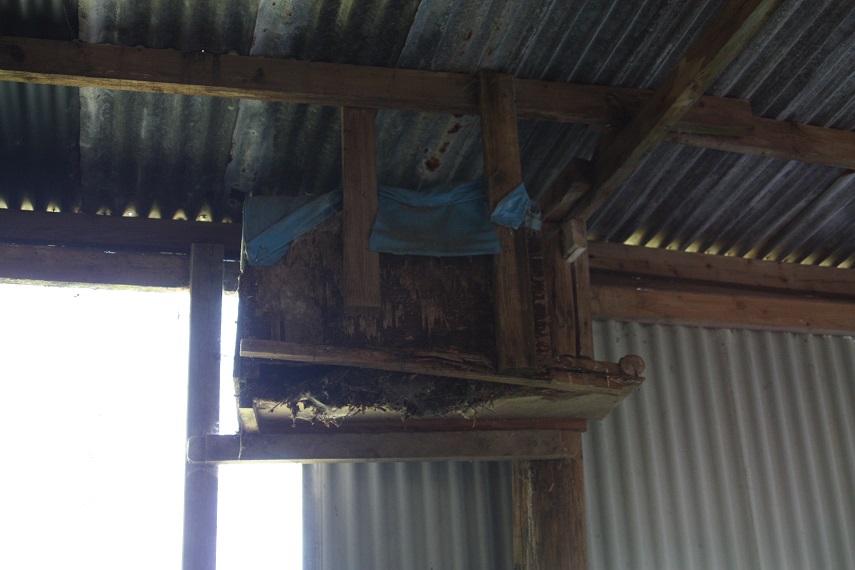
The barn: condemned and scheduled for demolition. The newer A-frame box in there has been removed and the grotty, rotting, falling apart box is still there:

How it hasn’t completely disintegrated is beyond me. Jonny climbed up, fully expecting to find a couple of warm Stock Dove eggs, instead he found four of these:

All a decent size and ready to be ringed. It is just astonishing how they keep choosing that box when there are three other new, good quality boxes in the immediate area. We then checked the other box in the Avis Meadows area and then went over the road to check on the Ravensroost Meadows boxes. These boxes have only been in place since last summer, so it was good to find that they are both active: not with Barn Owls though and also, thankfully, not with Jackdaws. They are a real nuisance if they take a liking to an owl box: they will build their stick nests on top of anything the owls are doing, and the owls will not be able to use it. However, both boxes have Stock Doves nesting in them, both had two warm eggs. We will check them again in two or three weeks to see if the chicks are there and capable of being ringed.

Ellie had to leave us at this juncture for a couple of work meetings, so Jonny and I went on to check further boxes at Lower Moor Farm and Blakehill Farm. The next three boxes we checked were all empty. Actually, that’s not strictly true, the penultimate box we went to at Blakehill Farm was absolutely stuffed full of twigs and grass and muck – with no sign of any attempt at nesting this year. Probably because not even the Jackdaws could get in there, it was so full. Jonny cleared it away. Hopefully, either later this year but, certainly, next year it will be back in use.

The last box checked is in the field adjacent to the farm buildings at Blakehill. When checking a box, before setting the ladder up, we have a large hand net on an extendable pole which is tapped against the box entrance to flush any adults in residence and, hopefully catch them. Most actually fly off when they hear people approaching but occasionally they sit tight. One of the Stock Doves at Ravensroost Meadows managed to escape the net but at this last box we were lucky enough to catch an adult Barn Owl as it left the box. Unfortunately, when we checked the box there was no sign of nesting, the bird was using it as a day roost.

Doubly galling the bird was a female with an extremely well-developed brood patch. She clearly has a brood somewhere but we have checked all of the boxes we know of so perhaps she has found a natural hole to use.

We released her and she flew off in the opposite direction to the box from which we had caught her – possibly going to visit her brood. Whilst flying off she was harassed by a Magpie, but she just ignored it and disappeared off across the plateau.

It was just under 4 hours of hot work, heavy lifting and a lot of walking. Three empty boxes, one day roost, one owl brood and two cutches of Stock Dove eggs might seem like a small return, but we were satisfied with our morning’s work.

Somerford Common: Saturday, 12th June 2021

It has been a long time since I have managed to get onto Somerford Common again. The last session was on the 10th April, so I was pleased that the weather was perfect for this morning. I was joined by David for the session, with a 5:00 start. We set up along the rides that border our winter feeding station. The net setup was slightly different to our usual summer layout:

The green areas are now full of brush and young trees and have changed the structure of the area so, going from the left, the 18m / 12m combo was put in its usual place along the edge of the paddock / coppice area. Usually there would be another 18m / 12m combo leading up the hill to the crossroads along that same border. However, this time we started further down and on the opposite side of the path, so that it ran along the edge of the scrub area and used a 3 x 18m combo. I abandoned the 3 x 18m combo on the north side of the crossroads because it now resembles a shaded avenue, very dark and enclosed, but kept the 3 x 18m combo to the south of the crossroads.

The first round got us very excited about the possibilities for the session, with a good catch. Unfortunately, the initial round of 8 birds (4 in the new net ride) was not replicated, with just ones and twos in each round. However, of the 4 birds taken out of the new net ride we had two of these:

Our first 2 Marsh Tit juveniles of the year! Absolutely delighted, especially given the dearth of young Blue and Great Tits so far this year. In fact, I have caught as many juvenile Marsh Tits and juvenile Blue Tits and one more than I have juvenile Great Tits! The largest number of juvenile Marsh Tits we have caught in June before is a paltry 2 – so we have matched this already.

The catch was reasonably varied for the time of year in this woodland: Marsh Tit [2]; Robin 4[3]; Song Thrush 1; Blackbird 1(1); Blackcap 3; Garden Warbler 1; Chiffchaff 4; Willow Warbler 4(1). Totals: 18 adult birds ringed from 7 species and 5 juvenile birds ringed from 2 species plus 2 birds retrapped from 2 species, making 25 birds processed from 8 species.

All of the adult birds caught were in full breeding condition but one of the male Willow Warblers was already in wing moult, which usually signals the end of their interest in breeding i.e. it is usually referred to as post-breeding moult:

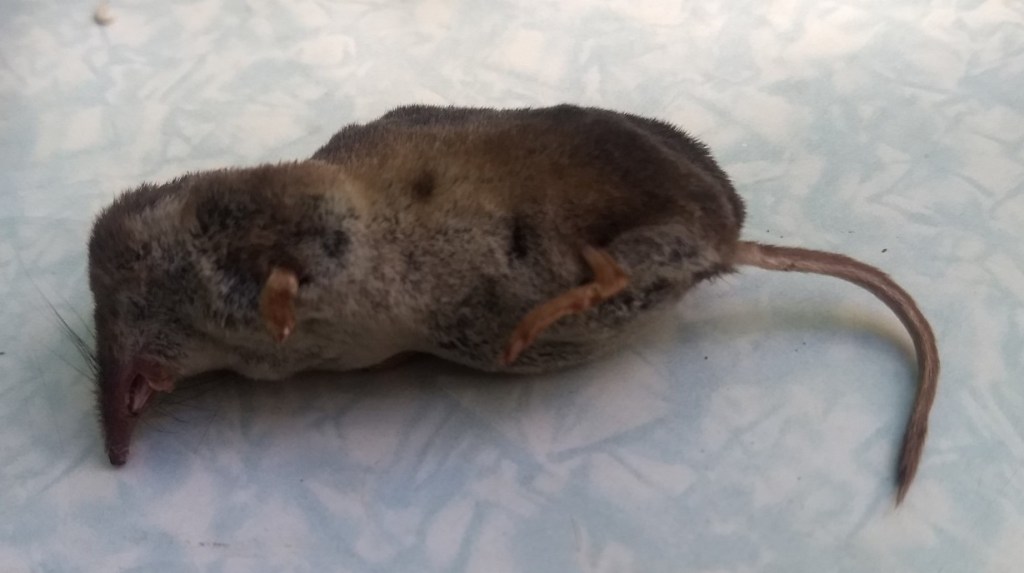
The first wildlife we saw this morning was actually a dead insectivore, a Common Shrew:

There didn’t seem to be any signs of predation unless those two dark spots represent talon marks from a Tawny Owl or similar. I am told (I haven’t tried it) that shrews are not particularly good to eat – so perhaps an owl grabbed it and flew off, then recognised what it was and just dropped it – it was in the middle of a path completely out in the open.

The other find of interest was a plant, a Great Butterfly Orchid:

I first found them on the site about 5 years ago, which I think (given the reaction from both the Wildlife Trust and Forestry England) was an unusual record for the site, but I haven’t found any for the last 3, so I was really pleased to find this one this morning.

With the birds hiding in the shade from 11:00, we started taking down at 11:30 and were off site by just gone midday. A good, relaxed session, given the lack of any Blue or Great Tits. At one point we did hear a small flock of Long-tailed Tits flying around, but that was over our heads at the ringing station and didn’t translate into a catch in the nets.

Some good news: the Wildlife Trust has agreed that I can resume ringing within Ravensroost Woods, using two specified rides (R27 and R38 respectively). I cannot wait to get back in there. My agreement is that I will not work in there at weekends, theirs is that I can block off access to the rides when I am working there, to prevent interference from members of the public coming across my equipment and vandalising it and / or (more importantly) damaging birds in the nets.

Ravensroost Meadow Pond: Thursday, 10th June 2021

Having spent all week with pulled muscles in my shoulder, and a very stiff and painful neck, I didn’t expect to get out before the weekend. As it all eased a little yesterday, and I could move my head a bit, I thought I would try to get out this morning. So, despite a really strong urge to switch the alarm off and go back to sleep, 5:00 found me at Ravensroost Meadow Pond for a session. The Belted Galloways had either been moved or have taken themselves off to one of the adjoining fields, so I set up without an audience today. I set the usual nets: 5 x 18m; 2 x 9m and 2 x 12m:

All nets, apart from the isolated 9m net on the spit, caught something. It was a pretty typical session for this site for this time of year. In a month or so it will be busier with juvenile warblers. Currently the juveniles of some of the earlier breeding resident species are turning up in the catch, particularly Robins, with another 5 ringed today. At 9:45 I caught my first juvenile Blue Tit of the year:

Like the Great Tit juvenile caught at Lower Moor Farm on the 5th, catching just one on its own is unusual this soon after fledging and is probably indicative of how badly these birds have fared after the awful weather in May. To underline just how bad it is, at 10:40 I caught a small flock of 6 Blue Tits: 5 adults and 1 additional juvenile. Those proportions are terrible: in a good year they would be reversed.

It was a decent catch: Blue Tit 5[2]; Great Tit 2; Wren (1); Dunnock 1[1]; Robin 2[5](1); Blackbird 1(1); Blackcap 2; Whitethroat 1; Lesser Whitethroat 1(2); Chiffchaff 1(1); Willow Warbler 2; Bullfinch 1. Totals: 19 adult birds ringed from 11 species and 8 juvenile birds ringed from 3 species plus 6 birds retrapped from 5 species, making 33 birds processed from 12 species.

It was a pleasant morning with Skylarks singing from the field to the north of the pond. The Belted Galloways did put in an appearance, in the field to the south of the pond. Hopefully they can be kept in that field they are currently in to give the Skylarks a chance to breed without risk of their nests being trampled.

Late morning there was a reasonable throughflow of Swallows. Unfortunately they avoided the causeway net, but it was a better showing than we had at any time last year. Hopefully the young will be fledging soon as they are far more likely to end up in the nets when hawking for insects or coming in for a drink.

Some good news: with people having gone back to work and children back to school, the footfall in Ravensroost Wood has reduced a bit. I have agreed a protocol with the Wildlife Trust for working back there. It is essentially where I worked in the winter, plus another couple of areas that are not used much by the public. I have been given permission to close them with “No Entry” signs, plus additional explanatory signage and poles to restrict access to the ride entrances when I am working there. For my part, the sessions will not be at weekends, to avoid the busiest times.

Langford Lakes: Saturday, 5th June 2021

This is a post by Jonny Cooper.

2021 marks the second year of my ringing at the Langford Lakes reedbed. The ringing kicked of this year in late April and will carry on until September. This session however was special as it marked the start of my new retrap adult survival (RAS) project for Reed Warbler. RAS projects essentially aim to ring all the breeding adults of a given species at a site each year and also to re-trap as many returning adults from previous years. The effort across years is constant and this provides data in the survival of adults for a given species. The reedbed at Langford was an obvious candidate for such a scheme and this adds an extra layer of value and analysis to the data being collected.

The session itself kicked off early with the nest open by 4am and the first birds caught at 4:30. It was no surprise that Reed Warbler dominated the catch with a large number of retrap birds ringed in previous years (just what I wanted for the RAS), this included a returning Spanish ringed bird originally recaptured on site in 2020.

The session ran as expected, with an initial pulse of birds then settling down to regular 5 or so birds per round. The full catch was: Water Rail 1; Great Tit 1; Long-tailed Tit 6; Wren (2); Grey Wagtail 2; Robin 1(1); Blackbird 1; Sedge Warbler 1(6); Reed Warbler 12(36); Blackcap 1; Whitethroat 2(2); Chiffchaff (1). A total of 28 birds ringed from 10 species and 48 birds retrapped from 6 species, giving a total of 76 birds form 12 species.

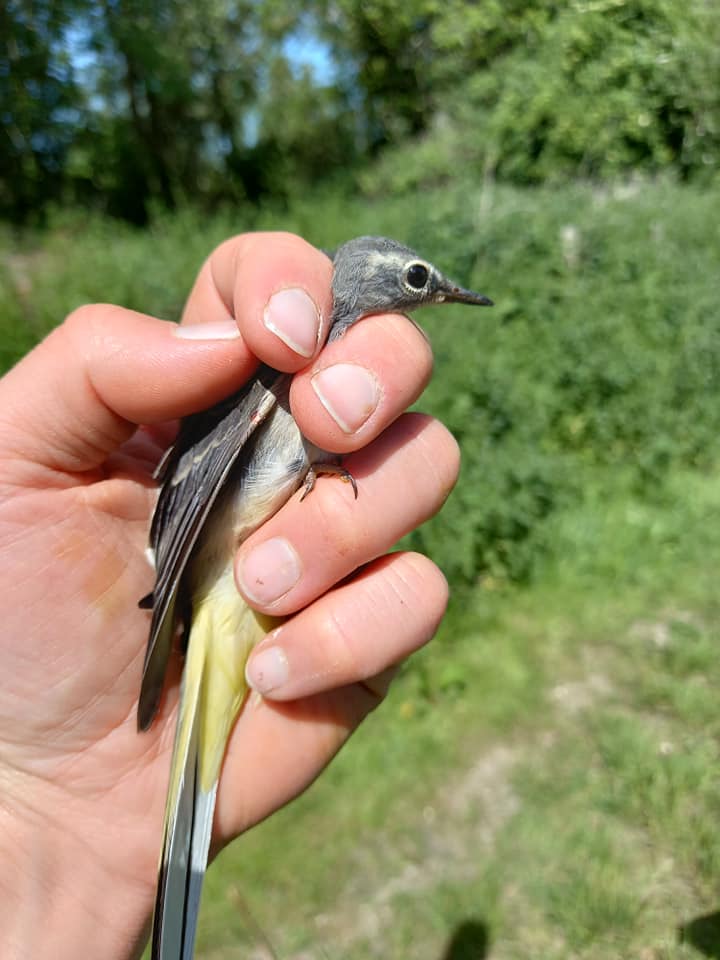
The absolute highlights where are the two Grey Wagtails and the Water Rail. Grey Wagtails are one of my favourite birds and it is always a pleasure to ring them and see them up close.

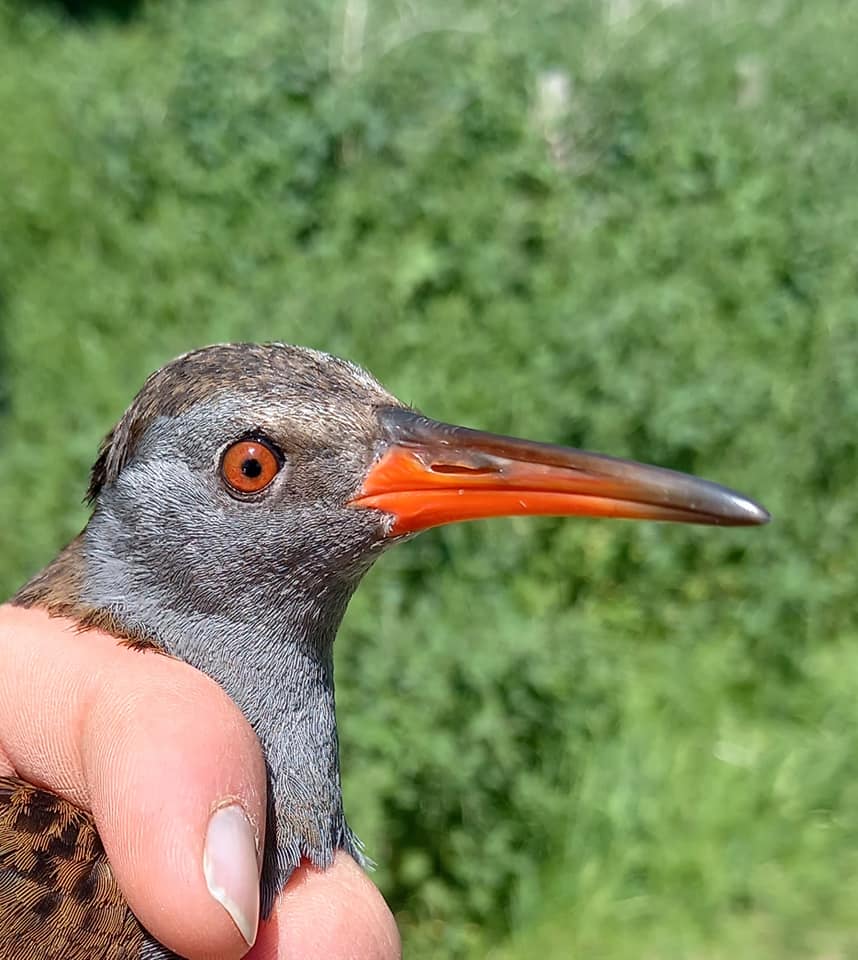
The Water Rail was a female in breeding condition. It is only the second record of Water Rail ringed at Langford Lakes and I can’t find any other record of Water Rail at Langford in the breeding season and within Wiltshire they are a very rare breeder (and usually in the water park) so it is a great record.

Overall a fantastic session and I can’t wait to see what the rest of the season has in store.