The Firs: Wednesday, 18th September 2024

This was my fifth visit to the Firs since it was reopened to our team for bird ringing, after the forestry operations. The third visit, at the end of July, gave an encouraging catch of 55 birds, last visit, in the middle of August, gave an astonishing catch for this site of 99 birds. Having worked Webb’s Wood on Saturday, Red Lodge a couple of time recently, all with disappointingly small catches, and unable to get into Ravensroost Wood (Wednesdays are reserved for their volunteer group outside of the breeding season) and the weather forecast for it to be dry but breezy, I decided to have another go at the Firs. The siting of the nets down the central glade make it relatively windproof when the wind is coming from the east or west. Today’s was a westerly. I was joined by Miranda and Laura for the morning at 7:00 and we set the usual central glade nets: one ride of 3 x 18m 5-Shelf nets on the western edge of the glade, followed on by 3 x 18m + 1 x 12m 5-Shelf nets on the eastern side of the glade, essentially making a single net line of 120m. The nets were open by 8:00.

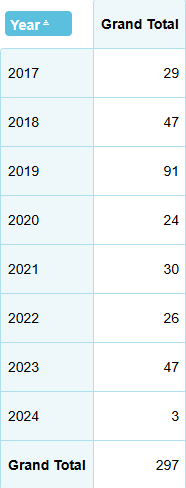
It started with a single Robin that flew in before we had opened the nets. You can normally guarantee that any bird caught before the nets are open will be one of Robin, Blackbird or (horror of horrors) Wren. Thereafter, we had birds arriving regularly throughout the morning, until we closed up at just after 11:30. It was another encouraging catch. The Ash die-back clearance and removal of mature oaks (part payment to the contractors for the work they did (but didn’t finish)) certainly seems to have improved the catches at the Firs. The average catch at the site this year has gone to 56.6 birds per session. When you compare this with previous years, all of which would have had at least three sessions fuelled by the provision of supplementary feeding, whereas this has had none in 2024, it is clear that the work in the wood has helped improve the catch, presumably because of the changes to the habitat. Nor should one overlook the excellent work that Rosie and her team have carried out opening up the central glade: the proliferation of blackberries has to be a contributing factor.

Only 2018 and 2019 come close, and they had big overwinter catches.

On the subject of those brambles producing those blackberries: they have to be the worst in the world, with the heaviest density of prickles I have ever come across. You really have to keep your nets well away from them, otherwise it can be disastrous. I have had one net completely destroyed by them: just impossible to extract after the wind changed direction and it got so badly ensnared I could only rip it out: just a mere £110 down the drain.

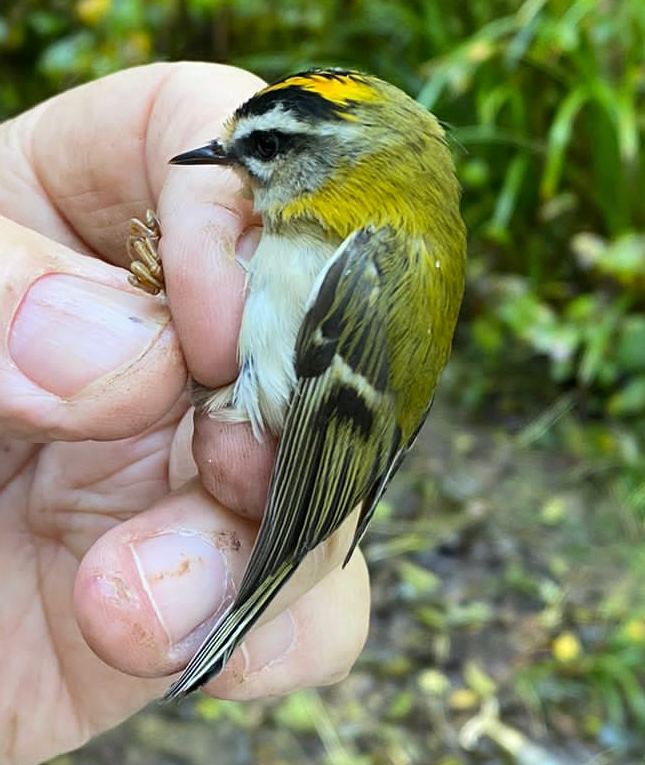
The list for this morning was pretty much what one expects in a woodland catch: Treecreeper 2[1]; Blue Tit 8[7](6); Great Tit 1[3](5); Marsh Tit [1](1); Long-tailed Tit {2}(3); Coal Tit 1; Wren 1(2); Robin [4](1); Blackcap [1]; Chiffchaff [9]; Goldcrest [2]. Totals 2 birds ringed unaged, 13 adults ringed from 5 species, 28 juveniles ringed from 8 species and 18 birds retrapped from 6 species, making 61 birds processed from 11 species. Of the retrapped birds, 7 were juveniles and the Long-tailed Tits could not be aged.

I did have the opportunity to show Laura and Miranda how to definitively age Treecreeper, as we had two adults and a juvenile:

Treecreeper, Certhia familiaris. The difference is in the primary coverts. An adult has either small or missing pin-prick spots at the tips of the primary coverts, whereas juveniles have larger, tear-drop shaped, spots.

If there was any disappointment in the catch, it was the failure to get any of the Nuthatch that spent the morning calling and knocking all around us. Also, there are at least two Green Woodpecker territories in the Firs but I have never been able to entice them into the nets.

With the wind getting very much stronger, and the nets starting to billow, we shut them at 11:40. took down and were off-site by 12:30 after another very satisfying session.

The Mipits are Back: Blakehill Farm, Monday, 16th September 2024

As regular readers will know, on the seventh of this month we held a ringing demonstration for the Swindon Wildlife Group. If it hadn’t been for the three lovely Whinchat that turned up late in the session, it would have been a very disappointing morning for the paying public. Unfortunately, the Stonechats that bred on site this year, whilst making an appearance sitting on top of the net poles, failed to hit any of the nets and Meadow Pipits were conspicuous by their absence, apart from one that flew across the plateau before any of the public arrived.

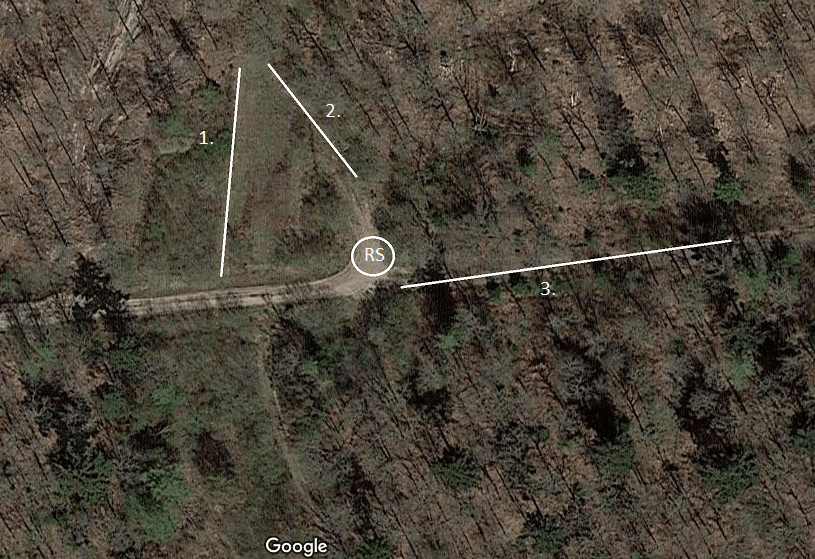
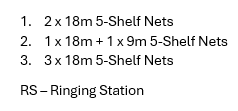
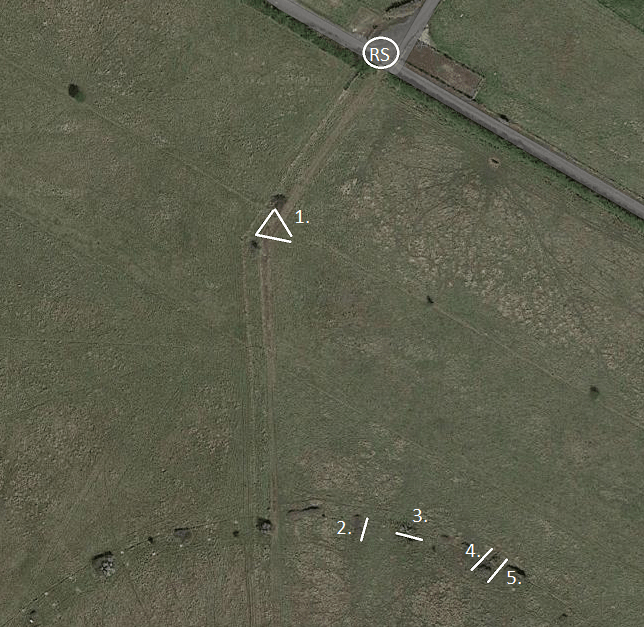
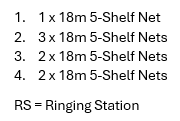
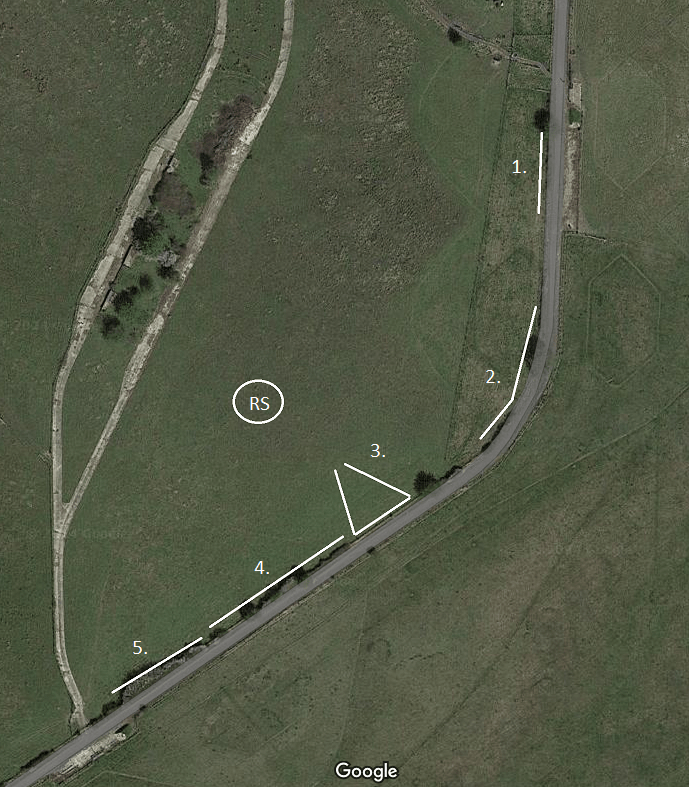
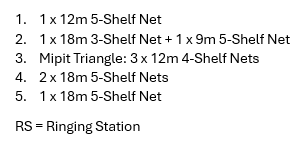
Last week’s midweek session had to be cancelled due to my back problems, so I was looking for an opportunity to get out early this week and today was perfect. What is more, the weather forecasts all said that it would be dry, with a low base wind until about 11:00, whereupon it would get somewhat windy, with the wind coming from the north. Having invited my team to join me, if they could make it, I worked solo this morning. Something that I haven’t done for an age, except for the occasional garden session. Being mindful of my physical state, I only set the following nets initially:

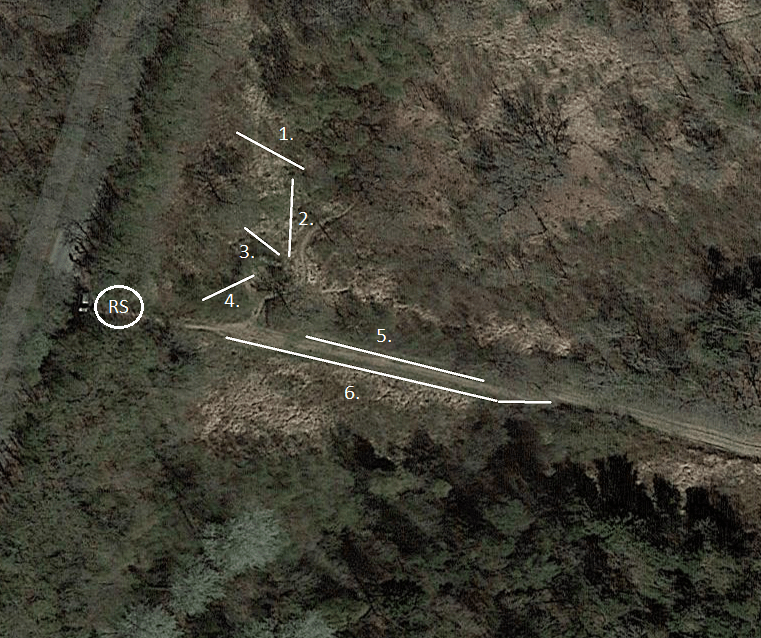
I worked with these nets until 11:00 when the breeze became too strong, and I had to close them. As I wasn’t ready to pack up then, I set a row of three 18m 5-Shelf nets along the perimeter track hedgerow. With the wind coming from the north, they were well sheltered and, having closed the other nets, easy for me to manage:

Although immediately adjacent to the ringing station, I had wanted to go for the potential Meadow Pipit catch and the potential for Whinchat and Stone chat.

The first round produced two birds: a Wren and our fourth Redstart of the autumn: three at Blakehill Farm and one at Lower Moor Farm! This is my team’s best catch of Redstart ever. We have only ever caught 11 since I started working these sites in August 2012: nine of them at Blakehill Farm, two at Lower Moor Farm. Walking back with these two bagged up I found my first two Meadow Pipits of the autumn in the Mipit triangle.

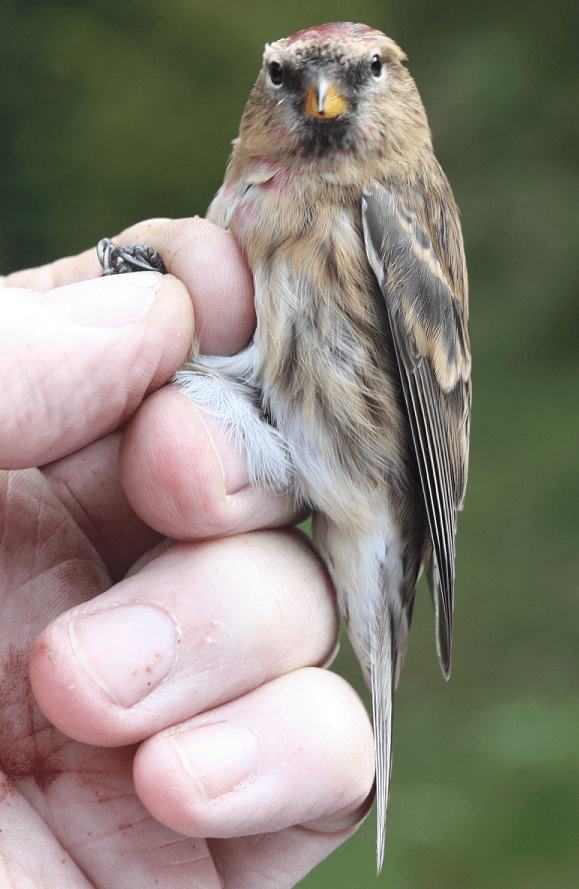
Juvenile Meadow Pipit, Anthus pratensis. Note the pale edges to the median coverts with dark points infiltrating the pale edge. These are classic age identifiers for this species. I am pleased to say that I caught a couple of them in nearly every round, ending with a total of 13.

There was a decidedly small fall of Chiffchaffs, with six in round two and five in round three, ending up with the same total of Chiffchaff as I did with Meadow Pipit. The fourth round threw up one of the species missing from two weeks ago plus another that I really wasn’t expecting:

Juvenile male Stonechat, Saxicola rubicola. Only the two innermost greater coverts are white. In the adult this would be three or four at this time of year.

Followed by:

Juvenile Sedge Warbler, Acrocephalus schoenobaenus. This is only the fifth that we have caught at Blakehill: the first was in August 2019. We have then caught one on autumn passage in each year since, except for 2023. It has never been more than one in any year though, and none on spring passage.

The catch for the session was: Blue Tit [4]; Great Tit [1]; Long-tailed Tit {1}*; Wren 1[1](1); Dunnock [1]; Meadow Pipit 1[12]; Stonechat [2]; Redstart 1; Sedge Warbler [1]; Blackcap [1]; Chiffchaff [13]; Reed Bunting [3]. Totals: 1 bird unaged*, 3 adults ringed from 3 species, 39 juveniles ringed from 10 species and 1 juvenile retrapped, making 44 birds processed from 12 species.

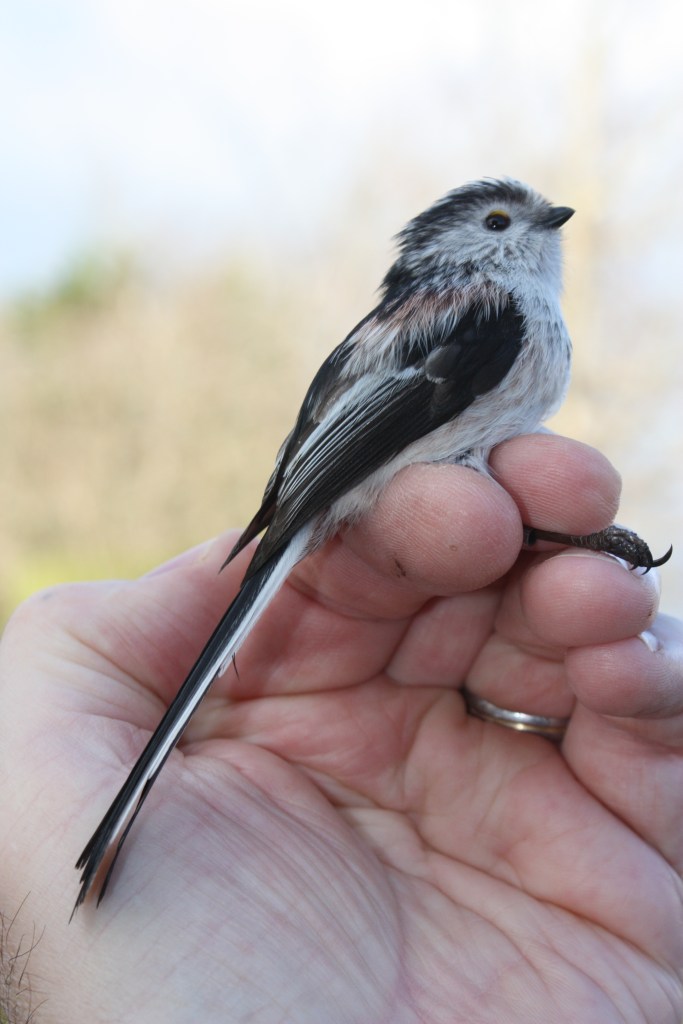
* unaged because both adult and juvenile Long-tailed Tits, along with Nuthatch and House Sparrow, moult into identical plumage in the autumn. This bird had completed its moult so impossible to say whether adult or juvenile. The eye-ring colour varies between red and orange but is not a reliable indicator of age.

I started taking down the nets at 11:00, finishing with the final three at about 12:30. It was a lovely session. Mind you, this time the cattle were extremely nosey and I had to chase them away from the nets on several occasions. No damage, thankfully, but I wonder what they were thinking when this idiot came running towards them waving his arms and shouting at them to go away (not quite as politely as that might read). It is a lot easier to manage when there are more of you to keep them away. I will be back there the very next time the weather allows.

Webb’s Wood: Saturday, 14th September 2024

The forecast for this morning was for it to start cold and warm up, becoming bright and breezy as the morning wore on. They got it right for once, so my decision to go for one of the woodlands was the right one. Webb’s was next on the schedule, so that’s where we headed. This week has been difficult: my body has decided that muscle spasms in my back are to become the default status. After a visit to the doctor yesterday my choice is pain or doped up to the eyeballs on anti-inflammatories (naproxen), co-codomol, Diazepam and, to top it all off, oral morphine. For this morning (and so I could drive) I stuck to the naproxen and co-codomol. To be honest, I should have had the Diazepam as well, because I spent the morning fending off spasms and in pain.

I was joined for the morning by Adam and his dad, Mark. Laura has, unfortunately, also been laid low by painful problems. She did join us later in the morning: just to sit and chat and provide tea and cake! I met Mark and Adam at 7:00, only to realise that I had left some important stuff at home: my rucksack with my coffee and biscuits (okay, my boots and welly socks as well), so I had to shoot off home to pick them up. Fortunately, I only live 10 minutes away, so I managed to do the trip there and back in just 15 minutes (much to Mark’s incredulity). As the rest of the team was otherwise engaged today, we restricted ourselves to just four net rides on even terrain:

We had a very quiet session, with just a few birds caught. Fortunately we all enjoy a good natter, and we had plenty of opportunity. Whilst we were setting up ride 3, I found this on the ground:

Mole, Talpa europaea, found dead. Such a shame: you see them so rarely. I have seen a couple alive outside of their tunnel system, but also a couple dead. Hard to tell what the cause was: there was no obvious signs of injury.

The catch was small, but pleasant: Blue Tit 1; Marsh Tit 1; Wren 1; Blackbird 1; Blackcap 1; Chiffchaff 4; Goldcrest 2. Total: 11 juveniles ringed from 7 species.

We packed up at 11:30, after two empty rounds, and headed for home. To be fair, that size catch was probably all that I could manage today. Hopefully things will settle down soon. Hopefully this weather will settle down soon! I need some dry, wind free days so I can go Mipit hunting at Blakehill!

A Welcome Return Saves the Day: Saturday, 7th September 2024

Today we carried out a scheduled ringing demonstration for the Swindon Wildlife Group at the Wiltshire Wildlife Trust reserve at Blakehill Farm. We decided upon setting up on the Chelworth side of the reserve, setting nets on the plateau and along the perimeter track hedgerow. As usual, the event was sold out. Nobby, the neighbouring landowner, once again allowed us to use his field for attendee parking. He is a good man!

I was joined for the morning by David and Sarah. Laura and Adam came along for the first couple of hours, but had to leave about 10:00. We set the following nets:

While we were setting up net 7 we caught our first bird of the morning: a Whitethroat flew into it whilst I was still playing the net out from the bag. I got David to hold the net taut whilst I extracted the bird: it can be a difficult thing to do, with lots of net wrapped around it, so I took the responsibility and, I am pleased to say, no problems. I didn’t set up and open ride 2 until 11:00, for reasons explained below.

Unfortunately, it was a really quiet morning. The site can be like that. It seems that our usual passage migrants are late arriving this year. Catches in the first week of September can vary between 21 on 1st September 2021 and 79 on 6th September 2017. The difference seems to be based on the date of arrival of the Meadow Pipits to the site. Robin Griffiths, the event organiser, saw a single Meadow Pipit flying across the plateau, but we did not catch any. Hopefully they will arrive soon: the crane-flies are emerging and that seems to coincide with Meadow Pipit numbers increasing.

The attendees arrived for 9:00 and I had a couple of birds to show them. As usual, I started with an overview of the ringing scheme and how the data can be used to identify individual birds, illustrated with our long-distance Blue Tit (second longest recorded movement of a Blue Tit within the UK) and our long-lived Goldcrest (the oldest known individual of the species) before processing the two birds. It was a nice pair to start with: a juvenile male Reed Bunting and a juvenile Whitethroat. I enjoy showing people little things, like sexing a juvenile male Reed Bunting on the somewhat hidden white collar developing at the back of the neck and, as in the case of the Whitethroat, the dandruff effect as the keratin sheath, or pin, of the feathers disintegrates.

Again, as usual, once I had processed the birds, I taught two of the children how to safely hold a bird in the ringer’s grip and then release it, whilst doting parents took their photos (we are talking seconds of time, not minutes). “Get children involved early” is my motto! In the end all of the children got to hold and release two birds, and a number of adults also got some training.

The patience of the audience was much appreciated. After we processed those two birds at 9:00, we didn’t have anything else to show them until 9:45, whereupon we caught two Chiffchaff, and then another one at 10:00. That was it, then, until 11:15. To fill the time we spent a while showing the people around the nets and how we set them. I decided to set up some additional nets along the perimeter track, i.e. ride 2. Of course, I should have done it earlier, as it immediately caught a Blackcap. Whilst I was checking ride 2, David and Sarah were checking the other nets and they came back with the prize catches of the session:

Juvenile Whinchat, Saxicola rubetra (Photo courtesy of Kathleen Gillen and reproduced with her permission).

After a fabulous catch of them in September 2021 both 2022 and 2023 were blank years, not Septembers, blank years, so to catch three in one session was lovely. Two of them were caught in ride 5: a 9m net that goes through a narrow cut between bramble on the west and blackthorn on the east. It has been a bit quiet of late, but this sort of catch is why I set this net – despite the dangers of the net being savaged on either side if the wind gets up. I gave one to each of David and Sarah to process (normally I do all of the processing at ringing demonstrations, and none if I have trainees with me on our normal sessions). That was David’s second and Sarah’s first.

Our last round was at 11:45 and we shut the nets as we checked them. We caught another three Chiffchaff. One of the Chiffchaff was having an identity crisis: emulating a Wren. It had crawled mostly through to the other side of the net from where it entered, span itself in the net over a dozen times and then got its head stuck through another part of the net. Definitely too much of a problem for Sarah, who is very early in her ringing career and who discovered it, so she called me over to extract it. That is my cardinal rule for trainees: if you are having a problem call me over. It is why we have a great record on keeping our catches alive, well and undamaged.

Again, we shared the processing. That was the end of the demonstration and the attendees left soon after midday and we started to take down. With David’s dad, Trevor, joining us, we split the take down and expected to get it done in half the time. Only when Sarah and I got to ride 5, we found that a Blue Tit had managed to get itself tangled into the net. It does happen occasionally that they get caught in a closed net, but that is usually in the morning when it is still a bit dark, and they probably haven’t fully woken up yet! For the same reason that I took the first Whitethroat out, I extracted it. Sarah lost the toss and processed it. By the time we had finished taking down and packing away it was close to 13:00 hours.

The list for today was: Blue Tit 1; Whinchat 3; Blackcap 1; Whitethroat 2; Chiffchaff 6; Reed Bunting 1. All birds caught were juveniles and none were retraps, so the total was 14 birds processed from 6 species.

Part of what helped keep everyone occupied and interested was the other birdlife flying around whilst we were there. At one point we had some large groups of Swallow and House Martin flying around. Unfortunately they stayed high mainly. I put a Swallow / House Martin lure on in the Mipit triangle, and they certainly grouped over and above the nets but they just never came down enough to get caught. The most surprising bird we saw was a Swift. After a group discussion, we all agreed that they left the local villages at the end of July, and to see one solitary Swift fly over the plateau was most unusual. Robin did catch sight of a Meadow Pipit flying close to the Mipit triangle. Let’s hope that is the start of their arrival and next session we can catch a bundle.

The most frustrating species seen today was Stonechat. Robin monitors the breeding birds at Blakehill Farm (amongst a number of other sites) and is aware of two successful nesting attempts there. That in itself is good news, as it is unusual and it would be great to see that happening on a regular basis. Not quite so good: whilst Sarah and David were closing the outer nets they saw at least four of them sitting atop the bushes and flitting around but never getting into the nets.

Alongside these were a Great Spotted Woodpecker, a couple of Robins, a Carrion Crow, some overflying Lesser Black-backed Gulls and a Kestrel that was seen hunting successfully on the plateau.

Whilst we were setting the nets up for the Mipit triangle we also had lovely views of a Hare running around the plateau.

So, I was disappointed that we didn’t have more to show the people, but they were all lovely and thanked us profusely for an enjoyable morning. I am not sure why I feel responsible for the weather, the number of birds caught etc. They are all outside of my control, but I do. Anyway, Whinchats!

I worry about my brain: just changed the month to September from August having published this yesterday and have 80-odd people wondering what I was wittering on about!

West Wilts Ringing Group Results: August 2024

Another extremely good month for the group: with some special catches and a new site that looks promising.

Added to the list for this month compared to 2023 are: Coal Tit, Hobby, Linnet, Meadow Pipit, Nightjar, Reed Bunting and Stonechat. Missing from the list were: Great Spotted Woodpecker, Green Woodpecker, Mute Swan, Red Kite, Sparrowhawk, Spotted Flycatcher, Stock Dove, Tawny Owl and Woodpigeon. Of those missing from this list, the Sparrowhawk and the Red Kite were processed at the RSPCA Oak & Furrows rehab centre, so weren’t wild caught. So, if we strike those two off, we have the same number of species but with differences.

The average numbers per session are pretty similar with, on average, 1.6 more birds ringed per session and 2.2 more birds processed per session.

Birds where we had significantly higher catches than in August last year were: Blackbird (22 to 13); Blackcap (172 to 131); Chiffchaff (215 to 176); Goldcrest (29 to 7, 20 of them on my sites); Goldfinch (42 to 25); Nuthatch (15 to 1, all on my sites); Robin (96 to 78) and Sedge Warbler (42 to 28). Significant reductions were fewer: House Sparrow (2 to 19) and Whitethroat (54 to 95).

The highlights have to be:

Our first Hobby, Falco subbuteo, caught and processed at the Wiltshire Wildlife Trust reserve at Langford Lakes by Jonny Cooper. Photo courtesy of Justine Hadfield. Prior to the split, one was caught and ringed at Swindon Sewage Works in July 2009.

This is closely followed by three of these:

Nightjar, Caprimulgus europaeus, photo courtesy Dr Ian Grier.

Since 2020 Ian Grier and Andy Palmer have caught eight of them, all on Salisbury Plain training area, six of them in the Imber Valley area. All bar one has been caught in August, and this is the second time that three have been caught in the same month. It also happened in 2022.

For me, the highlight has to be the fifteen Nuthatches: all caught in my sites, with the 15th coming in my new site, Gospel Oak Farm, on the 31st. Prior to that, the most the group has caught in August is 10. The only months that the group has caught more were in March (16) and December (17) 2017: both were with the aid of supplementary feeding stations, whereas this catch was purely as a result of the right nest in the right place at the right time.

An excellent month, our second best ever August. Let’s hope that September follows suit!

Gospel Oak Farm: Saturday, 31st August 2024

I started monitoring the Barn Owl nest boxes at Gospel Oak Farm in 2021 and thought then that the land in which they were situated looked like a good potential ringing site. The farm is essentially managed as a hay making site: with late cut hay. This year, for example, the hay was cut in the first week of August. The meadow is laden with wildflowers and one strip, within which sits a good sized pond, is managed as a wildflower meadow. I asked the owner, Richard, if he would allow us to start ringing at the site a couple of weeks ago and he readily agreed. With the forecast for this week being more or less dry, I arranged to carry out am initial trial session this morning. Unfortunately, the forecast changed to say that there would be a reasonably low base wind but that it could gust up to 30mph. Coming from the East-North-East meant it would be blowing straight down where we wanted to set the nets. I decided to chance it, having set everything up with Richard and my team,, not wanting to mess people around.

I was joined by Ellie and David at 7:00 and we set the following nets:

Next time, with a better weather forecast and, perhaps, a larger team, we will also take advantage of the rest of the site, which has fabulous hedgerows and a small copse adjacent to the hedgerow.

Our first bird arrived before we had even opened the nets:

Juvenile Robin, Erithacus rubecula, close to completing post-fledging moult but also looking pretty scruffy.

I could have put money on the first bird coming out of the nets would be either a Robin or a Wren.

We only had the nets open for just two hours before the wind became a worrying factor and we closed them. The last round, as we shut the nets at 10:00, produced another five birds! It certainly bodes well for the future: in that time, with that small number of nets, we caught the following: Nuthatch [1]; Treecreeper [2]; Blue Tit 2[2]; Great Tit 1[2]; Long-tailed Tit [3]; Wren [1]; Robin [3]; Chiffchaff [4]; Willow Warbler [1]. Totals: 3 adults ringed from 2 species and 19 juveniles ringed from 9 species, making 22 birds processed from 9 species.

It was a nice catch given the circumstances. When you add in our fifteenth Nuthatch of the month, that is just remarkable. We weren’t in a woodland and yet we caught not just the Nuthatch but also two Treecreepers.

We had the nets down, the last five birds processed and everything packed away quite quickly and were off site by 10:50. I am looking forward to more, and more extensive, sessions there in future.

Lower Moor Farm, CES 12: Thursday, 29th August 2024

Today was the final session for this year’s Constant Effort Site. It is highly likely that I will retire the CES next year. Working the same site every 10 days is tiring. When that site has declined year on year for the last four it is dispiriting: especially when you know that the bird numbers in the area are as strong as they ever were, but habitat change in the CES areas has made other parts more attractive to the birdlife. For example, Garden Warbler numbers have declined precipitately in the CES area but are doing well on other parts of the reserve. Lesser Whitethroat used to be regular in the catch, but the last one in the CES area was caught in 2020: ironically, the year we couldn’t carry out the CES due to Covid restrictions.

One of the issues is that, being a nature reserve owned by the Wiltshire Wildlife Trust, I cannot unilaterally make significant changes to particular areas of habitat. The Trust are very receptive and helpful, but resources are limited and they have a huge list of priorities. They have scheduled, and started, some remedial management already, and plan to do more over the winter, and I certainly intend to test out the impact of those changes, as they are the changes that I requested from them. For next year I am thinking of doing monthly sessions, moving around the site, including elements of the CES set up, to identify the busiest areas at different times of the year.

Anyway, to today. I agreed to do this on the Thursday because the Trust were running a children’s activity day, and bird ringing is always a draw for the children, as they get to see the birds up close, and some get the opportunity to learn how to hold a bird safely and release it.

I was joined for the morning by Rosie, doing her usual of helping set up before heading off to work for the Trust, Miranda and Justine. We arrived just before 7:00 and had the first ride open 10 minutes later (so easy when you can find the post holes). It was a very slow start, with just two birds until 9:00 when we suddenly had a small influx of six birds. Then, at 9:30 we had 13 birds. Unfortunately, we then had a long gap until 11:10, with 4, and 11:30 with 6. This meant that we were not in a position to show anything to the children for quite a long time. I did, though, have a bag of owl pellets I had collected for the event, so they could toddle off back to base and investigate those whilst we waited for some birds to arrive, i.e. at the times mentioned above.

When we did have some birds to show them the children were hugely enthusiastic and several got the chance to be taught how to safely hold and release a bird. One youngster will be going to school for the first time at the end of next week, and had been asked to produce a “book” on what she did during the summer: she now has two nice photos to add to her book of her releasing a Goldcrest and a Chiffchaff.

After the children left we had another hour long lull in the catching until, as usual, I said that we would make this the last round. Having said goodbye to the children we were joined by a somewhat older (okay, much older) trio who were keen to know all about it. Luckily for them, the “this will be the last round” magic worked and we extracted another six birds. They were every bit as enthusiastic as the children had been and also were given the opportunity to learn how to safely hold and release a bird.

The weather was truly weird, and I suspect that had something to do with the variability of the catch. The first couple of hours were very cool (sub 10oC) and then warmed up, which is when we caught most birds. Then the wind got up and had the nets billowing for about an hour, and then it dropped right away, and we caught birds again.

The list for the session was: Blue Tit [1](3); Wren (1); Robin [1](1); Song Thrush (1); Cetti’s Warbler (1); Blackcap [13]; Chiffchaff 1[7]; Willow Warbler [1]; Goldcrest [6]. Totals: 1 adult ringed, 29 juveniles ringed from 6 species and 7 birds retrapped from 5 species, making 37 birds processed from 9 species. Of the retrapped birds all bar the Song Thrush were also juveniles. Two of the juvenile Blue Tits and the retrapped Robin are not birds that we have ringed. Unfortunately, whomsoever has ringed them hasn’t entered the details into the database yet: one of the frustrations of ringing is that there is a large cohort of ringers who like to save up their data for a mammoth data entry session at a later date. That is the way the old recording system worked: they haven’t yet accepted the benefits of the on-line data entry system we have now! (That’ll wind a few ringers up!)

This session does compare well with last year’s CES 12: 24 juveniles ringed from 7 species (17 of them Blackcaps) and 4 retraps from 4 species (3 juveniles and 1 adult), making 28 birds processed from 9 species.

We had everything packed away and ready to leave site by 13:45 after a satisfying, if erratic, session. Now for Saturday: I will be trying out a site that is new to me: Gospel Oak Farm. I monitor the Barn Owls there but will be exploring the other birds that they have on the site. There is a large pond with good surrounding vegetation, hay meadows that are managed traditionally (i.e. they were not cut until the first week of August), a large wildflower area, separate to the haylage, and excellent hedgerows.

Swarmest Day of the Year: Blakehill Farm: Wednesday, 28th August 2024

I have to apologise for the punning title but it is entirely accurate and my neck and scalp are itching just thinking about the encounters. Miranda and I went to Blakehill Farm this morning. We arranged to meet at 7:00, only I woke rather early and got to site at 6:30. It was a good job I woke up early: I had forgotten to set my alarm! Could have been embarrassing. Anyway, we set the following nets:

The reason for the title is as follows, looking across to net set 2 from the track that runs past net set 3:

It doesn’t look too bad from this distance. However, as we got closer:

And looking at the net:

We found this in net rides 2, 3, 4 and 5. Rides 1 and 6 were the only rides that were not affected. It made for a very uncomfortable morning. I am not looking forward to shaking hundreds of dead ants out of the nets next time I open them.

We were joined / monitored for the morning by a small herd of young cattle. Fortunately, they are very docile (and controlled by these new fangled remote control collars) but they were definitely interested in what we were doing. With just the two of us we weren’t looking for a large catch, and in that we weren’t disappointed. I was hoping for Stonechat or Whinchat, perhaps a Redstart (although after three, one in each of our three previous sessions, including one at this part of the site, that’s just being greedy!) and perhaps signs of the odd Meadow Pipit arriving. Unfortunately none of those put in an appearance. However, we did have a decent catch. Once again, we were not inundated with Blue or Great Tits: just one of each.

It was a nice start to the morning, the first bird, a twisty Wren excepted, was a Lesser Whitethroat – and so was the next. It has been a very poor year for catches of these by my team: with none at our usual sites (Lower Moor Farm, Blakehill Farm West and Ravensroost Meadow Pond area) so to catch another two, exactly one month after we caught our first two of the year at Blakehill Farm East was a really pleasant surprise.

However, what was particularly nice this morning were the Goldfinches. I am spoilt: if I want to ring Goldfinch I put a net up in my garden and ring plenty, but the rest of my team don’t get that opportunity very often, so catching nine of them this morning, all in ride 1, was lovely. They have clearly had an extended breeding season this year: three of the birds caught had not yet started their post-fledging moult which suggests that they only left the nest in the last week or two. We did wonder whether the adults had actually nested in the hedgerow: it is a very thick combination of Blackthorn and Hawthorn interlaced with Dog Rose, so pretty predator proof. I might have a look for nest remnants once autumn is over.

Juvenile Goldfinch, Carduelis carduelis

Although the forecast for the morning, in fact, the whole day, was for it to be dry, at 10:30 and later, at 11:45, we did have a few drops of rain: big fat drops but very few of them. The latter started as we were taking down the nets and packing away. With a couple more Chiffchaffs to extract and process whilst we were trying to get the nets away, we finally left site at about 12:30. At least, the plan was that Miranda would leave at that point, to get home for an appointment, whilst I finished putting the ringing station away (okay: sitting down, drinking coffee and having a biscuit whilst thinking about finishing off the clearing away). Unfortunately, the other site owner had locked up after he left from checking his horses and we had a bit of a kerfuffle getting the gate unlocked for her to get away. That is the second time that has happened in our last two visits! The second time it has caused the team issues. I must have a word.

The other thing I need to have words about: there is a model aeroplane club that uses a couple of fields adjacent to the plateau. Their agreement with the landowner and with the Wildlife Trust is that they do not fly their models over the plateau, so they don’t disturb the livestock or the wildlife. Unfortunately, some inconsiderate member of the club decided to start flying his plane out over the plateau. He arrived at 11:00 and was there for about an hour – and our bird numbers fell away whilst he flew it out over the plateau. With our set up, I couldn’t get out to discuss it with him until after we had cleared the ringing station away, by which time he had left site as well.

The list for the day was: Blue Tit [1]; Great Tit 1; Wren [1](2); Dunnock [1]; Lesser Whitethroat [2]; Chiffchaff [6]; Goldfinch 1[8]; Reed Bunting 1[1](1). Totals: 3 adults ringed from 3 species, 20 juveniles ringed from 7 species and 3 birds retrapped from 2 species, making 26 birds processed from 8 species. Of the retrapped birds, the Reed Bunting and one of the Wren’s were both juveniles.

Somerford Common West: Sunday, 25th August 2024

With Saturday being a washout, Sunday was the only possibility for this weekend but, with all weather forecasts for the day stating that it would be very windy, with gusts reaching 40mph, coming from the south-west, the only site that could offer sufficient protection from such winds is the north-western side of Somerford Common.

The only downside of this site is that catches tend to be relatively small. Without the attraction of a feeding station the largest catch there was 18 birds. We have had up to 81 when there are feeders in place, but that won’t be happening until winter sets in.

I was joined by family Childs for the session at 7:00 and we set the following nets:

Each ride consisted of 3 x 18m 5-Shelf nets.

The first birds were caught at 8:15 and for the next three hours we extracted and processed birds. It was only three or four birds at a time and there was only one round in double figures (14 birds). That was down to a small tit flock of three Blue, four Coal and five Great Tits, plus a Robin and a Chiffchaff.

It took a while for the wild winds to get up but about 10:30 it really did start to blow. Fortunately, I got it right and the nets were completely unaffected. However, the last productive round was at 11:15 and, when the 11:30 round was empty we shut the nets and took down.

Our unusual run of Nuthatches continued today: with another three added to August’s list. We are up to 14 for the month now: our largest ever monthly catch. The only other months with catches in double figures are two in December (a 10 and a 12) and two in February (both 10) both with the attractant of feeding stations in play.

The list for the session was: Nuthatch 2[1]; Treecreeper [2]; Blue Tit 1[2]; Great Tit [7]; Marsh Tit [1]; Coal Tit [5]; Wren [1]; Dunnock [1]; Robin [3]; Blackbird [1]; Blackcap [1]; Chiffchaff [1]; Goldcrest [4](1). Totals: 3 adults ringed from 2 species, 30 juveniles ringed from 13 species and 1 retrapped bird, making 34 birds processed from 13 species.

I am happy with the variety of birds we are catching in August, even if the numbers are very variable. Only Red Lodge has produced fewer than 10 species, and I will let it off as it produced five of our 14 Nuthatches! But the Firs with 17 species, both Somerford Common East and West producing 13 species and Webb’s Wood with 11 species, and a total of 23 species from all sources so far in August, it is enjoyable. With a bit of luck next week might allow us to add a couple of migrant species to August’s list.

With everything packed away we were off site by 12:30.

A Load of NUTHA’s: Red Lodge, Wednesday, 21st August 2024

Today was a bit of a risk: last time at Red Lodge we only caught six birds. They were two Song Thrushes, two Robins, a Wren and Long-tailed Tit. That session, though, was early evening and more of a social event than a full ringing session.

This morning’s session was a more usual profile, although I was being “childminder” for Laura’s boys, Daniel and Adam. (I am licensed by the BTO for working with children, and have the enhanced DBS certification from the government agency.) I was also joined by Miranda and Steph, with Steph’s daughter, Bea. We set up the usual nets for this wood at this time of year: along the main track with two side rides:

We met up at 7:00 (ish) and set the nets, with Laura’s help as well, before she had to rush off for her appointment. We had the nets open just after 8:00, but had to wait until 8:45 until we caught our first bird: a Robin.

At this time of year I expect to catch at least 30 to 40 birds in a woodland session, at least half of which will consist of Blue and Great Tits. So the first unusual thing about this morning’s session was that we did not catch a single Blue or Great Tit.

The next unusual thing was that Robin was our commonest bird in the catch, with nine of them. Now, we did catch ten Robins on Saturday in the Firs – but that was in a catch of 99 birds. This catch was just 22 birds! We have caught nine Robins in a single session once before, in August 2016 in Red Lodge, but, again, that was in a catch of 85 birds.

And then there were the Nuthatches: we caught five: four new and one retrap. The most that we have ever caught in Red Lodge before is three: on eight occasions, only one of which was when we didn’t have feeding stations set up. Overall, this month to date has been remarkable for Nuthatch: we have ringed nine and processed two retraps. Only in 2017, in December with feeding station set up, have we caught more: 11 ringed and 1 retrap: but we still have 10 days and two Braydon Forest sessions to go this month.

Finally, we caught four Goldcrests: not unusual to catch larger numbers in this wood, but we have only caught Goldcrest in Red Lodge in August on three previous occasions: 2016, 2017 and 2020. The first was just one bird, the other two were the same size as today’s catch.

The catch for the day was: Nuthatch 2[2](1); Treecreeper [1]; Marsh Tit [1]; Long-tailed Tit [1]; Robin 2[7]; Blackcap 1; Goldcrest [4]. Totals: 5 adults ringed from 3 species, 16 juveniles ringed from 6 species and one retrap, making 22 birds processed from 7 species.

Usually I would have expected Blue Tits, Great Tits and Wrens to boost these numbers up to the 40 bird mark: my expected size for the catch. I suppose the upside is that we did not get pecked consistently when handling the birds!

We decided to pack up at 11:30, had everything away by 12:15, and were off-site by 12:30.