Red Lodge: Wednesday, 15th November 2023

This has to be the wettest November that I can remember. We got out on Saturday, with two days of rain to follow, dry today, so we got to Red Lodge this morning, torrentially wet tomorrow but dry on Friday. With the weekend also looking very wet, I am moving Saturday’s scheduled session at Lower Moor Farm to Friday.

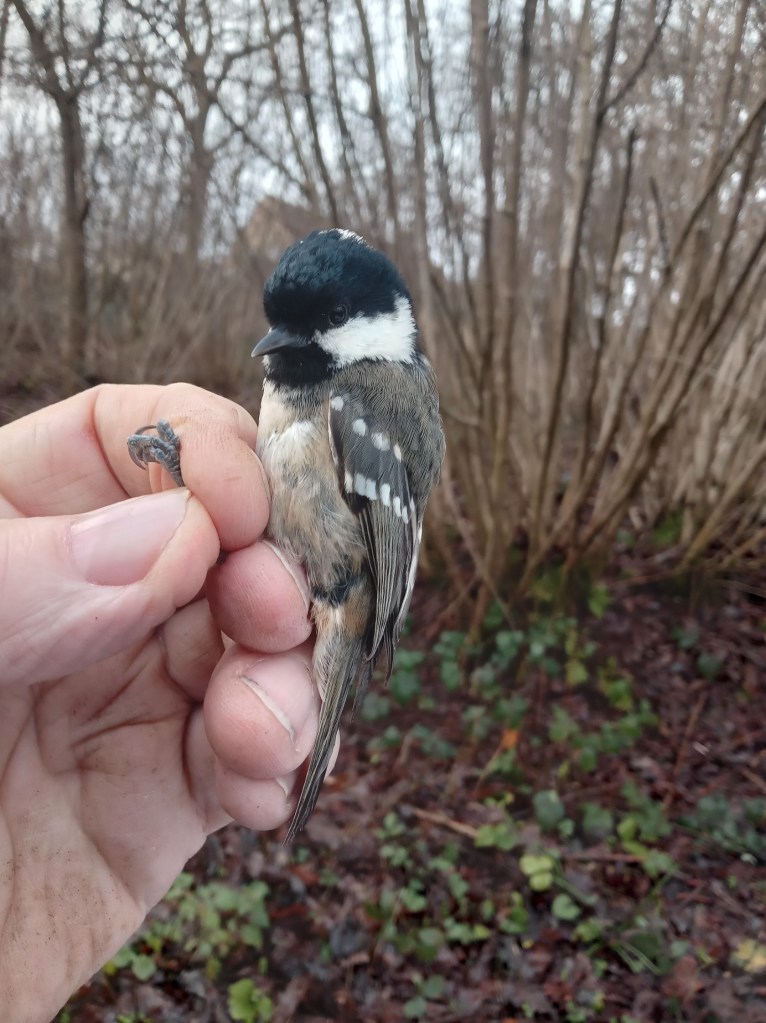
I was joined this morning by Rosie and Claire and then, slightly later, by Teresa and Andy. We set the usual nets in the places used for the last few sessions and I put on a variety of lures. It was a slow start with the first bird not out of the nets until 8:40. However, the next round delivered a small flock of Long-tailed Tits, a Goldcrest and a Wren. After that it went empty, four, empty, empty, three, empty and empty. I was getting pretty fed up with the lack of birds but then we had a surprising round of sixteen birds: mainly Great Tits, but our only Blue Tit of the day, a Coal Tit and three Goldcrests. However, we could only ring sixteen of the seventeen because one of the Great Tits presented like this:

A small Avian Pox pustule. It doesn’t look much, until you turn it around:

And then, its tail looked like this:

The pustule actually had a feather growing through it’s middle. It is the worst Avian Pox I have seen on a single bird. Needless to say, I didn’t put a ring on it and, after releasing it, I used copious amounts of anti-viral hand sanitiser before going near any other birds.

We did catch a few more birds after that, and ended up with a reasonable catch: Blue Tit 1; Great Tit 9(4); Coal Tit 3(1); Long-tailed Tit 5; Wren 1; Robin 3(1); Goldcrest 7(1). Totals: 29 birds ringed from 7 species and 7 birds retrapped from 4 species, making 36 birds processed from 7 species.

Not as good or as varied as the catch in October, with Redwing, Lesser Redpoll and Chaffinch missing from the catch. One upside though: only one Blue Tit to wreak havoc on our fingers! I will be setting up a feeding station there in the next week, so future catches will be larger but, almost certainly, mainly titmice.

Wind had been forecast for the day but it only really started getting up at just after 11:00. It was only affecting one of the rides but we decided to close the nets and take down at 11:30. We were packed away and off-site by 12:45 – a little slower than usual, but that was because I was letting the trainees do the bulk of the net take down, which is something that they need to know how to do.

Winter Ringing Project 2023: Session 1. Saturday, 11th November 2023

This is the second year of the BTO’s winter ringing project: a less constricted version of the breeding season Constant Effort Site scheme. The key differences are: fewer sessions further apart (eight sessions, two weeks apart) and recognition that supplementary feeding in winter can be necessary and is allowed. This year I have decided to use Somerford Common as the base now and going forward. On Saturday last I set up the feeding station. Originally I had planned to run the session on Wednesday, but my car had other ideas, breaking down again on Sunday evening. It took Ford Parts until Thursday to get the necessary replacement part, which scuppered that. Thursday afternoon I went over to site and topped up the feeders and cut the rides. It started to throw it down again just as I started clearing the last ride: so I got very wet.

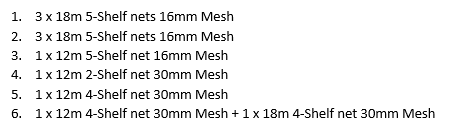
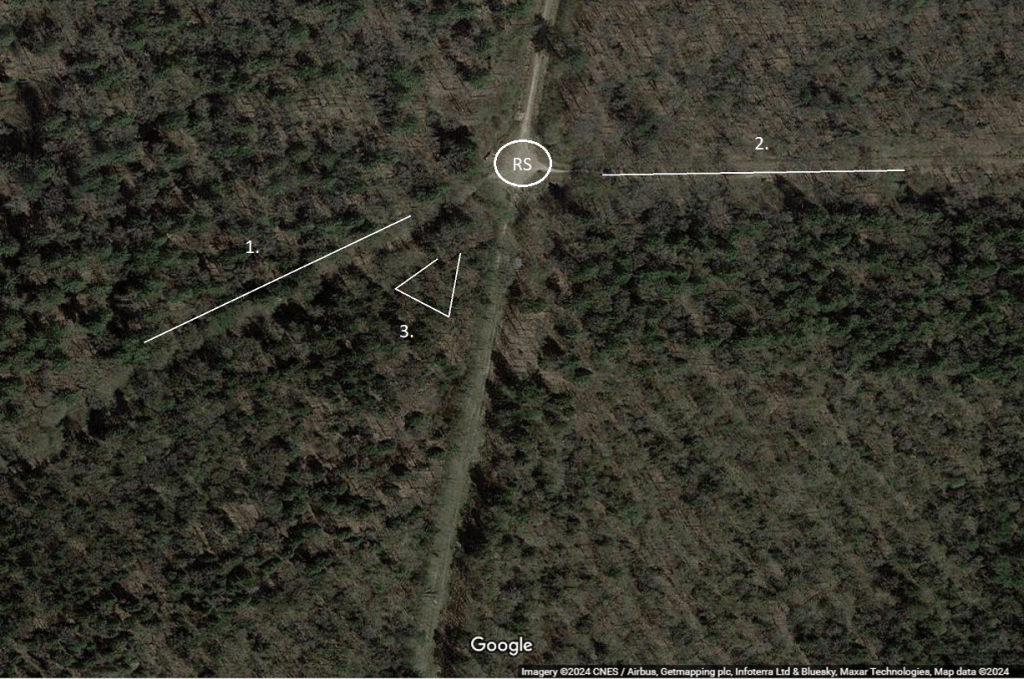
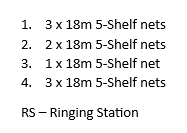
I was joined by Laura and Adam, Teresa and Andy at 7:00 and we set up the following nets:

We will be using these net rides for each of the next seven sessions. The feeding station comprises an eight litre seed feeder and a two litre peanut feeder. It has clearly been found by some of the local birds but I expect them to get busier. Unsurprisingly, the local Blue and Great Tits are already cashing in.

The birds started arriving as soon as the nets were open, and they just kept coming all morning. Our catch around the feeding station was primarily the aforementioned Blue and Great Tits but we also caught a couple of Marsh Tit and Chaffinch, plus both Goldcrest and Long-tailed Tit in those nets.

Net ride 4 produced a less Tit-focused catch with another nice catch of Lesser Redpoll plus, thankfully, a few Redwing, after they seem to have gone missing at my sites in the last month. The catch for the session was: Blue Tit 17(13); Great Tit 16(7); Coal Tit (1); Marsh Tit 1(1); Long-tailed Tit 4(2); Wren 2(1); Robin 1; Redwing 3; Goldcrest 3; Chaffinch 1(1); Lesser Redpoll 7. Totals 55 birds ringed from 10 species and 26 birds retrapped from 7 species, making 81 birds processed from 11 species.

With both regulars, Nuthatch and Great Spotted Woodpecker, missing from the catch, this was a good return. The Lesser Redpoll number is already our second best for November, and it is already our best October / November catch.

My highlights of the session were not what you might think: Teresa, on only her second session extracting birds, and Adam kicking off his extracting career, were both extremely good under pressure, by making sure that they didn’t allow themselves to be pressurised. They focused on what they were doing, asked for help when they needed it, and we had absolutely no issues as a result, despite a busy session. A big thank you to Laura who, whilst not wanting to be come a ringer, is a great helper and her extracting skills are first class: hopefully it is genetic! She and Andy also helped by scribing and with the setting up and taking down: valuable non-ringing members of the team.

We shut the nets as we carried out the last round: a Blue Tit and a Great Tit managed to get themselves into the closed nets before we could take them down. We ringed the Blue Tit and released the Great Tit, as it was one we had ringed earlier in the session. Despite that, we left site by midday, after a very satisfying session.

Webb’s Wood: Sunday, 5th November 2023

After an awful week of bad weather and a sick car, it was a relief to get out on Sunday morning. The forecast was for it to be dry but breezy. With the wind being forecast to come from the south-west, Webb’s Wood was the obvious choice, as the mass of the wood should act as a decent windbreak and the alternative was another trip to Ravensroost. I was joined by David, Teresa and Andy. We met at 7:00 and set the following nets:

I put on multiple lures for Lesser Redpoll, Siskin, Brambling, Redwing and Goldcrest. Two out of five worked. For the second session running there were no Redwing. This is a bit of a surprise: I am just wondering if the wet weather has prompted them to move on out of the Braydon Forest.

We had the nets open just before 8:00 and started catching immediately. Fourteen birds in the first round bade well for a good session, and it didn’t disappoint. It started with a small group of five Great Tits in nets 1 and 2 and a small flock of six Long-tailed Tits in net 4 plus a couple each of Coal Tit and Goldcrest.

Subsequent rounds didn’t reach that number, but the catching was regular and plenty interesting enough. Round 2 produced three Lesser Redpoll, and we caught one or two in most rounds thereafter. The turn around in the catch of this species in the wood is marked: it all dates from the massive thinning operation in the main beechwood in winter 2020 / 21. We ended up with a total of 11 in the session. With the encouraging catch of them in Ravensroost last Monday, perhaps we will be in for a good haul of the species this winter. The main catching site is at Somerford Common: which I hope to get to this week.

The list for the day was: Blue Tit 4; Great Tit 8; Coal Tit 6; Long-tailed Tit 7(2); Goldcrest 5(1); Chaffinch 1; Lesser Redpoll 11. Totals: 42 birds ringed from 7 species and 3 birds retrapped from 2 species, making 45 birds processed from 7 species.

There were a couple of additional highlights to the Lesser Redpoll: nice haul of Coal Tits and a cracking juvenile male Chaffinch. Chaffinch are usually only caught when there is a feeding station set up and we average fewer than four each year at the site. We have had four so far this year (three back in March, inevitably at the feeding station), so perhaps we might be lucky enough to have a better than average year for them as well. Ageing Chaffinch can be a bit of a challenge. The two central tail feather of juveniles are narrow and very pointed. However, if the lose their tail it will be replaced by adult type feathers, which leaves you relying on retained greater coverts. Fortunately, this bird very clearly had two retained greater coverts:

Juvenile male Chaffinch, Fringilla coelebs

As you can see within the circle, the two outermost greater coverts are paler than the inner greater coverts (the reflection from the camera flash on the next two greater coverts next to the old ones notwithstanding).

If ageing Chaffinch is difficult then doing the same for Coal Tit can be a nightmare for some people. The difference can be subtle, and some people just cannot see it. Fortunately, usually I can:

Juvenile Coal Tit, Periparus ater

This one isn’t too difficult, as the three old greater coverts are very obvious. Apart from being paler and browner the fringing on the OGC’s is yellowish, the fringing on the adult feathers is a pale grey. It is not always that easy to identify.

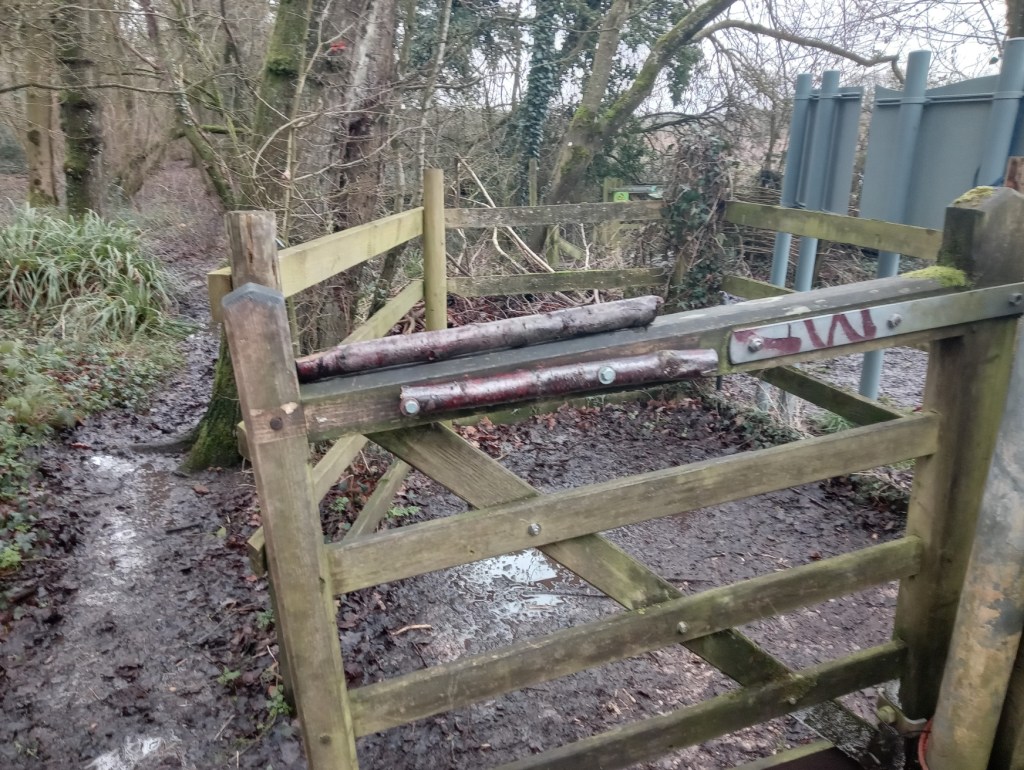
It was an easy, enjoyable session, although the wind did not conform to the forecast. In fact, it seemed to veer all over the place but, fortunately, it didn’t particularly impact upon our session. We started closing the nets at 11:30, extract the odd bird and close the nets as we went, processing each bird extracted before moving on to take down the next set of nets. As a result, we left site just after 12:45. One final point: on leaving the site last time the supporting pillar for the pole gate came away at the base. It took ages to get it all set up so it was as secure as possible. I reported it to Forestry England. Not only have they replaced that pillar but they have also repaired the padlock (it had an annoying piece of metal that kept coming down and blocking the key access) but also cleared and repaired the rest of the support structure (it used to be a real struggle to open and close – and it is now very smooth and easy). A big thank you to them for sorting it out so promptly.

West Wilts Ringing Group Results: October 2023

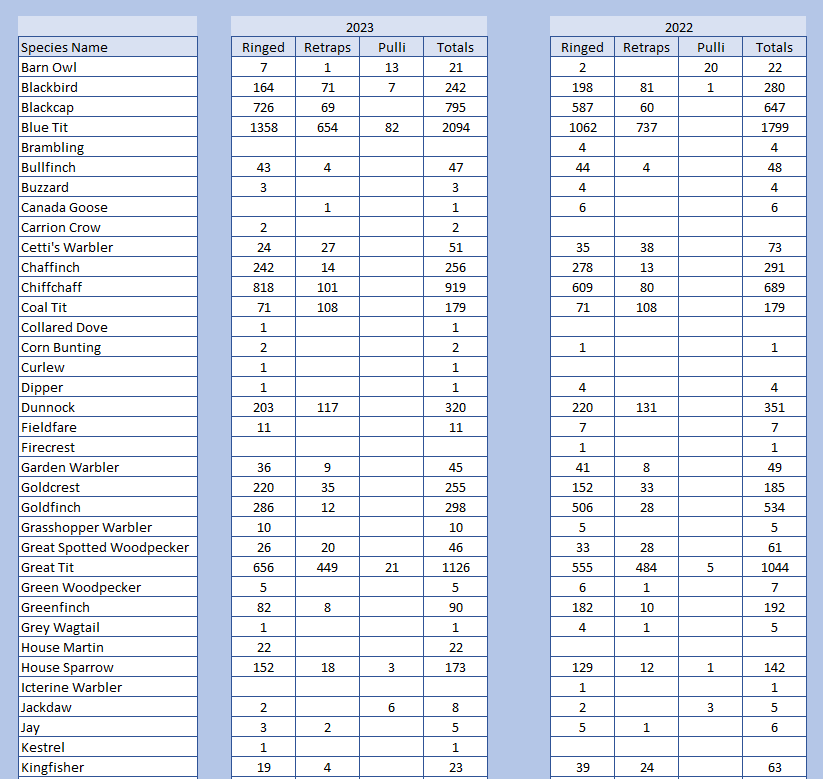
Another good month for the team, with our best October to date, and some excellent catches to boot.  The stand out has to be Jonny’s capture and ringing of a Lesser Black-backed Gull that he rescued from a bramble thicket at Langford Lakes yesterday.  Rob is the only other one of our group to have processed them in Wiltshire: three recaptured at Langford Lakes in February 2012. These had arrived from Heligoland, a North Sea island about 70 km north of the German mainland, rather than the Cotswold Water Park where there is a pretty decent roost.  Andy had a Fieldfare at his SPTA site.  This is actually our first October Fieldfare!  Most are caught in November: but this one turned up a day early!

image.png

As well as the two mentioned previously, added to our list compared to last year were one each of Grey and Pied Wagtails plus six Stonechat: three at Blakehill (including one that was so heavy that DemOn queried it), two at Andy’s SPTA site and one at Langford Lakes.

Missing from the list this October were Brambling (the two last year were the earliest we have caught in the autumn, and the first for Webb’s Wood), Jay, Kingfisher and Whinchat.  Disappointingly we have caught no Whinchat this year. For the second year running Blakehill Farm had plenty on site on migration but they managed to avoid my nets.

There was a huge increase in the number of Meadow Pipits caught: more than double last year.  But then, last year I didn’t get to ring Blakehill in October, where a reasonable proportion of them are caught.  There were significant increases in Blackcap (hanging on or just arriving?), Blue Tit, Chiffchaff, Goldcrest, House Sparrow and Yellowhammer.  Goldfinch numbers were well down but not sure why: the same sites, the same number of sessions.

Here’s to a good November (if it stops raining and the wind calms down)!

Ravensroost Recovery: Monday, 30th October 2023

The title is twofold: firstly, and more importantly, catches in the wood at Ravensroost have been pretty dreadful since 6th January 2022. That was a session boosted by a supplementary feeding station in place. Without that boost, this was our best session there for several years. The second meaning, without going into too much detail: I have been unwell, with depression. I had to decide how to handle that and being outdoors in the woodland is never a bad option. I arranged a session in Ravensroost Wood for Saturday, as a sick car had prevented me getting there on Tuesday and it was going to be too windy for the planned session at Brown’s Farm. Teresa and Andy came to help. We set the nets, caught and processed a retrapped Robin, and I then called a halt: I couldn’t face doing any more. I have to thank Andy and Teresa for being so understanding and helpful.

With the weather set to be dire for the rest of the week, I knew that I had to get back out and make sure that I could see it through. I decided to work solo, as I had to know that I could depend upon myself. As a result, I did not invite my usual weekday team along: I hope they will forgive me when they read about the session itself. In the event, Rosie came and helped me set up: we had things to discuss about some management changes being enacted for the woodland by the Wildlife Trust, which comes within her remit. The changes won’t affect our work there, but I needed to know so that I can plan and adapt accordingly.

The only slightly worrying event first thing was that, although most forecasts had it dry until the evening, as I was setting up ride 2 there were a few spots of rain, then a little bit of drizzle. Fortunately it only lasted for a couple of minutes, and thereafter the sky cleared and, once the sun was up, we had lovely blue skies for the rest of the session.

We set the following nets:

It was interesting from the start. Whilst we were setting the nets, and before the first round, there were large flocks of birds flying around the canopy of the woodland. There were a lot of Fieldfare all around, but we didn’t get so much as a smell of them near the nets. We noted several Tit flocks, particularly Long-tailed Tits. I was rather dreading being overrun by Blue Tits, especially after Rosie had left for work. Missing from the wood were Redwing. I set two lures along ride 2 for them but, for once, there was no response. That is a bit unusual.

The first couple of rounds produced half-a-dozen birds each. The second had five Great Tits: three juveniles and two adults – and I was rather expecting that to be the way it went: Blue and Great Tits making up the majority of the catch. How wrong I was! The last round that we did before Rosie had to head off to work, at 8:30, produced a lovely catch of 14 Long-tailed Tits, three Blue Tits and a Goldcrest. That was pretty much it for the Blue Tits, but not for the Long-tailed Tits and Goldcrests.

Rosie left after we had processed that round, it took a while. As she was leaving she noticed that there were a few birds in ride 2. I went to extract them, to be faced with a couple of Lesser Redpoll. I tried to call Rosie, so she could come and ring one of them, but couldn’t get a signal, so I had to do them myself. Next round I caught another. What was interesting was that none of them were caught anywhere near the lure and I was beginning to think that, perhaps, as sometimes is the case, the lure acts as a deterrent instead of an attractant. However, in my last round, just before 11:00, I did catch three right over the lure. I think the difference might have been an age thing: the first three were all juveniles, the second three were two adults and a juvenile – or it could just have been coincidence.

Lesser Redpoll, Acanthis cabaret

Six Lesser Redpoll is our second best ever catch of them at Ravensroost Wood. The best was in late November 2020 when we caught 17 at a feeding station. Other than that they have just been ones and twos.

As usual, Nuthatch were calling all around and I was thinking I would bring a lure for them next time. Of course the best lure isn’t a sound lure but a filled peanut feeder. That was one of the things I discussed with Rosie, as the Trust prohibited supplementary feeding last winter, because of HPAI. As they have relaxed that at other reserves, I was asking if we can set them at Ravensroost this winter. Hopefully yes, if Natural England will allow it, as the site is a SSSI. Still, who needs lures? Not only did I catch a male Nuthatch but I also caught a juvenile male Great Spotted Woodpecker. Definitely the noisiest bird you ever catch in a net!

Throughout the morning I was taking a couple of Goldcrest and / or Long-tailed Tit here and there, and they added up to a decent total by the end of the morning. The list for the day was: Great Spotted Woodpecker 1; Nuthatch 1; Treecreeper 1; Blue Tit 4(1); Great Tit 3(3); Long-tailed Tit 25(1); Wren 2; Robin 2; Blackbird 2; Goldcrest 10; Lesser Redpoll 6. Totals: 57 birds ringed from 11 species and 5 birds retrapped from 3 species, making 62 birds processed from 11 species.

It was a lovely session and has fully restored my appetite and put me back on an even keel. There were also a lot of interested and friendly people in the wood today, really keen to see the birds close up and to learn about ringing. One lady, visiting friends, having come up from Bristol, took down details on how to find a trainer from me as she was certain her daughter would be very interested in learning how to ring. Amazingly, every single one of the half-dozen dog walkers actually had their dogs on leads!

I closed the nets at 11:00, took down and was off-site by midday.

Somerford Common West: Sunday, 22nd October 2023

For the second time this week my first choice site became unavailable and so I had to go for an alternate. The plan had been to go back to Blakehill Farm for another clutch of Meadow Pipits plus testing the numbers of Redwing at what is one of our prime sites for them. At the beginning of the week it looked good but by Friday winds that were too high for the wide open spaces of Blakehill were forecast, so I decided to go to the western side of Somerford Common. News that Siskin and Lesser Redpoll numbers were increasing and that Common Crossbill have been seen at the site did influence my decision.

I was joined for the session by an unusually large team: ringers David, Adam and Teresa; helpers Laura, Andy and Mark plus Claire: also a ringer who has just moved into the area and is looking for opportunities to carry on her ringing activities. This was her first time out with us and a bit of an eye-opener as previously she has just worked alongside her trainer. She brought a lovely selection of chocolate biscuits / cakes, much appreciated by all of us. It was the largest group I have had out with me for ages: a shame that there wasn’t a proportionate response in the catch!

We met at 7:00 and set the following nets:

I set various lures: for Redwing and Lesser Redpoll on net 1; Redwing and Siskin on net 2 and Goldcrest, Lesser Redpoll and Siskin on net 3. Net 3 because, whilst like the others it is mixed woodland, this one is in an area with quite a high density of conifers.

Having set up the nets we went to set up the ringing station, only to find that I had left the ringing table at home. I decided to pop home and get it but my car stalled and refused to start again, so we had to make do with using my net boxes as a temporary solution. We started catching birds at 8:30, and caught a couple each round for the rest of the morning, until we packed up at 11:30. All nets caught, but net 3 caught most, mainly because the largest catch was of Goldcrest and that was as expected. Unfortunately, no sign of any Lesser Redpoll or Siskin in the catch. I wasn’t expecting to catch Crossbill. I have been told that the way to catch Crossbill is to watch where they go to drink and to set nets around that water source. Otherwise they are in the tops of the trees, way away from standard mist nets.

The catch for the morning was: Great Tit 3; Coal Tit 2; Wren 1; Robin 3, Redwing 1; Blackbird 1; Goldcrest 9(1). Totals: 20 birds ringed from 7 species and 1 retrap. I will be setting up supplementary feeding stations in the next couple of weeks, so expect to see a fairly substantial increase in catch numbers. Certainly not the biggest catch we have ever had but, to be honest, we had a really fun morning chatting in between rounds. I am lucky enough to have a good group to work with.

With so many hands, taking down was very light work and we were ready to leave site before midday. Everybody else left but my car decided still not to start, so I left site, with my car on the back of a lorry, at 14:30! All good fun!

Red Lodge Redpoll: Tuesday, 17th October 2023

The plan was to run a session in Ravensroost Wood this morning, so Miranda, Teresa and I met at 7:00 in the car park. Unfortunately the padlock on the main gate of the reserve was seized solid. Despite the padlocks being the same make and model from the same supplier for all Wildlife Trust reserves, and their providing the keys that should fit all, they don’t always, so I actually have two keys. Neither worked, whereas they always have before. It is far too much of a distance to haul all of our equipment to the ringing site, so I decided to head over to Red Lodge. Our last effort there got rained off before we had finished opening the nets (one of those days when the weather forecasts told us it would be dry!), so it was next on the list to be visited, after Ravensroost.

As a result, everything was running about 30 minutes later than planned, so we had the nets open just before 8:30 – which is when we started catching birds.

We set lures for a variety of birds, all autumn migrants / winter visitors: Redwing being the loudest. There were also lures for Siskin and Lesser Redpoll. Mind, the first three rounds were fairly indicative of what was to come: two Great Tits in round one, a Great Tit and three Blue Tits in round two and two Great Tits and a Redwing in round three. This is the earliest in the autumn that we have ever caught a Redwing, by a whole two days! That was back in 2014. Apart from that, the earliest we had caught them at Red Lodge in the autumn was mid-November. We ended up with a total of six, with the last one caught in our last round at 11:30.

The star bird of the morning, however, was this beauty:

Male Lesser Redpoll, Acanthis cannabina (photo courtesy of Miranda)

We catch very few in the Braydon Forest in the autumn, and have never done so before in October in Red Lodge. Webb’s Wood and Somerford Common are our more likely capture sites for this species in October.

Soon after this we caught a female Chaffinch. Not the first that we have caught in Red Lodge in October, but the first for five years. Again, a species we normally catch at the feeding stations in the winter months.

The list for the session was: Blue Tit 17; Great Tit 17(1); Long-tailed Tit 8; Redwing 6; Goldcrest 1; Chaffinch 1; Lesser Redpoll 1. Totals: 51 birds ringed from 7 species and 1 retrapped, making 52 birds processed from 7 species.

This is a very unusual catch for us. Obviously not the Blue, Great or Long-tailed Tits, but it is what is missing from the list: no Robin or Wren. I cannot remember the last time we had a proper session at Red Lodge where neither of these species were in the catch. Prior to this we had carried out 65 sessions in Red Lodge since 2013: 55 of those had either Robin or Wren or both processed during the session. It is over five years since neither species was caught in a session.

Somewhat more frustratingly, we had Nuthatch and Great Spotted Woodpecker calling all around us during the morning without catching any. But, the real icing on the cake (not the right term, but the right term would include the odd profanity) came as we were taking the nets down. The session had been forecast to be windy but, pleased to say that the nets were not affected until the wind really got going at 11:20, so we shut up shop at 11:30. As we were taking down net set 2, I heard a little “pitchu” call and a bit of a cackle, followed by several other calls and churring. At least three Marsh Tits basically saying “missed us”! I am sure those calls had a sarcastic edge to them!

We were away from site at about 12:30 after a thoroughly enjoyable session.

Breeding Season Review 2023

This year we have had quite an expansion in our monitoring of nesting birds in our area: primarily due to Jonny Cooper adding this functionality to his skill sets. All activities are carried out under licence from the BTO. Monitoring of Barn Owls and Stone-curlew are carried out additionally under Schedule 1 licences issued by the BTO on behalf of the appropriate government agency.

Introduction:

Having taken over the monitoring of the Barn Owl boxes in the north west of the county in 2018, following the retirement from doing so by the excellent Paul Darby and his team the previous year, we have since mainly focused on doing so.  However, with Rosie joining the Wiltshire Wildlife Trust in 2021, and joining my ringing team soon afterwards, she was instrumental in getting me to focus elsewhere, mainly due to the Swallows nesting in the Trust’s store rooms at Clattinger Farm.  Last year we started on monitoring those nests, as well.

Jonny Cooper has helped me with the Barn Owl boxes over the years and this year decided he would like to do his own thing. Primarily monitoring a number of titmouse nest boxes in the Trust reserve at Biss Wood.  There had been some nest recording in the wood in both 1989 and 1993, but it was opportunistic, not structured.  In order for him to pursue that, Jonny needed to get an endorsement added to his licence, allowing him to process hole / cavity nesting birds.  To help him achieve that, we spent a few sessions together at the beginning of the Blue Tit breeding season checking nest boxes together and processing any youngsters ready for ringing. As soon as he passed the threshold for that endorsement we sorted it out and he could carry on independently.  At the same time I specified Jonny as an “agent” for Barn Owl box checking.  This enables him to focus on the boxes in his area, around the environs of Chippenham and further south, whilst allowing me to focus more on the boxes local to me.

So, to the breeding season:

Barn Owls:

I spent last winter replacing a number of dilapidated owl boxes at my sites and erecting a number of new boxes at new sites in the area, and was hopeful that we would get some benefit from these.  Last year was excellent, we checked on 22 boxes. From those we had five successful Barn Owl broods, one brood that was predated at the newly hatched / naked young stage and one complete  failure after the three young were predated on the point of fledging, but 23 youngsters were ringed in the season.  Also making use of the boxes, we had one brood of three Jackdaw chicks ringed, two broods that fledged before they could be ringed and three broods of Stock Dove, with three ringed from two of the broods, the other fledged whilst I was laid up after back surgery.  Essentially, we had 13 boxes that were actively engaged in the breeding process plus there were two other boxes being used for roosting by adult Barn Owls.

This year we had 34 boxes to check. Unfortunately, none of the four additional boxes I put up over the winter attracted any breeding effort, although two were being used as a roost site by adult birds.  One of last year’s boxes was unavailable this season. The site had changed hands and I could not find the contact details for the landowner. Some of the boxes Jonny had taken over were active. We had six boxes that successfully fledged young, with a total of 14 chicks ringed.  Very different from last year.  It is almost certainly the influence of the weather. The previous two years had been excellent vole years. When checking boxes we were finding voles stashed in larders, no shortage of food and we had a single case of brood cannibalism. 

This year there was significant brood cannibalism.  Two of our earlier broods had four young in each box.  They were too small to ring when first looked at.  On returning to ring them a few weeks later, we found just two in each of the boxes.  Clearly the others had provided food for their siblings.  As well as the breeding boxes, at least six were being used by roosting adult birds, with five adult birds caught and ringed during the checking. Six of our boxes were used for nesting by Jackdaws.  We ringed six young from two of the broods, the others having fledged before we had the chance to ring them.  Six boxes had Stock Doves in occupancy. Two of those produced young that could be ringed and fledged successfully.  Of the others, one failed when the nest was predated, and the outcome of two of the other  sites could not be accurately ascertained.  Three of the boxes had Grey Squirrel dreys in them, one of which did produce a youngster: as I was clearing out the vegetation I heard a slight mewing sound, so stopped what I was doing and found this:

Grey Squirrel, Sciurus carolinensis, Kit

Four of our boxes, two at one site, showed squirrel occupancy.

So, not a great year for Barn Owls.  In fact, my most productive site over the last few years had no signs of Barn Owl breeding at all this year.  However, we had a total of 18 boxes actively involved in the breeding of various species, plus another six that were being used as roosts by adult Barn Owls.  It has to have been a bad vole year!

Hole / Box Nesting Passerines:

The bulk of this work was carried out by Jonny once he had his endorsement approved.  We have no comparisons with previous years because it is the first time any of the team have been monitoring these types of nest box.  Biss Wood had 21 nest boxes in situ.  Not all were boxes set up for titmice: as is often the case, boxes set up for Dormice were also used by them.  These boxes produced a total of 82 nestling Blue Tits ringed, plus three of the boxes produced a total of 18 Great Tit nestlings and, the icing on the cake, one of those boxes produced a brood of three Nuthatch nestlings. 

Alongside this activity, Jonny took over a number of Tree Sparrow boxes around the Maiden Bradley area: 147 of them spread across five sites.  The person who had been monitoring them over the last few years could no longer do so, so Jonny was asked to take them over. He took over later in the season but still managed to produce 50 nestling Tree Sparrows from 10 boxes and one box held a brood of 5 Wrens.

Tree Sparrow, Passer montanus, pulli (photo courtesy of Jonny Cooper)

Open Nesting Passerines:

This was something that I started working on in my local area last year.  I expanded my efforts this year, with the help of Rosie and Miranda, and Jonny continued his work further south in the county. 

Swallow:

Jonny processed 39 Swallow nestlings from ten nests spread over four sites. There was one nest failure, due to abandonment by the parents, in late July.  My team processed 30 nestlings from eight nests spread over two sites.  At our Clattinger Farm site we had two nests predated at the egg stage, and one nest in which the eggs were cold and either infertile or nest abandoned.

Swallow, Hirundo rustica, pullus (photo courtesy of Miranda Shirnia)

Blackbird:

Rosie drew my attention to two Blackbird nests at Clattinger.  Both were successful, with one producing four, and the other three, nestlings that fledged successfully.

House Sparrow:

For the second year running we had House Sparrow breed successfully in the same nest position as last year in one of the stables at Clattinger Farm.  This year we timed it better and managed to ring the three juveniles in the nest.

Robin:

For the first time we got to ring some Robin in the nest.  And what a nest! It was inside one of the stables at Clattinger Farm used to store tools, and the nest was built inside one of those plastic boxes in which hardware stores sell screws and nails.  They successfully fledged the four young we ringed.

Other:

Andy ringed two Stone Curlew young out on Salisbury Plain, after another season monitoring their breeding efforts.  There is a very narrow window for ringing their young, as they become active very soon after hatching.

In Summary:

Clearly the key difference between this year and last is the addition of Jonny’s efforts to the total and, to a lesser extent, the expansion of my teams activities to focus a bit more on nesting birds.

Thanks to all of the landowners who are involved in putting up boxes and allowing us access to carry out our monitoring and ringing work.

First Redwings of the Winter: Wednesday, 11th October 2023

After lots of reports of Redwing arriving in Wiltshire already this autumn, and Jonny catching nine at his Sutton Benger site on Monday, I decided to run a session at Somerford Common, one of my two best sites for the species. I have caught them this early in the month on three other occasions, with the earliest being at Blakehill Farm on the 9th October 2021. With it forecast to be windy, Blakehill Farm was a non-starter. Besides, I seem to have been there and written about it quite a lot recently, and hope to be there again this coming weekend. I also wanted to try out some different net setting at Somerford, in anticipation of the coming winter, and planning where to set the feeding station for when the weather turns.

Another reason for going to Somerford Common was that Teresa, who volunteers at the RSPCA Oak & Furrows Wildlife Rescue Centre, released a rescued (from the feline scourge) and recovered Siskin here a week ago. It was immediately joined by another small group of Siskin before moving off. I wanted to see if they were still in the area.

I was joined for the morning by Miranda and Teresa and we set the following nets:

Nets 1 to 4 were all single 18m 5-Shelf nets. Net 5 was an 18m net + a 89m net, both 5-Shelf nets. I set lures for Redwing on 5, Siskin on 3 and a mix of migrants on the other nets. After a couple of hours with no activity on net 3, I swapped the lure over with the one on net 2. Still to no avail on the Siskin front. The ringing station was set up behind a hedgerow, out of sight of the various nets.

Unlike either Saturday or Sunday, it was a slow session, with nothing like the activity levels we had over the weekend. However, round one produced two Redwing. To quote Hannibal Smith “I love it when a plan comes together!”. That said, apart from a flock of about 25 that flew over mid-morning, those were the only Redwing that we caught.

It is hard to complain though: the next round produced three Marsh Tits and a Goldcrest. We have ringed 15 Marsh Tits so far, year to date, which is our best for four years. This should set us up nicely for 20+ by the end of the year.

It was a pretty varied catch for this time of year in a woodland setting. However, we didn’t see or hear any Great Spotted Woodpecker or Nuthatch, which is most unusual for this particular site. Mind, if that is unusual: to not see, hear or catch a Blue Tit is a real rarity in one of my woodland sites. We did catch a few Great Tits, one of which was extremely reluctant to let go of my hand:

Juvenile male Great Tit, Parus major

That bird sat like that, back to my palm, holding on to my finger and thumb for a couple of minutes. Certainly long enough for me to open my phone, enter the security pin, select the camera icon and take a couple of photos, and then it sat there some more before deciding to leave. I have never had an experience like it before!

Talking of experiences, we caught an interesting (to me, at least) juvenile Treecreeper. Ageing a Treecreeper is quite simple: each of the primary coverts on an adult are either entirely brown, or have a tiny pale cream pinpoint at the tip. Juveniles have quite a pronounced tear drop shaped cream spot at the tip of each of the primary coverts. The juvenile we caught today rather took this to extremes:

Primary coverts of a juvenile Treecreeper, Certhia familiaris

Our weather recently has been bouncing between extremes of heat, strong winds and rain, occasionally torrential. This has an impact on parent birds ability to feed their young. As a result, feather development in young birds can reflect those difficulties, with distinct barring as the feather growth is interrupted or held back by lack of food. These are called “fault bars”. We found an excellent example in a Blackcap we caught towards the end of the session. When we looked at the tail feathers the barring was very obvious:

Tail feathers of a juvenile Blackcap, Sylvia atricapilla

Fault bars can be zones of weakness, and one can often find feathers that have broken along one such zone.

The list for the day was: Treecreeper 1; Great Tit 4; Marsh Tit 2(1); Long-tailed Tit 1(1); Wren (1); Robin (1); Redwing 2; Blackcap 1; Goldcrest 6. Totals: 17 birds ringed from 7 species and 4 birds retrapped from 4 species, making 21 birds processed from 9 species.

Once again, Goldcrest was our top species for Somerford Common, just as it was back in September. It wasn’t the busiest session but it was thoroughly enjoyable. Given that the weather forecast for the week had shown Wednesday to be wet, windy and no chance of ringing. By yesterday the forecast had changed to it being windy and wet from midday. Then this morning it had changed again to windy with the rain coming in mid-afternoon. The wind was nothing like as strong as forecast, and the woodland protected the nets from what there was, so the weather did not impact on the session at all.

One of the more interesting things we found this morning were these:

Turkey-tail Fungus, Trametes versicolor

We took the nets down in stages, finally packing everything away by 12:30. The rain finally arrived at 19:30 this evening!

Ringing Demo: Blakehill Farm, Sunday, 8th October 2023

After last week’s ringing demonstration for the Malmesbury & District Natural History Society, today it was the turn of the Swindon Wildlife Group (SWG), affiliated with the Wiltshire Wildlife Trust. The last time we did a ringing demo for SWG at Blakehill Farm was on the 20th August last year. Unfortunately, we only caught eight birds! They were quality and included Blackcap, Whitethroat, Lesser Whitethroat, Willow Warbler and, especially, only the second Tree Pipit ever ringed at Blakehill, and the first time any of the SWG had seen one there. So they were delighted. However, with it being the tail end of the Autumn migration, I was concerned that we might have a repeat but without the redemption of such a special bird for the site. Fortunately, although there was no Tree Pipit, I need not have worried.

There is always a risk with setting up a session at Blakehill, as it is so exposed to any wind. The forecast was for it to have light wind, with the gusts getting stronger over the course of the morning. They got it wrong again: only this time it was to our advantage, as it remained flat calm until 11:45, soon after we had started to shut the nets and take down.

I had the luxury of a large team out to help me. Ringers represented by Rosie, Miranda, Steph, David, Adam and Teresa. Helpers by Laura, Andy and Daniel, and last, but by no means least, Steph’s daughter, Bea, whose role was to keep me smiling! Which she did admirably.

We met at 6:30, with the attendees due at 8:30, and we set the following nets before they arrived:

The neighbouring landowner kindly allowed us to use his field as a car parking area for the morning. Which, with the size of our team, plus the SWG team and then the twenty attendees, was very helpful.

The first bird out of the nets was, as seems to be de rigeur for this site, a Wren. Our first round proper was an indication of things to come: two Linnet and one each of Meadow Pipit, Reed Bunting and Stonechat. Linnet numbers seem to have declined quite precipitously at the site, as Robin Griffiths, volunteer warden and highly knowledgeable, incessant observer, of all wildlife in this area, commented when we caught these two. Our ringing records do bear this out, with just two caught in 2020 and 2021, none last year, five in 2019, 16 in 2018, 25 in 2016 and 42 in 2015! To be fair, 2017 only produced 3, but the overall trend is significant decline.

Linnet, Linaria cannabina

The bulk of the catch came between 8:00 and 10:30, which meant that the attendees certainly got their money’s worth. Our Mipit triangle delivered in spades. We had our usual autumnal fall of Reed Bunting. September and October are our best months for catching these birds at Blakehill. This year is no different.

At 11:00 we were delighted to catch another two Stonechat: a juvenile female and a stunning adult male.

Adult male Stonechat, Saxicola rubicola

Towards the end of the session we had a small fall of three Chiffchaff. It is hard to know whether they are genuinely on migration out of the country or planning to overwinter in the Cotswold Water Park, as many do.

Juvenile Chiffchaff, Phylloscopus collybita

We also caught two Blackcap. At this time of year they would probably be late departing migrants that have fledged here this summer: both were juveniles. The female weighed in at a decent 20.3g. Fledging weight is usually about 16.5g, so I would suggest that she is definitely fattening up for the journey south. The male weighed in at 18.9g, so is probably doing the same. If it was a recently arrived migrant, as ringing has shown that we have a winter population migrating to the UK from central Europe, I would have thought it would have used up some of its fat reserves and would weigh less than that. I could be wrong, of course.

The list for the day was: Blue Tit 17(2); Great Tit 4; Long-tailed Tit 1; Wren 3; Dunnock 2; Meadow Pipit 47; Stonechat 3; Robin 2; Blackcap 2; Chiffchaff 3; Starling 1; Linnet 2; Reed Bunting 17. Totals: 104 birds ringed from 13 species and 2 birds retrapped from 1 species, making 106 birds processed from 13 species.

The thing I find odd about the Blue Tits we catch at Blakehill Farm is that the majority are not caught in the hedgerow, but in the sparse bushes out on the plateau. My natural thought about Blue Tits is that they are woodland and garden birds, not birds of the wide open spaces.

The session was a huge success with the attendees. A large number of people were shown how to safely hold and release a bird. I like to teach people how to do that, you never know when it might be required. We were packed away and off site by 13:00. With so many birds, all of the ringers got to ring a decent number of birds, which is not always the case at a ringing demo, as often it falls just to me to do the processing. So everybody went away happy.

The photos of the Stonechat and the Chiffchaff were courtesy and copyright of Teresa.