With Saturday being a wash out I was rather desperate to get out so, despite a weather forecast that said it would be gusting to 40mph, with a base speed of 20mph, I decided to risk it and head for Lower Moor Farm. I was joined by Rosie and Teresa on the ringing side, Andy to help set up and, for the first time, Emily and Justine. Emily has done a little ringing whilst at University and Justine is a raptor specialist, working with a group on the west side of Salisbury Plain, who has done virtually no mist netting and, as a consequence, no small Passerines or near-Passerines. This was an introductory session for both of them.
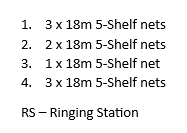
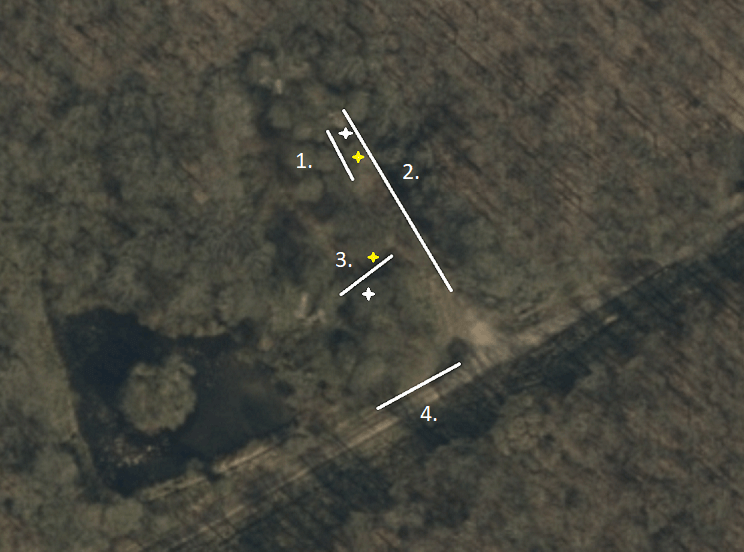
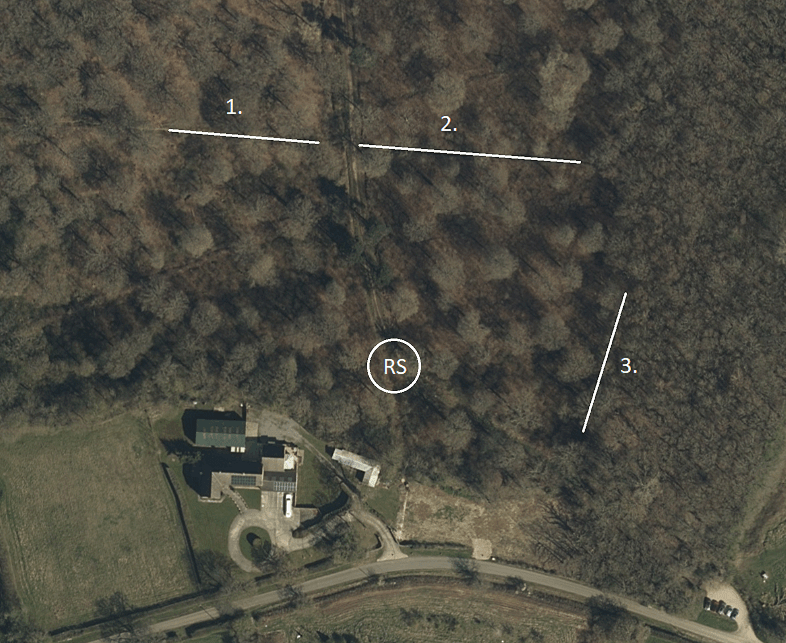
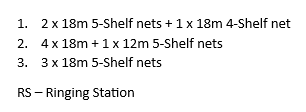
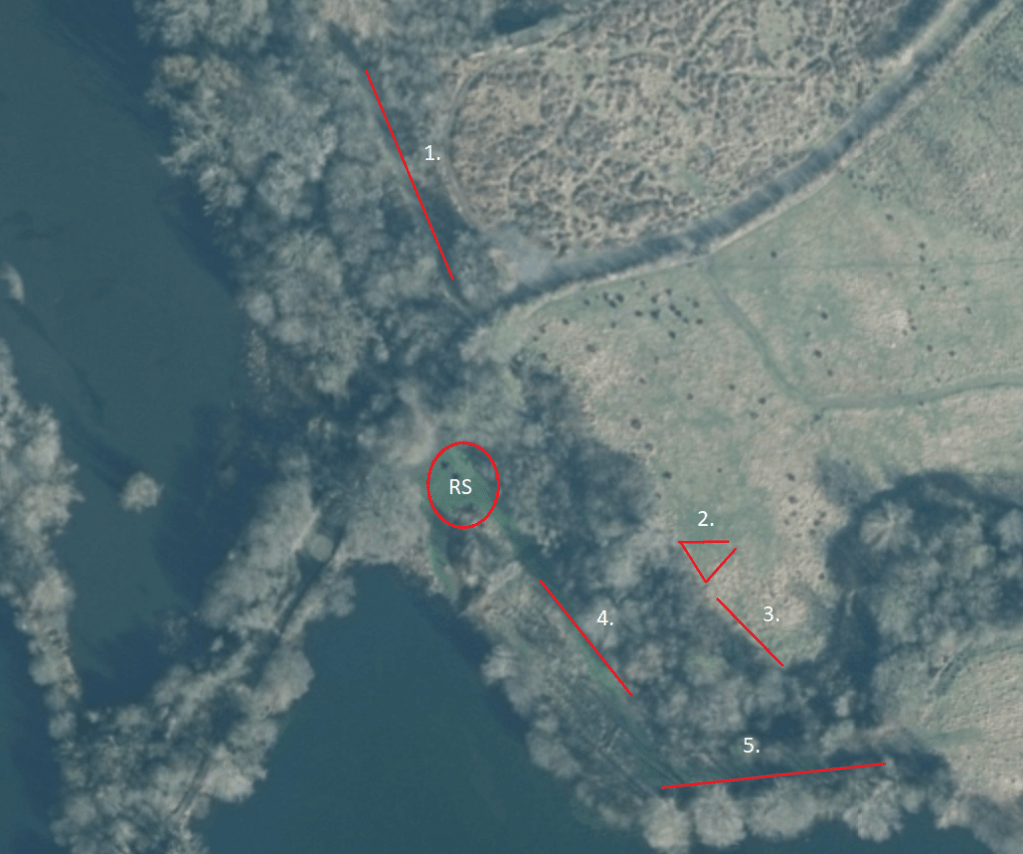
We met at 7:30 and set the following nets:
With two teams setting up the nets they were up and open quite quickly. As forecast, it did start out quite windy but, fortunately, the gusts were intermittent and the gaps between gusts got longer as the morning progressed. In the event it meant there was very little interruption to the ringing between 9:00 and 11:00 and we had a reasonable catch for this site for this time of year. We don’t have feeding stations set up there, so I don’t expect the level of catch like we experienced at Red Lodge last Friday.
The list for the session was: Nuthatch (1); Treecreeper 1(1); Blue Tit 4(3); Great Tit (1); Long-tailed Tit (2); Wren (1); Redwing 1; Blackbird 2; Goldcrest 4(1); Bullfinch 3. Totals: 15 birds ringed from 6 species and 10 birds retrapped from 7 species, making 25 birds processed from 10 species.
Our run of Bullfinch captures continued, with another three ringed this morning. Unfortunately, a fourth had to be released unringed as, like several of the Chaffinch we have caught recently, it had early signs of the Fringilla Papillomavirus infection on its legs. We did have a couple of males this time:
Male Bullfinch, Pyrrhula pyrrhula
One of the most beautiful of our resident birds. Alongside these, we had another small catch of Goldcrest: much to Justine’s delight, as she got to ring her first of the species. She also got her first experience of ringing / being bitten by Blue Tits. As someone used to dealing with Kestrels, Barn and Tawny Owls, she was somewhat surprised at how bitey, and how painful, they can be.
Emily also got to experience Blue Tits for the first time and also her first Bullfinch.
With the wind finally getting strong again, we closed the nets at 11:30 and took down, leaving the site just after midday. All in all, a small but enjoyable session and a couple more people interested in doing more bird ringing with me.
I had planned to run this session on Thursday but, with rain forecast between 7:00 and 9:00 that day, I moved it to Friday. The intention also was originally to run it at Somerford Common, as part of the winter CES plan. Unfortunately, moving it to Friday meant that Miranda couldn’t make it, leaving just myself and Teresa. Although Teresa is making excellent progress as a new trainee, I thought that the potential for an 80+ bird catch would be pushing her limits a bit. So, I swapped Red Lodge from Saturday to Friday, knowing that I have a full team out tomorrow to do Somerford Common, and, having only set up the Red Lodge feeding stations on Tuesday, I thought it would be a lot quieter and less pressured for Teresa.
We set the following nets:
We met at 7:30 and had the nets open by 8:30. By 9:00 the nets were full. So much for a quiet morning! The pair of us got on with it and extracted the birds as quickly as we could. In order to ensure control, we shut each net as it was emptied. It was, of course, an absolute Tit-fest: primarily Blue and Great Tits.
The list for the day was: Treecreeper 1; Blue tit 27(3); Great Tit 15(7); Long-tailed Tit 1(1); Coal Tit 2; Robin 1; Goldcrest 1; Chaffinch 2. Totals: 50 birds ringed from 8 species and 11 birds retrapped from 3 species, making 61 birds processed from 8 species. We did have a third Chaffinch but it had scaly-leg syndrome, so I just released it. There was also a third Coal Tit but he went a bit droopy on me, so I did my usual: popped it in a bag and put if down my front, against my skin, to warm it up. I am delighted to say that it did the trick. In fact, it did the trick so well that, as I went to take it out of the bag, it escaped my grasp and flew off!
It was hard work and, although the ambient temperature didn’t drop, a cold breeze did get up, I got cold, and so we never did reopen the nets: 61 birds caught in 75 metres of net with no lures playing was way more than I was expecting. I was impressed at Teresa’s composure, given that this was only her fourth or fifth session actually extracting birds. She just got on with it, asking for help where necessary (which wasn’t very much).
We packed up and left site soon after 11:00 after a much busier session than expected.
As luck would have it, on the only decent day since our freezing session on the 2nd December (Wednesday of last week) I had a major family commitment (mother’s 93rd birthday, absolutely couldn’t be missed). Friday was too windy and the rest of the time was wet, windy and totally miserable so, benefit of being retired, I arranged for a session at Webb’s Wood for Monday morning as the weather was looking possible.
I was joined for the session by Teresa, Laura and Andy. Laura and Andy helped setup and take down, Andy scribed, Laura extracted and Teresa did a bit of everything except scribing. We met at 7:30. The drive up to the ringing site was fun: several Robins and Song Thrushes and two Woodcock were quick to move out of the way. We did not catch any Robin or Song Thrush in the session (I wasn’t expecting to catch Woodcock, so wasn’t disappointed). Missing out on Robin is most unusual: since I started ringing at Webb’s we have managed 69 sessions and Robins have been caught in 65 of those sessions. So, an unusual missing species.
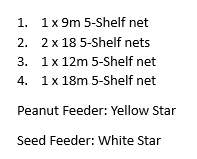
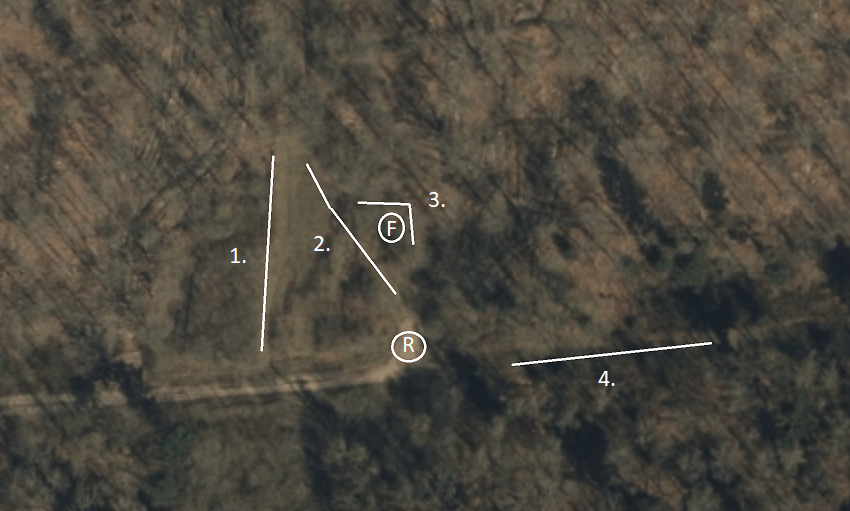
It was pretty windy when we got to the ringing site and, at first, I was unsure whether we would be able to set all of the intended nets. However, after setting up two net sets in sheltered areas, the wind dropped and I could set all of the nets that I had planned. That included two nets around the feeding station that I set up last week, before the weather turned horrible. The set up was:
We had the nets open by 8:15 and I put a number of lures on the net rides: one to three had mixed finch calls on the lures (Lesser Redpoll, Siskin & Brambling) whilst ride four had Redwing and, from 10:00, Goldcrest, Firecrest, Long-tailed Tit & Chiffchaff). Things didn’t actually get going until 9:00 and, apart from the lures, it was very quiet, with very little other bird noise about. However, at 9:00 the Latvian love song did its job and we had three Redwing in ride four, which was followed 15 minutes later by a female Bullfinch. This is our fourth Bullfinch ringed in the last four weeks: all of which have been female! Where have all of the males gone?
Whilst Teresa was processing this bird we couldn’t help but notice a large flock of small birds flying around the tops of the trees around the ringing station. It became clear that they were Lesser Redpoll responding to the lure and, sure enough, they came lower and started to hit the nets in rides one and (mainly) two. We sat back to see how many were going to catch. By 9:30 we decided it was time to get them out: 15 Lesser Redpoll and three each of Blue and Great Tit. The next round produced another three Lesser Redpoll. That was it with that species, until our last round at 11:30 when we ringed another one and retrapped two from our last Webb’s Wood session on the 5th November. It is good to know that they are staying around. The 15 in one haul is our largest individual flock catch of Lesser Redpoll and the 21 processed is our largest in any one session in the Braydon Forest. The previous largest session catch was 20 on 5th December 2021, with a single largest haul of 11 birds.
The list for the morning was: Great Spotted Woodpecker 1; Nuthatch 1; Blue Tit 9(4); Great Tit 8; Coal Tit 1; Redwing 3; Chaffinch 1; Lesser Redpoll 19(2); Bullfinch 1. Totals: 44 birds ringed from 9 species and 6 birds retrapped from 2 species, making 50 birds processed from 9 species.
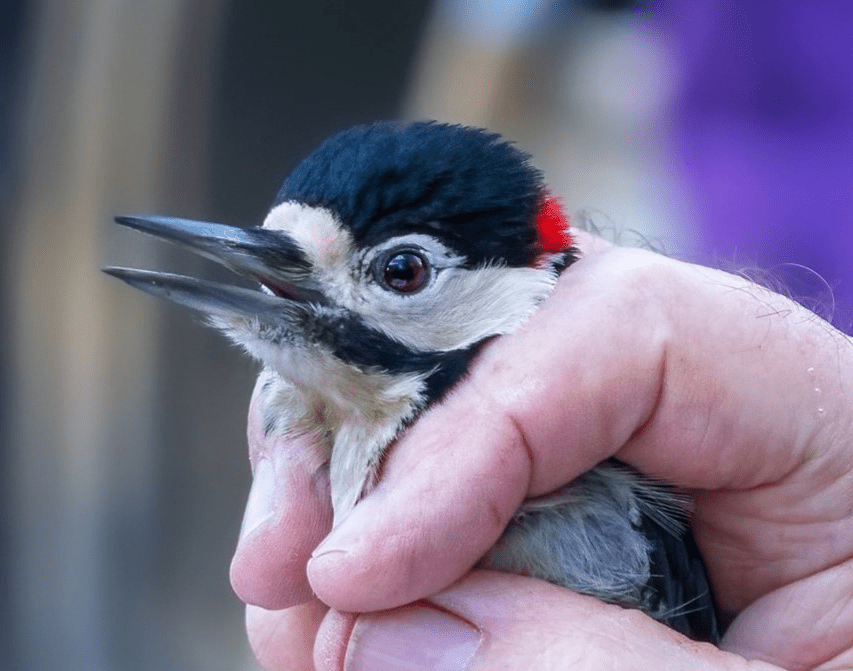
What is remarkable about this catch is the absence of any Goldcrest, Robin or Wren in the catch. Teresa’s highlights were the Nuthatch that she processed and this beauty:
Adult male Great Spotted Woodpecker, Dendrocopos major (photo courtesy of Teresa)
This has been our quietest year yet for this species in the Braydon Forest: only our ninth this year: about 75% of the average annual catch.
We did catch three Chaffinch but, unfortunately, the two that I took out of ride four were badly infected with Fringilla papillomavirus and I released them unringed before applying liberal quantities of antiviral hand wash so that there was no chance of passing the virus on to other birds.
We missed out on a Woodpigeon that hit the net, settled in the pocket briefly, but then extracted itself and got away. We always heard and saw Jay and Raven flying around. There were also two sightings of Muntjac and, somewhat later, two rifle shots. As, on leaving the site, we found that the gate had been locked our assumption is that the shots came from one of the stalkers Forestry England use to control deer numbers. I will be having a chat and asking FE to tell the stalkers to leave the gate open when we are on site. Our ringing site is a long way from the car park and should, for whatever reason, we need the attendance of a medical unit they will have cut off access.
The wind got up again at 11:00, so we started closing the most exposed and taking them down. Everything was packed away by midday and we left site soon after (soon after I had opened the gate for the gang to get out!). I then spent another 30 minutes visiting the other Forestry England sites that I ring at, topping up the feeders there. It was nice to see some Crossbills flying around at both of my Somerford Common sites. If only! They don’t respond to lures particularly, but needs must! We will be there on Thursday, so fingers crossed.
With the weather forecast for sub-zero temperatures, but with winter CES session 3 scheduled for this morning, I decided to got to site to see what the conditions were like. Fortunately, it felt warmer than forecast, probably because there was no breeze, and I determined that we could go ahead with the session. I was joined by Ellie for the morning. I knew that a couple of my other trainees were unavailable and that others are currently at the early stages of learning to extract. Fortunately, Ellie is my most experienced trainee, C-permit holder and extremely competent. As the key in cold conditions is to get the birds out of the nets as soon as possible, and to increase the number of checks on the nets to minimise exposure, that can be hard to do with inexperienced trainees, as you frequently have to step in to help them both in extracting and processing. Once in the bags the birds will be fine, but you don’t want them hanging around in the cold in the nets. Equally, in order to be able to process birds efficiently, and get on with net rounds in a timely manner, experience is key. In the event, I am pleased to say that none of the birds we extracted and processed this morning showed any signs of cold stress, and none had to spend time being warmed up before release.
Despite keeping the nets shut until they were all erected, we did have three birds in the nets before they were properly opened: a retrapped Marsh Tit and Great Tit and an unringed Chaffinch. Subsequent rounds were a bit busier but, around about 10:00, a freezing mist started to affect the nets, they became highly visible with a coating of rime, and the catch dropped right away. We closed the nets at 10:30 and attempted to take down. The nets were heavily rimed, frozen and very heavy and bulky. It was impossible to actually put them back into their net bags, such was the additional volume created by the coating of ice. Instead we tied the ends and then bundled them into our large carry bags. Back at the car I put them into the carry box I use for my bird bags. They are currently sitting in that box, in my kitchen and, four hours later, are still thawing out.
In the just over two hours we had the nets open we caught 34 birds: Nuthatch 1; Blue Tit 1(5); Great Tit 2(10); Coal Tit (3); Marsh Tit (4); Wren (1); Robin 1; Redwing 4; Blackbird 1; Chaffinch 1. Totals: 11 birds ringed from 7 species and 23 birds retrapped from 5 species, making 34 birds processed from 10 species. Not bad for such a short session.
It was good to ring our second Nuthatch in consecutive sessions for the site. That takes it to four ringed for the year: the average for this site. The four recaptured Marsh Tits were all ringed as juveniles at this site this year. In fact, two were ringed in CES 1 and one in CES 2. We did catch a second Chaffinch but, unfortunately, it was suffering with Fringilla papillomavirus (FPV), the legs were showing the warty excrescences and it could not be ringed. We did have a brief discussion about whether there could be some method for identifying individuals so that survival with this condition could be monitored. I have, in the past, weighed birds with FPV, and they always fall within the normal weight ranges, but it would be interesting to see how this disease affects survival.
With everything packed away we were off-site by just after 11:00, heading off for a well-deserved warming up.
A slightly unusual month for us this November. We just did not get the sessions in that we would normally expect. No doubt the weather had a large part to play. Also, my car deciding to break down regularly, leaving me stranded in the middle of Somerford Common and Lower Moor Farm on separate occasions, and then being off the road for a week whilst it was sorted out, didn’t help.
On the face of it we processed over 300 birds fewer than in November last year. However, we did nine fewer sessions than last year. So our average catch was two birds higher, and that was because the average retrapped was a couple of birds higher. On the face of it, one key difference this year, in my neck of the woods at least, is that I have only one feeding station set up (at Somerford Common, for consistency in the winter CES) whereas last year I had three set up in October. That said, my catch this year (310 birds processed in 7 sessions) was only 48 fewer than last year (358 in 9 sessions) – and averages out at 44 birds per session as opposed to 38: perhaps I need to rethink my feeding strategy!
We did have slightly less diversity in the catch this year: 30 species processed versus 33. Missing from the catch this year were Blackcap, Great Spotted Woodpecker (somewhat surprisingly), Green Woodpecker, Stonechat and, (totally unsurprisingly) the Merlin that Jonny caught this time last year. We did, however, add Cetti’s Warbler and Sparrowhawk to the list compared with last year.
Notable differences are: the huge reduction in Redwing caught this year compared to last, and the increase in Lesser Redpoll this year compared to last. All Lesser Redpoll, so far, have been caught in the Braydon Forest.
This week’s session was scheduled for Ravensroost Wood. As the local volunteer group carry out their works on a Wednesday, and ne’er the twain shall meet (we all get on fine – just too many vehicles), we went in this morning. I was joined by Rosie, Miranda and Teresa at 7:00. I decided to try a new net position (it caught two birds, I won’t try it again), which turned out to be the only one that wasn’t ankle deep in mud!
Rides 1 and 2 were incredibly muddy and, as is my wont, I managed to become intimately involved with it, tripping over a guy rope and measuring my length in the mud. As I had a bird attached to the carabiner around my neck, and protecting that was my main concern, there is not a lot you can do to fall elegantly and minimise the mud spatter.
The first round started nicely, only five birds, but two Nuthatch and a female Bullfinch alongside two retrapped Great Tits ringed at my previous session there. Round two was somewhat larger, at nine birds. Key amongst them in the catch was a Marsh Tit. The eighteenth ringed so far this year, that this was followed three rounds later by our nineteenth means that this year is looking good for the species in the Braydon Forest. As I have done very little ringing in Ravensroost Wood this year, and all of it in the eight-year coppice area, that I have ringed four there (0ne adult, three juveniles) this year is quite surprising. My next session will be at the north end of the wood to see whether we can increase that number.
Between 9:00 and 9:30 we captured four Goldcrests, but none afterwards, which was a bit of a surprise as they are usually absolute suckers for the lure. Talking of birds that come to the lure: we did actually catch a Redwing immediately over the lure. In that round we caught the second Marsh Tit and two Lesser Redpoll.
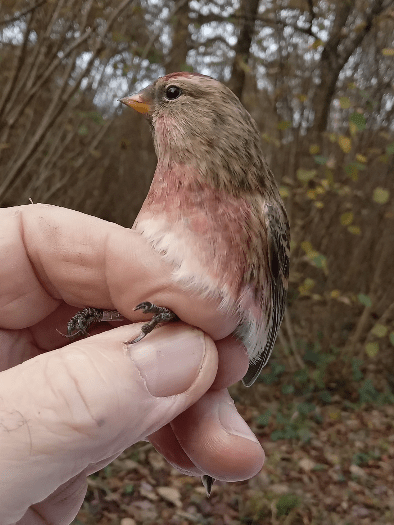
At 11:00 we were joined by one of the Wiltshire Wildlife Trust’s well-being groups. As luck would have it, that was our only empty round of the morning. We agreed that if we caught anything in our last round I would give them a shout so they could come over and I could show them what it is all about. Fortunately, we caught a Blue Tit, a Great Tit and this little beauty in that round, so we did have something to show them:
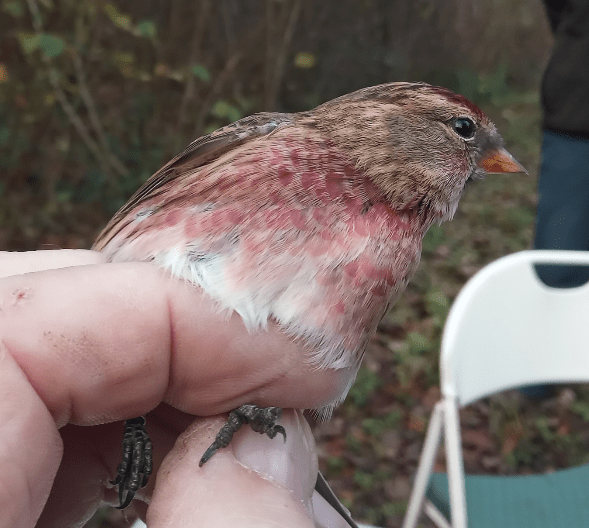
A beautifully marked juvenile male Lesser Redpoll, Acanthis cabaret.
Everybody was wowed by it. I was surprised at how well marked its plumage is. It was definitely a juvenile: the tail tips were very pointed, the classic identifier.
The list for the day was: Nuthatch 2; Blue Tit 4; Great Tit 2(2); Coal Tit 2; Marsh Tit 2; Long-tailed Tit (1); Wren 1(1); Dunnock 1; Robin 3; Redwing 1; Goldcrest 3(1); Lesser Redpoll 3; Bullfinch 1. Totals: 25 birds ringed from 12 species and 5 birds retrapped from 4 species, making 30 birds processed from 13 species.
I am quite surprised at the number of species, given the size of the catch, for this site. Even at my last session here, with 63 birds caught, it was 11 species, which was the most to date at that time.
Having finished my mini ringing demonstration we did the last round, closing the nets as we went: no more birds so we started taking down at about midday and were away from site by 12:45.
This is the first time that I have managed to get to Brown’s Farm this year. It seems that every time I have planned to go either the weather has turned sour, the car has broken down or I have been ill. Weather has been the biggest barrier: despite excellent hedgerows, the site is at the top of Postern Hill, just south of Marlborough, and any wind and it is unworkable. Windy conditions seem to have been a dominating factor in our local weather for the last three years. Last night things looked like I might have to cancel, but a couple of Imodium Instants and I was ready to go – so to speak! Just as well really, as I was being joined by David plus Laura, Mark and their two boys for the session and I really didn’t want them to miss it. We met at 7:15 and set the following nets:
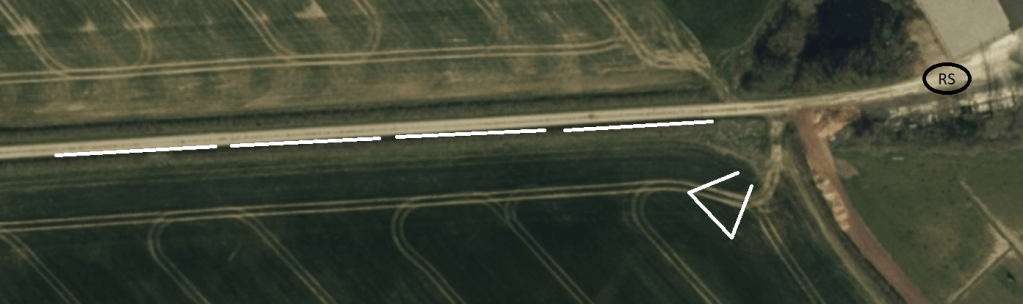
These are 4 sets of 2 x 18m 5-Shelf nets plus the Mipit triangle. To be honest, this was not where I had hoped to set my nets but the track down to the usual site, alongside the game cover, was impassable for our vehicles.
This time of year I expect to catch 35 or so birds at the site, irrespective of in which area I decide to set the nets (36 last October and 35 in November). We set the Mipit triangle more in hope than expectation. In the event we didn’t catch any. After the blank at Lower Moor Farm Friday before last, it rather looks as though they have moved on from this area.
The weather was cold when we arrived: bang on freezing point, so there wasn’t a lot of movement early on. As it began to warm up, after 9:00, we hoped that there would be an increase in avian traffic. Unfortunately, it didn’t happen.
Once the nets were set I tracked back to put the lures on the net rides: Meadow Pipit in the triangle and a mix of Yellowhammer, Linnet, Reed Bunting, Redwing and Brambling along the eight 18m nets. In the end net I extracted a juvenile male Yellowhammer. Unusually, I decided that I would process the bird: my first of the year. We ended up with four Yellowhammers, which meant that David, Adam and Daniel all got to process their very first Yellowhammers of their ringing careers.
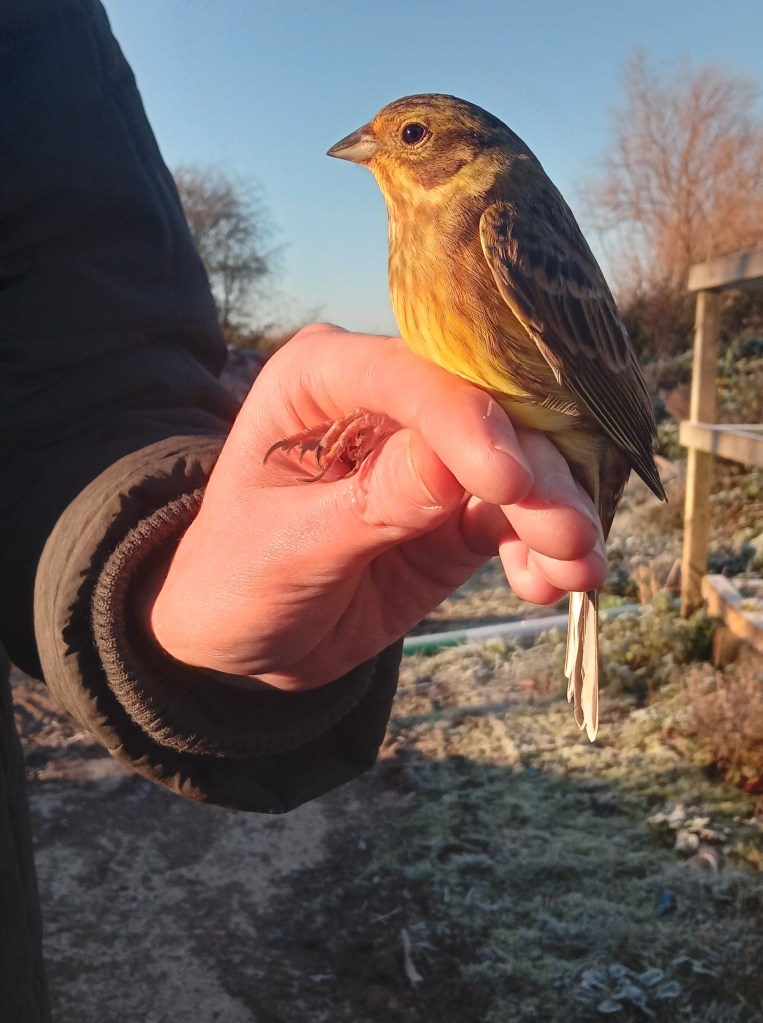
Juvenile Female Yellowhammer, Emberiza citrinella
The second bird out of the net was a Redwing. Somewhat surprisingly, nowhere near the lure that is so often successful.
After a couple of hours of the Meadow Pipit lure proving fruitless I changed it to Linnet. Quite soon afterwards a small flock of Linnets arrived and started flying around the Mipit net set. We eventually caught three of them in the triangle and another in the hedgerow nets:
Juvenile female Linnet, Linaria cannabina
Unfortunately, that was it. No more birds until we decided to pack up, which we did at 11:00. It was an enjoyable session, despite the small catch. With three of the trainees each getting their first Yellowhammer and Adam also getting his first Linnet, it was certainly good for them. Also, it made my day to ring my first Yellowhammer of the year, but also to be able to spend time showing trainees the dark arts of ageing and sexing both Linnet and Yellowhammer.
There was also plenty of time for chatting, drinking coffee and eating cake and biscuits. We did get plenty of birding in as well: Pied Wagtails were busy around the farmyard, a Kestrel was on the hunt, and there were plenty of other birds flying around. If there was any frustration it was the number of birds that hit the nets and bounced off. It is hard to know why it was happening: the nets were certainly not over-taught but somehow they managed to avoid the pockets. Oh well! I will give it a couple of weeks for the track to dry out (fingers crossed) and then have a go by the game cover.
Okay, it wasn’t actually a marsh but our site at Somerford Common has so much standing water that it might well become one. We haven’t had too much rain in the last few days, but Forestry England have had a rather large tractor on the site, carrying out the usual ride maintenance, but the under-wheel conditions (is there such a thing?) have resulted in a real mire, and left some pretty deep water-filled ruts, along the main ride.
Marsh Tit, though, is probably the wrong common name for Poecile palustris, as they are associated with, primarily, broad-leaved woodlands in the UK. As it says in “The Birds of the Western Palearctic”, they prefer their woods moist to dry, but not wet.
This was the second CES session for this winter. We were on site at 7:00. I was joined by Teresa and Andy and, after doing the school run, Steph. The same nets were set as in winter CES session one. Having set the nets, leaving them closed so that we didn’t get any unexpected early arrivals, Andy and Teresa went back to set up the ringing station whilst I opened the nets. Unfortunately, two birds had decided that they couldn’t wait for the nets to be open and had already entangled themselves. Fortunately, that meant they had to wait for me to free them and, doubly fortunate, two Marsh Tits: one new, one retrap.
Marsh Tit, Poecile palustris
That was the start of our best haul of Marsh Tits since an identical catch on the 27th December 20210: one new bird and six retrapped birds. One of the retrapped birds was over four years old, with another two being over three years old. Nothing near the species longevity record (11 years 3 months) but longer than the typical lifespan of 2 years. For a red-listed bird its population in the Braydon Forest is not just stable but showing a slight increasing trend. In the following graph, the trendlines show this to be the case. Even when the 2017 spike is removed, the trends on both ringed and retrapped are still upward:
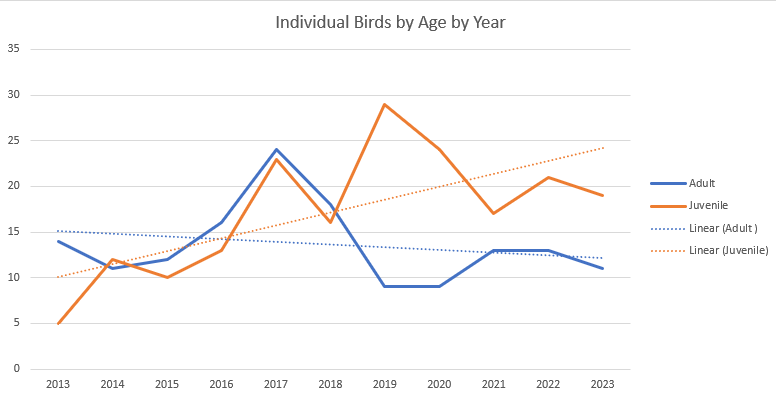
Retrapped birds can distort the picture, so I did a quick analysis of the numbers of individual birds by age group and year to give a better indication of how things are going for them:
As you can see, it is birds classified as juvenile that are driving the overall stability of the species in the Braydon Forest.
Obviously, Marsh Tits are a bit of an obsession for me, having helped persuade Forestry England to make it the priority bird species for their Braydon Forest management plans, but there was a lot else going on. Talking of Forestry England, we were joined by Sian from that organisation. She had driven past on her way to another site, saw the activity and stopped off to say hello. She spent a while with us, seeing what we do and learning how to safely handle and release a bird. She also found out what it is like to be bitten by a Great Tit (we spared her the Blue Tit experience – didn’t want to put her off). For the second session running we had a couple of Redwing drop in: unfortunately a fair few dozen flew over, some just missing the nets – as did a female Sparrowhawk. It was quite remarkable watching as she shot out of cover, noticed the net and did an almost vertical lift to get over it.
We are having a good year for Nuthatch, another four ringed this year will make it our best ever. Another Lesser Redpoll was caught, but several bounced off the nets, plus we had another small catch of Goldcrest. They are looking on target to be on par with recent year catches. For our woodland at the start of the winter it was a pretty good and varied catch:
The list for the day was Nuthatch 1; Blue Tit 5(6); Great Tit 6(9); Marsh Tit 1(6); Coal Tit 1(2); Redwing 2; Goldcrest 4; Chaffinch 1; Lesser Redpoll 1; Bullfinch 1. Totals: 23 birds ringed from 10 species and 23 birds retrapped from 4 species, making 46 birds processed from 10 species. It is not often that we get equal numbers of ringed and retrapped birds.
The catch dropped right away by 10:30. We shut the nets at 11:30, took down and left site by midday.
With the weather forecast for the weekend being rain, rain and more rain, I decided to move Saturday’s scheduled session back to Friday. Fortunately, David, Teresa and Rosie could come along to ring, and Andy to help set up, take down and scribe, as usual. Rosie was actually working at LMF today, so could stay pretty much up to 9:00, before setting off to do some cleaning and maintenance on the bird hides.
We set the following nets:
Rosie had noticed that there were large flocks of both Redwing and Fieldfare around the site. Fieldfare are notoriously difficult to catch, unless you happen to have a well-established orchard with plenty of windfall apples to set your nets in. Redwing are a lot easier to catch, particularly with the use of a superb sound lure that migrated to the UK from Latvia a good few years ago, and is known colloquially (okay, by me) as the “Latvian Love Song”. We did see a lot of Fieldfare over the course of the morning, all flying overhead. There weren’t so many Redwing around, but we di catch a few.
I set the Mipit triangle as at our last Lower Moor Farm session, on the 30th September, we managed to catch eight of them. Although we did see one of them sitting atop one of the poles, we didn’t catch it. In fact, net rides 2 and 3 did not catch a single bird.
The first round proper was rather good: we had 22 birds from eight species. The highlight had to be our first Kingfisher since September 2022. It was a juvenile female:
Juvenile Kingfisher, Alcedo atthis (photo courtesy of Teresa)
She was happy to sit on the hand for a short while before flying off strongly. Andy clearly has warm hands!
The second catch was a decent 16 birds, but then the catch died away to just three or four birds every other round. Mind, that did give us plenty of time to appreciate the Otter that was swimming around on Mallard Lake, giving excellent views from the side of the lake adjacent to our ringing station.
The list for the day was: Kingfisher 1; Treecreeper (2); Blue Tit 6(2); Great Tit 2(1); Long-tailed Tit 13(9); Wren 1(2); Dunnock 1(2); Robin (2); Redwing 4; Song Thrush 1; Goldcrest 6; Bullfinch 1. Totals: 36 birds ringed from 10 species and 20 birds retrapped from 7 species, making 56 birds processed from 12 species.
As you can see from the list, we had a really good catch of 22 Long-tailed Tits. Both the 13 ringed and the 9 retraps are the best ever in a single session since I started working there. Interestingly, the previous best was the previously mentioned session on the 30th September 2023. Interestingly, all of the retrapped birds were ringed as juveniles earlier this year.
As things had died off significantly after 10:30, we started taking down at 11:15. Shutting and taking down rides 2 and 3 first, leaving the others to catch, processing what was caught in the remaining open rides, shutting and taking down ride 1, whilst leaving 4 and 5 open until the end. We had everything packed away by 12:50 and everybody left. I finished tidying up, got into the car – and it wouldn’t start! Flat battery! Of course, getting a phone signal at Lower Moor Farm is a nightmare. I walked out of the site until I could get a signal and get my friendly local mobile mechanic to come and get me started. He did, and then me and his little helper had to push his van off the grass as its wheels just kept spinning and it couldn’t get traction! I tend to forget that my troublesome vehicle is a 4-wheel drive with hybrid tyres. Anyway, I got away at 13:45!
It was an excellent session, car problems notwithstanding!
This has to be the wettest November that I can remember. We got out on Saturday, with two days of rain to follow, dry today, so we got to Red Lodge this morning, torrentially wet tomorrow but dry on Friday. With the weekend also looking very wet, I am moving Saturday’s scheduled session at Lower Moor Farm to Friday.
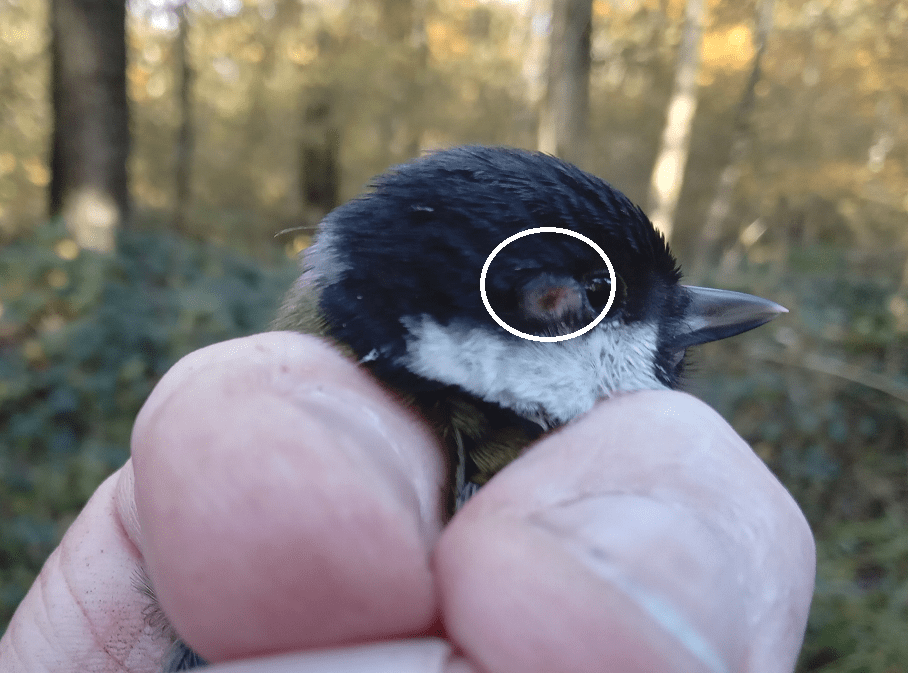
I was joined this morning by Rosie and Claire and then, slightly later, by Teresa and Andy. We set the usual nets in the places used for the last few sessions and I put on a variety of lures. It was a slow start with the first bird not out of the nets until 8:40. However, the next round delivered a small flock of Long-tailed Tits, a Goldcrest and a Wren. After that it went empty, four, empty, empty, three, empty and empty. I was getting pretty fed up with the lack of birds but then we had a surprising round of sixteen birds: mainly Great Tits, but our only Blue Tit of the day, a Coal Tit and three Goldcrests. However, we could only ring sixteen of the seventeen because one of the Great Tits presented like this:
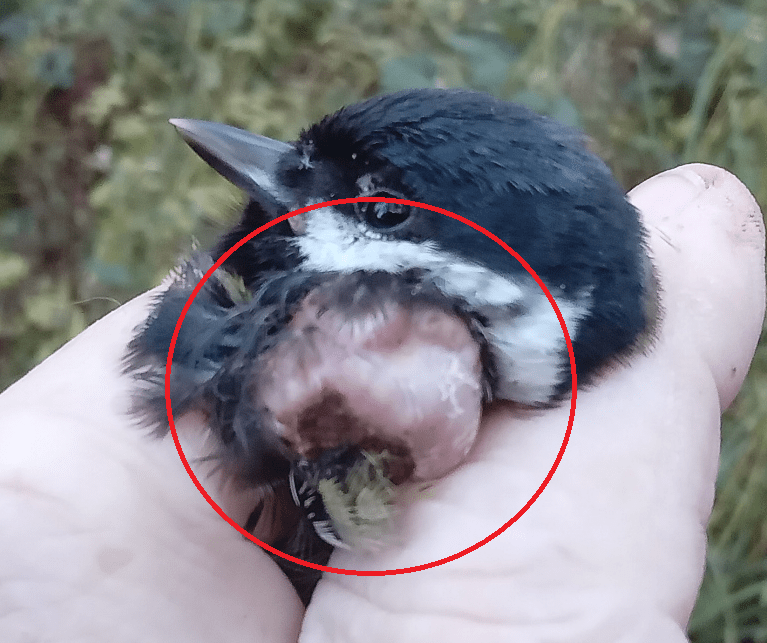
A small Avian Pox pustule. It doesn’t look much, until you turn it around:
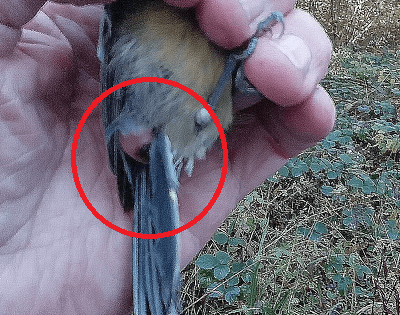
And then, its tail looked like this:
The pustule actually had a feather growing through it’s middle. It is the worst Avian Pox I have seen on a single bird. Needless to say, I didn’t put a ring on it and, after releasing it, I used copious amounts of anti-viral hand sanitiser before going near any other birds.
We did catch a few more birds after that, and ended up with a reasonable catch: Blue Tit 1; Great Tit 9(4); Coal Tit 3(1); Long-tailed Tit 5; Wren 1; Robin 3(1); Goldcrest 7(1). Totals: 29 birds ringed from 7 species and 7 birds retrapped from 4 species, making 36 birds processed from 7 species.
Not as good or as varied as the catch in October, with Redwing, Lesser Redpoll and Chaffinch missing from the catch. One upside though: only one Blue Tit to wreak havoc on our fingers! I will be setting up a feeding station there in the next week, so future catches will be larger but, almost certainly, mainly titmice.
Wind had been forecast for the day but it only really started getting up at just after 11:00. It was only affecting one of the rides but we decided to close the nets and take down at 11:30. We were packed away and off-site by 12:45 – a little slower than usual, but that was because I was letting the trainees do the bulk of the net take down, which is something that they need to know how to do.








 Ringing In The Braydon Forest & Beyond