Blakehill Breakthrough? Saturday, 23rd September 2023

It has been a pretty frustrating year for my team in the north of Wiltshire, with catches well down on previous years. The arrival of Meadow Pipits at Blakehill Farm always gives a welcome boost to numbers and, with a nice catch last week on the western side of Blakehill, I was looking to see more of the same on the eastern side. September has always been an excellent month for ringing at the Chelworth side of Blakehill Farm, boosted by large numbers of Meadow Pipit.

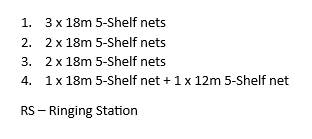
I had a lot of team members wanting to join me for this morning: my most long standing C-permit holder, Ellie, trainees Miranda and Teresa, and helpers Laura, Adam, Andy and (later, much later, Mark) signed up for the session. As a result, I decided to set rather more net than I have done recently:

I put on lures for a variety of migratory species on rides 1, 2, 4, 8 and between 9 and 10 and for Meadow Pipit in the middle of the Mipit triangle. Unfortunately, we still did not manage to catch any Stonechat or Whinchat this morning. The frustration is that they are there on site, we just don’t seem to be able to draw them in. Usually both species are nailed on in September at this site.

We had arranged to meet at 6:30 but, my having woken up at 5:00, and dozed until 20 minutes later, but couldn’t spin it out any more, I was on site by 6:00 and managed to have nets 8 and 9 set up before the others arrived. We had all nets open just before 8:00, and caught our first birds straight away. Then we had a bit of a stutter until birds started to arrive at 9:00. This coincided with the sun beginning to warm the site and the insect life becoming active. The area where the nets are set is an extensive rough grass paddock that is grazed by cattle, but not by sheep, and which has not been cut mechanically for over six years. Although there are not masses of wildflowers, it is absolutely buzzing with insect life. The most obvious at this time of year are the craneflies, and we are pretty certain that the arrival of the Meadow Pipits is a happy result.

The catch was busy all morning and we ended up with a total of 70 birds processed: Blue Tit [4]; Great Tit [4]; Wren [1](1); Dunnock [1]; Meadow Pipit 3[39]; Robin (1); Blackcap [4]; Whitethroat [1]; Chiffchaff [4]; Reed Bunting [7]. Totals: 3 adults ringed from 1 species; 65 juveniles ringed from 9 species and 2 birds retrapped from 2 species, making 70 birds processed from 10 species.

The Meadow Pipits were there in good numbers, as hoped for. All bar six were caught within the Mipit triangle, responding to the lure. One of the most regular catches at Blakehill in the autumn are Reed Bunting. With another seven today, nine for the month so far, it looks as though this will be comparable to previous years. They were all juveniles: not the easiest birds to age, particularly as the adults are all finishing or finished their post-breeding moult. One of the key distinguishing features is the extent of the black patches on the tertials: narrow and pointed on a juvenile’s wing, broad and squared off on the adult.

Juvenile Reed Bunting, Emberiza schoeniclus

So, why a “breakthrough”? This is the second largest catch my team has managed this year. The largest was at the feeding station at Somerford Common back in February, when food was scarce. Since then we have been grateful if we have managed to catch 30 or more birds in a session. It has given plenty of time for a relaxed approach to training, but the sheer enjoyment of a busier, bird rich session has been missing. This was certainly the most enjoyable session of the year so far, and everybody enjoyed it and got to process a decent number of birds.

The only slight downside to the morning was nothing to do with our activity. Adjacent to the reserve is a field where a local model aeroplane club meets to fly their toys. Their agreement is that they fly their models over the fields adjacent to the reserve, but that they do not fly them over the plateau, so that they don’t disturb the cattle or the wildlife. Unfortunately, not every member of the club cares to honour that agreement, and at about 10:30 this morning one of them turned up and started buzzing the plateau with his toy. It definitely impacted on the birds out on the plateau, clearly disturbing those in its flight path. He didn’t last long: possibly when three of the team started walking in his direction, although all they were going to do was to check nets, he possibly decided that they might be coming to discuss his activities and that he didn’t want to have that discussion. Just as well as, although I was out on the plateau, being annoyed by his intrusion, I was going to go and have that discussion when I had finished my round.

We were lucky with the weather. I took a chance on the forecast, which was for a relatively low base wind speed, but with that building up from 8:00 and with it gusting to 15mph quite early as well, as the plateau nets would be exposed to the projected westerly winds, but I wanted to go for migrants and Meadow Pipits. In the event, we had no issues with the wind until gone 11:00, whereupon we closed the nets, we did it in a slow sequence, so we could continue catching birds in the less affected nets, starting with the most exposed (8, 9, 10), finishing with the most sheltered (1 & 2, protected by the hedgerow). With such a good sized team out it was a quick and easy take down, with last birds extracted and processed at 11:45 and the team off site by 12:15.
Somerford Common: Saturday, 16th September 2023

With filthy weather forecast for the next week, starting from Saturday afternoon, I decided to try a session at Somerford Common this morning. I knew it wasn’t somewhere I ring often in September, but I didn’t realise that this would only be my second September visit since I started working there in 2013.

I was joined for the session by the same team as yesterday. Today Rosie didn’t have to leave for work until 9:00, and s0 she managed to get to process some birds after helping set the nets. It was a 6:30 start again and we set the nets at the southern end of the site:

One extremely keen juvenile Great Tit decided to get itself into net ride 4 before we had opened them. Fortunately it didn’t wrap itself in lots of net and was easily extracted. Once the nets were open, at just before 8:00, taking longer than expected thanks to some rather annoying twists and knots in the netting, I set sound lures for a range of migrant species on each of the net rides. The first round proper produced a single bird: a Wren, but after that things did improve. However, as well as some Blackcaps and a Robin, round two did produce the worst Wren I have ever had to extract. Somehow it had managed to crawl through several of the net cells, taking more netting with it, and getting royally enmeshed in netting as a result. In the end, with the bird’s welfare being paramount, I had to cut several strands on a brand new net (a mere £107 investment) to extract the bird. The Wren was perfectly fine, they are tough little birds, and flew off strongly after it had been ringed and processed.

We were regularly catching birds, mainly Blackcaps, alongside the occasional Robin and Blue Tit, and a solitary Goldcrest. However, at 10:00 I decided to change the lure on ride 4 to Goldcrest. The response was almost instantaneous. Over the next 30 minutes we extracted another nine Goldcrests from that net, but Andy, who was monitoring the ringing station and our possessions as most of the nets were out of sight from the ringing station, did tell us that there were at least another ten that had bounced off the nets! I never set lures for Goldcrest in inclement weather, and never before 10:00 whatever the weather, to ensure that they have had plenty of time to feed before being targetted. There were two adults (a male and a female) with the rest juveniles. I am not sure whether this was a fall of early arriving migrants or local resident birds. That there were so many in a flock, I suspect they were migrant birds.

Juvenile Female Goldcrest, Regulus regulus

The list for the day was: Blue Tit [4](1); Great Tit [2]; Wren 1[2]; Robin [2]; Blackcap 1[7]; Goldcrest 2[8]. Totals: 4 adults ringed from 3 species, 25 juveniles ringed from 6 species and 1 bird retrapped, making 30 birds processed from 6 species.

With rain set to arrive at midday we decided to make the 11:00 round the last one. In the event, the nets were empty, and we closed and took them down as we went. That meant we were away from site before midday. Hopefully the weather forecast will change and there will be a chance to get out next week but it doesn’t look hopeful!

Blakehill Farm Perimeter Track West: Friday, 15th September 2023

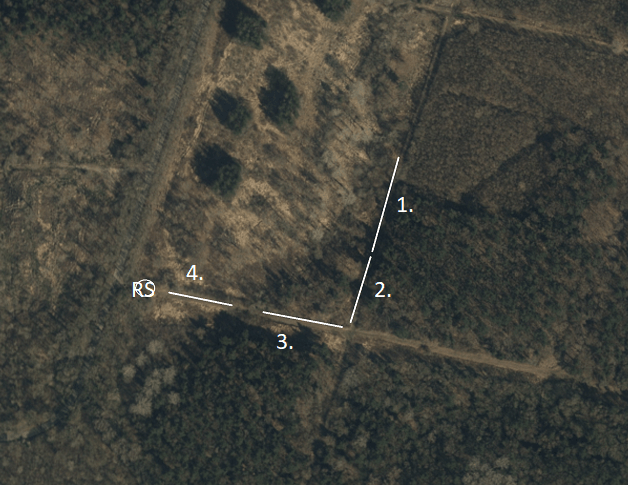
About this time last year there was a decent through flow of Stonechat seen in the hedgerows along the perimeter track on the western side of Blakehill Farm. I decided to try a session setting nets along the hedgerows to see if any could be caught. We did see half-a-dozen and managed to catch and ring two of them. Having failed miserably to catch any Whinchat or Stonechat so far this autumn migration, I decided to have another go on this part of the site: only my second go. Rosie came along to help set up before heading off to work, not a single bird by way of compensation, plus I was joined by Andy and Teresa for the whole session. We set the following nets:

Despite a 6:30 start, and having the nets open by 7:30, we didn’t catch our first birds until 8:15. It was a decent round with five Goldfinches and a Dunnock in net set 3 and a Meadow Pipit in 4. The white lines indicate a fenced-off area. This, and an equivalent area north of it, were fenced off to allow for them to be planted up with bird friendly wild flowers. It hasn’t worked as intended but the legacy is a mass of thistles. This is why the Goldfinches were caught in ride 3. At 10:00, having caught nothing, we split the nets in ride 2 and put one each through two of the thistle plots. Unfortunately the Goldfinch had already moved on and we caught no more. In fact, neither rides 1 or 2 caught anything. I think that the issue with ride 1 was that the hedgerow was just that bit higher than the nets and the birds, plenty of which were feeding on the blackberries in the hedgerow there, were just flying in and out over the top. I have decided that I need to put a 75cm extension on each of the net poles before trying again. I shall be investing in some 1″ diameter dowelling very soon.

Fortunately, ride 3 caught reasonably well all session, and the Mipit triangle just delivered as expected. It was good to see that the numbers are building up on the site. Hopefully we will get up to the high numbers seen in previous years as the month progresses.

The catch for the day was: Blue Tit 3; Great Tit 1; Dunnock 1; Meadow Pipit 22; Robin 1; Chiffchaff 3; Goldfinch 5. Totals: 1 adult ringed (the Dunnock) and 35 juveniles ringed from 6 species, making 36 birds processed from 7 species.

As you can see: still no Stonechat or Whinchat. I am determined, so will be back at Blakehill next Wednesday, weather permitting, on the eastern side of the site.

We started to take down at 11:30 and were ready to leave site just after midday.

Pipits Popping In at Blakehill Farm: Saturday, 9th September 2023

I always look forward to the eruption of the Tipulidae (Crane-flies to the unpretentious out there) in September, as it heralds the arrival of the over-wintering Meadow Pipits at Blakehill. On the last visit, on the 28th August, there was not a Meadow Pipit to be seen. This visit I was hopeful that they would have started to arrive, as mid-September is the prime time for them at the site.

This morning, with temperatures forecast to reach 30oC by 11:00, I decided to be very cautious with the net setting: I wanted no opportunity for heat stress on either the birds or the people. I was joined by my newest trainee, Teresa, and her partner, Andy. I also thought that it would give more time to guide Teresa through her first ringing experience. She has accompanied me at quite a few sessions, primarily photographing the catches, and the next thing I knew she had applied to be a trainee. Normally I would have expected her to have a few taster sessions before signing up, but I have no wish to curb enthusiasm. Besides which, Andy is a star at helping set up and take down. Because of the planned early closure, I got on site at 6:00 and spent 15 minutes playing with my new toy: an electric brush cutter, opening up the few rides I was planning to use, so we could get set up ready to go early on. It was, in fact, very misty and nothing started moving until gone 7:00.

I only set nets on the plateau area and didn’t set any along the perimeter track hedgerow, as follows:

The 2-Shelf nets were set along low level bramble bushes. The 5-Shelf nets were between or alongside bramble and blackthorn at a height of 2.5m. Lures were put on for a mix of possible migrant species at nets 3 and 4 and in between nets 5 and 6. The Mipit triangle had a lure purely for Meadow Pipit.

As I said, it was misty and a very slow start: a Whitethroat was caught in a net at 7:15 and a Dunnock at 8:25. Things improved after that somewhat, although several rounds were empty, the round at 9:15 produced eight birds, 10:15 five birds and the last round at 10:55 six birds.

Surprisingly, the biggest part of the catch were Blue Tits in nets 5 and 6, with a total of eight caught. Seven were dispersing youngsters, one was a retrap ringed at Blakehill in December last year.

The list for the day was: Blue Tit 7(1); Dunnock 2; Meadow Pipit 7; Blackcap 1; Whitethroat 1; Reed Bunting 2. Totals: 20 juveniles ringed from 6 species and 1 retrap, making 21 birds processed from 6 species.

The highlight was the arrival of the Meadow Pipits: all caught in the triangle. For those who don’t know why a Mipit triangle is set, the reason is that the birds are slow fliers and, as a result, they see the nets and can avoid them. You most commonly know they have arrived as you can see them sitting on the tops of the support poles and the top string of the nets. So, the lure attracts them into the middle of the triangle and, as the ringers approach the nets, they look to make a quick escape which is when they end up in the nets, as they take less care at that point, being focused on avoiding the people and forgetting about the nets. It works well and this is the result:

Juvenile Meadow Pipit, Anthus pratensis

This photo shows beautifully the characteristic pale fringing to the median and greater coverts that identifies this bird clearly as a juvenile. Both photos were taken by Teresa.

We shut the nets and took down at 11:00. The misty start to the morning had delayed the temperature rise but we had everything down and packed away by just after 11:30, just as the temperature was becoming an issue. Teresa finished her first ringing session with nine birds ringed from five species. I am sure that she will get to grips with it quickly.

It is still a little disappointing not to have caught any Whinchat or Stonechat at Blakehill yet. I plan to be back on the plateau 10 days time so, hopefully, we will get them at that point.

Ravensroost Meadows: Wednesday, 6th September 2023

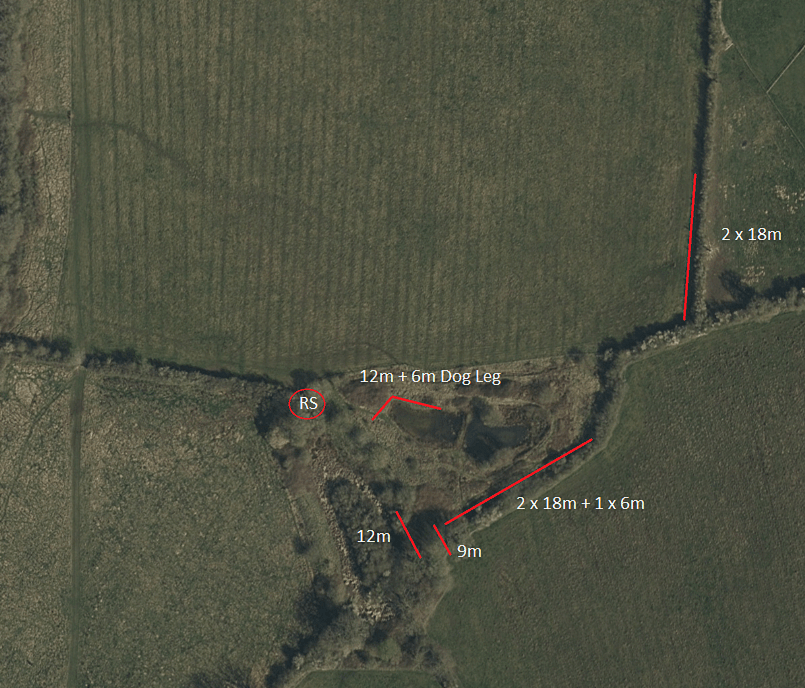
With the weather forecast to get extremely hot by midday, reaching 30oC, I decided that a short session at Ravensroost Meadows would be sensible. I was joined by Miranda, Rosie (and Polly, her Cocker Spaniel), and then Laura and Adam. Adam with his last day of freedom before back to school! We met at 6:30 and set the following nets:

To be honest, I had not expected the area around the pond to be as horribly overgrown as it was. Last time I was there the vegetation was very open. Miranda was an absolute trooper: she took one of my slashers and cut a path to the 12m ride and then cleared the ride itself, whilst Rosie and I and then Laura and Adam set the other nets. For them we merely trampled down the vegetation, which was predominantly Common Fleabane, Pulicaria dysenterica. The dog-leg was set on the off-chance that we could catch some Swallows or House Martins coming in to drink. I put on a lure and we crossed our fingers. Unfortunately, we were unlucky and, despite there being sizeable flocks of both species flying around all morning, one felt the need to come down to drink. Perhaps the hot weather has prompted the insect life to move to higher strata.

The plan was to shut the nets at 11:00 and take down and be off-site before midday, which we managed. We had a reasonable, but small, catch of mainly Chiffchaff and Blackcap, as follows: Wren 2; Dunnock 2; Robin 2; Blackbird 1; Blackcap 6; Chiffchaff 8; Goldfinch 2. Totals: 23 juveniles ringed from 7 species.

The Goldfinch were the highlights: although I catch plenty in my garden, over the years I have caught just 18 by the meadow pond, and the last were caught two-and-a-half years ago. These were, therefore, the first that Rosie and Miranda have processed at the pond, although both have done them elsewhere (Rosie: one at Brown’s Farm and Miranda: two at Blakehill Farm).

As well as the catch and the multiple Swallows and House Martins, we had decent views of both Buzzard and Red Kite circling in the thermals over Ravensroost Wood. Apart from them, and a bit of both Magpie and Jay movement and calling, there was very little other bird movement.

Decline & Fall; Part 2: Lower Moor Farm CES – 2015 to 2023

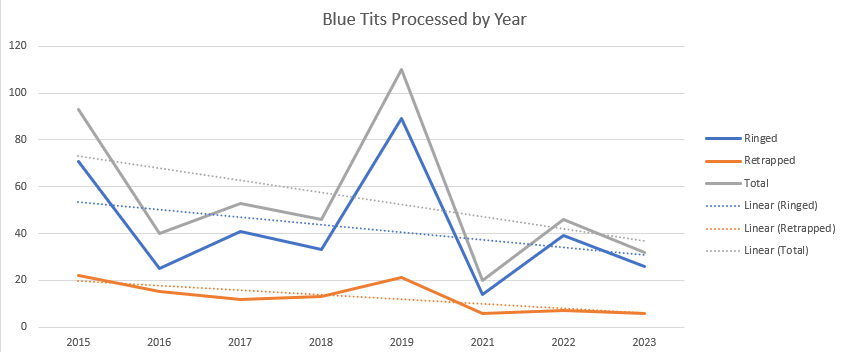
Following on from yesterday’s look at the decline in warbler numbers, I have now had a look at the more regular resident species: Blue Tit, Great Tit, Long-tailed Tit and Wren.

Blue Tit:

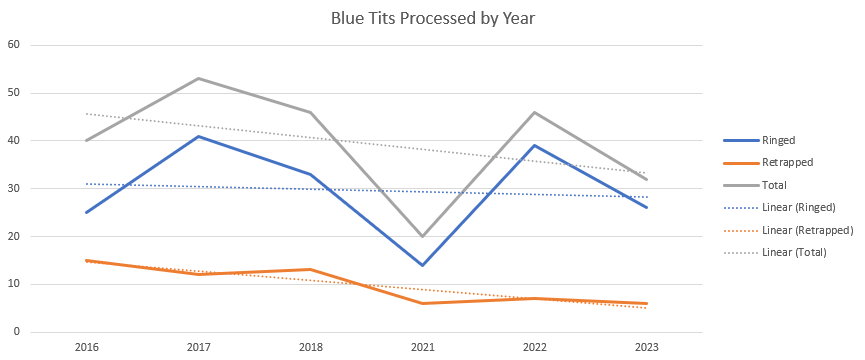
As you can see straight from the off, the trend is every bit as downward as it is for the warbler species. Clearly, the catches in 2015 and 2019 could have exaggerated the recent decline, so I recast the data minus those two years. The decline is less precipitous but still there:

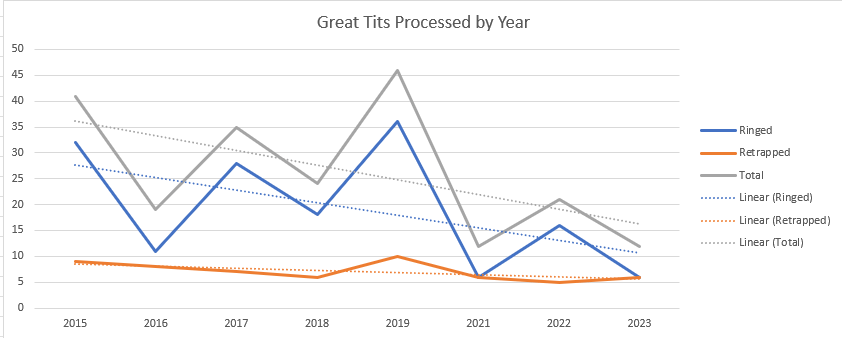
Great Tit:

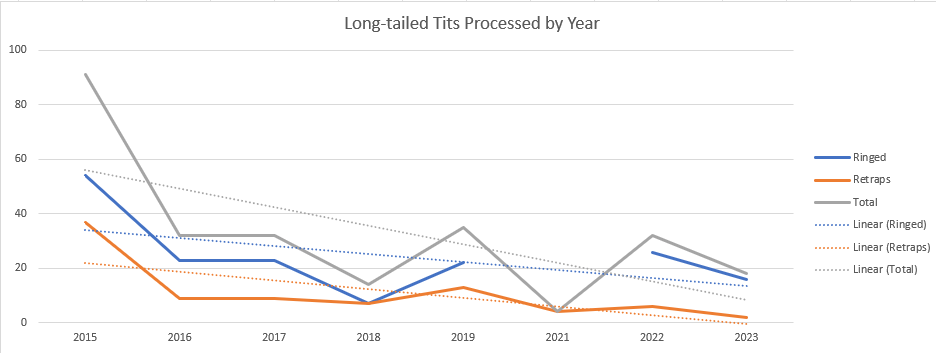
Long-tailed Tit:

So far, so much the same. My thinking was that all of these species, except Garden Warblers, are, basically, gleaners, removing insects from leaves. I then had a look at those resident species that have different feeding strategies: Robin, Dunnock and Wren.

Robin:

As you can see from this, the trend for birds ringed is pretty well static and the decline in retrapped birds is rather shallow. Overall, they are a consistent contributor to our CES sessions.

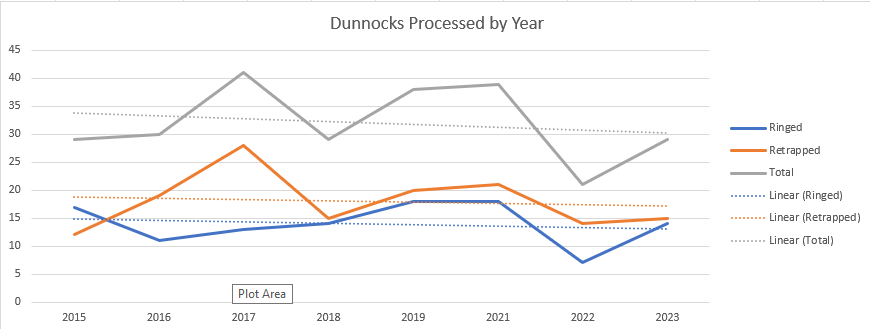
Dunnock:

The only species that I have analysed that has a higher retrap rate than the ringing rate. There are very shallow declines at all levels, but not as pronounced as for the warbler species or the Blue, Great or Long-tailed Tits.

Wren:

Another species with a shallow decline. The biggest reduction, although nothing like as pronounced in the warblers and tits, is in the retrapped birds.

What is driving the declines?

This is clearly the $64,000 question. I have had my theory on the problems, but as it is a nature reserve run by the Wiltshire Wildlife Trust, what I want to do about it has to fit in with their management plans. Fortunately, I had a meeting with both the Conservation Director and the Farm Reserves Manager of the Wildlife Trust and we have agreed upon a plan of action. In fact, the Farm Reserves Manager led the way in what needs to be done on the site. Fortunately, his ideas coincided completely with mine.

Since the Covid lockdown, two key areas of the CES have become overgrown. The canopy has closed over on those two rides, saplings have grown up and added to the thickness of the tree stock, filling in what used to be a nice open area. All of this has led to a darkening of the rides and, possibly more importantly, the wildflowers attractive to insects and other invertebrates have almost entirely disappeared from these two rides, leaving behind an under-tree flora consisting almost entirely of Stinging Nettle and Common Cleavers (Goose Grass, Sticky Jack, Sticky Willie).

The plan over this winter is to open out the undergrowth, cut back the canopy and thin the tree stock back to where it was pre-Covid and see if that improves the situation. We shall see what happens.

Decline & Fall; Part 1: Lower Moor Farm CES – 2015 to 2023

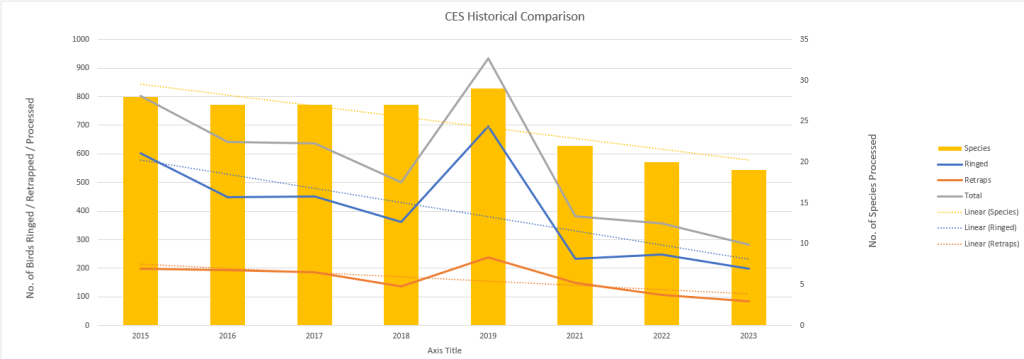
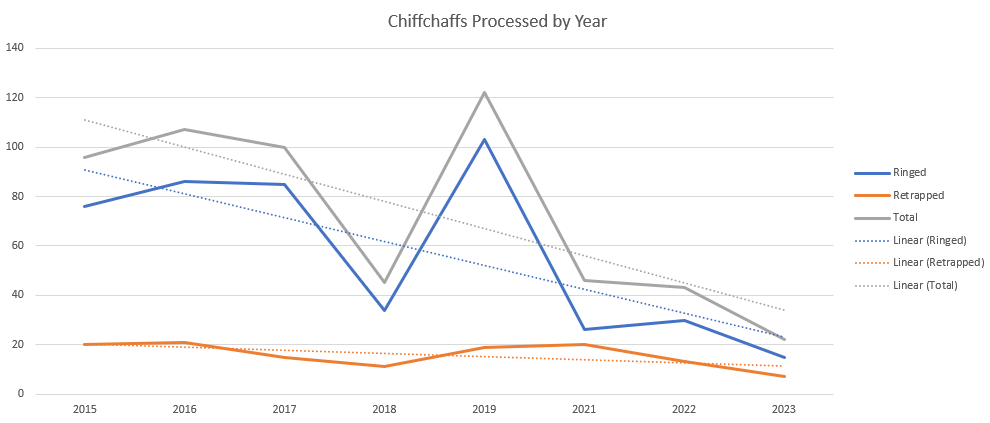
The point of a Constant Effort Site (CES) is to allow direct comparisons across the years. This is done by setting the same nets in the same places for the same length of time for 12 sessions, approximately 10 days apart, between the beginning of May to the end of August / first week of September. I started my CES at Lower Moor Farm in 2015 and, it is entirely possible, 2023 might well be the last. By committing to a CES invariably reduces the time available for my other sites. It all depends upon how Spring 2024 shapes up. I think that this graph shows exactly what the issue is:

Every single trend is downwards and, without the anomalous and exceptional year of 2019, the downward trend would be considerably worse. What is also significant is the decline in the number of species. This would indicate a reduction in suitable habitat for some of those species. I have had discussions with the Wildlife Trust to try and identify whether this is the result of habitat change or a genuine reduction of bird numbers in the area. There will be further discussion on habitat in part 3.

In this first part of my assessment I have had a look at the species that are my key reason for carrying out the CES at Lower Moor Farm: summer visiting warblers. In the next part I will look at the trends in resident species.

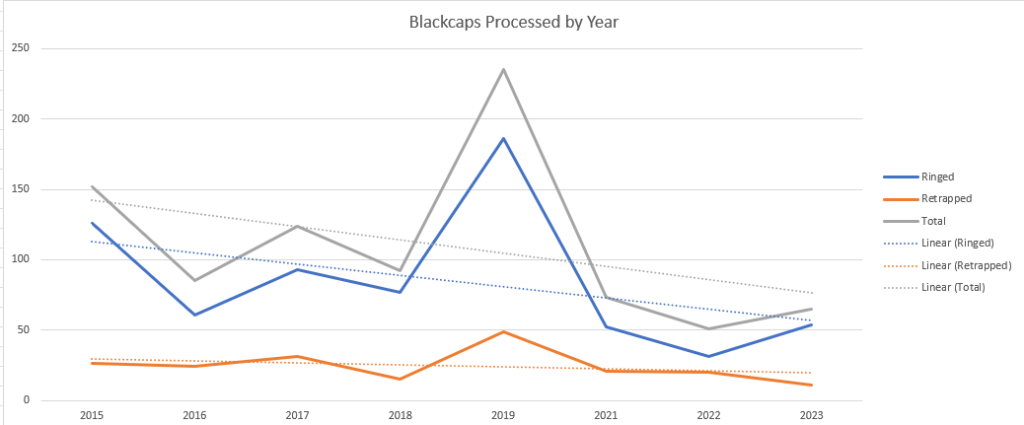
There are no active reed beds at Lower Moor Farm: the ponds and lake are ex-gravel extraction pits. Mallard Lake, until it became polluted by fertiliser run-off from other farms, was a marl lake. It now has a couple of thin reed fringes but not sufficient to support breeding Reed or Sedge Warblers. Unsurprisingly, the commonest warbler species are Blackcap and Chiffchaff.

As you can see, the retrap rate for Blackcap is relatively consistent, the numbers ringed have declined significantly. Interestingly, CES 11 and CES 12 this year each produced 17 Blackcaps, and those are the best catches of this species in any CES period. That just shows how poor the rest of the sessions have been for this species. Chiffchaff decline is precipitous and a considerable cause for concern. However, if that is bad, the situation with the less common warbler species is even worse. It used to be my best site for Garden Warbler but, again, their numbers have declined dramatically:

Similarly, the fall off in Willow Warbler numbers is significant:

If this is bad, then what has happened with Common Whitethroat and Lesser Whitethroat is catastrophic. Common Whitethroat were not significant in the catch for the first three years but, between 2018 and 2021, we had some hopeful signs, only for them to be dashed in 2022 and non-existent in 2023:

Lesser Whitethroat was even more disappointing as they were a solid contributor between 2015 and 2019 and then nothing since!

Obviously, with migrant warblers there can be many factors affecting numbers: primarily weather conditions. Certainly the last few years have been much less stable than we have been used to but it has not been bad enough to severely affect the CES sessions themselves, with only one being missed as a result of bad weather (session 3 in 2022).

I do have some ideas. For example, Garden Warbler and Blackcap have overlapping habitat requirements, with Garden Warbler preferring lower level vegetation for foraging, Blackcaps taller level vegetation, and they compete, with Blackcap seemingly outcompeting Garden Warblers. It is why when I can use lures I use Garden Warbler and it works for both species.

Part 2 will follow as soon as I can get it done.

Lower Moor Farm, CES 12: Saturday, 2nd September 2023

I really don’t like leaving things to the last minute but this was the absolute latest date that I could run the final CES of this year. I was joined for the session by David at 6:00, and we had the nets set up and open by 7:00. The weather was rather concerning: it was like being inside a cloud of mist – mizzle. It wasn’t enough for us to shut the nets but it wasn’t very pleasant for sitting around in. Ironically, the nets were actually well protected by the overhanging vegetation. In between rounds we sat in my car to stay out of it. We were joined by Claire and her two children at just after 8:00. I had texted her and given them the choice, given the unpleasant weather, but the children were apparently insistent on coming.

We didn’t actually catch any birds until 8:00. I suspect that they were also sheltering from the miserable weather! The weather finally relented and dried up at about 9:00 and, by 10:00, the sun peeped out, and by 11:00 it was positively warm and bright. The catch was an underwhelming 19 birds in CES 12 2022 and I was hoping that we would see some improvement. It started promisingly, with four birds in the first round, but that went up to ten in round two, and another nine in round three. After that, however, it all died away, with just another five birds caught in the next two hours before we shut the nets at 11:30.

The bird of the morning was our first juvenile Bullfinch of the year:

Juvenile Bullfinch, Pyrrhula pyrrhula

The list for the day was: Blue Tit (1); Wren [1](1); Dunnock (1); Robin [1](1); Blackbird [1]; Blackcap [17]; Chiffchaff [2]; Willow Warbler [1]; Bullfinch [1]. Totals: 24 juveniles ringed from 7 species and 4 birds retrapped from 4 species, making 28 birds processed from 9 species. Every bird, except for the retrapped Blue Tit, was a juvenile.

During the morning we were treated to some excellent views of a Great White Egret on the opposite bank of Mallard Lake. Apparently the Otters were also being very busy on the lake, but we didn’t get to see them as they were around the corner from our ringing station and nets.

David’s dad, Trevor, arrived to help us take down, and we were all packed up and ready to leave by about 12:20.

West Wilts Ringing Group Results: August 2023

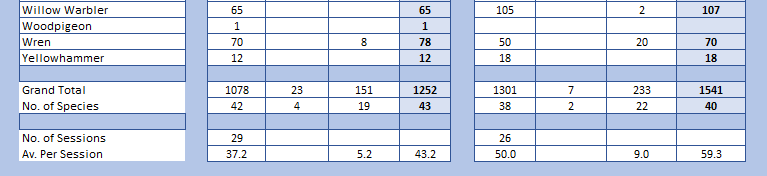
A very interesting month.  The catch was down on August 2022 by just under 300 birds, but last year’s August was exceptional for us.  This August is our second best.  We did process 44 species against 40 last year, even if one of those additional species was a Red Kite from the RSPCA Oak & Furrows project that I am currently working on.

The highlight has to be that Jonny ringed the first Mute Swan at any of our sites for over a decade: his one was caught and ringed at Langford Lakes. Interestingly, the first that we have a record for in the online database (DemOn) was also at Langford Lakes: on the 25th August 1990, almost exactly 33 years ago!

This year we had Marsh Tit, Mute Swan, Nuthatch, Sparrowhawk, Starling, Stock Dove, Swallow, Tawny Owl and Tree Sparrow, as well as the Red Kite, that were not caught in 2022. Missing from last year were Linnet, Nightjar, Reed Bunting, Stone-curlew and Whinchat.  The Kestrel and Peregrine processed in August last year were birds being rehabilitated at the Mere Falconry Centre, so if we only count wild court birds that is 43 species in 2023 to 38 in 2022.

The key declines in numbers were in some of our summer visiting warblers: Blackcap down from 195 to 131; Reed Warbler down from 100 to 35; Sedge Warbler from 89 to 28 and Willow Warbler 107 to 65.   Chiffchaff were 176 down from 193 but that was a decline in the number retrapped: the number ringed was 169 in both years.  Garden Warbler numbers were stable at 13 and 14 respectively.  Swallow numbers were boosted by my team carrying out a number of nest visits and ringing nestlings.  Tree Sparrows by Jonny’s taking over a number of Tree Sparrow nest boxes this summer.

There were conflicting results amongst some of our resident species. Blue Tit numbers were up to 144 from 84 and Long-tailed Tit 57 vs 18.  Whilst Great Tit numbers look reasonably similar, we ringed 78 vs 34 last year but only retrapped 16 vs 47. Blackbird (13 vs 27); Dunnock (31 vs 59); House Sparrow (19 vs 35) showed significant decreases in numbers caught and ringed. 

Next month should be a bit of a similar challenge: with 1,400 or so caught last year.

Bio-Blitz: Blakehill Farm, Saturday, 19th August 2023

A slight departure from my usual blogging activities this time: augmenting the ringing report posted on Saturday, 19th August. Bio-blitzes are a pretty good way of finding out what is to be found on a site. This Saturday’s was arranged, at fairly short notice, with half-a-dozen enthusiastic volunteers, organised by Rosie and another Trust staffer. My participation was to run my bird-ringing session first thing in the morning, and a moth-trapping session from 20:00 that evening.

The group went off on their surveying, and spent the next 5 hours or so looking at whatever they could see and identifying as much of those as they can. The list they produced was extensive, with a minimum of 183 species seen, and over 175 fully identified. This split down into, at least: 76 plant species; 5 fungi and lichen species; 39 butterfly and moth species; 26 other insect species; 12 other invertebrate species; 5 mammal species and 21 bird species. The lists that follow are a work in progress, with a number of species yet to be identified from photographs taken at the time.

The bird ringing produced 8 species, which was augmented considerably by the survey. The full bird list was: Grey Heron; Buzzard; Sparrowhawk; Barn Owl; Tawny Owl; Kestrel; Woodpigeon; Green Woodpecker; Blue Tit; Great Tit; Wren; Dunnock; Robin; Redstart; Lesser Whitethroat; Chiffchaff; Carrion Crow; Magpie; Jay; Goldfinch; Wheatear; Starling. We decided not to count the Peacock that we could hear calling across the back of the fields!

Outside of the butterflies and the moth caterpillars reported on in the ringing post, the mothing session went well. Rosie, Lynn (one of the volunteer crew) and I met at 20:00, set up my moth trap and sat and waited to see what we would get. Pretty quickly there were a lot of grass moths around: Rosie used her sweep net to catch those flying around and we were able to identify Agriphila tristella, Agriphila geniculea and Chrysoteuchia culmella. There were lots more flying around and plenty went into the traps: including a couple of European Hornets that seemed absolutely transfixed by the light: crawling over the actual bulb at times. I took the trap home, so it could be analysed the next day for additional species identification. Amongst the many moths in the trap we had this beauty:

Angle Shades, Phlogophora meticulosa

The commonest macro moth we found was the Six-Striped Rustic:

Six-striped Rustic, Xestia sexstrigata

My favourite, though, was a Cloaked Minor:

Cloaked Minor, Mesoligia furuncula

Or perhaps this:

Orange Swift, Hepialus sylvina

The moth list was: Orange Swift; Willow Ermine; Eudonia mercurella; Garden Grass Veneer; Agriphila tristella; Agriphila geniculea; Privet Hawkmoth caterpillar; Hummingbird Hawkmoth; Blood-vein; Shaded Broad-bar; Yellow Shell; Magpie Moth; Straw Dot; Dingy Footman; Cinnabar Moth caterpillar; Mother Shipton caterpillar; Vine’s Rustic; Straw Underwing; Angle Shades; Cloaked Minor; Lesser Common Rustic; Striped Wainscot; Common Wainscot; White-point; Flame Shoulder; Large Yellow Underwing; Lesser Broad-bordered Yellow Underwing; Square-spot Rustic; Six-striped Rustic; Setaceous Hebrew Character.

The butterfly list was: Small Copper; Common Blue; Gatekeeper; Brown Argus; Meadow Brown; Large White; Small Skipper.

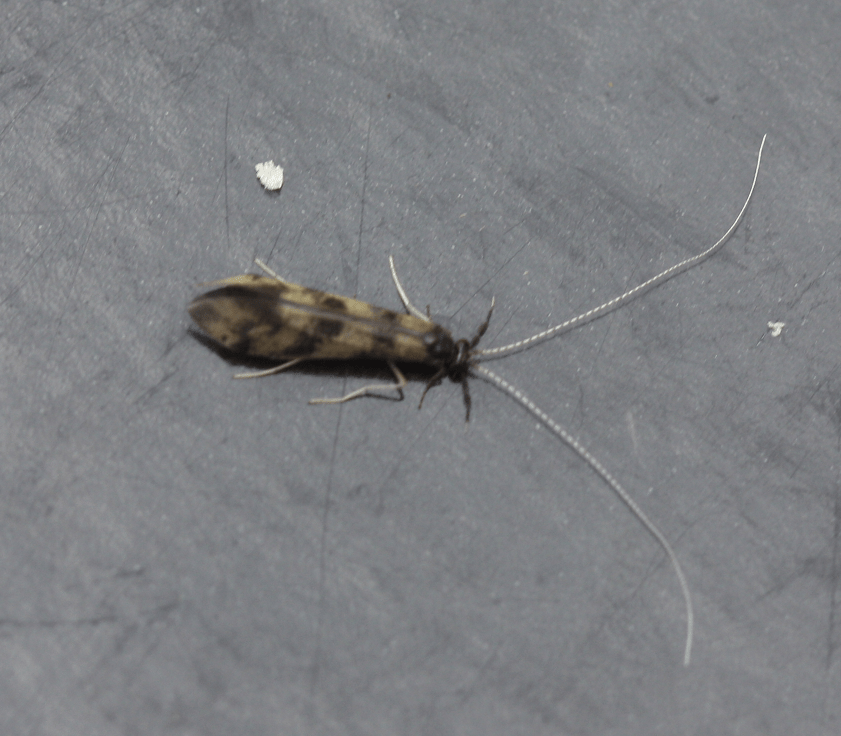
Naturally the moth trap attracted in a lot of other insects. One of the most often encountered, pretty much everywhere in this area, is this Caddis Fly:

Mystacides longicornis

The other insects found were: Mystacides longicornis; other Caddis Fly spp; Robber Fly; Hoverfly spp; Long Hoverfly; Dronefly; Ground Beetle spp; Pterostichus madidus; Pterostichus versicolor; Amara spp; Rove Beetle spp; 7-Spot Ladybird; 22-Spot Ladybird; Leafhopper spp; Common Fly spp; Small Blackfly; Common Carder Bee; Buff-tailed Bumble Bee – worker; Red-tailed Bumble Bee – male; Honey Bee; European Hornet; Darter dragonfly spp; Black Ant spp; Red Ant spp; Grasshopper spp; Roesel’s Bush-cricket.

The last has some quite striking markings:

Roesel’s Bush Cricket, Roeseliana roeselli

The other invertebrates were: Brown-lipped Snail; Unidentified Snail spp; Small Black & White shelled Snail; Small Stone White “Helix” Snail; Slug: Arion vulgaris “Davies”; Tent Spider spp; Wolf Spider; Harvestman spp; Woodlouse spp; Rough Woodlouse; Centipede; Earthworm spp.

The mammals identified were: Roe Deer, Muntjac; Fox; Badger; Rabbit.

The list of plants was, somewhat unsurprisingly, the longest: Pedunculate Oak; Ash; Field Maple; Crack / Grey Willow; Hawthorn; Blackthorn / Sloe; other Prunus spp; Crab Apple; Hazel; Elder; Spindle; Poppy; Bramble; Dogwood; Common Ragwort; Hoary Ragwort; Guelder-rose; Hawkbit spp; Cinquefoil; Dog Rose; Bulbous Buttercup; Fat-hen; Honeysuckle; Hop Trefoil; Bird’s-foot Trefoil (?); Dandelion; Ladies’ Bedstraw; Horseshoe Vetch; (Feather) Moss; Mallow; Common Agrimony; Sneezewort; Stinging Nettle; Horsetail; Common Yarrow / Field Horsetail; Biting Stonecrop; White Clover; Stitchwort / Mousey; Scabious spp; Knapweed; Red Dead-nettle; White Dead-nettle; Thistle spp; Crown Thistle (?); Teasel; Common Vetch; Black Medic; Thyme-leaved Sandwort; Ox-eye Daisy; Robin’s Pin-cushion; Musk Mallow; Cut-leaved Cranesbill; Briony; Groundsel / Chickweed; Willowherb (Hoary?); Wild Carrot; Tussock Grass; Ribbed Plantain; Meadow Vetchling; St John’s Wort; Germander Speedwell; Common Bindweed; Bittersweet Nightshade; Burdock; Hogweed; Ivy; Dock; Geranium; Broad-leaved Plantain; Lords & Ladies; Cornflower; Meadow Buttercup; Sorrel; Native Water-lily; Water Forget-Me-Not; Hedge Mustard.

Common Fleabane, Pulicaria dysenterica

Creeping Cinquefoil, Potentilla reptans

Fungi & Lichens: Lichen spp; Jelly Fungus; Field Mushroom; Under Tree Mushroom; Chalara Ash Die-back (Hymenoscyphus fraxineus)

Given that the group are primarily a small group of enthusiastic amateurs, this is quite a colossal achievement in such a short period of time.