Blues? What Blues? Somerford Common: Wednesday, 5th January 2022

Obviously a reference back to my last visit to Somerford Common where I found that Forestry England had mulched the entire area around my feeding station, with a subsequent drop off in the catch that day. As a result, I moved the feeders into an area closer to the remaining tree line. It is still in the mulched area, but has a tree-lined berm, a number of guard trees and some of the Blackthorn retained, because they are bearing the eggs of Brown Hairstreak butterflies. That, along with Marsh Fritillary, are key butterfly species for Forestry England in the Braydon Forest.

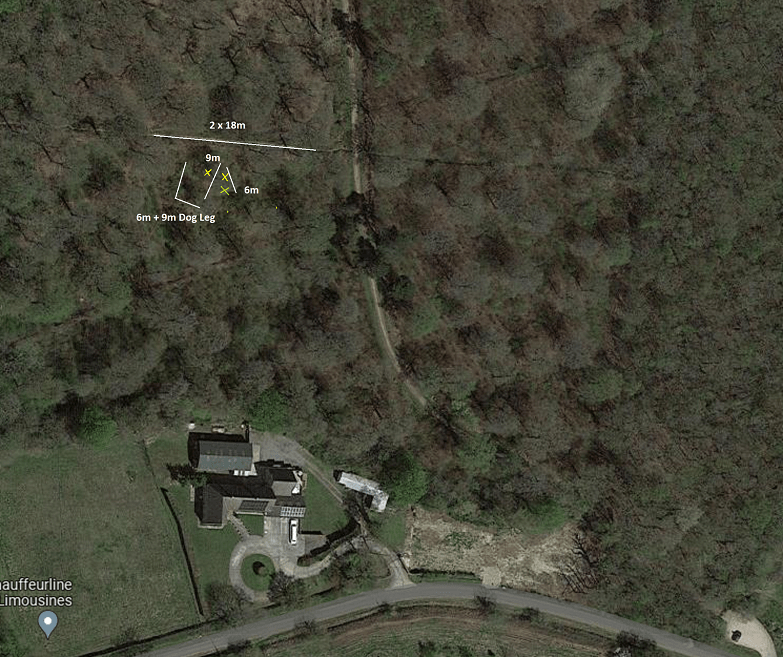
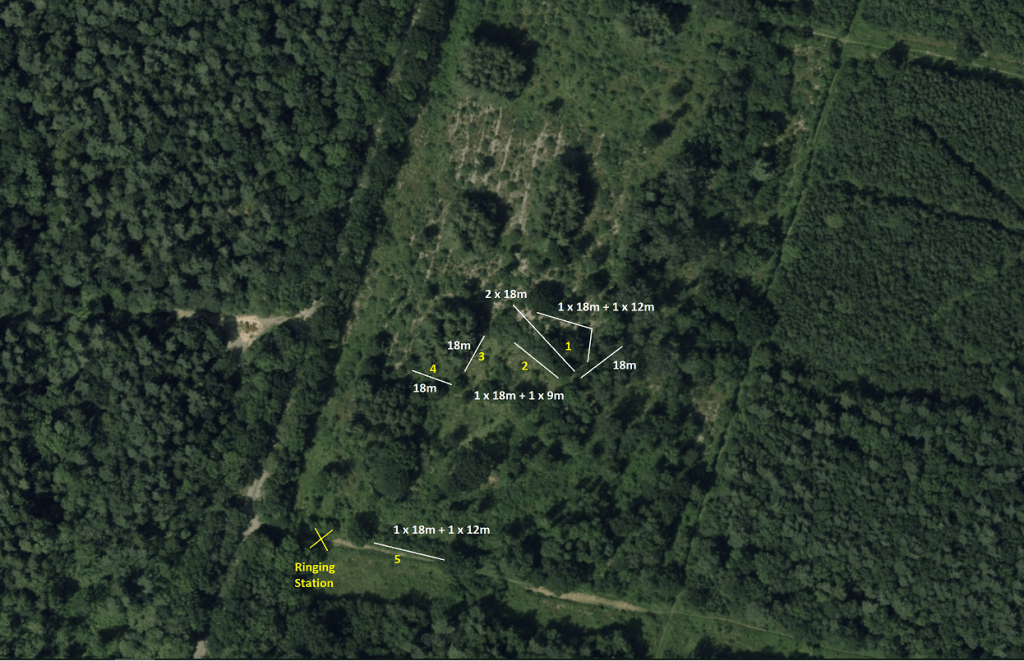
To be honest, I was just delighted to get out, having tried unsuccessfully on four occasions since the 22nd December. I was joined for the morning by Rosie and Jonny. Rosie did her usual: helped us set up and then had to head off for work at the Wildlife Trust having ringed a solitary Blue Tit. Jonny was also off to work but for 11:00, so he got to ring a few more birds. The set up was as follows:

The only net set that was retained is the one on the main path. The two white dots represent the feeding station. We put a lure for Redwing on the main path, and lures for Lesser Redpoll either side of the feeding station.

The first round proper, after Rosie had departed, gave us hope for rest of the session: as well as the expected Blue and Great Tits we had three each of Chaffinch and Goldfinch. We also caught our only two Redwing of the session, adjacent to the lure. There were quite a few Redwing flying around but, for once, they ignored the lure.

The next round delivered a couple of Lesser Redpoll. Jonny, despite being the busiest of our group, with some excellent sites, does not have one that consistently produces Lesser Redpoll, so he was really pleased with the catch. When the next round produced another bunch of Lesser Redpoll, he was very happy. This one was a retrap from my last ringing session, in Webb’s Wood on 22nd December:

Adult female Lesser Redpoll

The next round was much quieter. In fact, it stayed quiet until after Jonny left just after 10:30. Thereafter it got quite busy again and the list grew to a decent number. In fact, it was our fifth largest catch at the site. The list was: Great Spotted Woodpecker (1); Nuthatch (1); Blue Tit 16(9); Great Tit 2(3); Coal Tit 1(2); Marsh Tit (3); Wren (1); Robin 2(1); Redwing 2; Goldcrest (1); Chaffinch 6; Goldfinch 9; Lesser Redpoll 10(2). Totals: 48 birds ringed from 8 species and 24 birds retrapped from 10 species, making 72 birds processed from 13 species.

This augurs well for our scheduled ringing demonstration at Somerford Common on the 19th February!

I closed the nets at 12:30, and processed the last birds of the session, an hour later than I had planned, because the birds just kept coming, and then took down and was away from site by 13:45.

Braydon Forest Review 2021

This is a review of my team’s activity in the Braydon Forest in 2021.  The key highlight for me in 2021, however, was not site specific but was Jonny Cooper gaining advancement to his A-permit.  Jonny was my first trainee and is the first that I have managed to train up to A-permit level.  I am not taking credit for it: he has proven to be an excellent ringer and, as well as working with me, has taken advantage of every opportunity afforded to him by his relationship with the Wildfowl & Wetlands Trust, ringing Swans and other waterfowl, as well as trips to Iceland, ringing seabirds and Red-necked Phalarope, amongst others.  As a C-permit holder he has been massively engaged and a highly productive ringer, taking on a number of projects, including the lowland Curlew monitoring and his Langford Lakes / Wessex Water Reed Bed projects. 

For myself this year it has been difficult. The weather put paid to 25 of my planned 80 sessions.  I added 5 garden sessions to the schedule, but 60 sessions out of 85 was a 30% failure rate.

After the problem at Ravensroost Wood in July of 2020, a very similar incident happened in Red Lodge back in April.  This seriously knocked my confidence about working solo at the weekend, when there were so many more people about.  Post-lockdown footfall in all sites has been much higher.  So I asked my team if they could make sure that at least one of them could make themselves available. Everybody was as helpful as possible, with one exception, who left the group rather than help out.

Ravensroost Complex:

Due to restrictions imposed by the Trust on where I could set my nets, following the aforementioned vandalism incident in 2020, Covid concerns and the massively increased footfall in the wood, I stayed out of the wood until July.  I have only worked in the wood on 4 occasions this year.  It would have been more but the wet weather put paid to several attempted sessions in December. More of my ringing sessions in the Ravensroost complex this year were around the meadow pond area, where the Trust gave me permission to make it out of bounds to the public whilst I was working there and I could block the entrance with my car, to reinforce the point.  I carried out 6 sessions there but overall it was no more productive than the woodland, although there was far more variety.

The results have been both patchy and disappointing as a result.  The first woodland session in July was awful: 2 birds processed in 3 hours: a Blackbird and a Song Thrush.  It took me a while to regain my enthusiasm after that, so my next visit was in September, which yielded 14 birds in 4 hours (11 ringed and 3 retraps). Still, I persevered and carried out sessions in October and November, which were considerably better (46 and 58 birds processed respectively).  I had hoped to get a session in this December but it has just been far too wet and windy.

The list for the woodland this year was: Great Spotted Woodpecker (1); Nuthatch 2(2); Blue Tit 30(4); Great Tit 16(2); Coal Tit (2); Marsh Tit 3(5); Long-tailed Tit 4(2); Wren 2; Robin 2(1); Song Thrush 3; Redwing 2; Blackbird 3; Blackcap 3; Chiffchaff 2; Goldcrest 16(2); Chaffinch 3; Bullfinch 2; Lesser Redpoll 6.  Totals: 95 birds ringed from 16 species and 25 birds retrapped from 9 species, making 120 birds processed from 18 species.  For the second year running, since I started ringing in Ravensroost Wood, I ringed no Garden Warblers in the wood and the Blackcaps were caught on autumn migration. i.e. I have no proof of them breeding for this year. Equally, there was a dearth of both species at Lower Moor Farm. I believe that the rain and wind in May had them just keep going north until they got out of the rain.

The pond sessions were carried out in April, May, June, July and 2 in September.  The July session was 50% better than the July woodland session (Whitethroat, Blackcap and Blue Tit) but the others were certainly more productive overall.  The pond list for this year was: Snipe 1; Swallow 1; Blue Tit 16(1); Great Tit 3; Long-tailed Tit 1; Wren 5(4); Meadow Pipit 7; Dunnock 4(2); Robin 11(3); Redwing 1; Song Thrush 1; Blackbird 2(1); Reed Warbler 1; Blackcap 36; Garden Warbler 1; Whitethroat 3(1);  Lesser Whitethroat 3(3); Chiffchaff 11(2); Willow Warbler 4(2); Goldcrest 1; Chaffinch 1; Bullfinch 2(1); Goldfinch 3; Reed Bunting 2.  Totals 121 birds ringed from 23 species and 20 birds recaptured from 10 species, making 141 birds processed from 23 species.

Clearly there were 2 major highlights from the meadow pond sessions: my first Snipe caught in the Ravensroost complex and, secondly, a catch of 7 Meadow Pipits in one session. Previously I have caught the odd one at the meadow pond area.

Last summer the Trust erected 3 new Barn Owl boxes in the Avis . Ravensroost Meadows complex.  This year two of the three were occupied: by Stock Doves.  Each successfully reared a single chick.  Naturally the Barn Owls ignored the nice new boxes and nested in the dilapidated, falling apart box in the condemned barn in Avis Meadow.  There they successfully reared a brood of 5 chicks.

The Firs:

We managed 9 sessions in the Firs this year.  For the first time the total catch exceeded that of the Ravensroost complex, with 350 birds processed as opposed to 260, although the number of species in the Firs is between that of the Ravensroost Meadow and woodland, at 21 species caught.  On the whole, the sessions were productive.

The list was: Great Spotted Woodpecker 1(1); Nuthatch 5(4); Treecreeper 5(2); Blue Tit 79(46); Great Tit 39(44); Coal Tit 5(7); Marsh Tit (2); Long-tailed Tit 3(1); Wren 12(8); Dunnock 2(1); Robin 15(9); Redwing 6; Song Thrush 5; Blackbird 7(3); Blackcap 11; Chiffchaff 4(2); Willow Warbler 1; Goldcrest 6(3); Chaffinch 7(2); Bullfinch 1.  Totals: 215 birds ringed from 19 species and 135 birds retrapped from 15 species.

Somerford Common:

With 14 visits this year, Somerford was the most visited site for the team.  As a result, it also delivered the highest overall catch, with 305 ringed and 177 retrapped.  A month ago the area around the feeding station was cleared and mulched, with a consequent reduction in the catch. The feeding station has been moved into the uncleared area and it will be interesting to monitor the change.  The list for the year there was: Sparrowhawk 1; Great Spotted Woodpecker 4(2); Nuthatch (10); Treecreeper 3(1); Blue Tit 64(60); Great Tit 39(40); Coal Tit 15(6); Marsh Tit 7(27); Long-tailed Tit 11(2); Wren 6(4); Dunnock 2(3); Robin 20(9); Redwing 45; Song Thrush 3; Blackbird 4(2); Blackcap 9(1); Garden Warbler 1; Chiffchaff 7; Willow Warbler 6(1); Goldcrest 15(5); Chaffinch 19(1); Brambling 1(1); Bullfinch (2); Goldfinch 1; Lesser Redpoll 20; Siskin 1.  Totals: 350 ringed from 24 species and 177 retrapped from 18 species, making 527 birds processed from 26 species.

Highlights included the biggest female Sparrowhawk I have ever handled; the largest single catch of Redwing (at 18) caught at this site and another Brambling ringed and our first Brambling retrap: a bird ringed at Somerford last February.  The solitary Siskin was a first for Ellie to ring: the number was disappointing but is probably a result of the harvesting of the conifers on the other side of the road from our site in the last two years.

Webb’s Wood:

Due to the thinning work in the wood over last winter and the subsequent damage to the track from the heavy machinery, I was unable to access my ringing site until July and, with only 7 birds processed in that session, it didn’t look promising. However, we managed sessions in October, November and two in December, all of which gave a decent return.  The list was: Great Spotted Woodpecker (1); Blue Tit 45(17); Great Tit 24(15); Coal Tit 6(3); Marsh Tit 1; Long-tailed 15(1); Wren 7; Grey Wagtail 1; Dunnock 1; Robin 3(4); Redwing 8; Blackbird 1; Chiffchaff 1; Goldcrest 24(2); Lesser Redpoll 26.  Totals: 163 birds ringed from 14 species and 43 birds retrapped from 7 species.

The highlights were: our first ever Grey Wagtail in any of my northern sites and the massive increase in the numbers of Lesser Redpoll, with 26 caught in the two December sessions. I don’t know if the latter is a result of the thinning operation, but it is very welcome. Prior to this year we would catch 3 per annum on average, with the largest previous catch being 4 in 2013.

Red Lodge:

We managed 8 visits to Red Lodge this year. Troubled? Definitely. As anyone who reads the blog knows, apart from the altercation in April, the site has been targetted by local vandals for fly tipping on three separate occasions.  Unfortunately, scheduled sessions for the end of November and all of December have had to be cancelled because a large part of the site falls within the 10km surveillance zone for avian flu.  The BTO rules, sensibly in my opinion, prohibit ringing within that zone.  Although my ringing area is technically outside the zone, it would have been hair-splitting to ignore the restriction and I didn’t fancy the discussion.

The list for the year was: Sparrowhawk 1; Nuthatch 6(2); Treecreeper 1; Jay 1; Blue Tit 106(24); Great Tit 26(21); Coal Tit 6(5); Marsh Tit 3(3); Long-tailed Tit 1(1); Wren 11(1); Dunnock 2; Robin 12(4); Song Thrush 3; Blackbird 2(4); Blackcap 11(1); Chiffchaff 7; Goldcrest 8; Chaffinch 9(1); Brambling 1; Goldfinch 2(1); Lesser Redpoll 1(1). Totals: 220 birds ringed from 21 species and 69 birds retrapped from 13 species, making 289 birds processed from 21 species.

The undoubted highlight of the year was our first Brambling for the site.  This now means that we have caught Brambling at Somerford Common, Ravensroost Wood and Red Lodge in the last three years after nine years without a sighting, let alone a capture.

Blakehill Farm:

Like Red Lodge, Blakehill Farm was put out of bounds by the outbreak of avian flu at Castle Eaton. We managed to get in 8 full and 2 truncated sessions, including our autumn migration sessions, in before this however, with the following results: Curlew 1; Magpie 1; Blue Tit 18(4); Great Tit 8(3); Long-tailed Tit 18(6); Wren 10(5); Meadow Pipit 55; Dunnock 8(3); Stonechat 5; Whinchat 12; Robin 6(2); Wheatear 1; Redwing 39; Song Thrush 1; Blackbird 5(2); Sedge Warbler 1; Blackcap 2; Whitethroat 2; Lesser Whitethroat 1; Chiffchaff 6; Willow Warbler 2; Chaffinch 5; Goldfinch 2; Linnet 2; Starling 1; House Sparrow 6; Reed Bunting 8(1). Totals: 226 birds ringed from 27 species and 26 birds retrapped from 8 species.

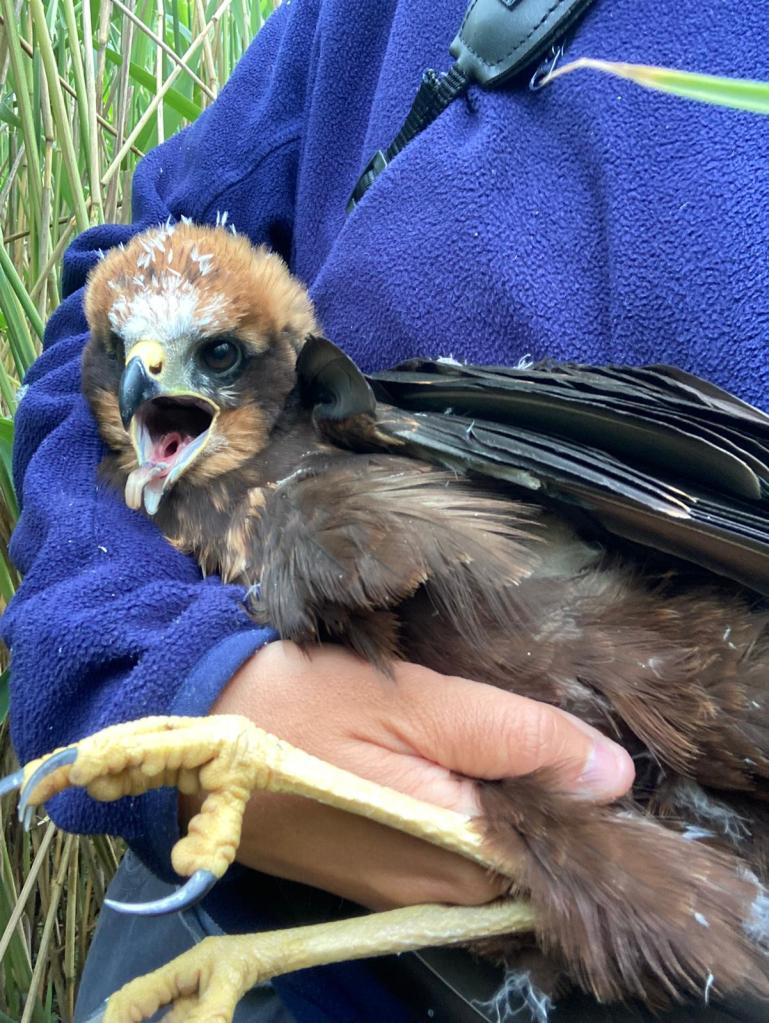
The highlight has to be the Curlew, ringed by Jonny as a part of the monitoring project. The first adult Curlew to be ringed in the Braydon Forest, and the first in Wiltshire by our group (and, I suspect, any other) for over 30 years.  That said, I was delighted to catch the first Wheatear by anyone in the group since 2012.  The Whinchat numbers were the second best for the site maintaining the solid autumn passage numbers of this species passing through Blakehill.

Numbers of Redwing and Meadow Pipit have been curtailed by our not being able to access the site due to the avian flu outbreak. 

Purton:

For the sake of completeness, as Purton lies within the Braydon Forest, this is a summary of the ad hoc ringing I did in my garden this year.  It is a lower total than usual, but I think that reflects my activity rather than a change in the numbers of birds. The list for the year was: Woodpigeon 4; Collared Dove 1; Blue Tit 26(14); Great Tit 3; Coal Tit 1(1); Long-tailed Tit 2; Pied Wagtail 1; Dunnock 4(1); Robin 3(1); Blackbird 2(3); Goldcrest 1; Goldfinch 18(1); Greenfinch 2; House Sparrow 1; Starling 19.

My garden highlight was the first Pied Wagtail for the garden and only the third caught at any of my sites (Brown’s Farm in 2019 and Blakehill Farm in 2015 being the other two).

Barn Owls etc:

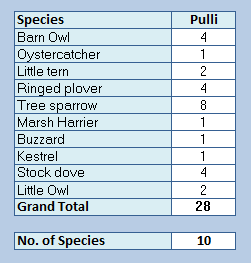
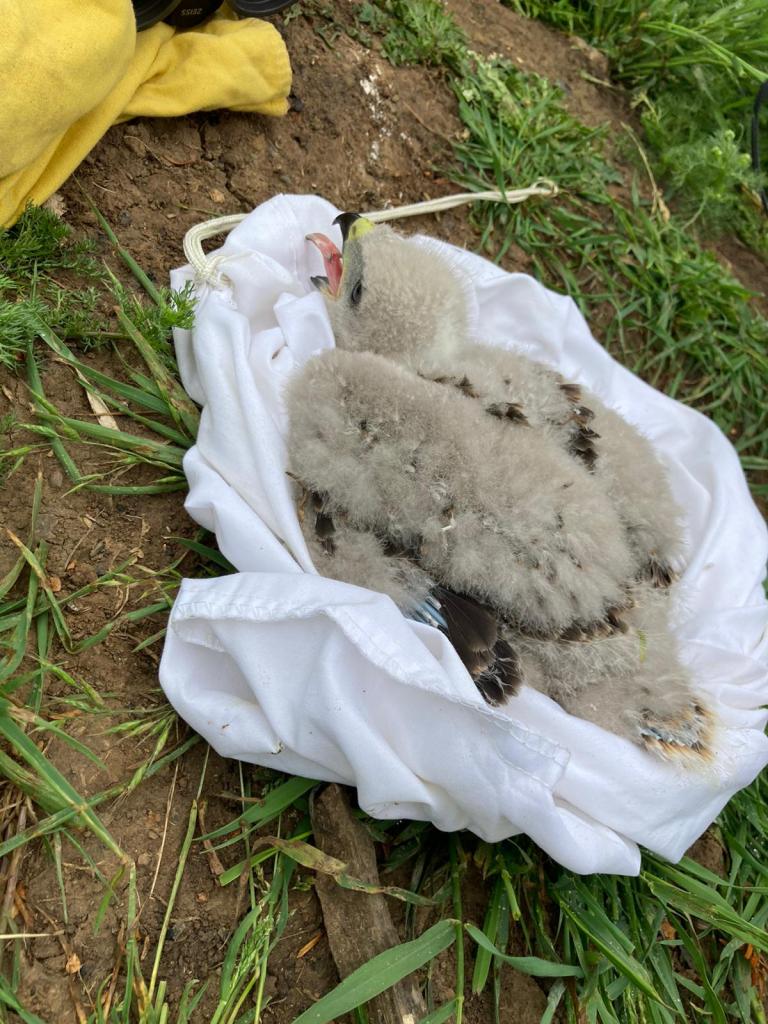
There are a number of Barn Owl boxes within the confines of the Braydon Forest, and they have been productive in 2021. We monitored a total of 17 boxes this year, from which we ringed 19 Barn Owls (1 adult + 18 chicks); 2 Stock Dove pulli and 2 Jackdaw pulli.  This is our best return in the Forest since I started monitoring them 4 years ago.

Braydon Forest 2021 Totals:

Snipe 1; Curlew 1; Barn Owl 19; Sparrowhawk 2; Woodpigeon 4; Stock Dove 2; Collared Dove 1; Swallow 1; Magpie 1; Jay 1; Jackdaw 2; Great Spotted Woodpecker 5(5); Nuthatch 13(18); Treecreeper 9(3); Blue Tit 384(170); Great Tit 154(129); Coal Tit 33(24); Marsh Tit 14(37); Long-tailed Tit 55(13); Wren 53(22); Meadow Pipit 62; Pied Wagtail 1; Grey Wagtail 1; Dunnock 23(10); Stonechat 5; Whinchat 12; Wheatear 1; Robin 72(33); Redwing 102; Song Thrush 16; Blackbird 26(15); Reed Warbler 1; Sedge Warbler 1; Blackcap 72(2); Garden Warbler 2; Whitethroat 5(1);  Lesser Whitethroat 4(3); Chiffchaff 38(4); Willow Warbler 13(3); Goldcrest 71(12); Chaffinch 44(4); Brambling 2(1); Goldfinch 26(2); Lesser Redpoll 54(1); Siskin 1; Linnet 2; Greenfinch 2; Bullfinch 5(3); House Sparrow 7; Reed Bunting 10(1). Totals: 1,456 ringed from 51 species and 516 birds retrapped from 24 species, making 1,972 birds processed from 51 species.

In pure numbers, this is the worst year I have had in the Braydon Forest. Even with the Covid disruptions and associated issues, last year produced 2,704 birds processed from 50 species. However, the key reason for the difference is the number of sessions: 73 carried out in 2020 and only 60 full sessions managed in 2021, out of 85 scheduled. The weather was the key problem.

Webb’s Wood: Wednesday, 22nd December 2021

After the miserable failure to get to Ravensroost Wood at the weekend and Monday, naturally, Tuesday would have been fine for a session. However, knowing I was going to be at Webb’s on Wednesday with Ellie joining me, and Matt, who contacted me through the blog, coming along for his first taster session, I decided that 5 days of early starts is far too reminiscent of being back at work, so stayed in bed. I did pop over to Webb’s Wood later that morning to fill up the feeding station.

Wednesday arrived dry, cold and windless: perfect winter ringing conditions. Matt was in the car park when I arrived for 7:30 at Webb’s, and Ellie joined us soon after. We started setting the nets and had them open by 8:30. Because it was a cold start, all nets were closed once erected, until the final nets were in place, when they were all opened together, to ensure that no birds were in the nets for any length of time. As the site we ring is very compact, and all nets are in nearly full view from the ringing station, we ensured that all birds were extracted within a couple of minutes of being caught in the nets.

I put on lures for Redwing and Lesser Redpoll. The former was a complete failure last time in Webb’s but, pleased to say that, this time the Latvian love song (as it is known) worked its magic and we had a small catch of Redwing in the first round. Thereafter they just flew over and ignored it but we got some.

The birds didn’t really start moving until 9:00. Our first bird, at 8:50, was a solitary Blue Tit. The second round, at 9:25, was the busiest, with 17 birds, including our four Redwing and six Lesser Redpoll. Thereafter they came in threes and fours until we closed the nets at 11:30.

The list for the day was: Blue Tit 6(7); Great Tit 3(4); Robin 2(2); Redwing 4; Goldcrest (1); Lesser Redpoll 6. Totals: 21 birds ringed from 5 species and 14 birds recaptured from 5 species, making 35 birds processed from 6 species.

Not a huge catch but it is noticeable that we are catching far more Lesser Redpoll in the wood than we ever have before. Prior to this year, from when I started working in Webb’s Wood in 2013, we had caught a total of 18 of them. So far, in just two sessions in December, we have caught 26 of them (after last time’s stupendous catch of 20 of them). I wonder if that has anything to do with the thinning of the wood over the last winter?

It was a nice, easy session. Matt enjoyed the experience and will be joining me again over the holiday period. We were packed up and leaving site by 12:30 – cold but happy.

Bird Flu Impacts & Weather Forecasts

Unfortunately, due to a bird flu outbreak at Castle Eaton several of my sites are covered by the 10km surveillance zone. BTO rules are, sensibly, that we should exercise caution and not operate ringing sessions within the surveillance zone.

This has had consequences for my sites at Blakehill Farm and Red Lodge. Although Red Lodge is not fully within the surveillance zone, my ringing site is on the edge of the zone, so I am treating it as if it is fully within. For a week, until they centred the zones properly (they originally centred it on central Swindon) both mine and Ellie’s gardens were within the zone. Since they centred it on the actual site of the outbreak we are both now outside the 10km restriction.

Last Saturday, the 18th December, I was scheduled to ring at Ravensroost Wood. The forecast was for it to be dry until mid-afternoon. Up at 6:45, I checked the weather before making my flask of coffee. Between putting the kettle on and filling the flask, it decided to rain. At the time Meteo (who also do the BBC forecasts), the Met Office and xcweather were all telling me it was dry. Back to bed. It eventually stopped about 9:30.

Sunday’s forecast was also dry: this time it was raining when I got out of bed. Back under the covers, promising myself that I would go Monday. So, next morning, up, out of bed, no rain, packed flask and nibbles, headed off to Ravensroost Wood. Drove to my net rides, exited the car to feel the first drop of rain! I waited 30 minutes to see if it would stop and it didn’t, so I went home again. Three days on the trot the weather forecasters got it completely wrong.

All those satellites, all that computing power and they are about as accurate as grandad’s bunion or a bunch of dry seaweed. It is as much of a profession as being a fortune teller is!

Rant over!

Sometimes It Is Hard Work: The Firs, Tuesday, 14th December 2021

Ellie Jones and I had planned to ring in the Firs on Sunday. As I arrived on site I got a text from Jonny Cooper advising that there had been an outbreak of bird flu in the local area, so I cancelled the session just in case we were within the restricted zone. The BTO, sensibly, err on the side of caution and don’t allow ringing within the 10km surveillance zone. On checking, two of my sites: my back garden and Blakehill Farm are within the zone and Red Lodge is partially within it, although not the area that I work within.

On a whim, I decided to carry out the missed session at the Firs this morning. The Firs is rather deceptive: it looks easy, but it has a considerable slope from the car park to the central glade where I set my nets. When there is a group of you working it isn’t too bad but when you are working solo it is one heck of a cardio-vascular workout, and I am not getting any younger. Add in to that, the catch today was the third largest I have had anywhere this year, and those other two were with a team to share the load: it was a heavy session.

Having arrived on site just after 7:00, I had the nets open quite quickly and put a lure on for Redwing on the bottom nets. This gave a quick initial return of six in the net just after 8:00. That was all of them that I caught – but it is the second largest catch I have had in the Firs (although well short of the 24 caught in on the same day in 2014).

As usual, with a feeding station set up the catch was Blue and Great Tit heavy but, with 12 species in the catch, it was a decent variety: Nuthatch (1); Treecreeper 1; Blue Tit 21(12); Great Tit 10(5); Coal Tit 1(1); Wren 2(3); Dunnock 1(1); Robin 1(1); Redwing 6; Blackbird 1; Goldcrest 2(1); Chaffinch 1. Totals: 47 birds ringed from 11 species and 25 birds retrapped from 8 species, making 72 birds processed from 12 species.

Unexpectedly for both parties, I was joined just before 11:00 by one of the Wiltshire Wildlife Trust’s Adult Well-Being groups, so I spent the next hour-and-a-half showing the attendees a variety of species up close, explaining about the ringing scheme and what happens with all of the data. They loved watching me get pecked by the Blue and Great Tits and the tiny Goldcrests but the bird that they all showed the most appreciation for was this:

Wren

It was its demeanour: it held itself as though it was so much above our shenanigans.

I shut the nets as I emptied them, starting at just before 11:30. As is par for the course in the Firs, this last round yielded another 21 birds, mainly Blue Tits, and so I didn’t end up leaving site until 13:30.

Somerford Blues: Saturday, 11th December 2021

With grovelling apologies to Eddie Cochran:

Not gonna raise a fuss, not gonna raise a holler
But I gotta say something, cos I’m hot under the collar!
I went to the site to do my winter CES
And what I found was this terrible mess
I don’t know what I’m a gonna do, cos there ain’t no cure for the Somerford blues

No place for birds to perch, no place for them to shelter
No place for them to hide from any avian predator
There was just this open devastation
With nothing here to hide my feeding station
I don’t know what I’m a gonna do, cos there ain’t no cure for the Somerford blues

This is what has prompted my terrible verses (and rhyming “shelter” with “predator” should be a capital offence):

This happened between my last session there on the 28th November and when I went to top up the feeding station on Thursday. I was told by Forestry England that the management plan for this area was to be coppiced on an 8 year cycle, but this has been stripped, not even 4 years since it was first done. The exceptions to the clearance being a few straggly bits of Blackthorn, which have been identified as having Brown Hairstreak eggs on them, as well as the established guard trees and the Silver Birch within which my feeding station is set up.

I notified the BTO that I might have to drop the site from the CES trial and, unfortunately, today’s results have confirmed that it cannot continue. To get any sort of decent catch there this winter I am going to have to change the net positions, to incorporate some more cover to protect the birds and make the feeding station a more attractive proposition. To be honest, though, my biggest disappointment is that the place was looking perfect for Garden Warblers next year. Way back in 2008, before I started ringing, I surveyed this site for the BTO’s revised Bird Atlas and, with the vegetation at a similar height and structure to what was in place before this week, my two summer / breeding season visits showed good numbers of Garden Warbler in that area and I was hoping for a repeat.

I was joined for the session by Anna, although she had to leave the session early, but she didn’t miss much. The list from the session was: Great Spotted Woodpecker (1); Blue Tit 1(8); Great Tit 2(6); Coal Tit 1(2); Marsh Tit (3); Dunnock (1); Robin (1); Blackbird 1; Chaffinch 2. Totals: 7 birds ringed from 5 species and 22 birds retrapped from 7 species, making 29 birds processed from 9 species.

One thing that Jonny Cooper and I recently discussed was how frequently we recapture birds with consecutive ring numbers weeks, months and years after they were ringed. For example, today we caught three Blue Tits, with the ring numbers AAL0006, AAL0007 and AAL0008. They were all ringed on the 30th December 2019 at Somerford Common. Numbers 6 and 8 have been recaptured separately on 2 and 4 occasions respectively, but this is the first time they have all been recaptured together and it is almost 2 years since they were ringed. We also caught consecutively numbered Great Tits: PF36524 and PF36525. Not only were their numbers consecutive, but they were close together and in the same net. One is a male, the other a female: do Great Tits form lasting breeding pairs? I have found papers that say that male Great Tits will seek to pair bond early, prior to the breeding season but to catch two birds, ringed at the same time on the same date and recovered, as outlined above, at the same time in the same net. This suggests a multi-season pair bond.

One other interesting catch was a juvenile male Blackbird with a bald spot and a single white feather but, attached to its scalp, at the base of that feather, was a fat and well-fed tick:

I closed the nets at 11:30 and took down and left site by just gone midday – the benefit of only setting six nets.

Webb’s Wonder: Sunday, 5th December 2021

After a week where sessions had to be cancelled at the last minute, because of unforecast changes in the weather, I was determined to get out if at all possible. I woke to find that the overnight rain had cleared, as forecast, and the wind was breezy but not overly strong. By the time I got to Webb’s Wood there was still no sign of rain, but the wind had really picked up. The tops of the trees were whipping around and groaning like crazy. I knew I could set nets in relatively sheltered areas but the feeding station area was in the teeth of the wind.

The feeding station had been topped up on Tuesday but, as my car decided to shred a wheel bearing whilst I was doing the feeding station run and, as my mobile mechanic advised, I was lucky that the wheel did not come off before I got it home, I didn’t get out again to top up at Webb’s before this morning, whilst he got the parts and rebuilt the wheel and axle. The feeders were all empty and I was hopeful of a similar result to our last visit when the team processed 65 birds, including our first Grey Wagtail for the Braydon Forest. With a 7:00 start, I was joined by Adam and Anna, with Jonny popping in to help set up, and for a chat about the planned Dipper project, and Claire brought Samuel along for another taster session a little later on.

This is where our ringing site is within Webb’s Wood:

As you can see, it is a fair way into the wood. We set up as follows within that area:

Ordnance Survey have not yet updated their aerial photograph since last winter’s thinning operations, so there is somewhat more space between the trees than this diagram shows. Our ringing station was set up on the turning area at the end of the clear path. We put a lure for Redwing on the easternmost 3 x 18m net ride and for Lesser Redpoll on the other 3 x 18m ride and on the single 18m net. I assumed that the feeding station would be a big enough draw in itself.

We set up the two 3 x 18m net rides first. By the time we had set up the second net ride, two Wrens had flown into the first. As soon as we had set the other three nets we had a Great Tit fly into the 18m single. We waited until 8:30 until we caught another Great Tit and a Blue Tit. Everybody was getting cold, the weather was dull and miserable, and we were sitting there discussing how bad it had to get before we would pack up, go home and get warm, when a small flock of Lesser Redpoll flew into the small clump of willow adjacent to the ringing station. We all held our breath waiting to see what might happen and then watched as they piled into the net. Eleven Lesser Redpoll later we were happy to stay a bit longer! Even Jonny decided that he would actually ring a couple, and I broke my rule and ringed one of them. To put that catch into perspective, the largest catch of Lesser Redpoll in Webb’s Wood was four on the 30th October 2013. Apart from that, we rarely catch them there. I wonder if that is as a result of the thinning of the wood?

Male Lesser Redpoll

Jonny had to leave after that little influx and soon afterwards Claire took Samuel home, as he was getting chilled and a little bored at the lack of activity because. between then and 10:15. we caught only another two birds: a Blackbird and another Lesser Redpoll. Thereafter, between 10:15 and 11:00 we had a good catch of birds: my fault for suggesting that we would start taking down the nets at 10:30, because it wasn’t getting any warmer and we were getting chilled. I have to stress: whilst I am moaning about being cold, it was not too cold for ringing. The temperature never dropped below 4 degrees Celsius, and we did not have a single bird showing signs of cold stress.

The list for the day was: Blue Tit 4(2); Great Tit (5); Coal Tit (1); Long-tailed Tit 5; Wren 2; Dunnock 1; Robin (1); Blackbird 1; Lesser Redpoll 20. Totals: 33 birds ringed from 6 species and 9 birds retrapped from 4 species, making 42 birds processed from 9 species. Of the 43 birds processed, 30 were caught in the single 18m net and 10 were caught in the feeding station nets, 3 in the ride nearest the ringing station and just one same day retrap in the furthest net ride, which we just released. I will bear that in mind for future sessions and might save the effort of putting it up.

To underline the importance of this catch of Lesser Redpoll for my team: it is our biggest to date in the Braydon Forest since I took over managing the ringing in the sites. Last year we caught an excellent total of 17 in Ravensroost Wood’s 8-year coppice area on the 12th November. Somerford Common, where we catch them most regularly, we have had a 14 and a 12, but until now Webb’s has been the second least productive of the Braydon Forest sites (ahead of the Firs, which has only given up two of them on one occasion in November 2016).

Another pleasing aspect of the catch was, following on from ten at our last visit, a small flock of five Long-tailed Tits. On both occasions they were all unringed. The norm in my catches is for 60% to be retraps and 40% unringed.

We finished taking down just after 11:45 and headed home to warm up. As I was driving up the road from the Braydon Crossroads to Purton, I had to slam on my brakes as a Buzzard flew across the road, crossing right in front of my windscreen! A cold but satisfying session.

West Wilts Ringing Group: November 2021 Results

Another good month for the group, despite some pretty iffy weather, culminating in Storm Arwen.  It is our highest catch for any November since the split at the beginning of 2013. The increase was driven by an increased number of retrapped birds and an astonishing number of Redwing.  We managed 22 proper sessions, ignoring the odd bird blundering into a net in Andy’s, Alice’s or my garden. 

After a slow summer, my sites are beginning to pick up and my little team actually produced 35% of the records.  This year it was 315 ringed and 140 retrapped against 260 ringed and 75 retrapped last year.  A huge contribution to that, despite their numbers being down across the group compared to last year, is Blue Tits, with 111 ringed and 53 retrapped against 44 ringed and 27 retrapped in November last year. 

I don’t think it has anything to do with feeding stations: this year I didn’t actually put up my feeding stations until the first week of the month, to coincide with starting the winter CES at Somerford Common.  Last year I opened them in mid-October, but the weather has been much milder this year.  It might well be that the winter CES is responsible: our session two, on the 28th November, delivered 6 new and 39 retrapped birds.  That 39 represents the difference between the previous best November retrap count and this year’s. 

The clear differences in numbers are the lower than last year catches of Meadow Pipit, Blue and Great Tits, and the astonishing increase in the number of Redwing caught this year.  That is mainly down to a huge increase in the catch on Salisbury Plain compared with last year: 142 vs 31, with honourable mentions for East Tytherton at 60 vs 27 and Sutton Benger at 45 vs 22.  The Salisbury Plain catch was driven by a single catch of 69 on the 16th of the month. 

We also had reasonable increases in the numbers of Wren and Robin ringed.  The number of retrapped Marsh Tits was astonishing: the 3 ringed birds (one at Somerford Common and two at Red Lodge) plus the 18 retraps representing 13 individual birds, with 5 doubles at Somerford Common, making a total of 17 encounters this month. No doubt the winter CES is impacting on the recapture of Marsh Tits at Somerford Common.

My team had several highlights this month: the two Brambling, a first for Red Lodge and a recapture at Somerford Common of a bird ringed at the site in February of this year, both being our first late autumn birds in the Braydon Forest; a Grey Wagtail in the middle of Webb’s Wood, a first for the site, and a solitary Linnet at Blakehill Farm.  One would expect to catch plenty there but we do catch very few: just 2 or 3 per year with the exception of 2018 when we caught 12.

Grey Wagtail (photo by Anna Cooper)
Linnet
Brambling retrapped at Somerford Common

Retrap Central: Somerford Common, Sunday, 28th November 2021

As Storm Arwen (is J.R.R. Tolkein getting royalties?) hit with a vengeance on Saturday, we pushed the scheduled session back to this Sunday morning. As a result, I lost the services of a couple of the team, having already lost one to illness, so my grand plan for several nets away from the usual setup was shelved. However, I was joined for the session by Anna and we set our usual nets. I was interested to see whether the storm would have impacted on our catch. I think it probably did: we only caught one finch when we would usually expect to catch two or three species of finch. As it was, the one finch we caught was a good one though.

One of the arguments often trotted out by the anti-ringing fraternity is that the recovery rate is so low. If you are ringing at a migration hotspot then the likelihood of a high, local recovery rate is obviously not going to happen. When, like me, you ring the same sites throughout the year, with just one site that attracts good numbers of passage migrants (Blakehill Farm), then your recovery rate is much higher. Over the nine years that I have worked these sites retrap rate is over 25% per annum. Clearly, with young passerines suffering from a 70% to 80% mortality rate in the six months post-fledging, a 25% recovery rate is pretty good.

Today at Somerford Common, carrying out our second winter CES session there, we caught 40 birds from 9 species: 31 of them were recaptured birds. Primarily they were resident species, and to recapture 5 Marsh Tits in one session was extremely pleasing. However, we also had the excitement of catching our first ever retrapped Brambling. It was ringed at Somerford on the 27th February this year.

Brambling photo courtesy of Anna Cooper

The most venerable bird caught today was a Blue Tit, ring number S580946, ringed as a juvenile 5 years ago.

The list for the day was: Nuthatch (3); Blue Tit 3(17); Great Tit 2(2); Coal Tit (1); Marsh Tit (5); Wren 2; Robin 1(2); Blackbird 1; Brambling (1). Totals: 9 birds ringed from 5 species and 31 birds retrapped from 7 species, making 40 birds processed from 9 species.

One oddity amongst our catch was a Blue Tit with a deformed bill. It seemed perfectly healthy and was a good weight, so it is clearly not suffering as a result:

Blue Tit with deformed beak. Photo courtesy of Anna Cooper.

We closed the nets after our round at 11:30, took down and left site by 12:15.

Red Lodge Lesser Redpoll Update

I loaded the data from this morning’s session into DemOn by about 14:00. Then I wrote the blogpost about the session, which I published at just after 16:00 this afternoon. Had I looked at my email before publishing I would have found the recovery report from the BTO, which arrived in my inbox at 15:52.

Anyway, to confirm that the bird has northern roots: it was ringed on the 28th September 2020 on a ringing site at Hatfield Moor, South Yorkshire. It has therefore moved 227km, 197 degrees South-South-West. The time gap is 422 days, but that isn’t really relevant, as I suspect it will have moved around in the intervening period.

This is a major benefit of the BTO’s online data entry system. As I entered the data I got notification that our data matched with what would be expected. One day, in a future systems upgrade, we will be able to see the full history of any bird we capture. I can’t wait.