I have been moth trapping in my garden since 2011. The advent of digital photography has revolutionised the study of moths: trays of record specimens, killed and pinned to boards, have largely been replaced by hundreds (thousands?) of photographs. I have never felt the need to “collect” specimens in that way, anyway.
Over the years I have had some wonderful catches, including a first for Wiltshire:
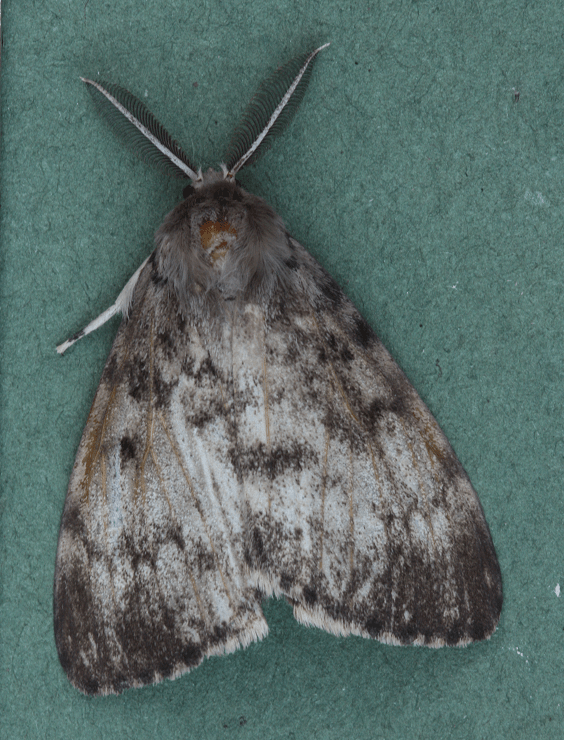
Gypsy Moth, Lymantria dispar
It became extinct in the early 1900’s and was apparently accidentally reintroduced, probably through the port of London in about 1969. Numbers have increased and are regularly reported in Wiltshire these days.
Anyway, since I started I have recorded over 450 species of moth in my garden. 150 species of micro moth and 300 species of macro, not including aggregates. I refuse to extract genitalia to distinguish between, for example, Dark Dagger and Grey Dagger. I have managed to distinguish them because I have found caterpillars of both in my garden and they are clearly different.
Anyway, last night I set my Mercury Vapour, Robinson trap in the garden to see what might be found. The list for the night was an encouraging early catch:
Micros: Light Brown Apple Moth 2; Eudonia angustea 1.
Macros: Poplar Hawkmoth 1; Garden Carpet 1; White-spotted Pug 1; Grey Pug 1; Brimstone Moth 1; Brindled Beauty 2; Swallow Prominent 1; Muslin Moth 1; Silver Y 1; Nut-tree Tussock 1; Mullein 3; Hebrew Character 2; Bright-line Brown-eye 1; Flame Shoulder 5.
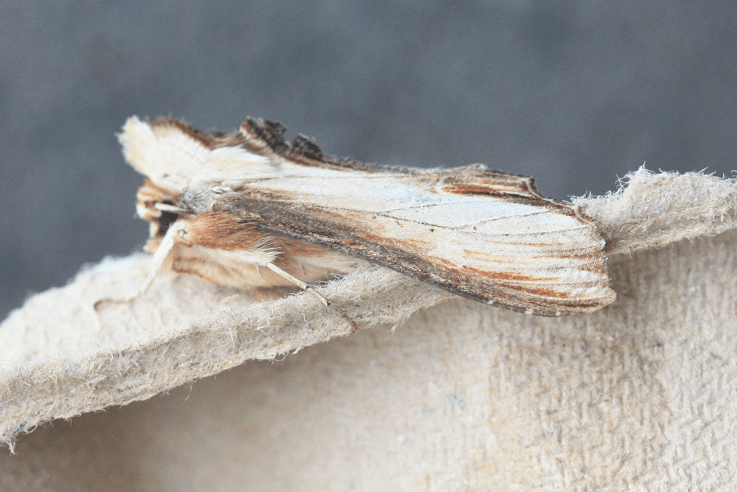
Mullein, Shargacucullia verbasci
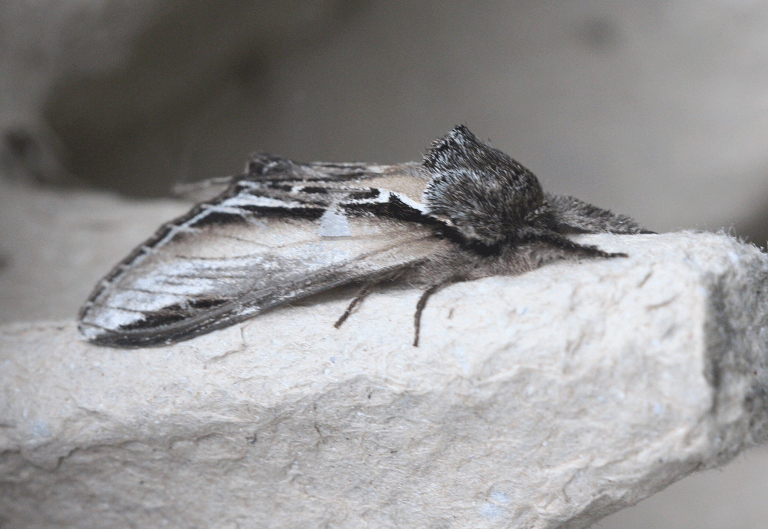
Swallow Prominent, Pheosia tremula
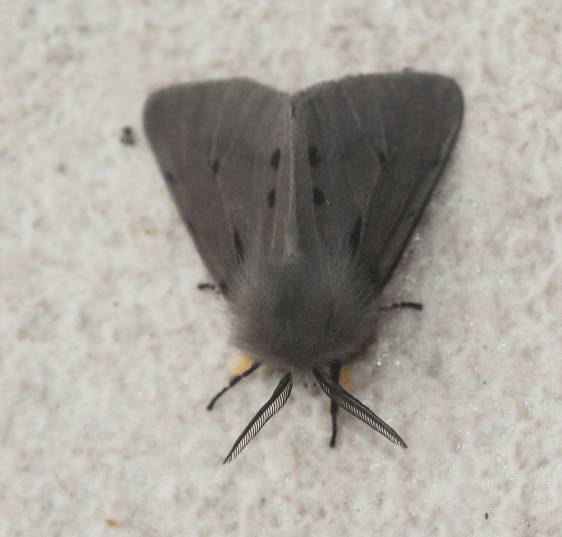
Muslin Moth, male, Diaphora mendica
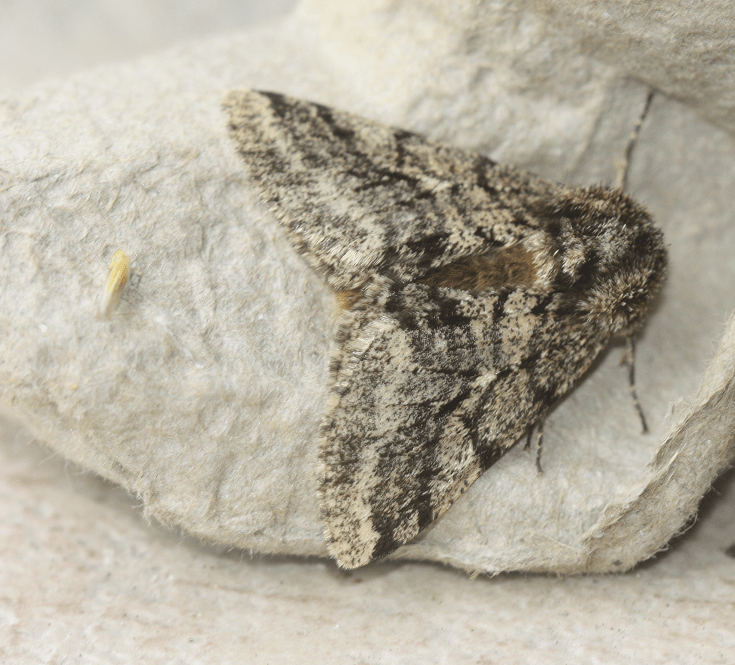
Brindled Beauty, Lycia hictaria (Note the tiny yellow beastie on the left: could be a micro, could be the nymph of some other insect.)
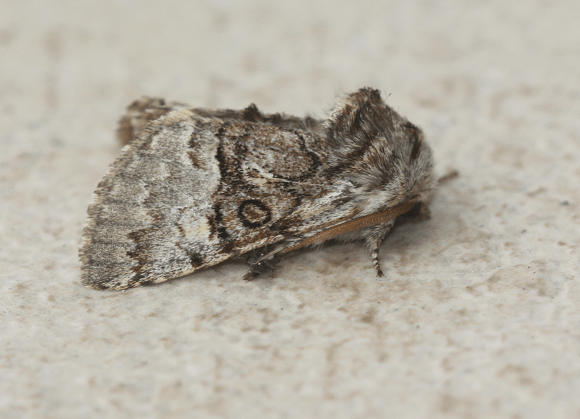
Nut-tree Tussock, Colocasia coryli
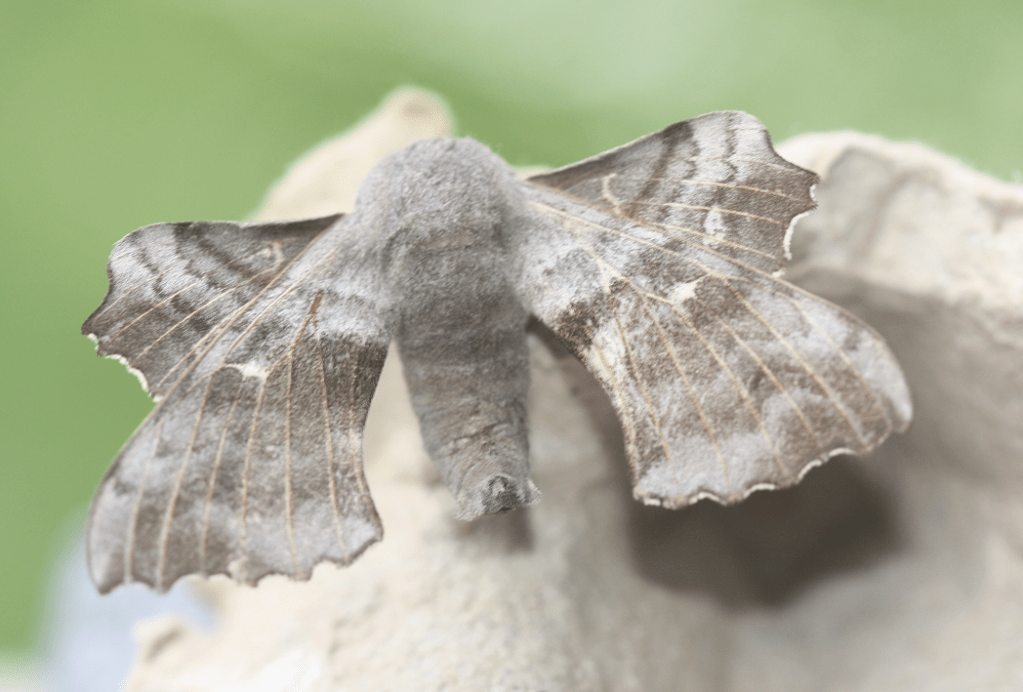
Poplar Hawkmoth, Lacothoe populi
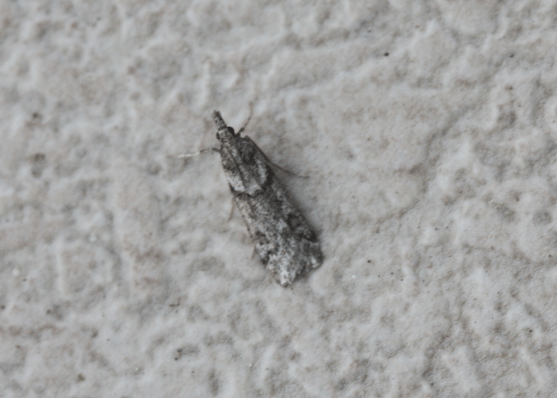
Eudonia angustea
 Ringing In The Braydon Forest & Beyond