Webb’s Wood: Saturday, 12th January 2019

On a cool, blustery morning Jonny Cooper, Andrew Bray and I took ourselves off to Webb’s Wood. One of the benefits of woodland sites at this time of year is that they are relatively sheltered from the wind, depending upon the prevailing direction, so we can carry out ringing activities when other habitats would not be available.  The downside is that the variety will not be that great.  We were able to set up four short net rides plus nets by the feeding station.  The feeding station gave a good indication of what we were likely to catch.   I topped up the feeders on Thursday morning: the peanut feeder was half empty, the seed feeder hadn’t been touched.  True to expectation, those nets delivered just Blue, Great and Coal Tits.

However, it was a relaxed session with a reasonable catch and variety.  The list was: Nuthatch (1); Treecreeper 1; Blue Tit 6(4); Great Tit 1(3); Coal Tit 2(3); Long-tailed Tit 3; Robin 1(1); Goldcrest 8(1).  Totals: 22 birds ringed from 7 species, 13 birds recaptured from 6 species, making 35 birds processed from 8 species.

Any session where we catch 9 Goldcrests is a good session.  They are very attracted to MP/3 lures.  Being birds that weigh in the region of 5g, I am always mindful of their welfare and so I never put a lure on for them if the temperature is very low.  As it wasn’t too cold this morning, I did put on a lure, but not until 10:30 this morning.  I didn’t want to target them until they had a good chance to feed up.  We then caught 9 in the next hour: which just underlines how attracted they are to lures.  They were all processed and released without mishap.  It is what we expect, but always good to be able to report it.

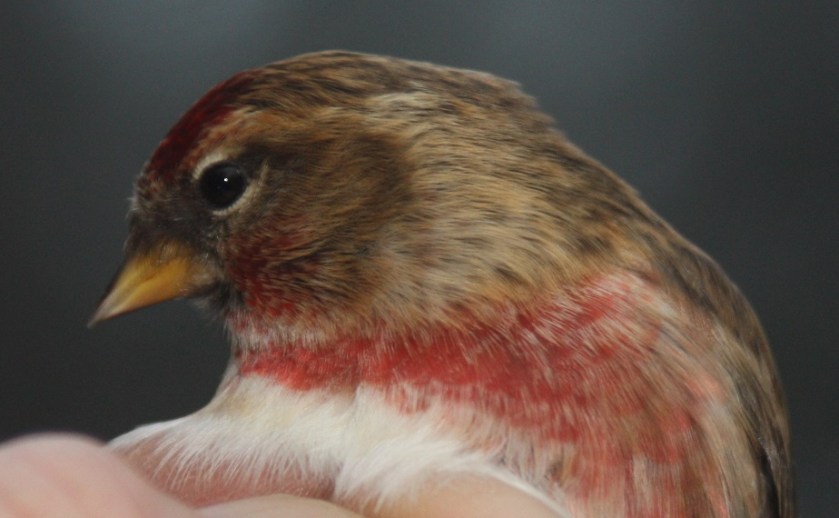
There were several small flocks of Redpoll around, but they weren’t stopping, just flying through. Hopefully we will catch a few in the next couple of months.

We closed the nets at 11:30 and were away from site by just gone midday: with Andrew heading off purposefully to find the Smew at the Cotswold Water Park.


Lacock Abbey Allotments: Thursday, 10th January 2019

A post by Andrew Bray:

The first session of the year at Lacock Abbey Allotments started on a bright and sunny morning, which gradually clouded over as it progressed.  It started out very cold and seemed to get colder as the morning wore on.  My toes are gradually defrosting at home!

I filled up the on-site seed feeders and set one net nearby.   The catch was consistent and I was kept busy during the session.  All of the the recaptured birds were ringed by me at the site.

I was lucky enough to catch a Woodpigeon.  It was feeding on the ground and flew into the bottom shelf of the net when I approached.  They are large birds, and can get themselves out of the net more often than not.  However, I got to it before it could escape, and I was glad that it was the only bird I had to run for!

The list for the day was: Woodpigeon 1; Great Spotted Woodpecker 1; Nuthatch (1); Blue Tit 10(3); Great Tit 3; Coal Tit (1); Wren 1; Robin 2(3).  Totals: 18 birds ringed from 6 species; 8 birds recaptured from 4 species, making 26 birds processed from 8 species.

Brown’s Farm: Saturday, 5th January 2019

My last visit to Brown’s Farm, back in late September last year, was a busy session with 69 birds caught.  In anticipation of a similar catch, for this session I was joined by Jonny, Ellie and Emmeline (our latest recruit). Unfortunately, we did not have quite such a productive session, despite putting the nets in the same place as last time.  The hedgerow food must have become severely depleted.  Next time we will set along by the game cover.

That is not to say that, despite a lack of birds, it wasn’t an interesting session.  We only caught 13 birds but the list was Blue Tit 2(1); Robin 2(1); Blackbird 2; Linnet 3; Starling 1; Yellowhammer 1.  Totals: 11 birds ringed from 6 species; 2 birds recaptured from 2 species, making 13 birds processed from 6 species.

Two of the three Linnets were male.

2019_01_05linne

There are two ways of identifying male birds. The first, and most obvious, is the presence of pink on the breast, which becomes more obvious as they come into breeding condition.  The other criterion you can use is demonstrated on the second photo.  When you look at the primary wing feathers the innermost feathers have a white leading edge. If that white edge reaches close to the black feather shaft it is a male, if there is a gap of 1mm or more it is a female.

2019_01_05linne 2

The Starling was an adult male.  You can tell this because of the shape of the feathers on the side of the breast:

2019_01_05starl

As you can see, they are thin and pointed with a central black shaft. That is diagnostic of an adult male.  Finally, the Yellowhammer was also a male. This one was a bird that fledged last year:

2019_01_05yelha

Over the next few months those brown tips to the head feathers will wear away revealing the familiar yellow head of the bird.

Red Lodge: Wednesday, 2nd January 2019

For our first session of the New Year we headed for Red Lodge.  I was delighted to be joined for the session by Fraser Bell.  Fraser and I have ringed together off and on for some 9 years, and he has progressed to his A-permit this year.  We were also joined by Jonny, Andrew and David for the morning.  It was a good experienced team and, despite only setting 11 nets, totalling 195 metres, we caught a creditable 100 birds from 13 species. We had an indication that we would have a decent haul: I had filled the feeders up yesterday lunchtime and the two seed-feeders were emptied and the peanut feeders had been reduced by a quarter.

What we hadn’t expected was the return of the Redwing.  Over the last couple of weeks they had definitely dispersed: one cold morning and there were flocks around again.  We saw plenty and managed to catch 16 during the morning.

My favourite catch of the morning was a Coal Tit (photograph below) which I ringed as an adult in February 2013, making it at least 7 years old and probably over 8 years.  The record is 9 years and 2 months, but the typical lifespan is just 2 years.

2019_01_02Coati

We also recovered a Blue Tit that was ringed as a juvenile in the Firs in November 2018.  We are used to recovering Blue and Great Tits that have moved around the Braydon Forest, but this is the first movement from the Firs to Red Lodge that we have established.

The list for the day was: Nuthatch (3); Blue Tit 25(23); Great Tit 4(5); Coal Tit 6(2); Marsh Tit 1(1); Long-tailed Tit 5; Wren 2; Dunnock (1); Robin (1); Redwing 16; Goldcrest 2; Chaffinch 1(1); Bullfinch 1.  Totals: 63 birds ringed from 10 species; 37 birds recaptured from 8 species, making 100 birds processed from 13 species.

*Update: In this catch was a recaptured Blue Tit, ring number S589485. It was ringed at Stansore Point, near Lepe Country Park in Hampshire on the 7th November 2016. It has travelled 99km NNW in just over 2 years.  Not the longest movement recorded but pretty impressive for a non-migratory species.

Somerford Common: Saturday, 29th December 2018

I was joined by Jonny, David, Steph and Lillie for this, our first session after Christmas.  The ride down which we set our nets is beginning to show the first signs that the incredible drying out of the substrate this summer and autumn might just be succumbing to the winter rains. i.e. it is beginning to get very mucky underfoot.

David is currently struggling to get ringing sessions under his belt. It seems there is a paucity of trainers willing to take people on and so, for each of his 10 week terms at university in Aberystwyth, he gets to do no ringing.  Both the University and myself have tried to find someone in the area who he could work with in term time, but with no success. I am always delighted at how quickly he manages to pick things up again, but training the next generations of ringers is a real problem.

Speaking of which, Lillie has been coming out with us, accompanying her mum, Steph, for two years now, since the age of 7.  She has been taught how to do all of the basic processing of birds in the hand once they have been extracted.  Saturday was a red-letter day for her (and the team) as she carried out her first extractions.  I started her off gently, with a Chaffinch, and then we moved on to Blackbird, Great Tit, Coal Tit and, finally, to test her mettle, Blue Tit.  Suffice to say, she did extremely well and needed very little help after having been shown what to do.  We will take it slowly but she will become an even more valuable member of the team very quickly.

The catch was a good one: with a reasonable variety for a north Wiltshire woodland in winter.  We did not catch any Redwing this session. I did a quick visit to Blakehill Farm on Wednesday morning, their stronghold in this part of the county, and didn’t see any: so I was not that surprised.  (I did manage to see 5 Snipe and 2 Jack Snipe, so it was good visit).  Anyway, the list for the day was: Nuthatch 1(1); Treecreeper 2; Blue Tit 11(4); Great Tit 4(1); Coal Tit 5(9); Robin (1); Blackbird 1(1); Goldcrest 3(1): Chaffinch 4.  Totals: 31 birds ringed from 8 species; 18 birds recaptured from 7 species, making 49 birds processed from 9 species.

Unfortunately, we missed out on two good birds.  A Sparrowhawk flashed down the ride and got entangled in the net, just long enough to get Jonny running full pelt to try to get to it, but unfortunately it extracted itself and got away before he could reach it.  The second bird we could not process was a Jay.  We don’t catch many, so to have to let one go was disappointing.  The bird was badly affected with what was almost certainly a mite infection, but it looked very much like the scaly leg problems we find with some Chaffinches.  The irony of being able to ring 4 Chaffinches, as they had clean legs, but not a Jay, that we have never seen this problem with before, was not lost on us.  This poor bird was missing two of its claws on the left foot, as a result of the infection.

Treecreeper are always a nice catch but very difficult to photograph.  BTO rules are that photographs of birds should not be shown if they could be construed to be uncomfortable or stressed.   The problem with photographing Treecreepers is that they always look miserable in the hand: they have a down-curved beak and hunch their shoulders, so it is difficult to get a usable photo.  Fortunately, on release both of ours flew into nearby trees and stayed still for long enough to get a photograph before flying off:

2018_12_29Treec


The Firs: Saturday, 22nd December 2018

We were lucky to get a session in on Saturday, with the weather having been awfully wet for the previous few days.  We set nets down the main path, either side of the feeding station.  I was joined for the session by Jonny, Ellie and Steph.  It was a fairly routine woodland session: primarily Blue Tits in the catch, no doubt attracted in numbers to the free feed.

The list for the day was: Blue Tit 28(13); Great Tit 2(4); Coal Tit 1(1); Marsh Tit (1); Wren 1(1); Robin 1(2); Redwing 2; Goldcrest 1.  Totals: 36 birds ringed from 7 species; 22 birds recaptured from 6 species, making 58 birds processed from 8 species.

The catch was fairly disappointing in its lack of variety.  The huge flocks of Redwing and Fieldfare have definitely moved on from the area, so it was nice to catch a couple of Redwing but, unusually, to catch no Nuthatch or Great Spotted Woodpecker was definitely unusual.  Also, no sign of any finch species at all.  Hopefully some Lesser Redpoll and Siskin will turn up later in the winter.

Three Sessions 12th, 13th and 16th December

Given the weather forecast for last week, it was quite remarkable that I managed to fit in all three scheduled sessions, the last by moving Saturday’s session to Sunday, the others simply because the weather was better than originally forecast.

Wednesday, 12th December saw my monthly Help4Heroes session at Tedworth House go ahead.  There were two issues that restricted the catch: none of the feeding stations had been stocked up in advance and a couple of workmen were doing ground works in front of two of my net rides. The latter were not expected to have been there, as they were expected to have completed their tasks by the Tuesday.  The list for the morning was: Blue Tit 5(4); Great Tit 4(1); Wren 1; Dunnock (1); Robin (1); Blackbird 1; Chaffinch 2; Goldfinch 3. Totals: 16 birds ringed from 6 species; 7 birds recaptured from 4 species, making 23 birds processed from 8 species.

The catch could have been better: a Redwing managed to extract itself from the net before I could get to it and a large flock of Lesser Redpoll flew through the area but, unfortunately, they were too busy foraging in the canopy to come down to the nets. Later in the winter, as the canopy feed becomes depleted, I am sure that they will drop down and we will catch a few.

Thursday, 13th December was a very different session to most. It took place at Lower Moor Farm and I was helped for the session by Ellie Jones, one of my senior trainees and the Wiltshire Wildlife Trust’s northern reserves manager, which includes this site.  We were joined for the morning by a team from BBC’s Countryfile programme, which included presenter Matt Baker.  They were making a film about the Wildlife Trust’s Care Farm on the site. This is a local authority funded scheme to enable vulnerable, disadvantaged and disabled young people to explore nature in a safe and relaxed educational environment.  The youngsters and staff are regular visitors to my ringing sessions, and I like to get them to get close to the birds and try to teach them some simple identification tips for ageing and sexing species.  For this session we were joined by just one of them, who was the focus of the session.

To ensure we had some birds for filming I had set up a couple of peanut and seed feeders two weeks ago and kept them topped up on a weekly basis.  However, to make sure we weren’t inundated with birds, Ellie and I only set two nets.  Prior to Dan’s arrival (the youngster to be filmed), the camera and sound crew filmed me extracting some birds from the net.  You don’t realise your particular foibles until a disinterested third party is with you. They asked me to stop talking to the birds whilst I was extracting them, as it would not transfer well to the television.  They filmed our activity for over 2 hours.  Ellie kept the nets clear whilst I carried out the ringing activities.  Dan was taught how to safely hold and release a number of birds from half-a-dozen species. He was also shown how to age and sex Great Tits and age Blue Tits and was quizzed by Matt Baker on what he had learned.  He thoroughly enjoyed the session. With that much filmed there might be a few minutes of bird ringing on the show to be aired on the 20th January 2019. We shut the nets once the filming stopped.

The list for the morning was: Blue Tit 2(4); Great Tit 4(4); Wren (1); Dunnock 1(4); Robin (2); Blackbird (1); Chaffinch 2. Totals: 9 birds ringed from 4 species; 16 birds recaptured from 6 species, making 25 birds processed from 7 species.

Sunday, 16th December was at Ravensroost Woods. I was joined by Jonny Cooper and also by Emmeline Williams from the Wildlife Trust’s well-being team.  We set up a single net ride of 5 nets, with 84 metres of net.  As expected at this time of year, the catch was dominated by titmice: Great Spotted Woodpecker (1); Nuthatch 1(2); Blue Tit 27(19); Great Tit 7(3); Coal Tit 8(3); Marsh Tit 1(3); Wren 1; Dunnock (3); Robin 1(1); Goldcrest 1; Chaffinch 2(1).  Totals: 49 birds ringed from 9 species; 36 birds recaptured from 9 species, making 85 birds processed from 11 species.

The highlight of the catch was our seventeenth Marsh Tit of the year: we still have a way to go to catch up with the 29 captured last year but it is still a strong showing and better than most years for the species in the Braydon Forest.  I manage a licensed colour ringing scheme for Marsh Tits caught in the Forest in the hope that I will get reported sightings back. If you do see any please leave a comment on the blog page with date, place and colours.  I will send a response with details of when and where the bird was ringed and any subsequent sightings.

2018_12_16marti

Webb’s Wood: Saturday, 8th December 2018

The weather forecast wasn’t particularly encouraging for today, with the potential for rain being estimated in the high teens percentages and strong winds forecast.  However, as the wind was forecast to come from the west and we ring right in the heart of Webb’s Wood, we thought we should be able to get a bit of a session in, provided the rain held off.  I was joined for the session by Jonny, Steph and Lillie.

On Thursday I had set up a couple of bird feeders and, although I didn’t expect them to play much of a part on Saturday, whilst setting them up I had noticed a flock of 40 or so Redwing in the vicinity, which would make a good target for our session.

We had the nets open for 8:00 and started catching straight away.  I was right about the feeders: we only caught 6 of the birds in the nets set close by. At the next session I have no doubt the vast majority of the catch will come from there.  The net setup is shown on the photo below. The circle shows the position of the feeding station:

Webbs 2

This photo shows the position of the ringing area within the wood:

Webbs

I was right about the Redwing: we caught 22 of them: exactly half of the catch. So far this winter it looks like being our best ever for Redwing, with 130 to date in our sites in the north of the county, and we haven’t had any hard weather yet.  The total catch was: Great Spotted Woodpecker 1; Nuthatch 1; Blue Tit 8(1); Great Tit 1(2); Coal Tit 2; Wren 1; Robin 1; Redwing 22; Blackbird 1; Goldcrest 2(1).  Totals: 40 birds ringed from 10 species; 4 birds recaptured from 3 species, making 44 birds processed from 10 species.

At about 10:15 the wind began to get up and, as the nets were getting blown out by the wind, we shut them and took down.  It was a good decision: just as we finished packing the equipment away in the car, the rain came.  We left site at 11:00.

Blakehill Farm: Tuesday, 4th December 2018

With foul weather to end November, unfortunately the start of December is not looking too clever either.  Having been unable to get out since a week ago Sunday, and with rain forecast for the rest of the week, and today being scheduled to be flat calm and dry, I took advantage of being my own boss to have a ringing session this morning.  Unfortunately, the rest of the crew having jobs and other responsibilities, it was going to be me on my own.  I decided on Blakehill Farm, as an opportunity to catch a few Redwing. They roost in the trees on edge of the Chelworth Industrial Estate and feed in the hedgerows on the perimeter track and out on the central plateau.

I didn’t plan to set too many nets, and in the event I didn’t set as many as I intended because, having set up the second net set, the Redwing started arriving regularly and in number.  Redwing continued to be caught throughout the morning, with the last being extracted at 11:30.  Prior to today, the largest catch of Redwing the West Wilts Ringing Group has had was 39 at Blakehill in November 2016. Today eclipsed that, with a total haul of 70.

Whilst the session was dominated by the Redwing, I caught a number of other species typical of Blakehill’s hedgerows and plateau.  Linnet numbers seem to have fallen away recently, so to catch a pair this morning was a pleasant bonus:

2018_121_04Linne

As well as the Redwing, I caught the following: Great Tit 1; Dunnock 1; Meadow Pipit 1; Robin 2; Blackbird 6; Goldfinch 1; Linnet 2; Reed Bunting 1.   A total of 85 birds ringed from 9 species.


Lower Moor Farm Visitor Centre: Sunday, 25th November 2018

With Saturday being a miserable, drizzly day Jonny and I pushed back the session to Sunday.  The forecast was for it to be a drier day but windy.   My usual ringing site at Lower Moor farm would have been too exposed to a north-easterly wind, so we moved to the area by the Visitor Centre and the Children’s Education Area.

LMF VC

When we set the nets I thought that the three net sets in the Children’s Education Area would provide the major part of the catch.  In fact, the single net set adjacent to the road way produced 70 of the 79 birds caught.

The first round was the largest, with a good number of Redwing and a sizeable tit flock caught in the road nets.  Thereafter, it was steady influx of birds leading to a catch comprising: Blue Tit 14(5); Great Tit 7(3); Long-tailed Tit (4); Wren 7(1); Dunnock 5; Robin 4(1); Redwing 16; Song Thrush 1; Blackbird 1; Goldcrest 1; Chaffinch 1; Goldfinch 5; Bullfinch 3. Totals: 65 birds ringed from 12 species, 14 birds recaptured from 5 species, making 79 birds processed from 13 species.

As is usual for this time of year, we set several lures. two for Redwing, and one each for Lesser Redpoll and Chaffinch. The Redwing lure worked beautifully in the road net, where all 16 were caught, the others failed miserably.  What they did do was create work for me: as I spent the entire session accosting birders as they arrived in the car park, to warn them not to be fooled by the lures.  As a result, I also spent quite a lot of time doing impromptu ringing demonstrations to interested parties.  This is something I enjoy doing, but I also think it is important to engage people in the process, so they understand why we do it and that the birds are not compromised by it.   Jonny having left early, due to a prior commitment, coupled with ensuring the nets were cleared regularly, kept me pretty busy for the rest of the session.

My session highlight was catching the Song Thrush: my record sheets for the ring size CC prior to this catch showed nothing but Redwing for the last 50 captures. I expect to see a couple of hundred more Redwing over the course of the winter but will hopefully be interspersed with a good number of Song Thrush.  We have a good sized population of these declining birds in north Wiltshire, and I regularly ring 30 to 40 per year, since an all time low of just 4 in 2013.