Lower Moor Farm: Sunday, 25th September 2022

On Saturday, 22nd September 2021 I held one of my best ringing demonstrations: the second of two held in short order at Lower Moor Farm. The second was held because the first was sold out instantly and could have been sold out twice over. The Swindon Wildlife Group asked if I was happy to do a second demo for them and the rest is history. We processed 80 birds that day, including a Kestrel and a Kingfisher. So, when I was thinking about where to go this weekend, I noticed the coincidence of dates and decided to head back to Lower Moor Farm.

I arranged a 6:30 start with David only, having awoken at 5:30, I was on site by just after 6:00 and started getting the nets set up. David arrived on time, and we had the nets set and open by 7:15. We only set the nets for our CES rides 2, 4 and 5, as I didn’t want us to be overloaded with just two of us extracting and processing. I had decided, from discussions with, and posts from, other ringers on Facebook, to lure for Blackcap. As I went to set up the lures, we found the first birds had been caught, and the first bird out of the nets was:
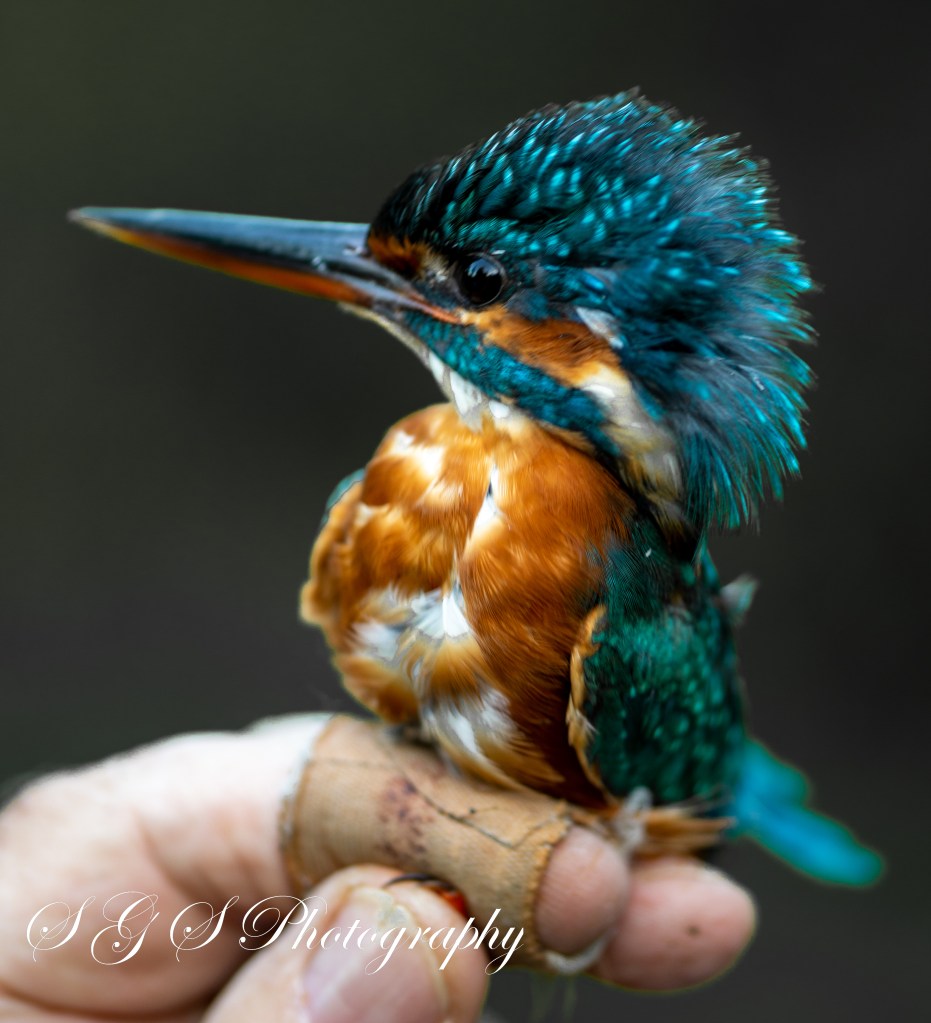
As I was walking back to the ringing station, I noticed a photographer paying attention to our nets. I started chatting and I asked him what he was hoping for. His answer was Kingfisher, so I told him he was in luck as I had one in the bag. That is his photo above: a juvenile female. Sean (didn’t get his second name, so British) stayed with us for the next couple of hours and took a lot of photos.

Attending the aforementioned ringing demonstration was a family group: Claire, with her son, Samuel, and daughter Zara. They had to leave before we had packed up the nets, and so missed the Kingfisher we caught at the end of the session. Subsequently Claire contacted me and asked if she and the children could come along to some other sessions. Of course, I agreed, and they have joined me on a number of occasions since. Unfortunately, most they have been able to make seems to have been at Ravensroost Woods, rather limiting their experience. Fortunately, they were able to make this anniversary session. Disappointingly for them, they arrived at 8:00, after we had processed and released the Kingfisher. One day!!

What with my ringing being restricted recently and other issues, it has been quite a while since Claire and co could join me again, so we took it slowly, reintroducing them to safely handling the birds. Zara is just eight-years old, and her handling skills are already excellent. All ringers know that Bullfinches will, on occasion, sit on your hand for quite a long time after you have released them. However, with Zara many species seem to like sitting in the palm of her hand after release. I have never seen anyone else with whom that happens. Later on in the session, I showed Zara how to take wing measurements. She then proceeded to “check” David’s wing measurements, with me being the final arbiter. I think it ended up 3-2 to Zara, much to David’s amusement / chagrin. There was only ever 1mm in it but fun for me, and ammunition to embarrass my (excellent) trainee for the foreseeable future. I have promised Zara that I will start her on her ringing career next time they can make a session. Start them young!

As expected, we had a good haul of Blackcaps. What was interesting was the sex imbalance. Of the 27 caught 22 were male. I really must check previous years and see if this is a common phenomenon.

A little less expectedly, at 10:50 we also caught a nice little flock of Long-tailed Tits. We are getting to that time of year when the Long-tailed Tits that fledged this year have completed their post-fledging moult and are now indistinguishable from adult birds, so in my list they are identified as age unknown. The actual list for the day was: Kingfisher [1]; Blue Tit [2]; Great Tit [3](3); Long-tailed Tit 7(1); Wren [2](1); Dunnock [2](2); Robin (2); Song Thrush (1); Cetti’s Warbler (1); Blackcap [26](1). Totals: 7 birds, age unknown, from 1 species; 36 juvenile birds from 6 species and 12 birds retrapped from 8 species, making 55 birds processed from 10 species.

One other bird that Sean mentioned he would love to get to photograph was Green Woodpecker. As I have blogged before, Lower Moor Farm is my most successful site for catching Green Woodpecker. Of the 20 caught in one of my sessions, 16 of them have been at Lower Moor Farm. During the same round that the Long-tailed Tit flock landed we caught a Green Woodpecker. Well, it landed in the net and sat there for a short while but, as soon as Zara said it was in the net and I made a move to extract it, it twisted itself round and got away!! You can’t win them all.

The one bird I actually felt sorry for in the session was the recaptured Song Thrush. I couldn’t help noticing that the head feathers above the cere were matted and had a huge, almost broad bean sized growth. As I took it out of the net the growth and some of the matted feathers came adrift. I collected it and took it back to the ringing station for a further look. It was the largest tick I have ever seen. So bloated with Song Thrush blood that it was huge and, I suspect, naturally disengaged from the bird as I was extracting it.

We closed the nets at 11:30, with David’s dad, Trevor, turning up in time to help us clear away. With just nine nets up it took very little time, and everything was packed away by about 30 minutes later. I actually stayed and watched and listened for another 45 minutes, just enjoying the place and the wildlife and chatting to some of the photographers.

Goldcrest Longevity Record

On the 22nd November 2015 we caught and ringed a Goldcrest in Ravensroost Woods. On the 8th March 2021 this bird was recovered by another ringer on St Mary’s in the Scilly Isles. Although I blogged about it at the time, it was not confirmed until the BTO published the 2021 ringing & nest recording report. This was published on the 30th August 2022 and the BTO have confirmed that this is the longevity record for this species. One would have suspected that it would need to be something of a hero to have endured so long, migrating each year, covering goodness knows how many miles in the process. This is the record from the BTO site:

Another Bit of Blakehill Farm: Wednesday, 21st September 2022

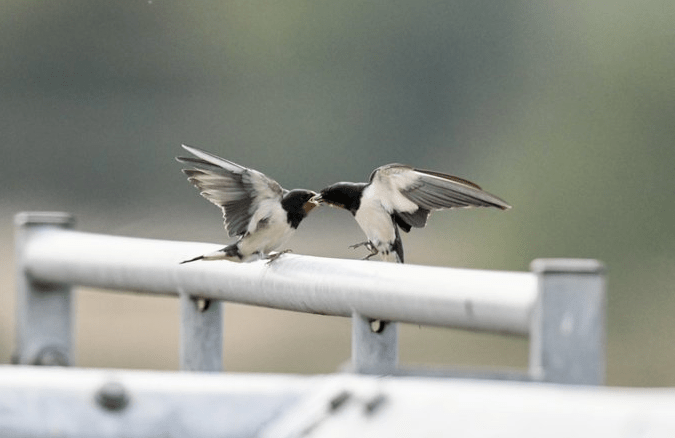
I spent yesterday morning checking and cleaning out Barn Owl boxes at Upper Waterhay Farm and Blakehill Farm, accompanied by local birder / photographer Chris Snook. Chris was hoping to get some photos of Barnies and, whilst he didn’t get any photos of them, he did get to see some. Better still, he got a fantastic picture of a juvenile Swallow being fed by an adult:

As we drove onto the site, we couldn’t help but notice Stonechat popping up at regular intervals. On our way back from checking the boxes where, annoyingly, I didn’t take my hand-net to the box in Allotment Field. Annoyingly because I thought, having seen it full of Jackdaw nesting material over the breeding season, that there would be nothing in the box, only for a Barn Owl to fly out as soon as I got the ladder against the tree. So, on the way back we stopped to look at the Stonechat and were surprised to see so many of them. My estimate is that there were at least 10.

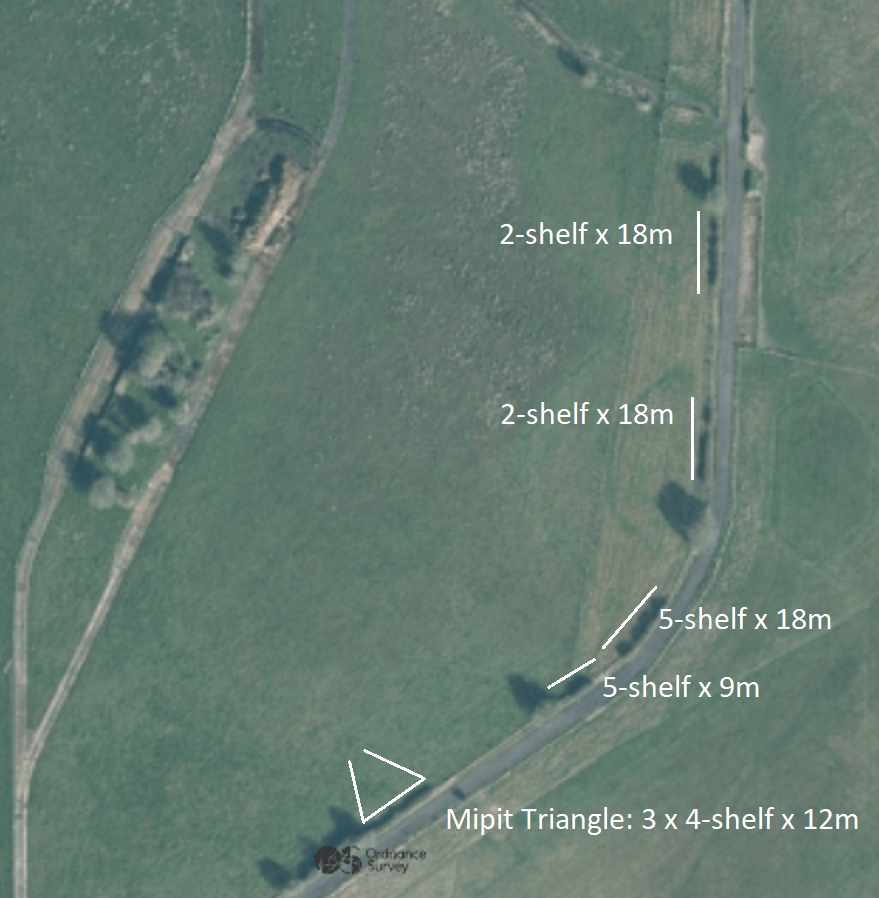
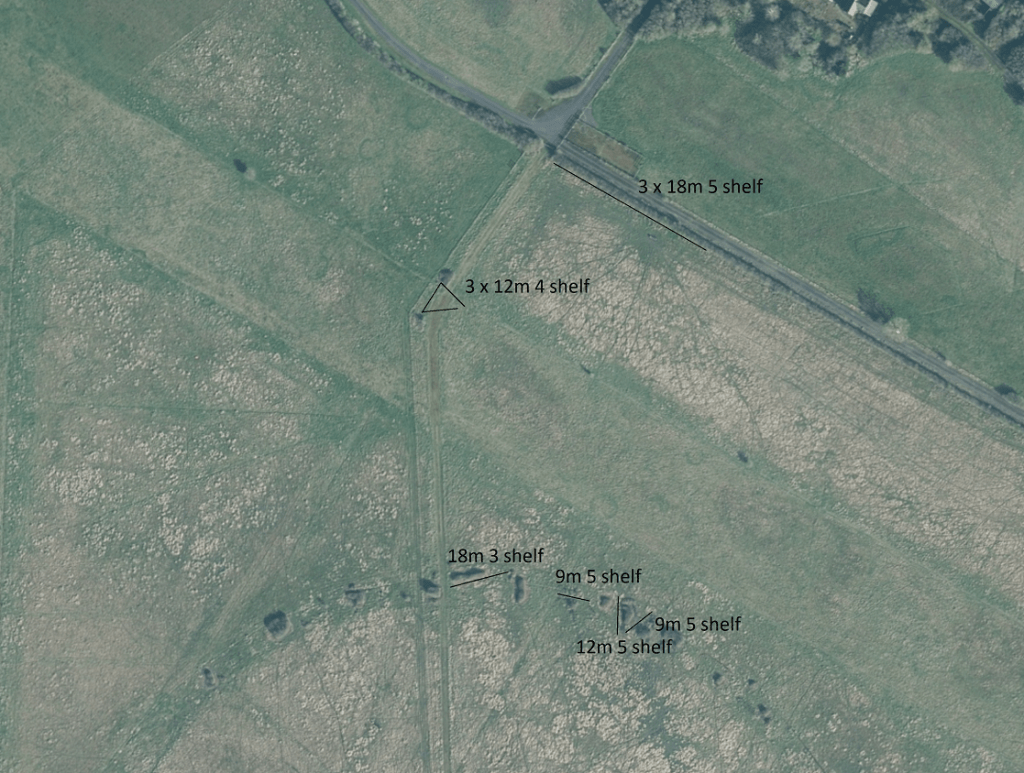
I have never tried ringing birds in that area of the site, but the Stonechats were a big draw. We set nets in the area where the Wildlife Trust trialled seeding the area with weedy, seedy plants, which did not work out and has reverted to a lot of thistle and ragwort in the main area and the blackthorn is spreading in from the Blackthorn in the hedgerow. The area in question is the paler area in the diagram below, in which all of the nets were set, except the Mipit triangle:

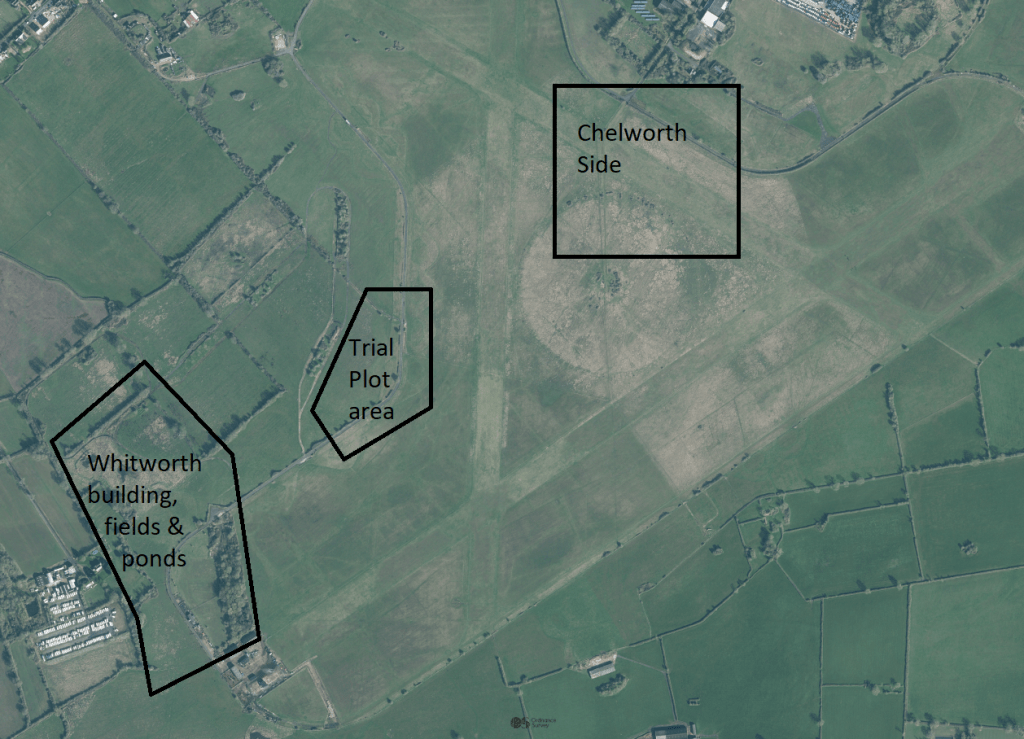
This area fits between my regular ringing sites at Blakehill. The Chelworth Industrial Estate side is the main area, followed by the fields and ponds adjacent to the Whitworth building, as shown in the diagram below:

In an effort to attract in the birds we had come for, I set lures for Stonechat on every one of the four nets in the trial plot area and, unsurprisingly, put Meadow Pipit on in the middle of the Mipit triangle.

I was joined by Miranda and Rosie, doing her usual, helping set up, ringing a few birds and then heading off to work. As we drove down to where we were going to set up, there was at least twenty Skylark on the track. Perhaps I should get there earlier and try some dazzling for these birds of which I have only ever caught one previously.

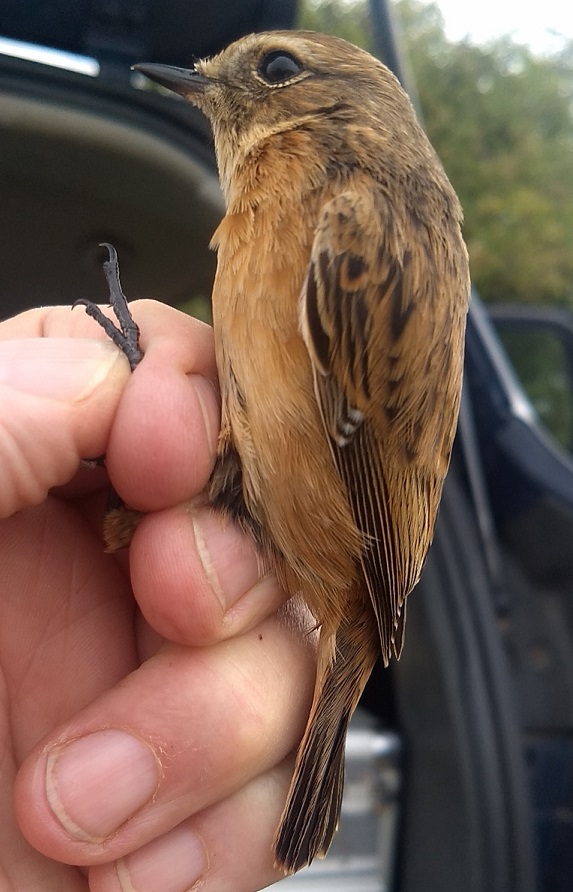
The first birds into the nets landed in the 5-shelf 18m net: a Chiffchaff and a Great Tit. Whilst Rosie processed those, Miranda went and took the first few Meadow Pipits out of the triangle and our first Stonechat of the morning, a juvenile female:

Juvenile female Stonechat, Saxicola rubicola

We caught two juvenile females, neither of which responded to their lure, but which were caught in the Mipit triangle. I suppose it is possible that they are actually migrating with the Meadow Pipits.

The nets in the trial area were disappointing, with one caveat. The 9m net caught nothing, the 18m 5-shelf caught just four birds, one of which was a same day retrap. Next to that the 18m 2-shelf caught nothing and the furthest away 18m 2-shelf caught just one bird: another Meadow Pipit. Having said that: this Meadow Pipit was an adult that was ringed elsewhere in August 2020. I am looking forward to finding out where it has come from.

The list for the day was: Great Tit [1]; Wren [1]; Meadow Pipit 2[27](1); Stonechat [2]; Robin 1; Chiffchaff [4]. Totals: 3 adults ringed from 2 species, 35 juveniles ringed from 5 species and one bird retrapped, making 39 birds processed from 6 species.

Miranda and I decided to close the nets at 11:30 and, as so often happens, the weather turned as the decision was made, the wind got up and we had to get the nets closed and down quite quickly. We were away from site by 12:30. As I was driving back up the perimeter track, three male Stonechat sat on the posts of the fencing closing off the trial area, with another further afield, at the top of a prominent, dead Dock seed head. That rather underlines that there are good numbers of Stonechat at Blakehill this year. When you look at the last couple of sessions, Blakehill has done extremely well for me and the team.

Garden Goldfinches: Monday, 19th September 2022

Because today was a bank holiday, I thought some of the team might be available for a session this morning. As it turned out, nobody was available, so I decided to set up a few nets in the back garden. I set two x 6m and one x 3m nets in a triangle around the feeding station yesterday evening and opened them at 7:15 this morning. It was just as well, to be honest, as my arthritic right ankle decided to play up last night and into today and working one of my sites solo would have been no fun. Five minutes later I was extracting the first bird of the morning from the 3m net:

Juvenile female Goldcrest, Regulus regulus

This was followed by a Blue Tit and then a Goldfinch. Goldfinch became the predominant part of the catch. A slight digression: for the last dozen years I have taken part in the BTO’s Garden Birdwatch (GBW) scheme. For each day I count the maximum number of birds of each species seen in my garden at any one time. Today, for example, I have put down two Blue Tits and 14 Goldfinch for the GBW records. In the session I have ringed 15 individual Blue Tits and 31 Goldfinch. Interestingly, my GBW number for Goldfinch was recorded at 9:35 but, when I went out to extract those that had hit the net, I extracted 16 of them, so there were actually more than I had seen. Conversely, our GBW record for Woodpigeon for today is seven, but I caught just one.

Today’s catch has turned into the biggest to date for my garden. The nets were open until noon and then again from 14:00 to 17:30. The afternoon session was much quieter than the morning, with just 15 of the 60 birds caught. My previous highest catch was 50 birds, of which 45 were Goldfinch, on the 26th October 2016.

The Goldfinch catch was almost entirely made up of juvenile birds, with just a single adult ringed and two retrapped adults in the mix. One of those juveniles had seemingly fledged very recently, as it had not started its post-fledging moult. There were several in the very early stages of that moult, all the way through to those that had completed.

As well as the excellent numbers of Goldfinch and Blue Tit, there were several other highlights. The first two Greenfinch of the year at any of my sites arrived at 8:45. Two juveniles, a male and a female. It is over four years since I have seen any evidence of Trichomonosis in the local Greenfinch population. This year we recorded three possible breeding pairs visiting our garden: when you see six of them, three of each sex, all together on your feeders at the same time, you can be pretty confident that is a minimum number. To catch two birds that fledged this year and seem to have paired up already (they were in the same net, just a few centimetres apart, is pretty reasonable evidence) is pleasing.

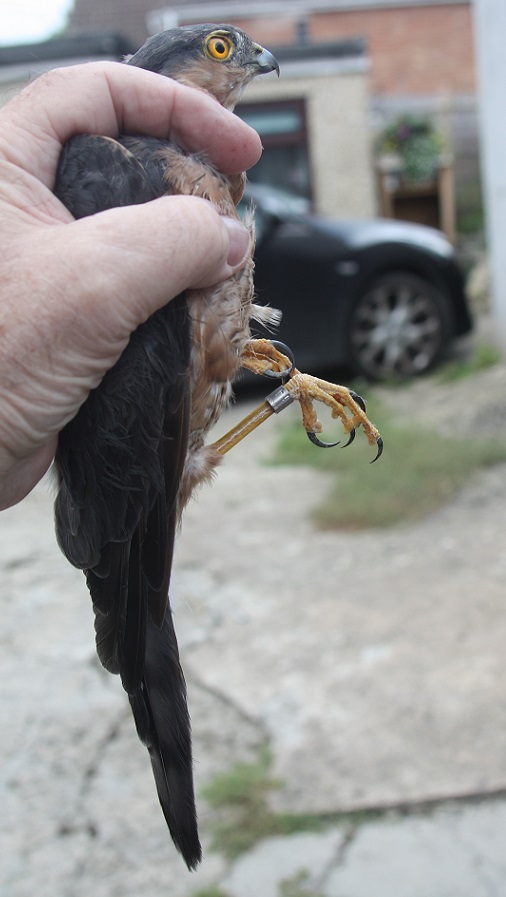
At 10:45 I had a double hit of the unusual: firstly, a retrapped Woodpigeon from May 2020 and then this bad boy:

Juvenile male Sparrowhawk, Accipiter nisus

This is the second juvenile male that I have caught in my garden. The previous one was in October 2019, and I have now ringed 10 in total in my ringing career, not quite one per year.

The list for the day was: Woodpigeon (1); Sparrowhawk [1]; Blue Tit 3[12](1); Great Tit 1[1]; Coal Tit [1]; Robin [2]; Goldcrest [1]; Starling 1; Greenfinch [2]; Goldfinch 1[30](2). Totals: 6 adults ringed from 4 species, 50 juveniles ringed from 8 species and 4 birds retrapped from 3species, making 60 birds processed from 10 species.

There were a couple of small disappointments: a Stock Dove that bounced off the nets and a complete no-show of the Jackdaws. Normally when I put out fat-balls and mealworms they dive in straight away. Today: not a sign of them. It is almost as if they knew!!!

Ravensroost Meadows: Saturday, 17th September 2022

Although the catches haven’t been particularly good at the meadow pond recently, neither had they been at Blakehill until this Wednesday, when the migrants turned up: from 7 birds on the 20th August to 64 last Wednesday. I was hoping that we might get some of the same at this site. Blakehill is always boosted by the return of the Meadow Pipits. The hope for Ravensroost Meadows is House Martins and Swallows. We arranged to meet at 6:30, only I woke early and was on site by 6:00. Just as well: the recent change in the weather, providing a bit of rain alongside the warmth, has sparked a huge spurt in the growth of the vegetation: so, I spent a good 20 minutes doing some ride clearance. Rosie and David joined me at the agreed time, and we set up the usual nets plus one additional 18m net along the side of, what remains of, the pond. As usual, Rosie had to leave to go to work and organise a volunteer work party at 9:15, after processing four birds.

Once upon a time, the pond was a small pool and a larger pool split by a causeway on which we would set a 12m net and put on a lure for the preferred hirundine species. Unfortunately, this year the area of the larger pond in front of the causeway has sprouted a fine collection of reeds. This has broken the natural flight path and, so, despite having hundreds of House Martins and tens of Swallows swooping around the meadows and the pond all morning, we didn’t catch a single one. If I removed the Meadow Pipits from Wednesday’s catch, we would have caught 23 birds. Today at the meadow pond area we caught 24 birds: if only!

The list for the day was: Treecreeper 1; Blue Tit 3; Wren 2(3); Robin 5; Blackcap 6; Chiffchaff 3; Willow Warbler 1. Totals: 21 birds ringed from 7 species and 3 birds retrapped from a single species, making 24 birds processed from 7 species. All of the birds caught, including the retrapped birds, were juveniles.

Every session at the meadows this year we have set the 9m net on the spit in the small part of the pond. So far this year it has caught absolutely nothing. In the past it has always caught one or two birds and, occasionally, a decent haul. Today, it caught absolutely nothing until we had closed and taken down the other hedgerow nets. Our last catch comprised five birds, all in that net: two Blue Tits and three Blackcaps.

It isn’t often that I get to say this but, one of the Blue Tits was interesting:

Juvenile Blue Tit, Cyanistes caeruleus

This bird is still very much in juvenile plumage and currently undergoing its post-fledging moult. According to the BTO’s Bird Facts, the latest date of laying is 11th May. The maximum length of incubation, plus maximum length to fledging is a total of 36 days, making the latest possible fledging date the 16th June. For this bird to be still undergoing so much of its post-fledging moult three months later seems unusual.

David, his dad Trevor, and I started taking down at 11:30 and, with the interruption of the five birds to be processed, we had everything taken down and packed away by 12:30.

That’s Better: Blakehill Farm; Wednesday, 14th September 2022.

After our ringing demonstration on the 20th August, with its massive total of eight birds from six species, we had more emails thanking us for the session than we have ever had before: almost twice as many as we had birds! Having spent the last ten days in Scotland, doing a bit of birding, and seeing loads of Swallow and House Martin, and a few Wheatear, flying about the place, I wanted to catch up with whatever migrants might still be coming through Blakehill Farm and see if we could do better than last time.

I had Miranda and Rosie joining me for the session. The forecast was a bit hit and miss, depending upon which organisation you looked at. All forecasts agreed that the rain would have finished by 7:00, so I set a start time of 6:30. It also predicted wind speeds of 6mph, gusting to 13mph, which is marginal for working there. I decided to go ahead regardless, rather than move to a woodland site. Fortunately, the wind made very little impact on our activities. We did set fewer nets than usual, as there would be just two of us for most of the morning:

Critically, we set the three x 12m nets in the “traditional” Mipit triangle and set a lure going. With the nets set by 8:00, we quickly caught a Whitethroat and two Wrens. Unfortunately, the Meadow Pipit lure had decided it didn’t like being on its back and stopped after one cycle. As Rosie had to leave at 8:40, I let her process the three birds.

Before the next round I sorted the Meadow Pipit lure and there was an immediate impact: with several of them sitting on the top of the nets to see what was going on. Then we started catching them. I had lures for Tree Pipit, Whinchat and Spotted Flycatcher: none of them worked although, more on this later, we did catch one of those species elsewhere.

The rest of the morning was nicely busy, with 12 birds each at the rounds starting at 9:00 and again at 9:45. That later round delivered a surprise: two Swallows. We had watched them flying around the plateau, but I didn’t expect to catch any. Especially, I did not expect to catch one in the lowest net of the entire set, which is what happened. The other was caught in the 9m net set next along from the first Swallow net.

The next round was very busy but, fortunately, Anna Field, a member of the Gloucester Raptor Group and also of the North Wilts Ringing Group, and with whom I had spent some time (as chauffeur) at the Wash Wader Group, wandered over to say “Hello”, as she was busy doing her day job: spreading wildflower seed with a group of volunteers on parts of the reserve. Timely, as she is a skilled ringer, and helped us with extracting the 25 birds we caught that round. As well as 14 Meadow Pipit, there was a nice fall of nine Chiffchaff in the hedgerow net, all within a 2m grouping.

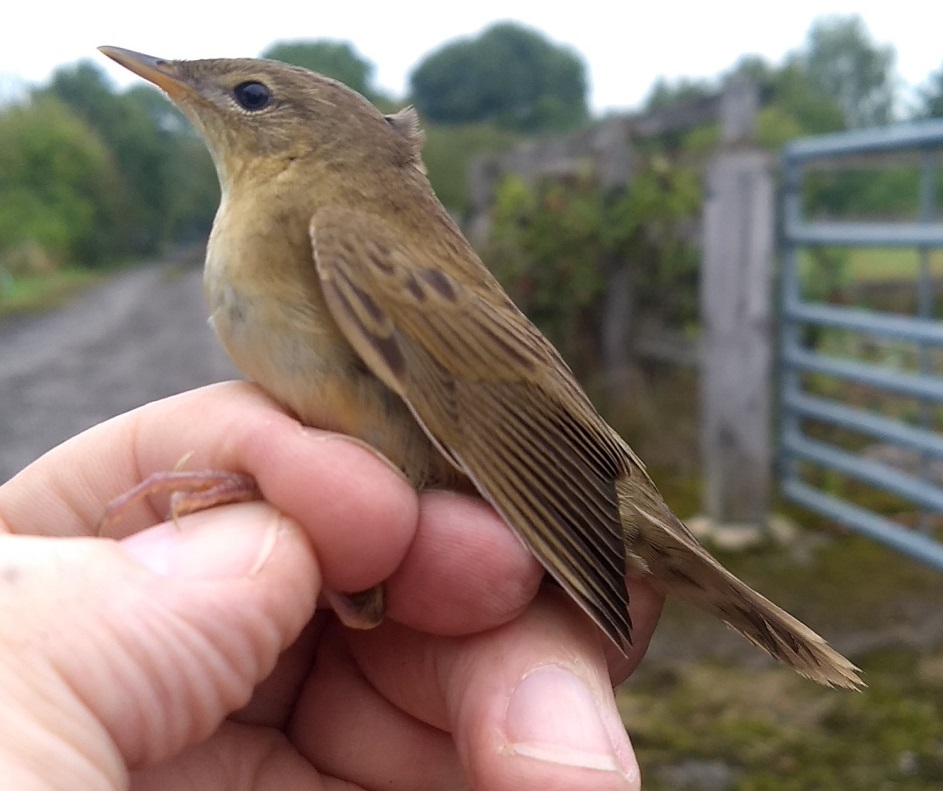
We had two notable catches. The first was in the Swallow round: our second ever Grasshopper Warbler for the site:

Grasshopper Warbler, Locustella naevia

The other was the last bird out of the nets: our first Spotted Flycatcher for the site.

Spotted Flycatcher, Muscicapa striata

This means that we have now caught and ringed Spotted Flycatcher in every part of the Braydon Forest except Webb’s Wood.

Our list for the session was: Swallow [2]; Great Tit [3]; Wren 2(1); Meadow Pipit 3[38]; Spotted Flycatcher [1]; Grasshopper Warbler [1]; Sedge Warbler [1]; Chiffchaff [11]. Totals: 5 adults ringed from 2 species and 57 juveniles ringed from 7 species and 1 (juvenile) retrapped, making 64 birds processed from 8 species. This is my team’s largest catch this year that did not involve feeding stations – and only two of those were larger than this catch.

We did our last round and closed the nets at 11:30. After we processed the last birds and took down, we were away from site just after 13:00.

Curlew in the Braydon Forest 2022

This post is provided by Jonathan Cooper, Project Officer at the Wiltshire & Swindon Biological Records Centre, Curlew project leader and invaluable member of the West Wilts Ringing Group.

The Breeding Season 2022:

Compared to 2021, the 2022 breeding season provided more favourable conditions for Curlew. The weather was generally warmer, with no prolonged wet spells during the crucial nesting period.

The field season kicked off in March with birds returning to the Cotswold Water Park prior to them then moving to their breeding territories. In amongst these birds was the colour marked individual from 2021, which spent the winter in Cornwall. In addition to the local breeding birds some larger counts (of 20+ birds) in the water park suggest that birds were also moving through on migration to breeding sites elsewhere. 

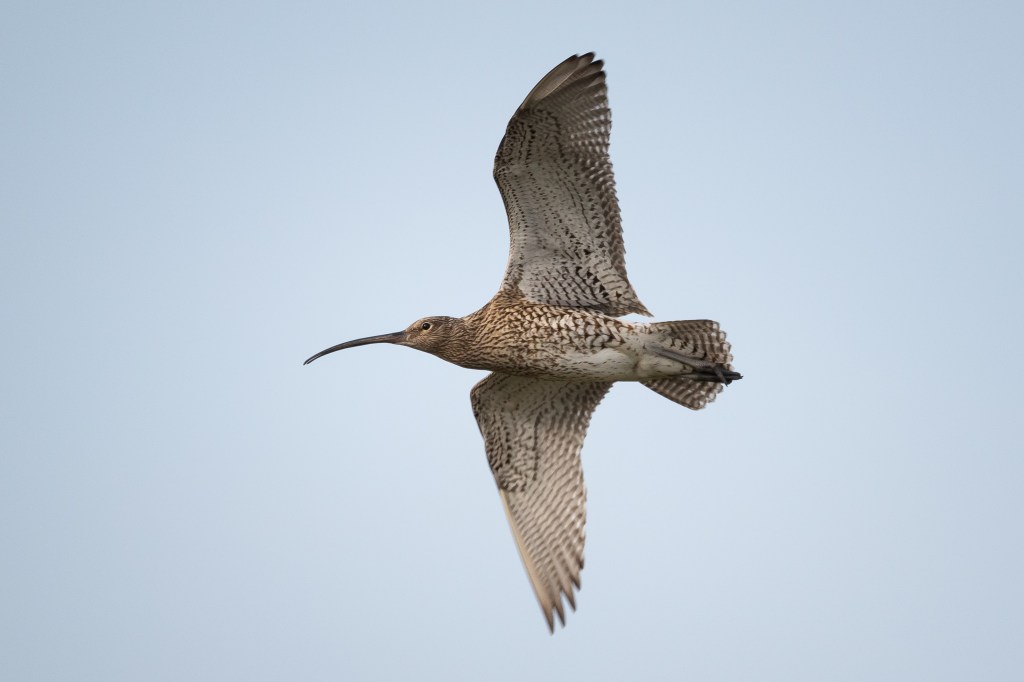
Curlew, Numenius arquata, at Blakehill Farm. Photo copyright Philip Law.

Once birds returned to their territories, we began our monitoring of the nesting attempts. This year we were aided by some supportive landowners who gave us access to areas we were previously unable to survey. This allowed us to monitor each pair much more closely. Overall, there were five pairs of Curlew breeding in the Braydon Forest. Interestingly several records of birds came in from the west of the area where pairs have not previously been recorded, something to follow up in 2023. 

Outcomes:

Due to our nest monitoring we were able to implement protection measures around two nests (one nest was fenced and for another an area was left uncut). The measures helped these two pairs to hatch chicks with the adult birds observed ‘on guard’ and mobbing predators. This is an encouraging sign showing these measures can work. 

Nest Fencing Photo copyright Jonny Cooper

However, the story takes a sadder turn, with both pairs losing their young within 10 to 12 days: likely due to predation. Overall, in 2022 no Curlew chicks were observed to have fledged from the Braydon Forest. This frustrating result shows the harsh reality of Curlew conservation. 

Future Steps:

The project will keep monitoring the breeding pairs within the area as well as implementing measures to help protect the nests. In 2023 the work to ring and track birds will continue, with more birds being fitted with colour-rings allowing their movements to be monitored.  

We will also be working closely with the newly formed Braydon Forest Farm Cluster. This group of landowners are starting to work together to support Curlew (and other grassland species) at a landscape scale. 

West Wilts Ringing Group Results: August 2022

Despite my inactivity and failure to add more than 100 records to this month’s total (only 3 of my sessions got into double figures), this month registered as our largest catch in any month since the group came into its current structure at the beginning of 2013.  Most of that can be attributed to Jonny’s efforts, with 1,044 birds processed, and Langford Lakes producing 475 of them.  There was a decent amount of activity on Salisbury Plain, at two sites one in the Imber Ranges area and the other in the New Zealand Camp area, producing just under 360 birds processed.  The vast bulk of the catch, over 1300 of them, were new birds and, quite probably, already on Autumn migration.  There were some exceptional birds caught: unfortunately, despite requests, I have no photographs of them to share. Unfortunately, some members of our group are still of the opinion that the less said about bird ringing, the better. I am of the opposite view: the answer to ignorance is education, which is why I set up and run this blog and carry out so many ringing demonstrations, both formal and informal.

Regular blog readers will notice my two cheats in amongst the wild caught birds.  I was contacted through the blog by a falconer about two birds he was rehabilitating and wanted ringing.  The first was a second-year female Kestrel, that had managed to end up in a barrel that had contained some sort of resin and, unfortunately, there was enough left to make a mess of its plumage, with lots of feathers stuck together.  He has managed to separate many of the feathers, by judicious use of talcum powder, and will be keeping the bird until it has completed the moult of both body and flight feathers before releasing it back into the wild.  The second bird was this:

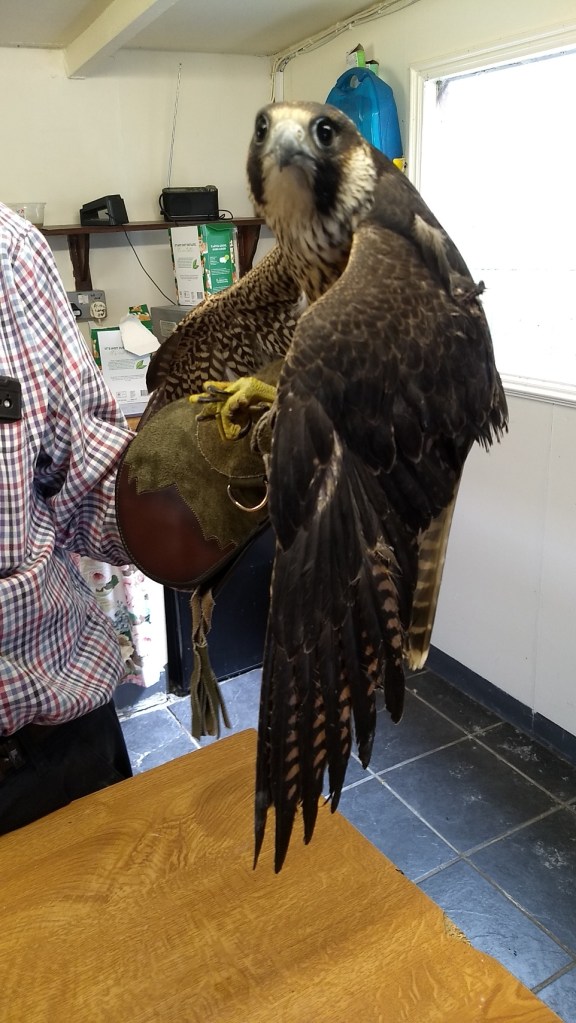
Second-year Female Peregrin, Falco peregrinus

A juvenile, female Peregrine. I just didn’t realise how big they are.  She had a bruised wing and swollen joint, for which she is currently being treated. A local vet x-rayed her and confirmed there is no break in the wing.  Once healed she will be trained to hunt before final release back into the wild: the way falconry used to work in medieval times.  It would be interesting to know where she fledged from.  Clearly not from any publicly known site, otherwise she would already have been ringed. One thing that was really good about both recoveries is that they were found by local farmers who handed them over to be rehabilitated.

In terms of the wild birds caught, as you can see from the list, nearly every species was up on last year.  Clearly the highlight has to be the capture of three Nightjar in a single month. Prior to this month there had been only one caught by the group: that was in August 2020 at the Imber Ranges site.  Of this month’s three, two were caught on separate occasions at the New Zealand Camp site and the most recent at the Imber Ranges site again.  However, there were some other remarkable catches: amongst Jonny’s record haul there were 19 Kingfisher (16 ringed and 3 retrapped), all 69 Greenfinch processed (65 ringed and 4 retrapped) and 149 0f the 193 Chiffchaff processed (131 ringed and 18 retrapped).  Willow Warbler numbers were not only massively up on last year but it was our best ever monthly catch of the species at 107.  The previous highest was also in August: August of 2015 at 41.  The bulk of these came from Langford Lakes. Reed Warbler numbers were a little down on last year and Garden Warbler numbers also, but otherwise it was all very positive.

It was a fantastic month in what is shaping up to be a good year.

As a footnote, as a rule I don’t count things like ad hoc garden sessions as full sessions unless they result in more than 10 birds being caught.  I haven’t usually had to make a decision about that on proper site sessions until this month.  On my second post-operation session I went to Ravensroost Wood and, with Rosie’s help, set 4 x 18m nets along a particular ride that usually delivers upwards of 20 birds. We caught 3 in the hour-and-a-bit before Rosie headed off to work: and that was it.  I gave up after another 2 hours produced no birds.

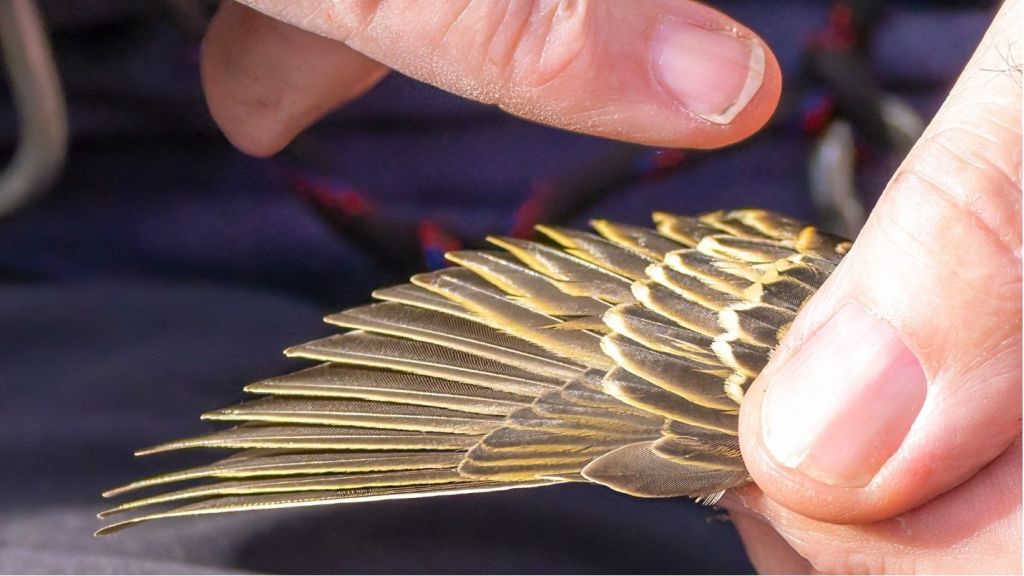
On the 20th August I carried out a ringing demonstration at Blakehill Farm.  It is always a bit of a risky business, with the site being so weather dependent. Unfortunately, on the morning the breeze got up, affecting the plateau nets quite quickly, although the hedgerow nets were largely unaffected.  We had 20 adults and 4 children attending – and we caught just 8 birds, only 7 whilst the public were there.  I have to say, I have carried out dozens of these ringing demos and none of them has sparked as many emails thanking us for the experience as this one did. Too weird for words.  The catch was two each of Wren and Whitethroat and one each of Blackcap, Lesser Whitethroat, Willow Warbler and Tree Pipit.  The Tree Pipit delighted everybody, but especially Robin Griffiths and the rest of the Swindon Wildlife Group running it, as it was their first ever record for the site, although we did ring one previously, back in 2018.  One of the attendees, Teresa, has sent me a load of photos from the session, including this couple of the Tree Pipit: one showing its punk hairstyle and the other showing how we aged the bird:

Juvenile Tree Pipit, Anthus trivialis courtesy of Teresa Farr
Note the pale fringing to the median and greater coverts: indicating a juvenile bird – courtesy of Teresa Farr

And this is the entire bird:

juvenile Tree Pipi, Anthus trivialis courtesy of Teresa Farr

Lower Moor Farm: CES 12, Saturday, 27th August 2022

Today was the last CES session at Lower Moor Farm for 2022. I have a big decision to make: is it actually the final CES session at this site? Today we caught a measly 19 birds. Admittedly it was a freak, but on the 20th August 2014, my fourth visit to the site, I felt like a quiet session, so I just set the three 18m nets that now comprise ride 2 of my constant effort site, known as the Heronry Ride by the Trust.

In that session I actually caught 157 birds from 15 species. Today that ride delivered 12 birds from 7 species. It was the best return of any of the rides. Why the difference? I suppose the first thing to say is that the huge catch was a freak: and I have never got close to that since. 90 of those birds were migrant warblers. The second thing to say is that the structure has changed significantly. Although the path is still there and open, at the time the foliage that forms the barrier between the Heronry Ride and the adjacent path to the third hide on the site, was thinner and much lower. Between the path and the stream that forms the boundary between Wiltshire & Gloucestershire the willows were interspersed with massed banks of bramble, and I am certain it was the fruits of that which pulled them in.

In the following years the Trust became somewhat enamoured of creating scallops along rides, as a way of improving the habitat for butterflies and other insects. However, that required the removal of most of the bramble, the idea being that they would be replaced by wildflowers / plants that were more attractive to the insect world. Two things: the wildflower planting never happened, and the open spaces need continual maintenance to keep them open, which has also not happened. Since then, the stream-side woodland has closed in, and the open spaces have become completely occupied by nettles. I have nothing against nettles, but I don’t think they are particularly attractive to pollinators, whilst being a wonderful food plant for the offspring of so many insect species. The simple fact is, though, that what attracts the birds into that ride in the autumn is the crop of blackberries that now no longer exists.

Up until 2020, the small area adjacent to ride 2, known boringly as ride 1, was a single 12m net in the only patch of true woodland within the CES site. It was never a great catching net, but it did catch the odd excellent bird: Green Woodpecker and Kingfisher for two. In 2020 two of the trees collapsed, blocking the ride and the Trust decided on a new policy for the area. The Heronry Ride was put out of bounds to the general public, and the plan is to rewet the woodland area. I love the idea, even if I did lose one of the rides from the CES. As part of the programme, quite a lot of thinning happened along the stream side (I know, because I had to remove quite a lot of cut wood from the ride path prior to my next CES session!) but not on the opposite side. This thinned area has, once again, been colonised by nettles.

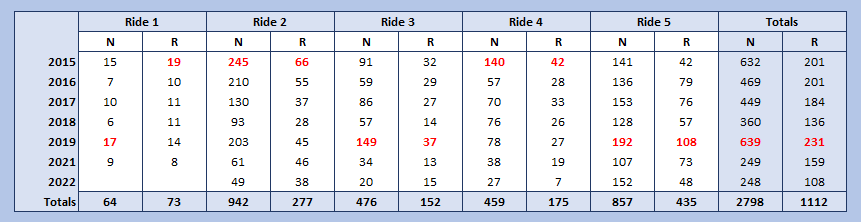
Then we move on to ride 4. Ride 4 runs from the gate into the wildlife refuge for a length of 2 x 18m nets. What started as a line of mature trees along the stream side, and a few low trees and scrub between the ride and Mallard Lake, has now grown up, and the numbers of birds have also dropped significantly. It will take a considerable amount of thinning work to turn that around. I think that is enough doom and gloom. The following table shows exactly what has happened. It is as if 2019 marked the high-water mark and 2020 destroyed the integrity of the CES site:

There is a lot of effort that goes into a CES. Twelve sessions between May and the end of August, roughly 10 days apart, and I would work mine for 5.5 hours at a time. If I am going to be processing fewer than 30 birds per session, i.e., less than 6 birds per hour, that is not a good use of my time, nor is it providing much by way of training for my team – and there is only so much coffee one can drink in a session. If the Trust allows me to thin out rides 2 and 4 over this winter, then I will try it out for another year.

Anyway, the results from this last session were: Blue Tit 1; Great Tit 2(1); Wren 1(1); Dunnock (2); Robin 1(2); Blackbird 4; Blackcap 2; Chiffchaff 1; Bullfinch 1. Totals: 13 birds ringed from 8 species and 6 birds retrapped from 4 species, making 19 birds processed from 9 species. All birds processed were birds fledged this year.

The total catch for the CES this year was: Sparrowhawk [1]; Green Woodpecker 1(1); Treecreeper 1[10](5); Blue Tit 2[37](7); Great Tit [16](5); Long-tailed Tit 1[25](6); Wren 3[12](7); Dunnock 1[6](14); Robin 2[23](13); Song Thrush 2[1]; Blackbird 3[6](8); Cetti’s Warbler 1[2](5); Blackcap 6[25](20); Garden Warbler 5[3](3); Whitethroat 2[1]; Chiffchaff 2[28](13); Willow Warbler [9]; Chaffinch [1]; Bullfinch 1[8](1); Reed Bunting [1]. Totals: 33 adults ringed from 15 species, 215 juveniles ringed from 19 species and 108 birds retrapped from 14 species, making 356 birds processed from 20 species.

It is still a lovely site, and I have every intention of continuing to work there, but I feel that I need to explore other areas of the site, mainly within the wildlife refuge.

Rehabilitation and Ringing

I was approached, through the contact page of this blog, by a gentleman named Allan Gates, of the Mere Down Falconry Centre, about the possibility of my ringing two birds of prey that he is currently rehabilitating.

A few years ago I had a chat with the Oak & Furrows Wildlife Rescue Centre about the possibility of ringing birds that they have rehabilitated prior to release. They were quite keen, and so was I – they had the most astonishing number of Spotted Flycatcher juveniles brought in from local woodlands, that they were hand-rearing, and which were very close to fledging and, at the time, Spotted Flycatcher had not been ringed in the Braydon Forest area.

I contacted the BTO and found that the process involved creating a project plan, paying for a special licence, paying a premium on every ring used (volunteer ringers pay for every ring we use and the cheapest is about 25p these days – my Barn Owl rings cost £2.00 per), and one was supposed to also estimate the number of those birds that you would expect to recapture and pay a fee upfront for each expected recapture. I decided that was both too bureaucratic and too expensive for me to take it on: bureaucracy being the biggest factor. I am not keen on paperwork.

However, as one of the birds being rehabilitated was a Peregrine, I was excited at the possibility and contacted the BTO again. This time I was delighted to be told that, provided this was to be an ad hoc arrangement, there was no need to do any of what had previously been expected of me. Brilliant! The second bird is a Kestrel, with a very interesting tale to tell.

I arranged with Allan to visit his facility on Thursday afternoon. It really is a fascinating place with an astonishing collection of birds of prey. Allan doesn’t open to the general public, either taking specific bookings for tailored activities at his site, but also attending local shows and activities to inform, educate and display the birds.

We dealt with the Kestrel first. This was a second year female. She was found by a local farmer having somehow managed to get into a barrel that had previously held some resin. Unfortunately, there was enough of it left in and around the edges of the barrel to coat her feathers. So many of her primaries and secondaries had stuck together that it was impossible for her to fly. Allan has spent an age cleaning her up, and using talcum powder to help separate the feathers. Unfortunately, the vanes of the individual feathers themselves are still sticking together and she is still unable to fly. She has started her moult, and new, clean feathers are already in evidence. Allan will be monitoring her moult and, as soon as she has completed her moult, she will be released back into the wild. In the meantime she will be well cared for at the centre.

The second bird was the aforementioned Peregrine. What a stunning individual:

Juvenile Female Peregrine Falcon, Falco peregrinus

The bird was found on the ground unable to fly, holding its right wing in an awkward position, and brought to Allan for his attention. He took it to his local vet, who was happy to x-ray the bird. Fortunately, it showed that, although there was some bruising and swelling, the wing was not broken. It is now being treated with anti-inflammatory drugs and, hopefully, will be overcome its problems and soon be flying again.

It is a female bird that fledged this year. To me the most exciting thing about this bird is the fact that it was not already ringed! We hear all of the time about known nesting sites, which are monitored every year, and where the young are ringed in the nest, but this is Wiltshire and, outside of the pair on Salisbury Cathedral, records of breeding Peregrine Falcon are virtually non-existent. Where did it come from?

I was delighted to have the opportunity and very pleased to meet with Allan and Kayleigh, his assistant. Lovely people.